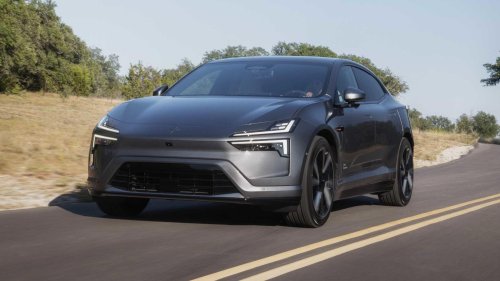
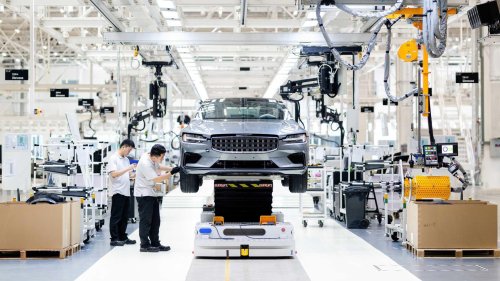
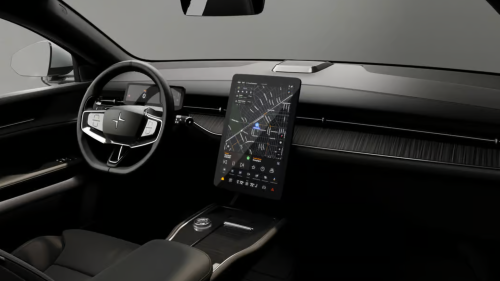
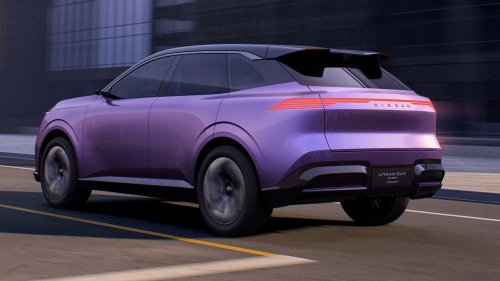
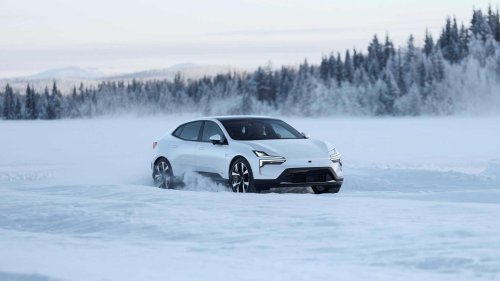



















With so many choices on the performance car market in 2026, it has never been so tough choosing one machine over another. It's down to the automakers to make the difference in this regard, as they have to ensure that the unique selling points of their offerings are displayed front and center so that buyers swivel towards them rather than their rivals. This can range from striking styling choices to performance figures that simply can't be ignored.Swedish manufacturer Polestar, which is owned by the Chinese growing superpower Geely, is approaching this task from a different direction entirely. It reckons reading the human body could be the key to constructing the perfect driver's car, and it has recently announced a fascinating initiative that could change the way vehicles are designed forever. Polestar Will Design Cars Using Science PolestarThe marque is looking for new ways to make its vehicles attractive to driving enthusiasts, as it can take some special sauce to make an expensive vehicle justifiable, given the current financial situation around the world. Its very cheapest model costs just shy of $55,000 after all, with some of its larger and more powerful cars demanding closer to $75k before you've even considered adding some options. At that point, simply coming up with a slick tagline isn't enough, and brands need to find other, more tangible ways to design and market their machines.To this end, Polestar has decided to rely heavily on science. While this isn't exactly a new concept, with manufacturers having studied physics to create cars for decades, Polestar is taking a different stance. Rather than focus on the car, it's electing to focus on the soggy bit behind the wheel. Yep, you. Or your parents, or that hateful neighbor down the street. Whoever has the money to buy a Polestar, essentially.The brand is set to conduct a series of tests at a closed racetrack called the Gotland Ring, which is located on a Swedish island, west of the mainland. It hopes that by measuring how individuals react when driving a car, further progress can be made when it comes to designing a performance car to make people feel special. Should the experiment come off, it will offer a key advantage in this sector, as Polestar's offerings could be perfectly molded to the needs of auto enthusiasts. Polestar Will Be Working With A University To Conduct These Tests PolestarPolestar recently announced that it would be working with the SDG Impact Lab, which is affiliated with Oxford University in the United Kingdom. The SDG Impact Lab was established in 2021, and teaches students practical ways of dealing with the various environmental and social issues facing the planet. But without the embarrassment inflicted upon some brands. The lab was therefore singled out as the ideal partner for Polestar, as it can use its expertise in human behavior and biology to look for changes as the chosen drivers test out different things on Polestar's supplied vehicle.From there, Polestar can use the gathered data to shape its future models directly around the attributes that increased the engagement and enjoyment of the test subjects. Polestar Will Try And Measure Multiple Elements Of The Human Make-Up PolestarThe tests are already up and running, with the first having taken place in early March 2026, with the concluding one set to finish at the end of July (2026). Once the data has been fully quantified, it will be presented to the world at a public event later in the year.Polestar and the SDG Impact Lab are investigating three main forms of human response: physiological, cognitive, and behavioral. Essentially, the operations will measure how the mind and body react to different aspects of a Polestar performance car, which should hopefully offer the brand's designers and engineers an idea of what makes a driving enthusiast tick.A range of sensors and body measuring tech will be used to monitor the effects of different elements of the marque's cars, with changes made to the vehicle to see how the drivers react. As an example, the steering feel could be altered to see if the brain shows the driver is more or less engaged, and the same goes for other elements like the throttle and brake feel. Beyond this, different noises could be pumped through the cabin to see if any help increase enjoyment, or influence other emotions.Polestar hopes the data gathered can be used to increase the driving engagement of electric vehicles, and hopefully prove to naysayers that the EV revolution isn't some fad. In addition, it's hoping to show that elements like engine noise aren't the biggest drivers towards driving engagement, and that other attributes of an EV can be just as important. Polestar's Studies Could Lead The Way For Other Automotive Segments Nissan Beyond the practical benefits that'll allow Polestar to provide vehicles that can sell themselves once potential buyers climb behind the wheel, it could also use the data to further its PR efforts. Most manufacturers utilize forms of performance data to sell their performance offerings, with popular figures being 0–60 mph times and peak power. Should it find a way to quantify and easily display the data gathered from these tests, it could prove that certain features of its models directly influence how a driver feels. In turn, this could intrigue and convince buyers that the car is designed purely for them, setting them apart from rivals that could be seen as being designed with a colder, more practical approach.In addition, should the data prove readable and offer tangible benefits, these kinds of tests could be expanded to other vehicle markets. Polestar could use the same approach for its luxury models, and measure how the human brain reacts to vehicle design choices that try to increase the level of comfort and serenity within the car. The same approach could then be stretched to family SUVs, as the level of discomfort and frustration could be picked up, allowing designers to alter the cabin layout or other elements to ensure the human body is naturally at its happiest while traveling in one of their cars.It can be difficult to accurately portray how you're feeling within a car, so having data that doesn't lie could be a more effective and reliable way to measure exactly how a person is feeling at different moments inside a vehicle. Polestar Needs To Prove EV Is The Way Forward PolestarPolestar will be very much hoping the data gathered can help it attract customers, as it needs to increase its sales figures if it is to secure itself as one of the big players within the EV sector in the coming years. While it's making decent gains internationally, with the brand selling 34% more vehicles in 2025 versus 2024, it has some work to do in the lucrative US market. It managed to sell just 5,747 cars across the Atlantic in 2025, which was a concerning 26.8% drop compared to the year before. The brand puts the considerable decrease down to introducing new SUV-focused models in the US, and effectively ditching the well-established Polestar 2. Polestar's Fortunes Versus Other Luxury Brands It had better hope the new model boosts its fortunes, seeing as the marque barely beat the struggling Alfa Romeo in the sales charts across the entirety of 2025, though it at least managed to get the better of the disastrous Maserati. Rivals, such as Lucid, managed to sell around three times as many units as its Swedish rival.Aside from introducing newer and trendier models, Polestar's ongoing driver engagement tests could help tempt those on the fence regarding EVs to their vehicles, since there will be tangible data to show the vehicle can boost happiness, or whatever buzzword the manufacturer elects to use.Should this approach come off, there is a very real chance that it will become one of the key ways brands will decide how to design their cars. This data can be logged depending on the kind of car, the type of buyer the vehicle is aimed at, and even as far as where the machine will be sold, to perfectly dial the car in for sale. By the end of the year, we'll find out whether Polestar's out-of-the-box thinking could change the way cars are designed forever.Sources: Polestar.