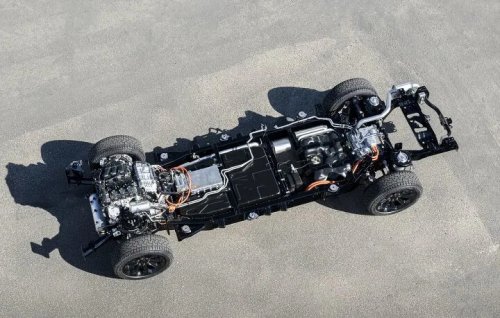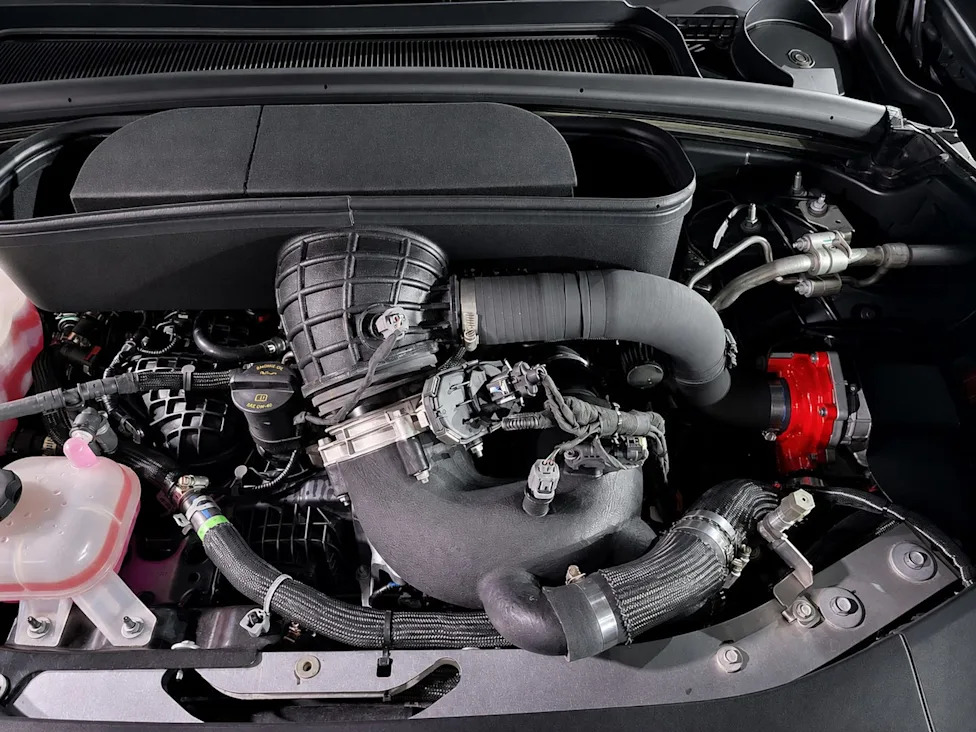
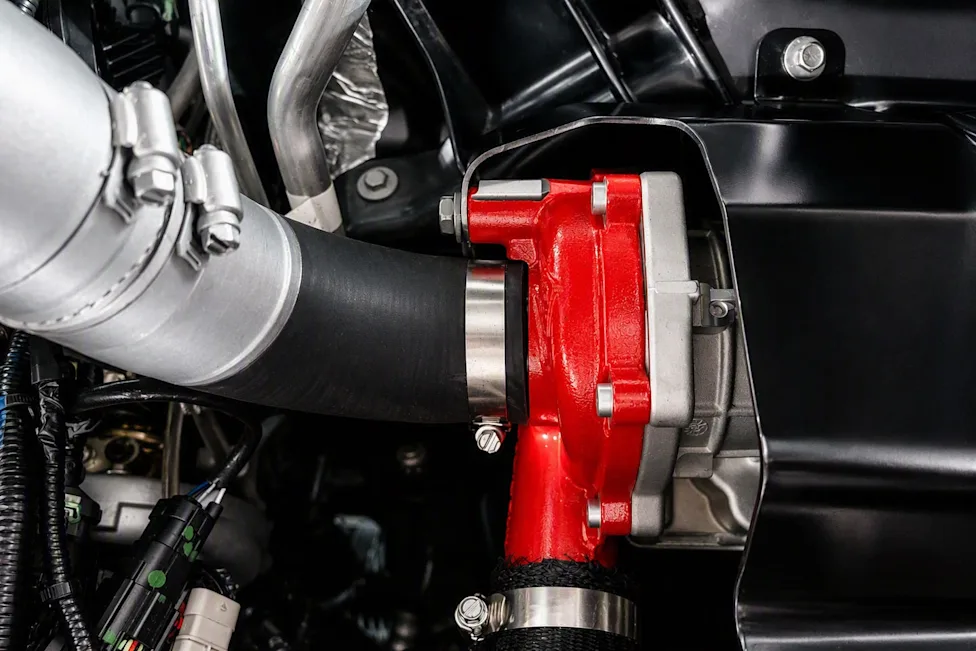



















Stellantis Thinks It Has Solved Turbo LagStellantisStellantis' resurrected SRT division, its performance arm responsible for things with names like Hellcat, has already started to explore the next evolution of performance powertrains.The automaker on Thursday unveiled a proof-of-concept system it calls eBoost Air, an electrically assisted turbocharging technology designed to essentially eliminate turbo lag without dampening the high-end power of large turbochargers.Turbo lag has long been one of the bane of large turbochargers. While bigger turbos can generate more horsepower at higher engine speeds, they require substantial exhaust flow before reaching peak efficiency, leaving a delay in throttle response at lower rpm.AdvertisementAdvertisementStellantis says eBoost Air targets that gap by placing an electrically powered compressor ahead of the turbochargers. When the driver stomps on the throttle pedal, electronically controlled valves route incoming air through the compressor, creating positive boost pressure almost instantly. As exhaust flow builds, the conventional turbochargers take over, and the system returns to its normal airflow path.The concept isn't a new one. Automakers including Mercedes-AMG, Porsche, Audi, and Ferrari have all played around with electrically assisted turbocharging in recent years, especially as emissions regulations have increasingly favor smaller, turbocharged engines.A close up of the eBoost Air system.StellantisFor Stellantis, however, eBoost Air is as much about the engineering process as the technology itself, it says. SRT as an engineering division was formally dissolved in 2021. But last year Stellantis revived it, and in just over a year since the group's return, it developed the novel turbo technology."Enthusiasts aren't interested in technology for the sake of technology," Tim Kuniskis, head of American brands and marketing for Stellantis North America, said in a statement. "But when technology improves performance with no downside, they're all in."The technology is currently paired with a prototype version of Stellantis' twin-turbocharged 3.0-liter Hurricane inline-six, though the company has not announced production plans.