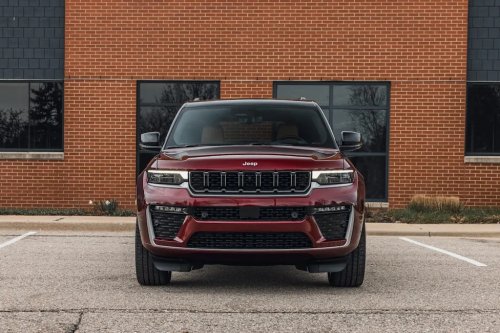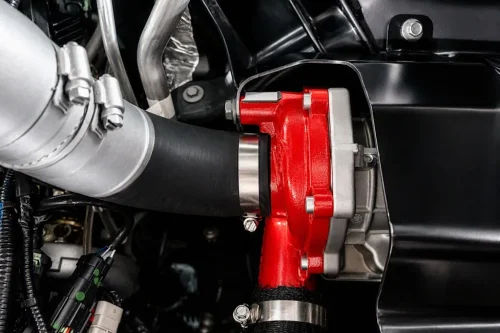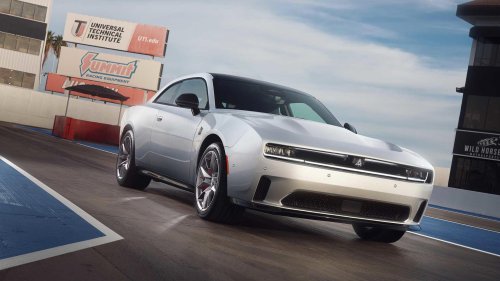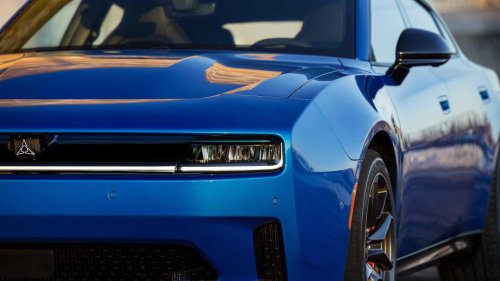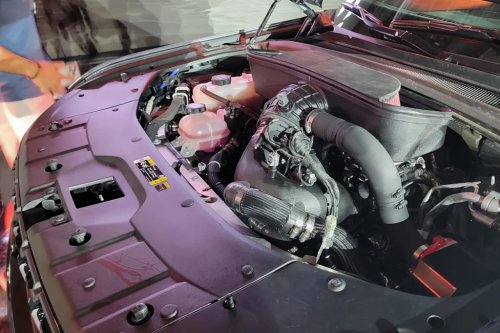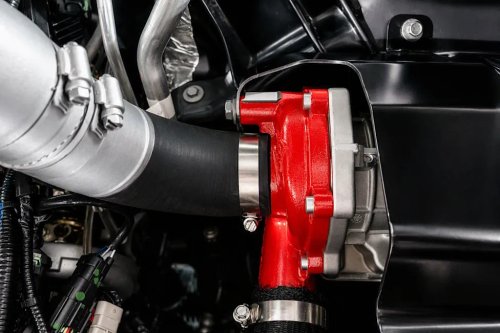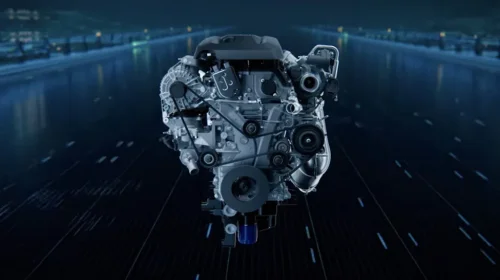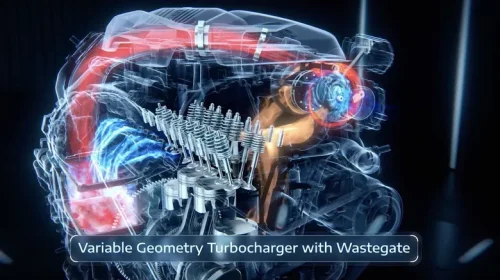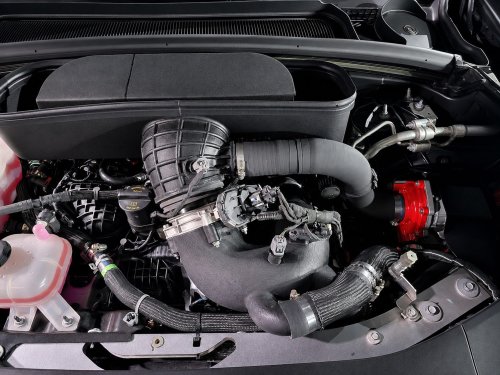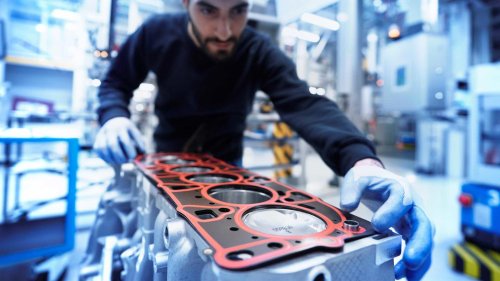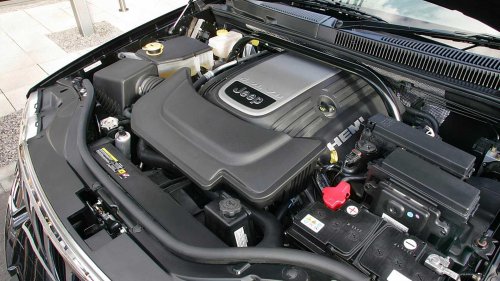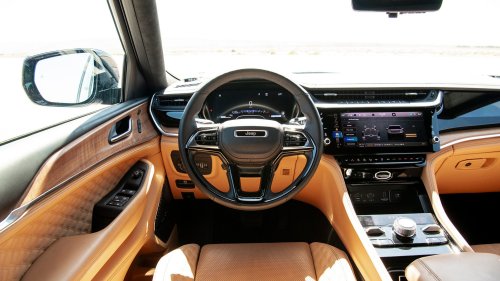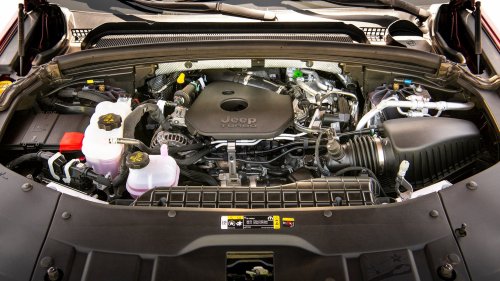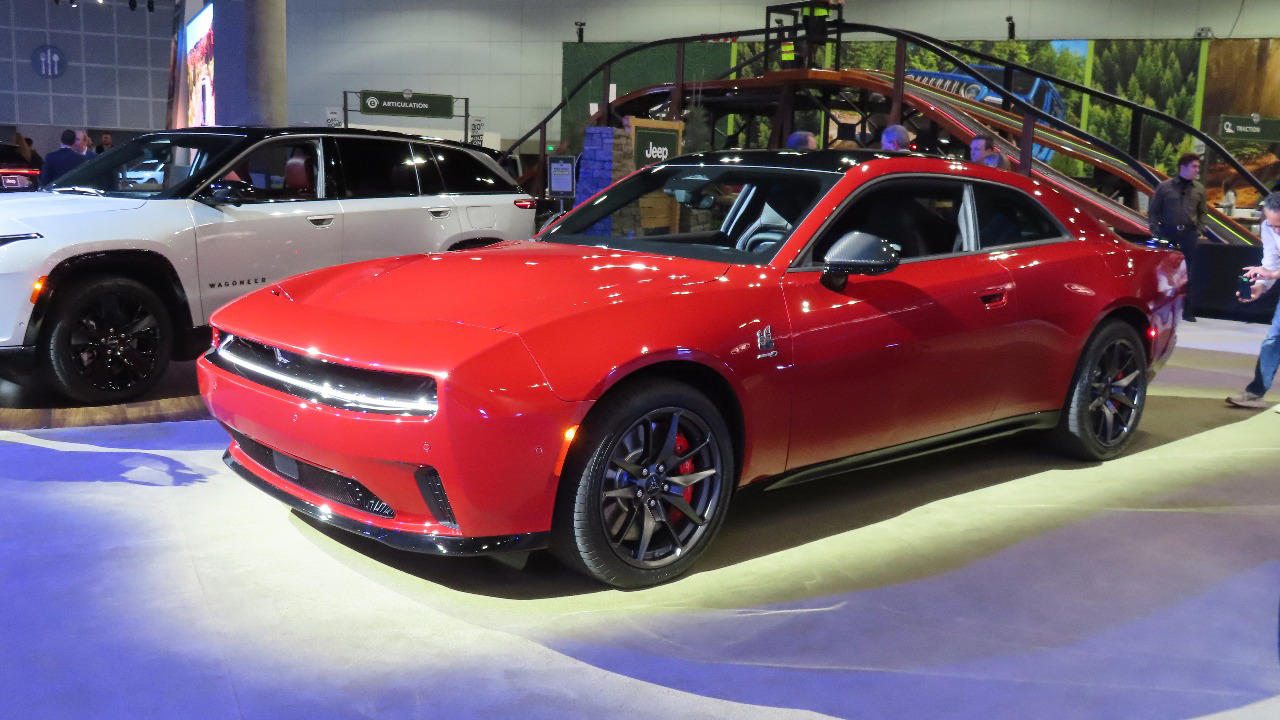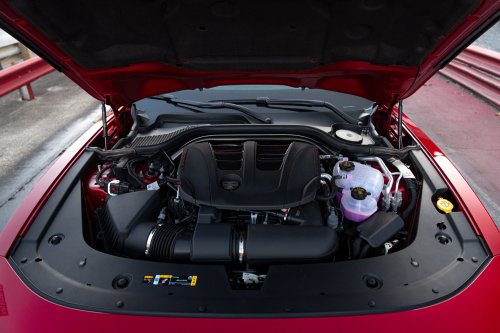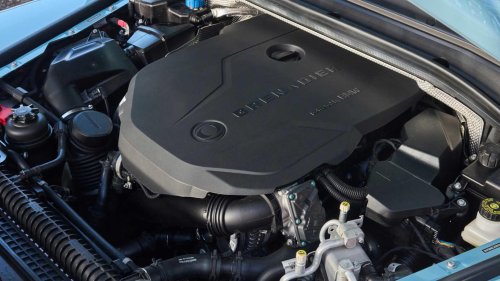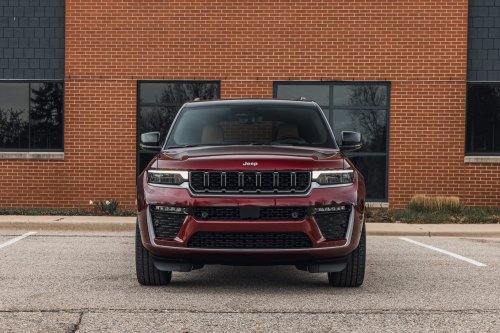
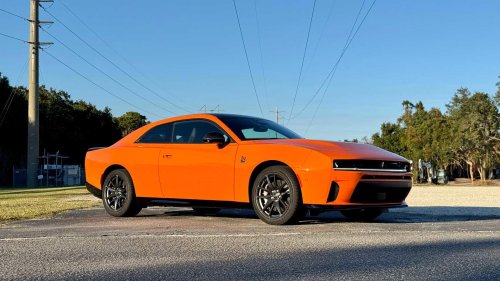
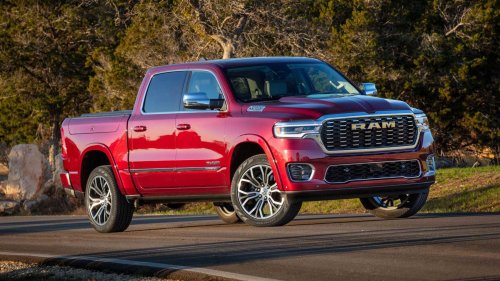
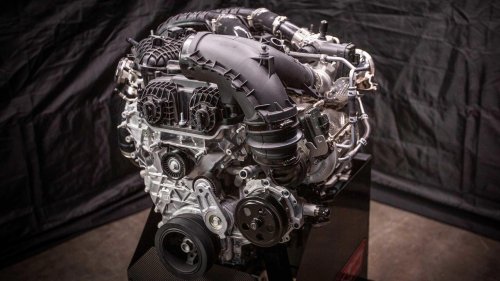
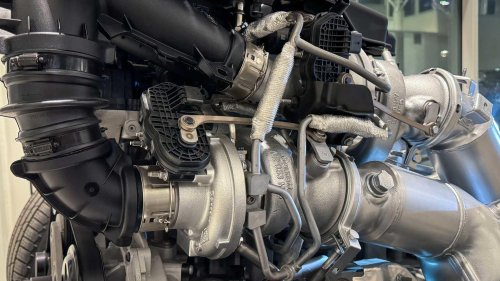
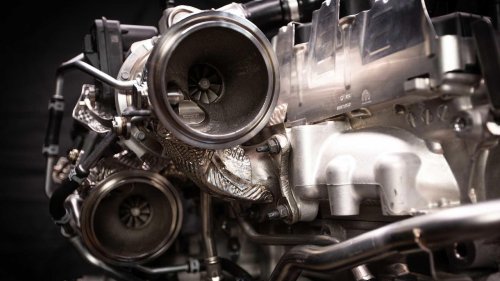
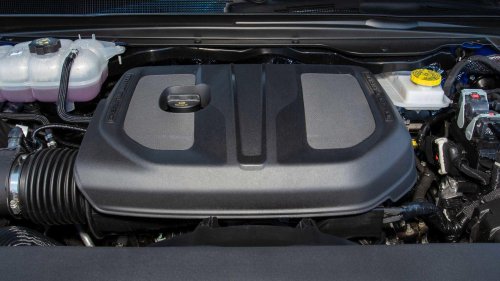
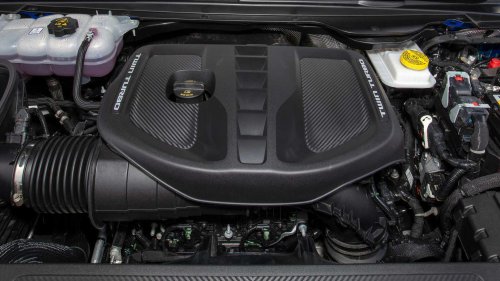
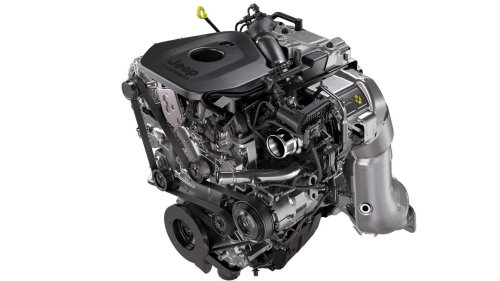



















The return of the Hemi V8 to Dodge and Ram has been exciting for many fans of combustion engines, trucks, and muscle cars. It's understandable, too – it's a characterful engine with a legendary name.The thing is, the engine that was created to replace it, the Hurricane straight-six, is arguably a better, more impressive piece of engineering. So, in the midst of all the V8 news and rumors, we felt it was worth giving the blustery block some much-deserved attention by digging into its details. When It Was Introduced And What It Comes In JeepStellantis first revealed the Hurricane in 2022, and at the time it was simply presented as a V8 alternative without a specific model attached to it. Of course, providing V8 performance made it pretty clear what models would probably get it: large trucks and SUVs, and performance cars.The first production use of the Hurricane engine was in the 2023 Jeep Wagoneer and Grand Wagoneer, introduced alongside the then new long-wheelbase versions of the full-size SUVs.The standard-output version was available in the regular Wagoneer, and the high-output in the Grand Wagoneer. The introduction of both the Jeep's engine and body options came a few months after the Hurricane was revealed. Soon after that came the announcement that separate crate versions of the Hurricane would be offered through Direct Connection.Jared Rosenholtz/CarBuzz/Valnet The next two models to get the Hurricane six were the Ram 1500 and Dodge Charger Sixpack. The Ram got it for the 2025 model year, and it infamously replaced the Hemi V8 altogether (before its recent return). Both standard- and high-output versions were available, with the latter appearing in the new Ram RHO. The RHO combined the chassis upgrades of the TRX with the high-output Hurricane. Last year, the Dodge Charger finally got the Hurricane, the first combustion engine for the model since its redesign, and it again got both versions of the engine. The Basics Of The Hurricane StellantisRegardless of Hurricane variant, they all share some basics. They all have a displacement of 3 liters, and they each have the same bore and stroke of 84 and 90 mm respectively. They each have a pair of 54-mm Garrett turbochargers, direct fuel-injection, high-pressure (5,075 psi) mechanical fuel pumps, and an air-to-water intercooler along with forged steel connecting rods and crankshaft. The crank is fitted with cross-bolted main bearing caps, and it sits in an aluminum engine block with a closed deck.Stellantis It's easiest to explain a closed-deck block by first explaining what an open-deck block is. An open-deck block has wide open passages on all sides for coolant to pass through. This means the cylinders in which the pistons move are just kind of sitting in some free space with coolant around them. A closed-deck block only has specific coolant passages drilled in, leaving material to directly connect the cylinders to the rest of the block, making it stronger.Stellantis The aluminum block is matched with an aluminum oil pan and cylinder head. The block also incorporates the exhaust manifold, with the turbochargers mounted directly to the engine block. These manifolds benefit from having coolant passages surrounding them to keep temperatures steady for improving emissions. All of these engines are also built at the Stellantis engine plant in Saltillo, Mexico, which is the same factory that builds Hemi V8s. The Unique Parts Of The Standard-Output Engine StellantisThe entry point for the Hurricane is the Standard-Output engine. The main differences come in a few components and how much boost it gets. The pistons are just cast aluminum, and the compression ratio is lower than the High-Output at 10.4:1. It has a single high-pressure fuel pump to reach the same 5,075 psi pressure in the fuel rail, and the intercooler has a single passage for charged intake air. Additionally, the turbochargers are set to provide a maximum of 22 psi of boost.Stellantis These components and specifications are the same for all Standard-Output Hurricane engines, and so they all have the same output. They make 420 hp and 468 lb-ft of torque. These engines can take regular fuel, but premium is recommended to get full performance. You'll also find this engine in the Dodge Charger Sixpack R/T, Ram 1500, Jeep Wagoneer and Jeep Grand Wagoneer. The engine is also available as a complete crate engine, called the HurriCrate or just the long block through the Mopar Direct Connection store. It's listed as the Cat 1, as a play on the Hurricane name and the rating system for the real life storms. The Unique Parts of the High-Output Engine StellantisMoving up to the High-Output Hurricane nets a number of upgrades. It features forged aluminum pistons with oil-jet coolers, dual high-pressure fuel pumps, and the intercooler has dual passages for air. The compression ratio is reduced to 9.5:1, which seems to be for accommodating the increase in boost pressure. Depending on the application, maximum boost pressure can be either 26 psi or 30 psi.With two different kinds of boost levels, there are different outputs for the High-Output Hurricane engines.The initial High-Output engine that was only available on the Jeep Grand Wagoneer used the 26-psi setting for the turbos, and it made 510 hp and 500 pound-feet of torque. That particular engine is no longer available, and now the Grand Wagoneer is only available with the Standard-Output engine.The 30-psi version of the engine is now used in versions of the Ram 1500, such as the top-rung Limited and the high-performance RHO. In those applications it makes 540 hp and 521 lb-ft of torque. It's also in the Dodge Charger Sixpack Scat Pack. The Charger has some small tuning differences, including a higher redline of 6,200 rpm, and these changes allowed Dodge to get a bit more power and torque at 550 hp and 531 lb-ft. This is also the high-output engine variant available through Mopar Direct Connection with the designation of Cat 3. The Six Has A Little Sibling Now StellantisThe main focus of this deep dive is the Hurricane six-cylinder, but Stellantis has created a four-cylinder that's basically a Hurricane with two cylinders cut off. Just like the bigger engine, the four-cylinder has a closed-deck aluminum block and aluminum oil pan. The displacement is 2 liters, and it has the same bore and stroke as the six. The rods and crankshaft are both forged steel, though the pistons are cast aluminum like in the Standard-Output six.In some areas, the four-cylinder is arguably more impressive than the six-cylinder. The compression ratio is higher than either six at 12:1, and boost is turned up to 35 psi. It's fed by a single turbocharger rather than two, but it still has an air-to-water intercooler. The smaller engine revs higher, as well, with a redline of 6,500 rpm. The engine even gets both port and direct fuel injection, rather than just direct injection. All of this allows the Hurricane four-cylinder to make 324 hp at 6,000 rpm and 332 lb-ft of torque at 3,000 to 4,500 rpm. The engine even does this on regular fuel.The first vehicle to get this new four-cylinder is the Jeep Grand Cherokee. The engine itself is built in Dundee, Michigan, and additional ones will come from a plant in Kokomo, Indiana. It will likely appear in many more models in the future, and Stellantis says that the engine can be paired with hybrid systems. When those might show up is an open question, since Stellantis has discontinued all of its hybrid options in the US, with the exception of the upcoming range-extender models.