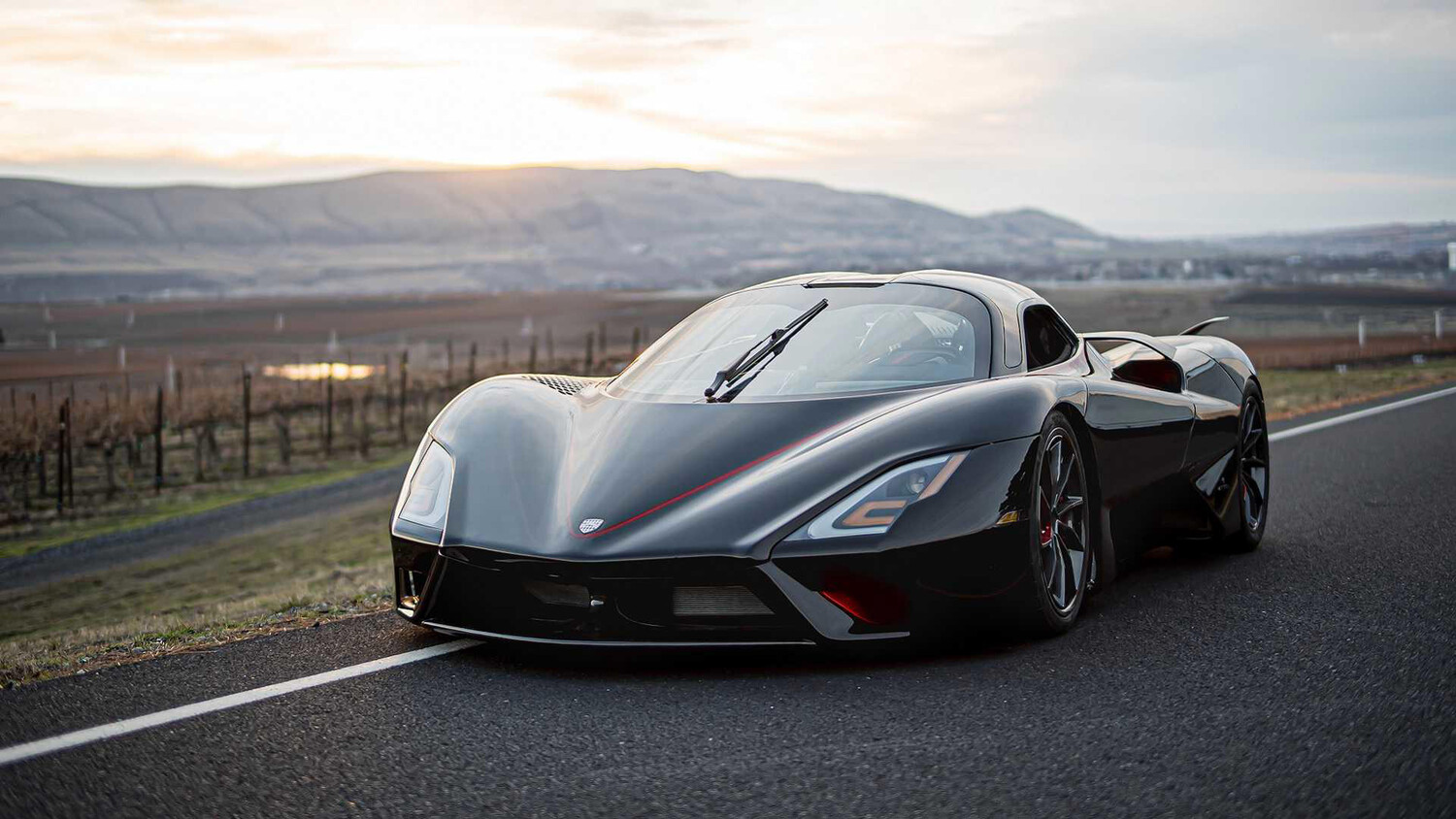
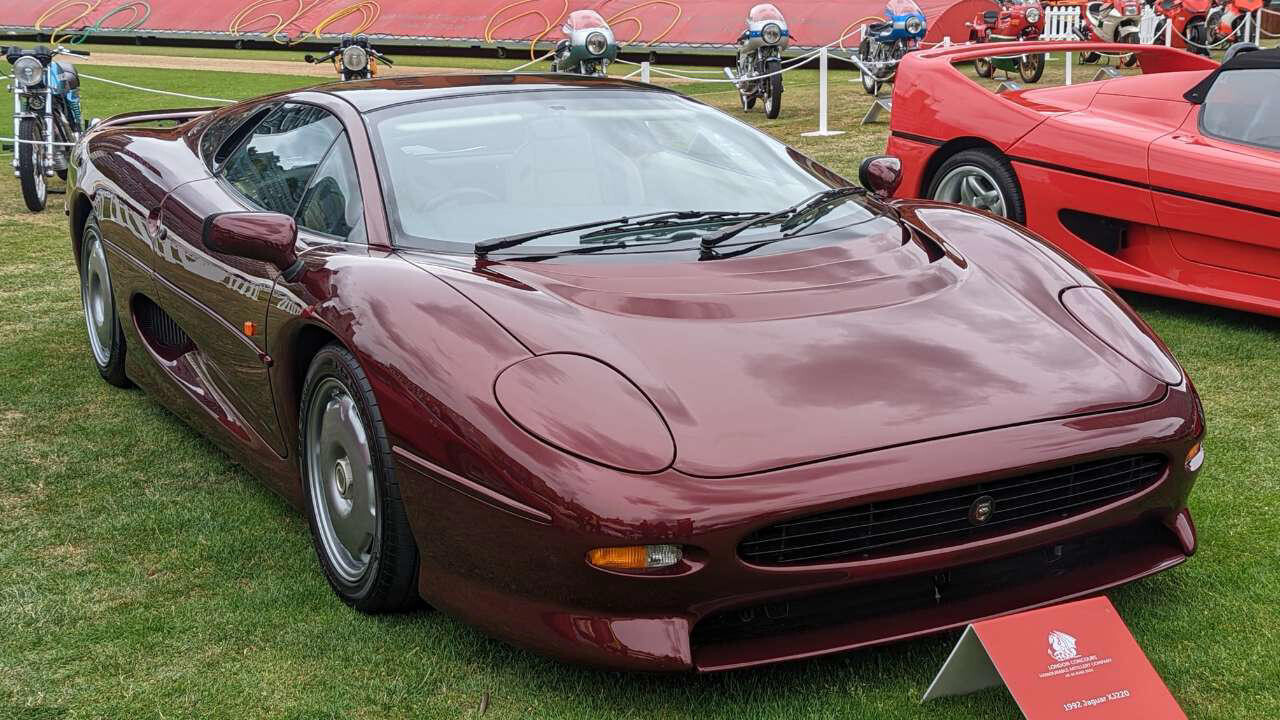
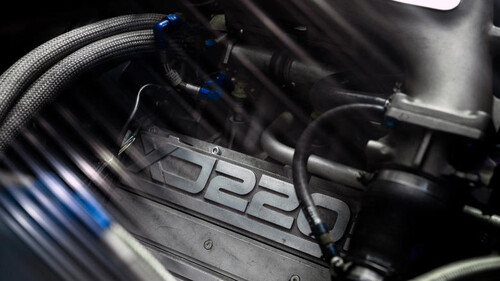
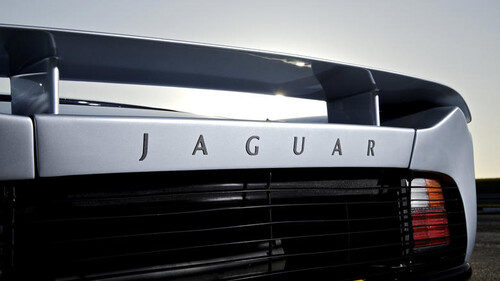
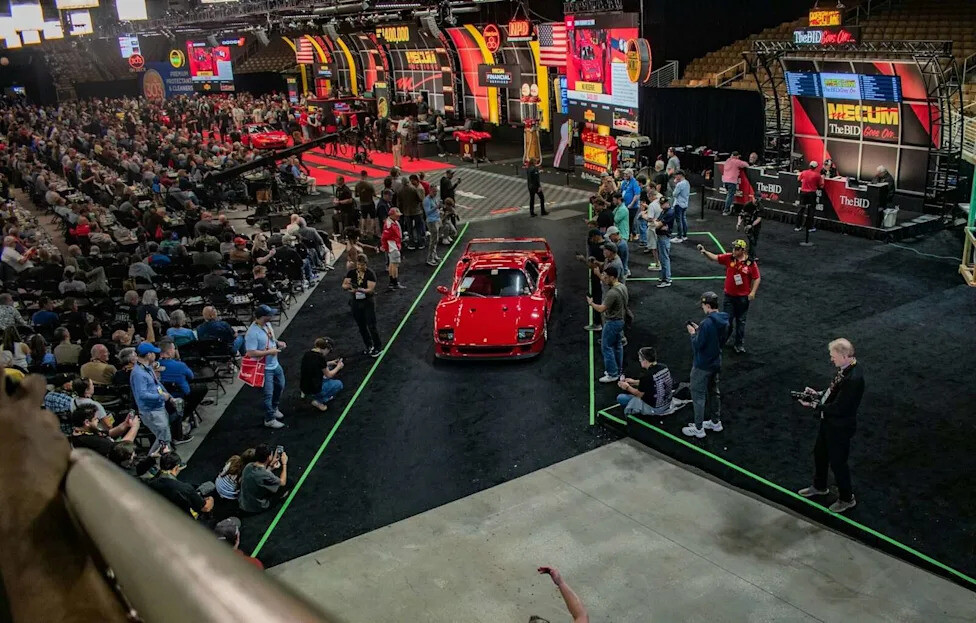
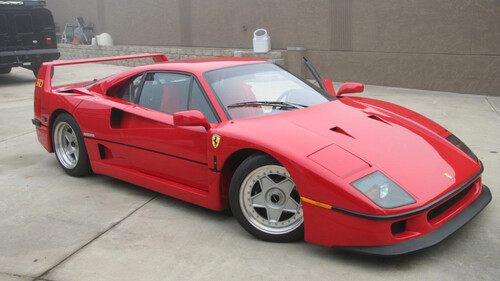
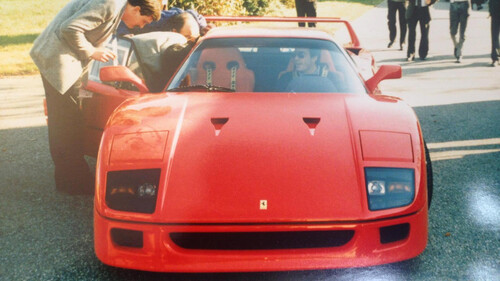
In the early days of the supercar era, things were all about speed. Automakers wanted to push the boundaries on how fast their cars could go. In that quest for the highest speed possible, there was one particular milestone they all wanted to reach. That was the 200 mph barrier. There was a genuine race to become the first to break it.Because multiple street-legal cars that could go faster than 200 mph came out in the 1980s, there's still a lot of debate since over who actually got there first. Surely, there has to be a clear-cut answer by now. What was the car to actually wear the crown, then? Well, we're going to break down the contenders and the arguments for them here. The 200 MPH Obsession - Why Breaking This Barrier Mattered So Much PorscheWhy did automakers get so obsessed with trying to get their Supercars to break the 200 mph barrier? Well, for a start, 200 mph is an impressive, round number. There's no getting away from that. It's also the kind of top speed figure that, up until around 30–40 years ago, was the preserve of race cars. Being able to build a street-legal car that could go faster than 200 mph genuinely was race car levels of performance. Additionally, it was a matter of pride and bragging rights. Becoming the first to build a car that could legitimately go faster than 200 mph would cement that automaker's name and brand in the history books forever. The Ferrari F40's Claim — The "Official First" That Made History MecumOne of the earliest production cars that people can all agree got anywhere close to breaking the 200 mph barrier is the Ferrari F40. Its official top speed was listed as 201 mph, and there have been plenty of runs where close to that was achieved.Car & Driver managed to achieve speeds of 197 mph during a 1991 road test, and there's the legendary story of Japan's "Mr. Ferrari" who recorded speeds of up to 197 mph on the Japanese highway network. But, neither of those actually truly broke that 200 mph barrier. Ferrari doesn't seem to have ever recorded an officially verified run of the F40's top speed itself, either. The F40 did have the fastest quarter-mile time of any production car in the world back then, though, clocking in at 11.9 seconds at 125 mph.For many people, that official top speed is enough to claim the Ferrari F40 as the first production car to crack the 200 mph barrier. It's put the F40 in the history books, and people will still claim it's the greatest analog supercar ever made. But, combined with those independent tests that didn't get up to that 200 mph mark, and a particular run of a different car that happened earlier, people aren't so sure. The Earlier Run That Sparked Debate RufUnless you really know your '80s supercars, you might not know about the RUF CTR Yellowbird. This is an odd, boutique-built car, based on the 911 Carrera 3.2. RUF chose the Carrera 3.2 instead of the factory 911 Turbo as the base of the CTR Yellowbird because it was slightly lighter and had a better drag coefficient. From there, RUF bored out the 3.2-liter engine to 3.4 liters and fitted it with twin turbochargers. The result was a car with an output of 463 horsepower and 408 lb-ft of torque. Combine that with the CTR Yellowbird weighing only 2,535 pounds, and the performance was absolutely extraordinary. This was hammered home by a test carried out by Auto Motor und Sport at the Nardo ring (we'll see this track pop up again in just a bit) in 1988, where it reached 213 mph. This was faster than a Porsche 959 S (211 mph), two different examples of the Ferrari F40 (199 mph) and a Mercedes AMG 6.0 32V "Hammer" (179 mph) that were run as a comparison.You might think that this has solved the debate. It's got to be the Yellowbird that was the first production car to crack 200 mph, surely? But, there's a big catch to this. Auto Motor und Sport's run at the Nardo ring wasn't a two-way average in multiple directions. For a speed record to count under the rules set by both the FIA and Guinness World Records, two runs in the opposite direction have to be done within an hour and an average top speed has to be taken between the results of both runs. Jaguar's Run That Created Controversy JaguarIf neither the Ferrari F40 nor the Ruf CTR Yellowbird count, then what about the Jaguar XJ220? That car is clearly recorded as having achieved over 200 mph, after all. In the Jaguar XJ220's case, it may very well be the first car here we could say officially managed it. In a top speed run in its stock form during its testing phase, the Jaguar XJ220 did manage to achieve a top speed of 212.3 mph at the Nardo Ring in 1992 (the same place where the Ruf CTR Yellowbird did its run a few years previously). Officials from Guinness World Records were present for the run, as were journalists from Road & Track and Car magazine, along with a camera crew from BBC Top Gear, and it was done under the official rules.You'd think, then, that Jaguar would have just gone home and been done with it. They'd smashed the 200 mph barrier, and done it completely by the book. But, Jaguar wanted to go faster. They wanted the marketing triumph they could get by getting that little bit more speed out of the XJ220. So, they decided to modify the car. They cut the catalytic converters out and replaced them with a straight-through exhaust (this would restrict the engine less), and the gearing was lengthened in the hope that it would boost the top speed.That's exactly what happened: a 217.1 mph top speed run was recorded. Controversially, this is the run the Guinness World Records recorded as the official top speed of the XJ220. While it wasn't illegal to run cars without catalytic converters in Europe at the time, it was still a deviation from the factory spec of the XJ220 (and a change that reportedly gave the car as much as 50 extra horsepower). Why Production Car Speed Records Are Still Debated MecumDespite a lot of standardization over the years, production car speed records still get debated all the time. That's not just the case with the examples we've already talked about here. Even to this day, claims that an automaker has managed to make the fastest production car in the world or the first production car to go over a certain speed get scrutinized a lot. Why? There are still very good reasonsfor them to be. A couple of those reasons are the same ones that caused debate over the runs we've already talked about. Another one, though, has stemmed out of a much more recent run that shook the automotive industry with controversy. Different Verification Standards Have Caused Problems RUFAs you'll have already gathered from the issue surrounding the RUF CTR Yellowbird's run, there are a lot of issues that show up when different verification standards are used. If a run in a single direction's done, instead of two in opposite directions with an average taken between them, that single-direction run can't be submitted as an official speed record. While it does count for something as a proof of concept of how fast a car can be, that's just one instance of a car managing that. For it to be considered as a true top speed, it has to be repeatable. Record Runs Are Often Massaged By Modifying Cars McLarenAs we've seen in the Jaguar XJ220's run, it isn't unknown for manufacturers to massage the results a little by modifying the cars that were used in the run. This kind of massaging of results by manufacturers was used by McLaren later to set the official production car speed record in the F1.The McLaren F1 that was used for the record attempt was a prototype car. Right off the bat, that's not a production-spec model. On top of that, the prototype F1's gearing was lengthened so it could reach a higher top speed. The production-spec F1's gearing makes it top out at around 230 mph. While that's still a very impressive top speed for a supercar from the 1990s, it just doesn't seem quite as amazing as that 240 mph figure McLaren achieved with the modified prototype. Sometimes, Automakers Don't Tell The Truth SSCIn the first two points we've discussed here, the issues with the top speed runs focus solely on the methods used to achieve them. Those cars did legitimately achieve incredible speeds — they just had a bit of help doing so. There has been at least one example, though, of a time when an automaker provided false information about how fast its car was. This was the infamous case of the SSC Tuatara, which (for a brief period) became one of the most well-documented scandals in the automotive industry.SSC claimed that the Tuatara hit an astonishing 331 mph on a top speed run they carried out themselves and filmed in 2020. But, various automotive experts started deconstructing the footage and claimed that it didn't match up to SSC's claims. Furthermore, Dewetron (the company that provided the GPS equipment used in the run), refused to endorse the 331 mph top speed. In 2021, SSC finally stated that the Tuatara hadn't even broken the 300 mph barrier, let alone got up to 331 mph like had been originally claimed. SSC's claim as to why the original scandal happened was that the speed data they shared with the general public was incorrect. The SSC Tuatara still hasn't verifiably broken the 300 mph barrier in any top speed run, with the fastest recorded run being a two-way average of 282.9 mph.Sources: Car & Driver, Ferrari, Jaguar, RUF, SSC