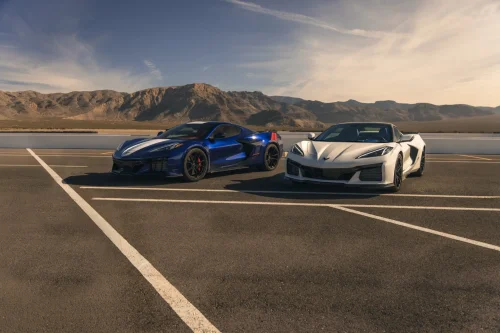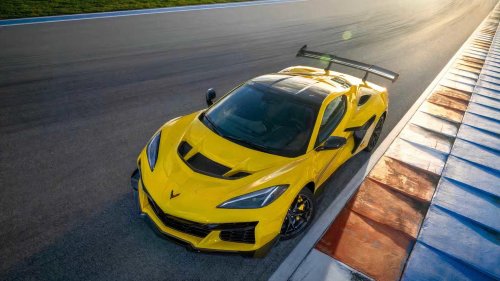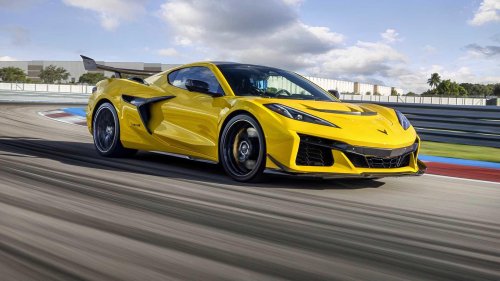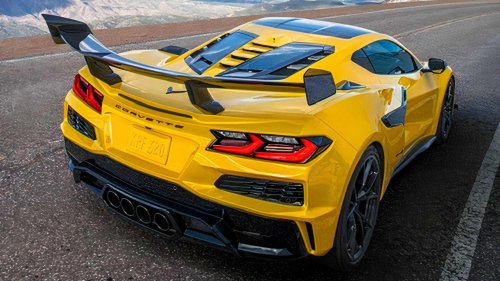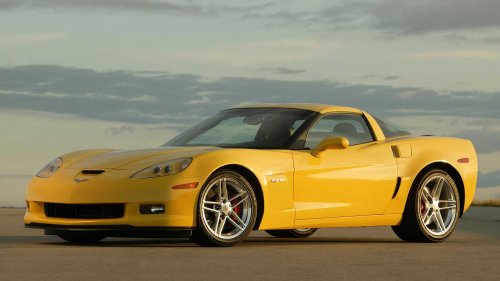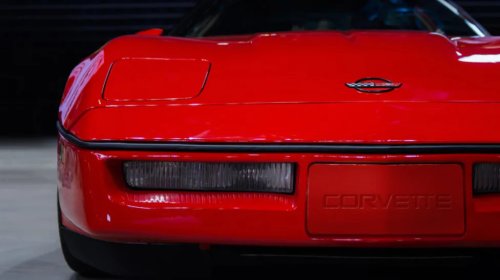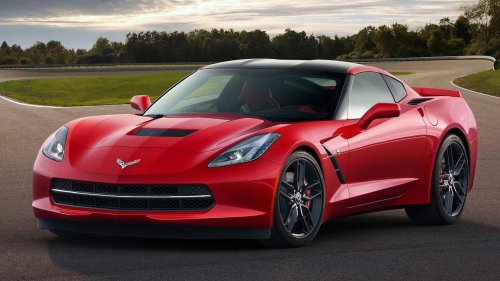
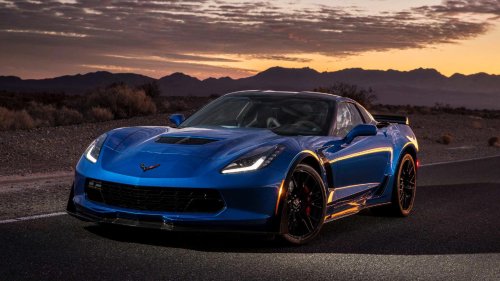
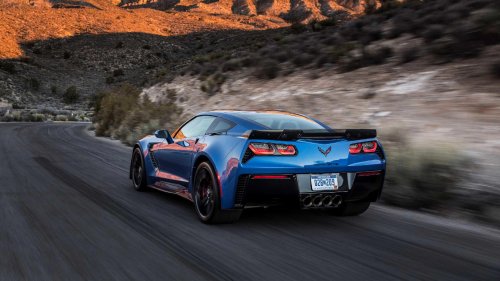
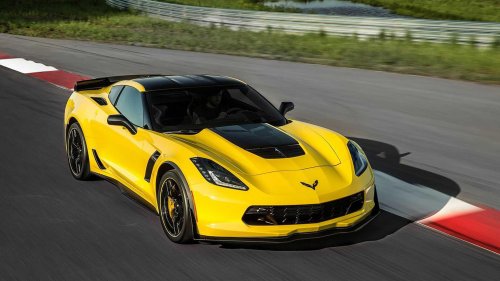
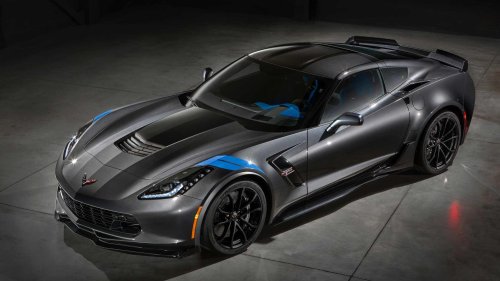
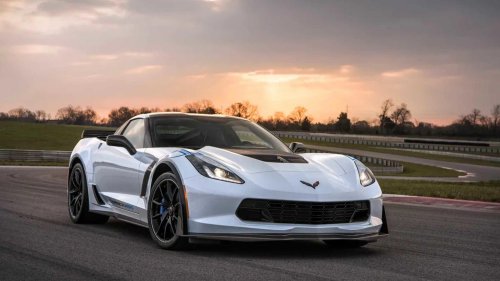
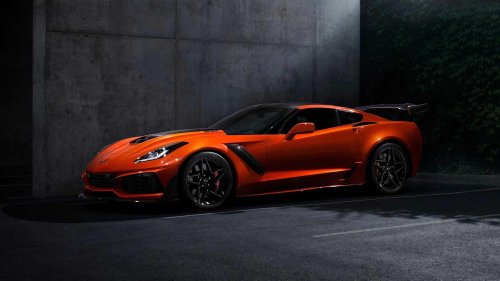
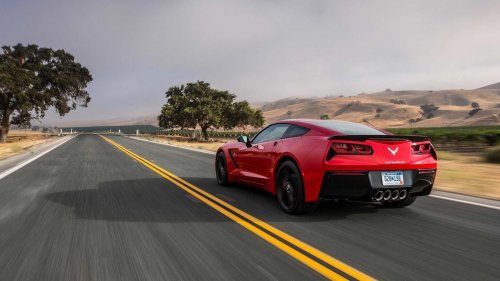
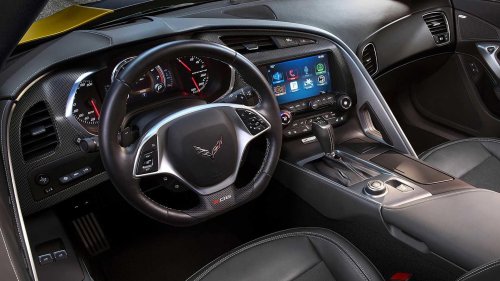



















Jump LinksWhat years of the C7 Corvette have serious problems?Which C7 Corvette should I stay away from?Which is better, the 1LT, 2LT, or 3LT?In which years was the C7 Corvette produced?The Chevrolet Corvette has undergone some huge changes over the last ten years. You could argue that going from a front-engined layout to a mid-engined one is the biggest change in its 70-year history, which makes the C7 Corvette generation one of the most important. This is because the C7 generation was the last Corvette to be front-engined, the last one to be available with a manual transmission, and the last one not to have any hybrid versions released, meaning some would say it was the last “true Corvette.”If you are in the market for this swansong Corvette generation, you may want to know which C7 Corvette models were introduced in any year, and also the best and worst years for reliability. We are, therefore, going to be breaking down what each model year of the C7 Corvette offered in terms of new variants and any other changes, as well as what the experience of buying it and keeping it on the road will be like.This article breaks down each of the model years in which the seventh-generation Chevrolet Corvette was produced, spanning five years between 2014 and 2019. 2014: The Delayed Debut ChevroletThe C7 Corvette was in production for five years, all in all, but if things had gone according to plan, it would have been far longer. Development of the seventh-generation Corvette started in the late 2000s, and it was supposed to go into production in 2011, but several American automakers, including General Motors, were standing on the precipice of insolvency at that time. It wasn’t until 2013 that the seventh-generation Corvette was first shown to the world at the North American International Auto Show. With a design that was far more aggressive but still full of retro cues, it made quite a splash. The biggest retro cue was the name, as it was the first Corvette since the third-generation to be called the Stingray.Chevrolet With 2014 being the first of the C7 years, the Stingray was the only version, and it had a then-new 6.2-liter small block V8 engine that pushed out 455 horsepower and 460 lb-ft of torque. It drove the rear wheels via either a seven-speed manual or a six-speed automatic transmission, and it could get from 0–60 in under four seconds. There was a Z51 performance package that brought dry-sump lubrication, better brakes and suspension, and bigger wheels. In terms of reliability, despite being the first year of its production, the 2014 Corvette C7 has fewer reliability concerns than some of the years that followed, with just an airbag recall and a cracking fuel tank being the potential problems to look out for. 2015: New Variants And New Problems ChevroletThough 2015 was only the second year of the C7 Corvette’s production, there were major changes made to the Corvette lineup when you factor in what was different for all Corvettes, and the supercar-rivaling Z06 variant that was launched this year. The six-speed automatic transmission was replaced with a superior eight-speed auto box, and there was a new performance data recorder that could use cameras and super-accurate GPS to record lap times, and two new design packages. One of those design packages was the Atlantic package, which was more grand-touring-oriented, while the Pacific package was focused more on performance. Other than this and the Z07 package, which brought carbon brakes, Michelin tires, and some carbon aero bits, there wasn’t a huge change to the performance, which is where the Z06 comes in.Chevrolet The Z06 featured a 6.2-liter V8 engine that was supercharged, giving it 650 hp and an equal amount of torque, making it, at the time, the most powerful General Motors car ever. As well as all that extra grunt, it received unique aerodynamics like a carbon splitter at the front, a carbon spoiler at the back, and a larger grille and unique hood design to keep the engine cool. It also had a removable carbon fiber roof like the Stingray, making it the first convertible Z06 since the 1960s. The 2015 model year did, however, see far more reliability issues, with more complaints on the NHTSA and Car Complaints portals. The most common problems were with the automatic transmission, which could jerk and judder, requiring the torque converter to be replaced after a shockingly low number of miles. More shaking could be caused by a fault with the factory-installed tires during sharp turns. 2016: A Few Visual Updates ChevroletIn 2016, the Corvette saw far fewer changes than it had in the previous year, with none made to the C7 Corvette specs, while the Stingray and Z06 remained the only two versions produced. The cosmetic changes the Corvette saw this year came in the form of Twilight Blue, Spice Red, and Jet Black suede, all of which resulted in special colors for the interior and unique accents on the exterior. Each of them had a corresponding exterior color, with others also being available for some extra variety. There was also a special edition called the C7.R, which brought some bespoke cosmetic changes with yellow stripes and brake pads, sports seats, and plenty of suede in the cabin, as well as several nods to Corvette racing history with plaques and sills. The MY2016 Corvette saw fewer owner complaints overall regarding reliability issues than in 2015, but still more than in 2014. The main problems were cracked or warped wheels and, in some cases, blown engines, which were caused by machining issues at the time. 2017: A Third Variant Joins The Range ChevroletIn 2017, the Corvette once again saw no major changes to its recipe. There was still the Stingray, which served as the base Corvette model, and the Z06, which was the more expensive high-performance variant. This model year did, however, see the arrival of the Corvette Grand Sport, which would sit in-between these two and provide a “best of both worlds” experience. It would achieve this with the same naturally aspirated V8 from the Stingray, but with the performance upgrades and more widebody design from the Z06, and finally a unique wheel design and springs as part of the magnetic ride control. A special Grand Sport Collector's Edition was also produced, which featured Tension Blue stripes on the front fender and the interior. Unfortunately, 2017 was not the best model year when it comes to the C7’s reliability, and it actually has more complaints than any other year on Car Complaints. The main issue was cracked wheels, which could cause vibrations at high speeds or even flat tires. The power steering could also fail, but this was later fixed with a recall. 2018: The Best Year For Reliability ChevroletThis was the year that the Chevrolet Corvette celebrated its 65th anniversary, and so a special edition to mark the occasion was in order. It was called the Carbon 65 edition, and both the Z06 and the Grand Sport were available in this version. Limited to just 650 units globally, it was painted exclusively in Ceramic Matrix grey, with unique graphics and badges on the inside and out, and carbon fiber elements throughout. The only other change here was that all Stingrays now came with standard 19-inch front wheels and 20-inch rears. The MY2018 Corvette makes up for a lack of big changes by being quite possibly the best C7 Corvette model year for reliability, being hit with far fewer complaints than even the 2014 C7 Corvette. The only issues were those of cooling, which all C7 Corvette engines experienced, and likewise, with the wheels, but overall, for the least number of headaches after purchasing, this is the best year to buy. 2019: The Front-engined Vette’s Supercharged Send-off ChevroletWhen the C7 Corvette entered the 2019 model year, it did so with General Motors having announced that it would be the last one before the eighth generation would arrive the following year. Because that upcoming Corvette was going to be mid-engined, this would be the last model year for the Corvette as we had known it up to that point, so it couldn’t exactly go quietly. The most recent and last variant of the C7 Corvette would be the ZR-1, which had a new LT5 supercharged V8 engine that produced 755 hp and 715 lb-ft of Torque. This was largely thanks to the 2.65-liter supercharger, which requires 110 hp to run it, but provides 290 hp in return. It also visibly has the most aggressive aero package, and it was developed in conjunction with the Corvette racing team. Despite being the final model year of the C7 Corvette’s life, there are previous years that are significantly more reliable than this one. The 2019 model year might not have had as many complaints as the other stinker years, like 2017 and 2015, but there are still issues with the airbags, the wheels, and engine overheating, which means this year should be treated with caution. Conclusion: Should You Buy The C7 Corvette In 2026? Chevrolet With this wealth of knowledge now at your disposal about each of the model years of the C7 Corvette’s life, you are probably wondering if it is a good idea to consider one as your next used performance car buy. If so, it is important to be aware of how much you can expect it to cost to buy and maintain, as well as if there are any model years that should be avoided. The C7 Corvette might have come down in price slightly, but it is holding its value surprisingly well. The C8 has, if anything, depreciated more thanks to the supply and demand issues when it launched in 2020 no longer being a thing. Its better performance means it does boast higher used values, but the original Corvette characteristics of the C7 might make it more appealing for many.Chevrolet Using our price trends feature, you will find that the first couple of year models can be had for a lower price, under $40k, but from 2017 onwards, the average price is over $50k. A Z06 will be over $60k, and a ZR1 will always have a used price in the six figures. The model year we see the biggest spike in value for is 2018, and this makes sense, as if there was any model year we had to say would be the best for reliability, it would be this one. There is no Corvette that won’t cost you a bundle annually to keep it on the road, as things like servicing, new tires or new brakes due to wear mean you need around $1,500 a year. For some of the more costly problems like wheel warping or cracking, engine overheating, or transmission issues, you will likely be paying this much again, unless you need a full replacement for those parts, in which case, you could be paying up to $5,000. FAQs What years of the C7 Corvette have serious problems? There is no C7 Corvette model year that doesn’t have any reliability problems. Even examples from 2018, which is arguably the best C7 Corvette model year for reliability, will not be completely free of problems, and checking that they have been well looked after will still be important. What you are probably wondering, however, is which years are the most problem-prone, and based on the reliability data that we have looked at, the most problematic C7 Corvette years are 2015, 2017, and 2019. Which C7 Corvette should I stay away from? As mentioned above, there are three years - 2015, 2017, and 2019 - which are best avoided. This is due to issues like warped wheels and brakes, and engine overheating, and this will affect more hardcore models like the Z06 even more. Examples of C7 Corvettes from the most problematic model years may not necessarily be a nightmare to own, provided that any recalls that were issued have been carried out, and a history of repairs that were needed has been addressed. Which is better, the 1LT, 2LT, or 3LT? The names 1LT, 2LT, and 3LT denote the three different trim levels that the C7 Corvette Stingray was available in. They were called 1LZ, 2LZ and 3LZ for the Z06, and 1ZR, 2ZR and 3ZR for the ZR1. These different trim levels will not make any fundamental difference to the Corvette’s driving experience or performance, but rather affect what equipment it has fitted. If you want the C7 Corvette you buy to have things like ventilated seats, a head-up display, or that performance data recorder mentioned earlier, the higher trims will be better. In which years was the C7 Corvette produced? The seventh-generation Corvette arrived in time for the 2014 model year after many delays; it was originally meant to launch in 2011. It was produced over five years, from 2014 until 2019, and it was replaced by the mid-engined C8 a year later. This means the C7 saw six individual model years.