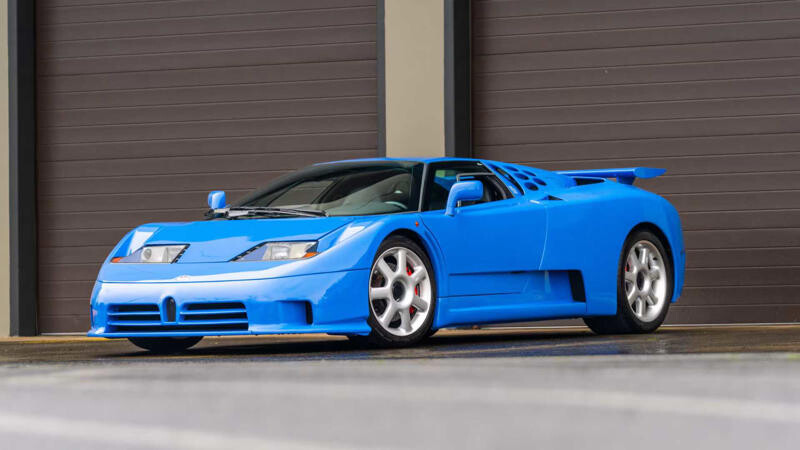
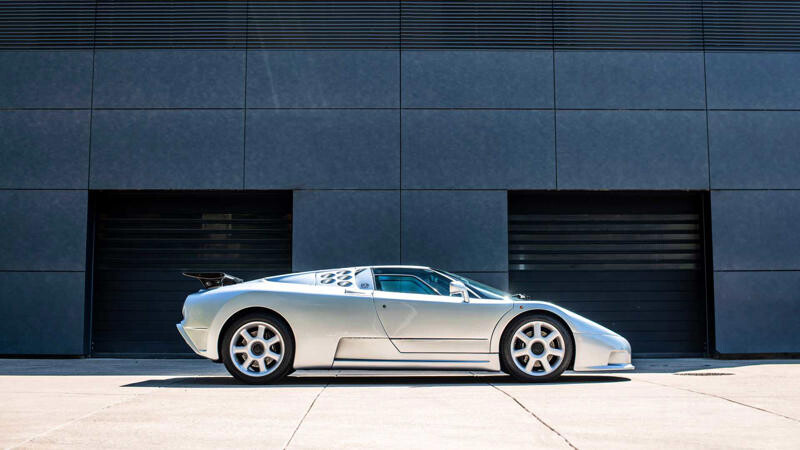
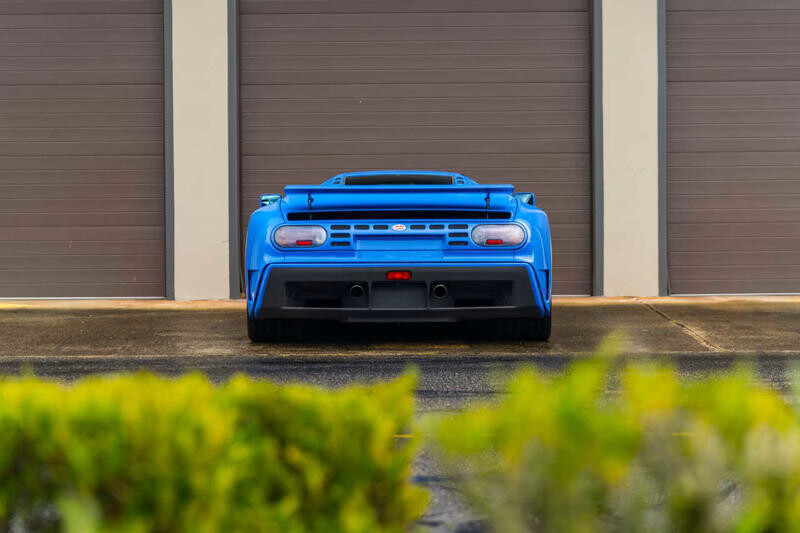
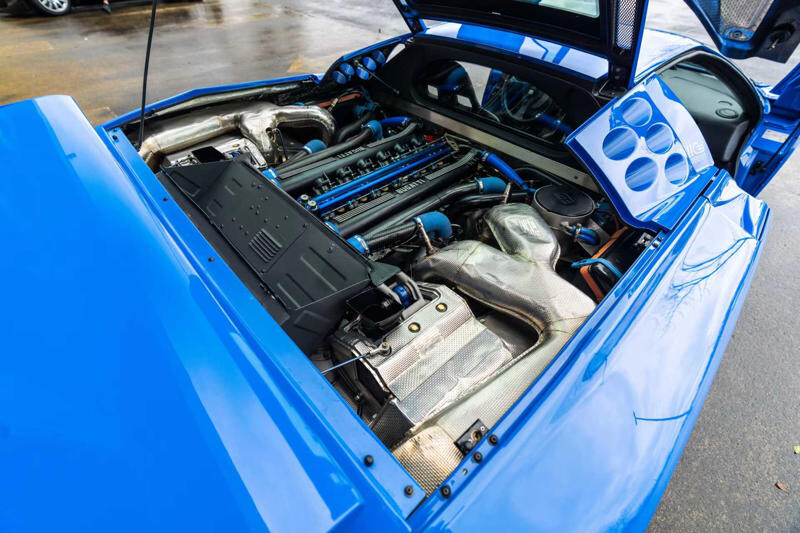
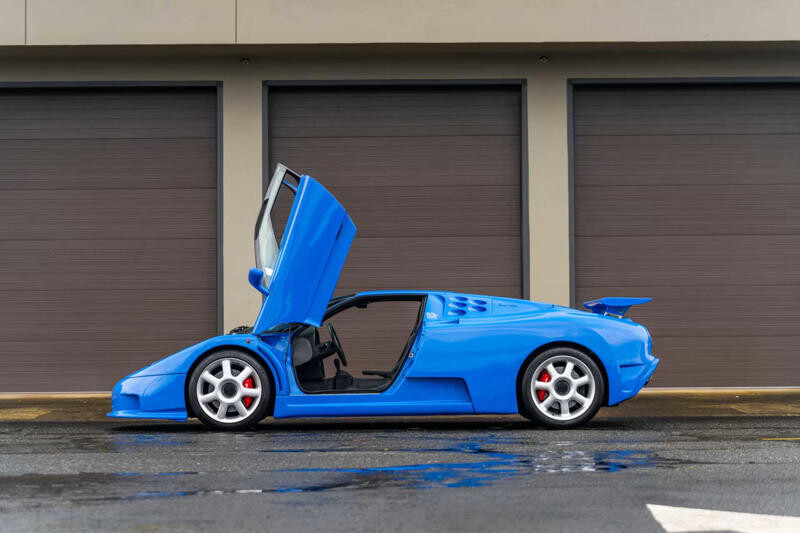
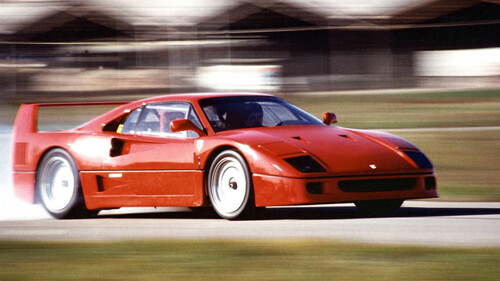
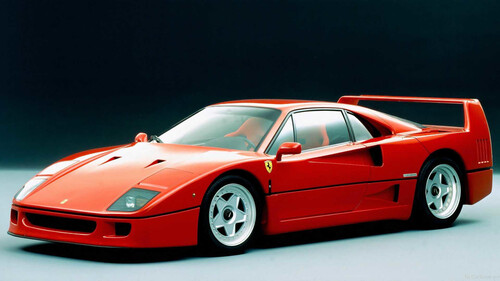
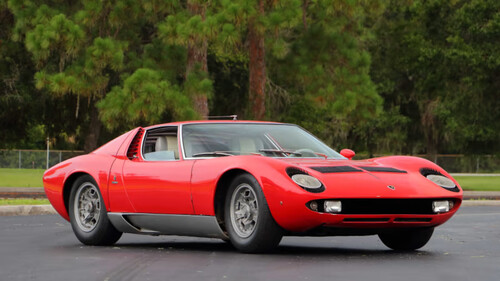
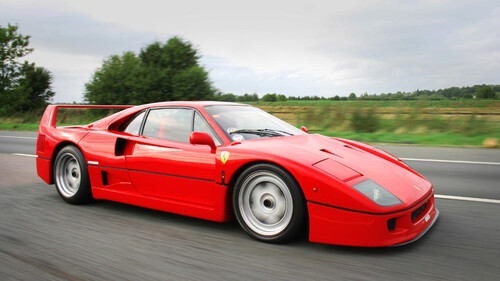
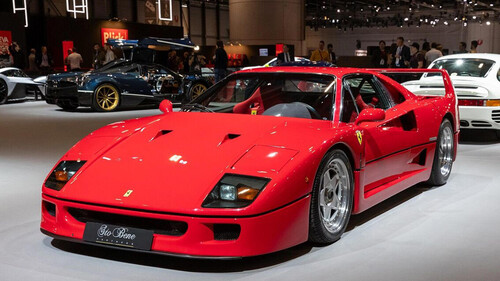
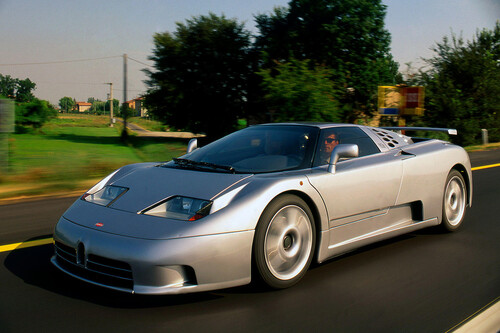
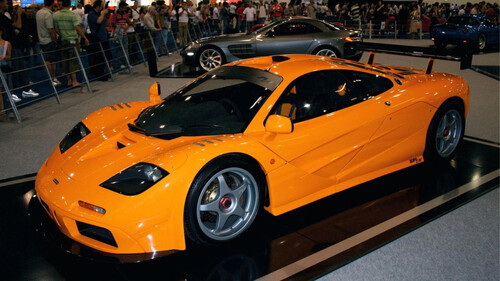
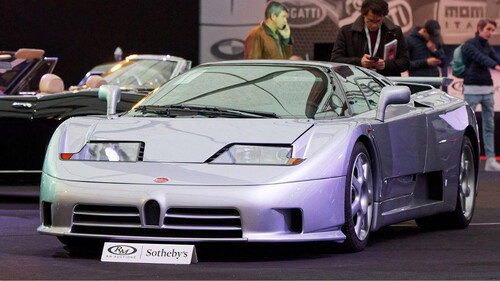
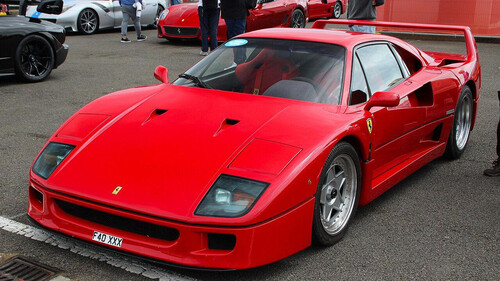
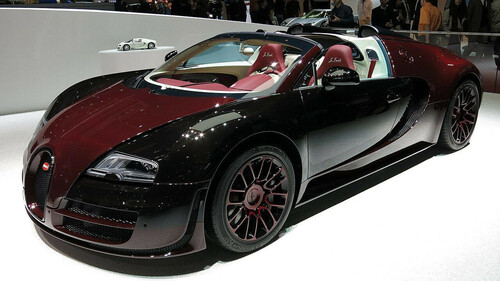
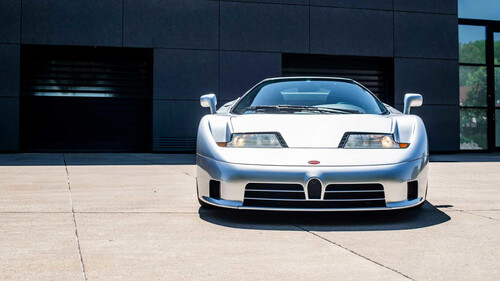
In the early 1990s, the supercar world was locked in an arms race defined by a simple formula. Mid-mounted engine, rear-wheel drive, and as much horsepower as the chassis could handle. Maranello and Sant'Agata Bolognese were deep in their eternal rivalry. Woking was quietly assembling what would become the fastest production car on the planet, and Jaguar was trying to justify a controversial V6 swap in its flagship.Into this arena stepped a name that most of the automotive world had written off as history. Bugatti, the storied French marque that had not produced a car in decades, was attempting a resurrection. What its engineers built in a purpose-designed factory in northern Italy would turn out to be the most technically ambitious supercar of its generation. Almost nobody noticed. What It Meant to Build an AWD Supercar in the Early 1990s Mecum All-wheel drive in the early 1990s belonged to rally stages, not supercars. The Audi Quattro had proven that sending power to all four wheels could dominate loose-surface racing, and Subaru and Mitsubishi were following that playbook in the World Rally Championship. But on tarmac, at triple-digit speeds, every serious manufacturer believed that rear-wheel drive was the only credible layout for a high-performance car. Ferrari built the F40 that way. Lamborghini built the Diablo that way. The McLaren F1, still in development, would be built that way.The engineering logic was straightforward. Rear-wheel drive saved weight, reduced mechanical complexity, and gave the driver a purer connection to the road. Adding a front differential, a transfer case, and extra driveshafts to a mid-engine layout meant more mass, more parasitic drivetrain loss, and more things to break. For a car chasing top speed records and lap times, the conventional wisdom said all-wheel drive was a compromise that solved a problem supercars did not have.One team of engineers in Campogalliano, Italy, disagreed. They believed that the next generation of supercars would need all-wheel drive not as a crutch but as a performance multiplier. Their argument was simple: what good is 550 horsepower if the rear tires cannot put it to the ground? As power figures climbed, traction was becoming the limiting factor. The car they were building would not just send power to all four wheels. It would do so through a system sophisticated enough to bias torque rearward under acceleration while maintaining stability at speeds above 200 mph. It was an approach to all-wheel drive that the rest of the industry would not adopt for another decade. The Bugatti EB110 GT Was a Supercar a Decade Ahead of Its Time MecumThe Bugatti EB110 GT debuted on September 15, 1991, exactly 110 years after the birth of Ettore Bugatti. The name encoded the tribute directly. Behind the two-seat cockpit sat a 3.5-liter V12 with 60 valves and four IHI turbochargers, producing 553 hp and 451 lb-ft of torque. Power reached all four wheels through a six-speed manual gearbox and a permanent all-wheel-drive system with a viscous locking differential, a rear limited-slip differential, and a carefully calibrated torque split of 27% front, 73% rear.That ratio was not arbitrary. Nicola Materazzi, who joined the project after initial development and had previously engineered the Ferrari F40, recalculated the split based on dynamic load transfer under acceleration rather than static weight distribution. The result was a car that could deploy its power with a level of traction no rear-wheel-drive rival could match.Bugatti The chassis was equally radical. Bugatti Automobili commissioned Aerospatiale, the French aerospace firm, to construct a carbon fiber monocoque. In 1991, carbon fiber was still exotic even in Formula One. No production supercar had used a full carbon tub at this scale. The double wishbone suspension at all four corners rode on bespoke 18-inch BBS magnesium wheels, and Brembo supplied the brakes.The bodywork, which evolved from an original Marcello Gandini design through revisions by Giampaolo Benedini, featured active aerodynamics: a rear wing that deployed at speed and air flaps near the rear window that could be raised manually or adjusted automatically. The EB110 GT weighed 3,567 lbs, hit 60 mph in 3.4 seconds, and topped out at 213 mph. It held the world record for the fastest production car when it was homologated at the Nardo test track in 1992. Why the EB110 Spent 15 Years in the Shadows Mecum The Bugatti EB110 should have become one of the defining supercars of the 1990s. Instead, it became a footnote. The reasons had almost nothing to do with the car itself and everything to do with timing, money, and a rival that arrived two years later and consumed all of the oxygen in the room.The supercar market that had boomed through the late 1980s collapsed in the early 1990s. The speculative bubble that had inflated values of cars like the Ferrari F40 burst violently, and buyers who had ordered supercars as investments were suddenly trying to offload them at a loss. Into this hostile market, Bugatti Automobili was trying to sell a car that cost roughly $360,000 in GT form and over $400,000 for the SS. Sales were slow.Bugatti Romano Artioli, the Italian entrepreneur who had resurrected the Bugatti name, compounded the problem by acquiring Lotus in 1993. The financial strain proved unsustainable. Bugatti Automobili filed for bankruptcy in 1995 after producing approximately 139 cars. The factory in Campogalliano sat empty. The EB110 became an orphan without a parent company to support its legacy.Then McLaren delivered the F1. Gordon Murray's masterpiece hit 240 mph, carried a naturally aspirated BMW V12, and was immediately crowned the greatest supercar ever built. The F1 dominated every conversation about 1990s performance, and the EB110, already struggling for attention, was pushed further into obscurity. For the next 15 years, the car existed as a curiosity, espected by the engineers who understood it, largely ignored by collectors chasing the F40 and the F1. The Carbon Fiber Monocoque Bugatti Built With an Aerospace Company Mecum The partnership between Bugatti Automobili and Aerospatiale was one of the most significant technology transfers in supercar history. Aerospatiale, which would later become part of the European Aeronautic Defence and Space Company, brought aircraft-grade carbon fiber construction techniques to a production car for the first time at this scale.The EB110's monocoque was not a token use of composite materials bolted to a conventional structure. It was a full carbon tub that formed the structural core of the car, offering exceptional torsional rigidity at a fraction of the weight of an equivalent aluminum or steel chassis. McLaren would use a similar approach for the F1, and today every serious hypercar uses carbon fiber construction. The EB110 was there first, and the aerospace connection gave it a structural integrity that few competitors could match. How the EB110's Quad-Turbo V12 Shaped Every Bugatti That Followed Mecum When the Volkswagen Group acquired the Bugatti name and established the modern Bugatti operation in Molsheim, the engineering team did not start from a blank sheet. The Veyron, which debuted in 2005, used four turbochargers, permanent all-wheel drive, and a carbon fiber structure. The Chiron, which followed in 2016, refined the same formula.The direct line from the EB110 to the Veyron to the Chiron is unmistakable: quad forced induction, all-wheel drive as a performance necessity rather than a safety net, and a carbon composite chassis designed for rigidity and light weight. Nicola Materazzi's torque-split philosophy, the idea that a supercar's drivetrain should be tuned for dynamic load transfer rather than static balance, became the standard approach. The EB110 was the proof of concept for everything Bugatti has built since, and every modern hypercar with all-wheel drive owes something to the decisions made in Campogalliano in the late 1980s. What the Bugatti EB110 GT Costs Today MecumThe market correction for the Bugatti EB110 has been one of the most dramatic in modern collector car history. A decade ago, a GT could be bought for well under $500,000. Today, clean examples consistently sell in the $1.5 million to $2 million range at major auctions, with the rarer SS variant pushing comfortably past $2.5 million. The car that nobody wanted for 15 years is now priced alongside the rivals that overshadowed it.The trajectory makes sense when you consider what the EB110 actually is. A car built in a quantity of fewer than 140 total units, with a carbon fiber monocoque, a quad-turbocharged V12, all-wheel drive, and a design pedigree that traces through Marcello Gandini and the engineers who built the Lamborghini Miura and Countach. For 15 years, the world priced the EB110 as if it were a failed experiment from an era of ambitious flops. The current market reflects what the car always was, the most forward-thinking supercar of the 1990s, and the direct ancestor of every Bugatti that followed. The experiment was never the problem. The timing was.