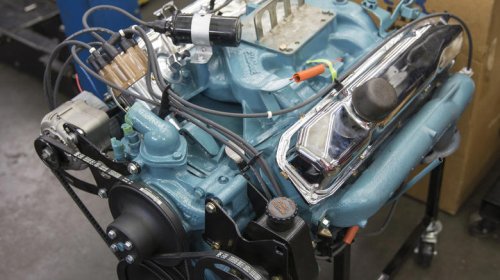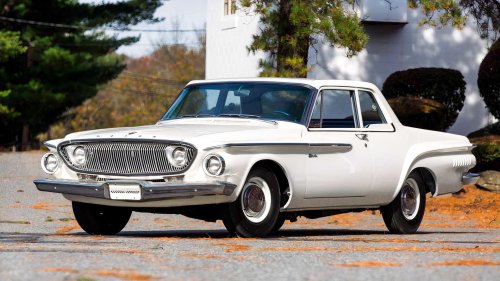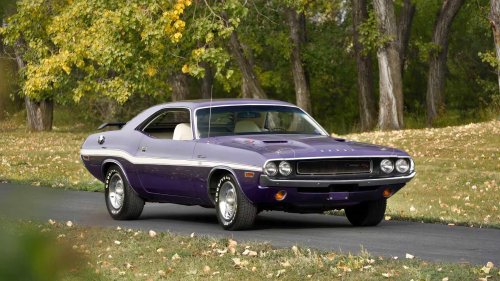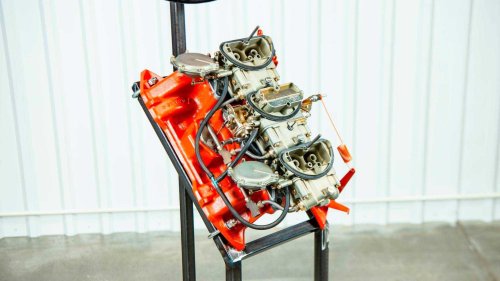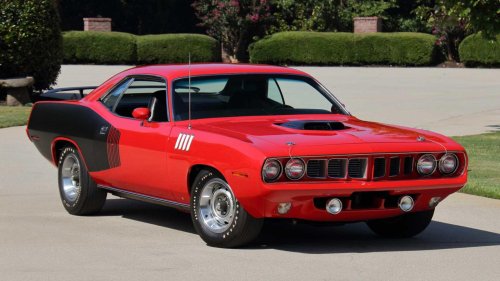
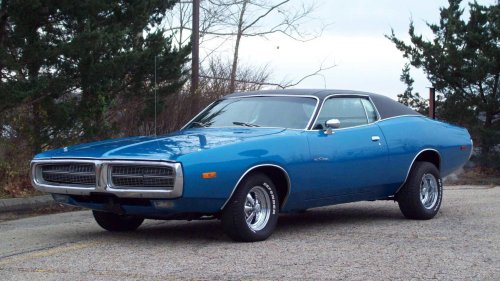
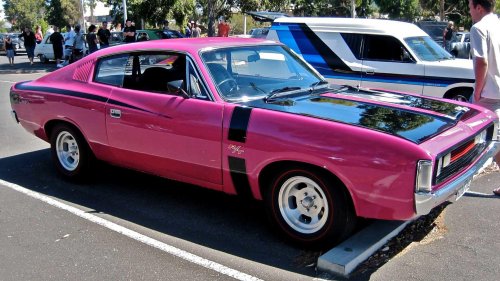
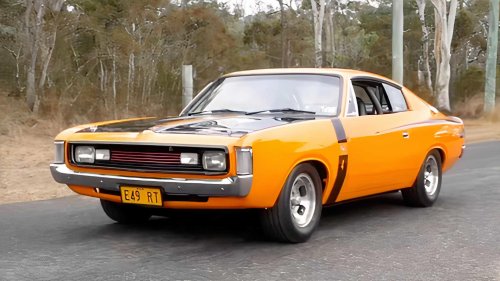
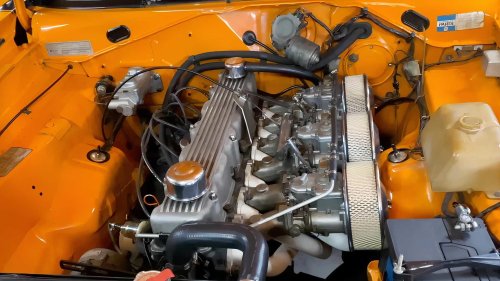
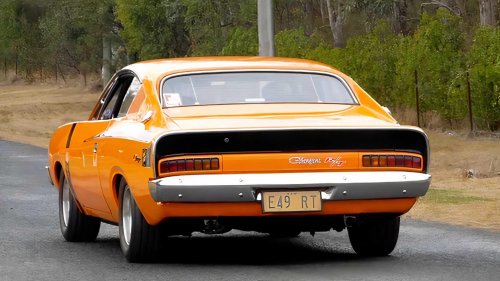
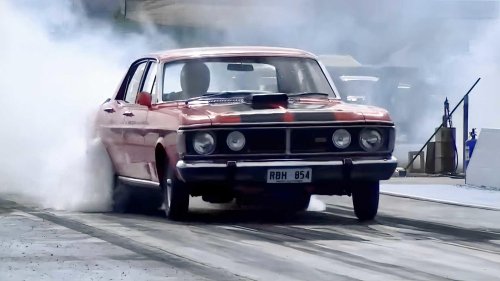
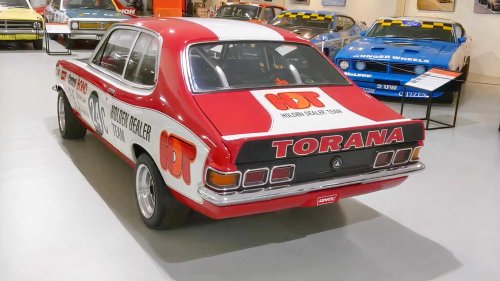
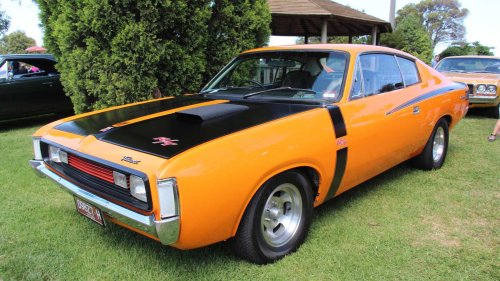



















One of the wackiest periods in automotive history was the Australian Supercar Scare of 1972 in which muscle cars were effectively banned. The Bathurst 1000, which was the Hardie-Ferodo 500 at the time, is a touring car race, and to qualify a vehicle for competition, 200 units had to be homologated, which meant the manufacturers were selling powerful vehicles to the general public. There was public outcry and the government threatened to ban such cars, so the automakers voluntarily stopped making high-performance street machines. That, incidentally, is reason #10,426 why American freedom rules, as we have the constitutional right to buy a 1,000+ horsepower Hemi with single-digit ETs and MPGs without government infringement.In any case, one of the cars that triggered the threat to tear Down Under asunder, was actually a Mopar, but not one most people have heard of. Chrysler Australia built entirely different cars for that market that were surprisingly cool and packed some serious performance to boot. There was even one in 1972 equipped with a Hemi inline-six, yet another thing exclusive to Australia, that could actually outrun American Dodge and Plymouth V8 muscle cars. While there's no truth to the rumor that Aussies measure automotive output in emus rather than horses, it's a fact that they had a Mopar-killer Mopar for one brief moment. Golden Age Of American Muscle Ends In 1971 Mecum Just to be clear, Australia didn't have a car that could outrun a 425-horsepower 426 Hemi V8, and in fact, no country did, including the U.S., but Mopar's dominance did come to an end. The Golden Age of American Muscle began in 1964 with the introduction of the Pontiac GTO and died off seven years later, with 1971 being the last great year for factory street performance. Both the Hemi and 440 Six-Pack big-blocks were discontinued after '71, and while many of the iconic muscle car nameplates would carry on, they did so with decidedly less power under the hood. 1971 was also the year Mopar peaked with the Plymouth Hemi 'Cuda setting the regular production car high watermark in the quarter-mile, blazing a 13.1-second ET. Malaise Era Mopar (Lack Of) Performance Mecum For the once Hemied 'Cuda and Dodge Challenger, 1972 was a bit of a shock with a 240-hp 340 V8 being the "baddest" option that year. Even worse, the 318 V8 was the base engine, and it barely made 150 hp, which would have been acceptable for a riding mower, but not a muscle car. The B-Bodies got hammered too, with the once mighty 375-hp 440 V8 being detuned to only 280 hp in both the Dodge Charger and Plymouth Road Runner.A new 400 V8 was introduced to replace the 383, which had potential, but with a disappointing 255-hp rating, it wasn't anywhere near the 330 horses its predecessor packed. All of this represented a dramatic lack of power that turned former 13-second street machines into sluggish 15-to-17-second grocery getters, and that's why '72 and beyond was known as the Malaise Era. The Mopar Muscle Car You’ve Never Heard Of Ferenghi/Wikimedia Commons Meanwhile on the other side of the world, Aussie Mopar was just getting started on their muscle car journey in 1971. It's probably similar to how when it's winter in this hemisphere, it's summer Down Under, only with street machine eras. The '71 Chrysler Valiant Charger was similar to the A-body Plymouth Valiant sold in the U.S. but had different sheet metal, including wider fenders for a wider track and fatter wheels. The VH series, and no, it doesn't stand for Van Halen but definitely rocked, was produced for two years, and was one of Australia's most popular cars, with trims for everyone from commuter to speed demon. There were a variety of six and eight-cylinder engine options, but its secret weapon was a Hemi straight-six that we'll explore in greater detail in just a moment. 1972 Chrysler VH Valiant Charger R/T E49 Grassroots Garage/YouTude In 1972, the Aussie Mopar got radically more awesome with the VH Valiant Charger R/T E49, which was essentially a homologation special for the Bathurst 1000, though Chrysler didn't provide direct support for teams or drivers. Its seriously cool appearance didn't change, so it was the 302-hp 265 cubic-inch Hemi Six-Pack I6 under the hood that gave it an upgrade. Since we were just talking about the 426 Hemi and 440 Six Pack, 302 hp doesn't seem all that impressive, but with a 105-inch wheelbase and 3,020-pound curb weight, this compact muscle car had a superior power-to-weight ratio and amazing low-end torque for speedy launches. 265 Hemi Six-Pack Inline-Six Specs The rear-wheel-drive VH Valiant Charger R/T E49 was only available with a four-speed manual transmission, which sounds like a good deal to us. It was capable of 5.6-second 0-60 acceleration, quarter-mile times between 14.1 and 14.4 seconds, with a top speed of 131 MPH. Keep in mind that this wasn't a drag car, but rather a tourer designed to run on high for long periods of time. The other thing to remember is that 1972 was officially the Malaise Era, at least in the Northern Hemisphere, so this Aussie Mopar was an anomaly in its display of quickness and performance.Grassroots Garage/YouTube For hardcore Mopar fans, there's nothing wilder or more intriguing than the VH Valiant Charger R/T E49's 265 Hemi Six Pack. With 265 cubic inches and hemispherical combustion chambers, this straight-six had three two-barrel 45 mm Weber carburetors mounted on the side of the engine. You've heard of the Ford Side-Oiler? Well, this is the Chrysler Side-Fueler. It used a hotter cam, upgraded pistons and connecting rods, a shot-peened crankshaft, and tuned heads to squeeze every last bit of power out of its modest displacement. Rated at 302 hp and 320 lb-ft of torque, the 265 Hemi Six Pack generated more power than Mopar V8 big-blocks more than twice its size in '72. Outrunning the Mopar V8s Grassroots Garage/YouTube The fun thing about racing a right-hand-drive car like the VH Valiant Charger R/T E49 is that, if they are lined up correctly, the drivers are next to each other, making conversation between drivers much easier. The unfortunate thing about racing against the Aussie Mopar, at least for American V8s, is losing to something with a straight-six. Both the '72 'Cudas and Challengers with 340 V8s could run a quarter-mile in the mid-to-high-14s, which is obviously not good enough to beat an R/T E49, but at least they could kind of hang with it, avoiding too much embarrassment. The '72 Chargers and Road Runners with 440 V8s, however, were 15.0-second cars, and that spells disaster against a car that can hit a quarter-mile as quickly as 14.1 seconds. In a case like that, you simply keep driving home to avoid dealing with all the laughing and pointing. Faster Than A Ford XY Falcon GTHO Phase III RevvedUp Muscle/YouTube Most Americans' knowledge of Australian muscle cars is limited to the Mad Max "Last of the V8 Interceptors" blown Ford Falcon, but in the pre-apocalypse days, the '71 XY Falcon GTHO Phase III was a real Road Warrior. With a 351 Cleveland V8 that produced 300 hp and 380 lb-ft of torque, the '71 Grand Touring High-Output or Get The Hell Out Falcon had a 6.4-second 0-60 time and a 14.4 quarter-mile, neither of which was good enough to beat the VH Valiant Charger R/T E49. The XY Falcon GTHO Phase III did have a 143 MPH top speed, which was better than the Valiant Charger, so it was faster, but the Chrysler was quicker. We should probably change the heading of this section, but we love the alliteration, and "Feistier than the Ford Falcon" just sounds weak. Harder Than A Holden Torana GTR XU-1 Australian Muscle Car Sales/YouTube With the 1972 Holden Torana GTR XU-1, we're starting to realize that all Aussie muscle cars had seemingly random letters and numbers, leaving us without a clue as to what they stand for. We'll take a stab at this one: the "eXpletive You" 1 Torana Get To Rockhampton (an actual Australian city). It turns out the biggest loss was for the Holden, as its 190-horsepower, 200 lb-ft of torque 202ci 3x2 carb I-6 could only muster a 7.5-second 0-60 time and a 15.9-second quarter-mile. By the time the Torana GTR XU-1 crossed the finish line, the VH Valiant Charger R/T E49 driver was already back home putting shrimp on the barbie and enjoying some Fosters in those giant cans with Crocodile Dundee and Yahoo Serious. VH Valiant Charger R/T E49 Aussie Unicorn Sicnag/Wikimedia Commons Only 149 units of the amazing 1972 Chrysler VH Valiant Charger R/T E49 were ever built with just 21 "Big Tanks" featuring massive 35 gallon gas tanks to reduce pit stops in endurance racing. In any normal feature about a rare unicorn car, this is the point where we'd tell you about its value and highlight some gonzo auction sales, but there is no evidence that anyone ever tried to bring one to the States, let alone auction one off. There are no listings on Mecum or Bring a Trailer, and Hagerty doesn't have a value rating. We did find one that sold Down Under for $210,000 Australian dollars, which is $134,000 in U.S. dollars, so it's a legitimate collectible and a solid Mopar unicorn. While it would be great to import one and move the steering wheel to the correct side, there's no way to justify that cost for a car that wouldn't impress onlookers who have no idea what it is.Sources: Chrysler, Ford, Holden