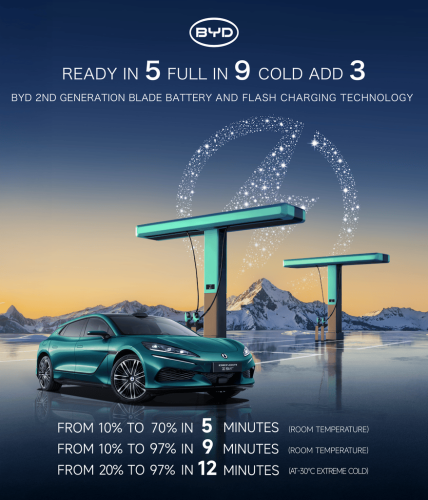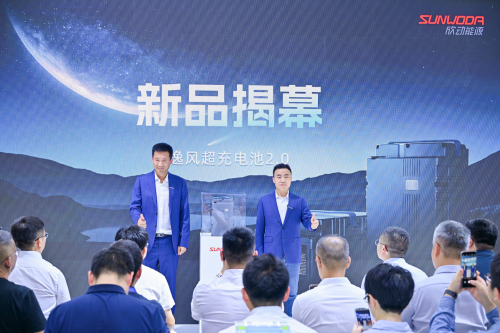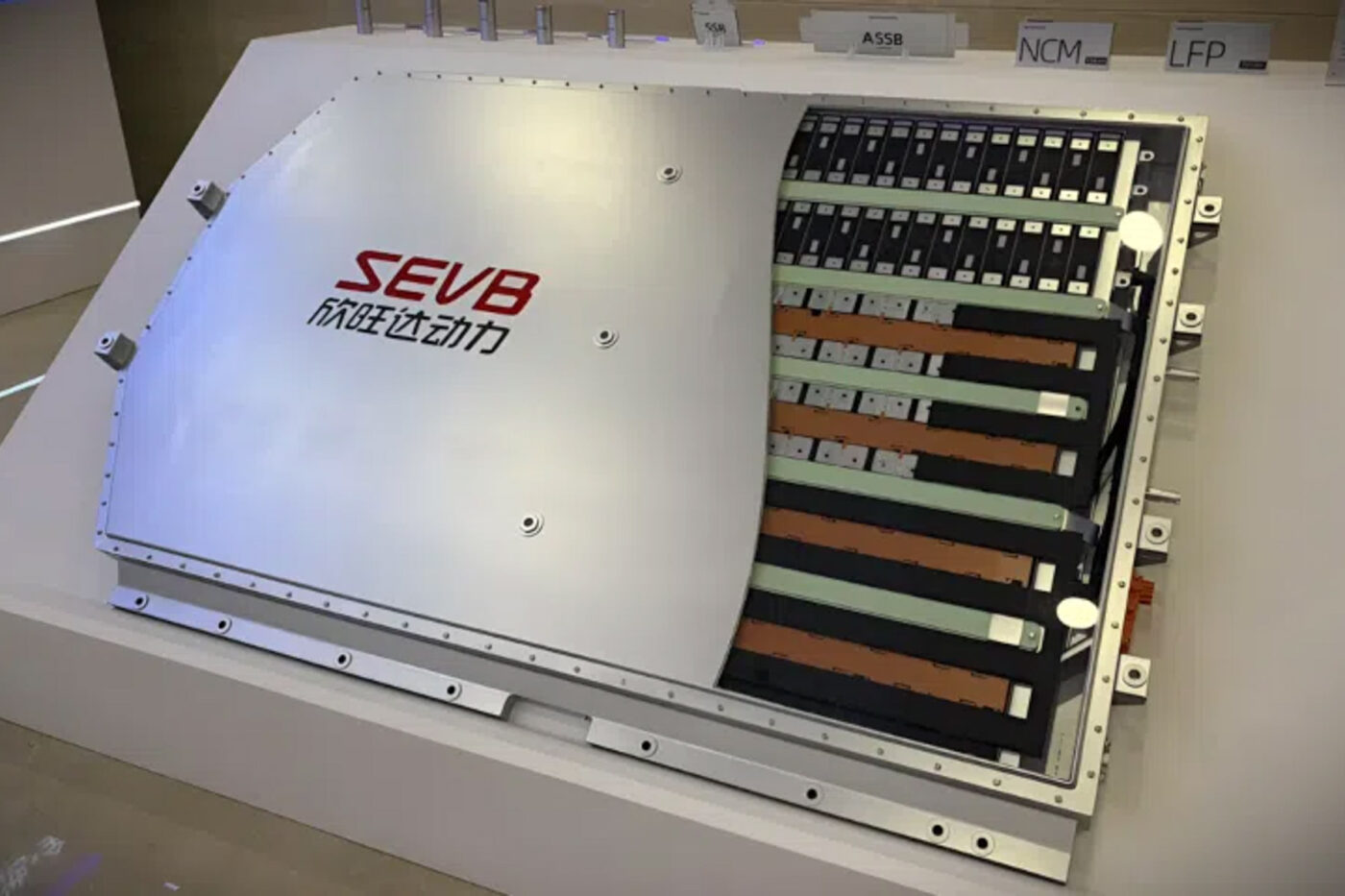



















Image: 42howIn addition to its 15C battery, Sunwoda has also announced sodium-ion and AI-integrated battery systems. However, the presentation focused primarily on the ‘Xingchi Supercharge Battery 2.0,’ a lithium iron phosphate (LFP) battery for battery-electric passenger cars that supports peak charging rates of 15C. This figure should be treated with caution, however—more on this below.The ‘Xingchi Supercharge Battery 2.0’ delivers similarly impressive performance to the ‘Blade Battery 2.0,’ which BYD unveiled in early March. Both batteries achieve a charging time of nine minutes, though Sunwoda’s LFP technology charges from 5 to 95 per cent, compared to BYD’s 10 to 97 per cent window. The event showcased a battery pack comprising 264 prismatic cells, with an energy capacity of 98.8 kWh—a size typical for modern electric cars.According to Chinese reports, the pack operates at a voltage of 844.8 volts and can handle a maximum charging current of 1,800 amperes. This translates to a peak charging power of just over 1,500 kW. However, it remains unclear how long the battery can sustain the 1,800-ampere charging current before thermal constraints require it to be throttled. For a limited period, high charging power appears feasible: charging from 5 to 75 percent is said to take just 5 minutes and 30 seconds.The stated charging rate of up to 15C refers to peak charging power, not the entire charging process. The C-rate indicates the ratio of charging power to the battery’s energy capacity; for a 98.8 kWh capacity, 15C corresponds to 1,482 kW of charging power. Typically, however, the C-rate describes the average charging speed for the entire process—4C, for example, means a full charge in 15 minutes, while 6C takes ten minutes.If the 15C rate applied to the entire charging process rather than just a brief peak, the 98.8 kWh battery would theoretically be fully charged in four minutes. While this level of speed is not yet achievable, a 90 per cent charge in nine minutes still represents an excellent average C-rate of 6.7 for this segment.1,500-cycle lifespan – despite fast chargingAs is typical for LFP cells, the Xingchi Supercharge Battery 2.0 is designed for a long service life. Sunwoda specifies a lifespan of 1,500 cycles—while explicitly allowing unrestricted use of fast charging during the warranty period.This detail signals confidence in the battery’s durability. Sunwoda expects that repeated high-power charging sessions will not significantly affect long-term performance.Despite the similarities between the systems, one key difference remains compared to BYD. BYD presented the Blade Battery 2.0 as part of a complete ecosystem, including dedicated charging infrastructure and several vehicle models.By contrast, reports on Sunwoda’s new battery do not mention any specific series applications. It remains unclear when and in which vehicles the technology will debut—or when it will undergo independent validation.In addition to its ultra-fast-charging LFP battery, Sunwoda has unveiled two further passenger car technologies approaching series production. One focuses on longevity, offering a battery with particularly low performance degradation. The other targets hybrid vehicles, where a new cylindrical cell is set to cut charging times from 10 to 80 percent to just ten minutes. For commercial vehicles, Sunwoda also presented a dual-charging system delivering up to 1.44 MW.At the same time, the company is advancing sodium-ion technology—but not primarily for use in cars. Instead, Sunwoda is positioning these cells, like some of its new LFP products, for stationary energy storage. According to the company, its sodium-ion cells can achieve 20,000 charge cycles at room temperature and more than 10,000 cycles at elevated temperatures, although it has not specified what qualifies as ‘high temperatures.’Such cycle life points to long service durations in home storage systems or grid-scale applications. Thanks to low costs and abundant raw materials, sodium-ion cells could make stationary storage more economically attractive. However, their lower energy density compared to lithium-based batteries limits their automotive use. Sunwoda thus sees them mainly in affordable entry-level vehicles rather than in high-end electric cars.Artificial intelligence is also set to play a greater role in the rapid advancement of battery technology. Under Sunwoda’s AI+ strategy, AI will be integrated into battery development, manufacturing, and lifecycle management. The company expects this approach to enable more efficient and data-driven research and development.carnewschina.com