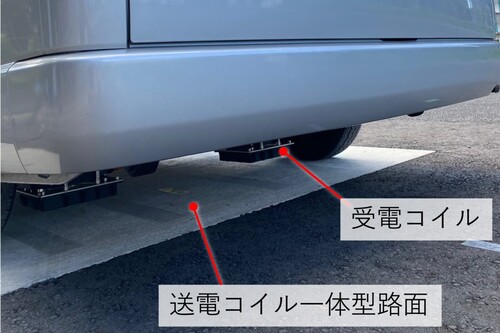
Evan Carter · 5 months ago@evancarter81Norwegian consortium develops inductive ship charger for offshore applications Liked by+65 othersPost commentRelated PostsCalifornia Preps For Battle Royale Over Offshore Wind Leases That Trump Wants To Kill 83 · Evan Anderson · 4 months agoKawasaki Angler Jet Ski Review: Offshore and Inshore Fishing in Florida 46 · Aiden Carter · 4 months agoTrump Pays Off Energy Company in Grudge Match Against Offshore Wind 45 · Leo Harris · 4 months agoSpain Could Have Nearly 7 Gigawatts of Offshore Solar Power 91 · Nicole Scott · 4 months agoShell could walk away from offshore wind in $1 billion+ sell-off 77 · Emma King · 4 months agoHarley's Moving Engine Production To The US. Switches After Years of Offshoring 28 · Adam Turner · 4 months agoTotalEnergies On The Hot Seat Over Offshore Wind Deal 83 · Mia Lee · 4 months agoSierra Club Applauds Northeast States for Challenging Trump Administration’s Illegal TotalEnergies Offshore Wind Lease Buyout 65 · Chloé Green · 4 months agoWorld’s Fourth-Largest Economy Challenges Trump On Offshore Wind 28 · Amélie Nelson · 5 months agoOffshore Wind in the Philippines Won’t Prosper Without Ports 26 · Amélie Roy · 5 months agoPhilippines’ First Offshore Wind Zones Could Generate 11 TWh A Year, But When? 37 · Logan Bouchard · 5 months agoYet Another Offshore Wind Farm Survives The Trump Chopper 55 · Ryan Leblanc · 5 months ago$1.4B saved: Massachusetts locks in cheaper offshore wind power 32 · Abigail Lavoie · 5 months agoSurprise! New York Scores Another Offshore Wind Victory 44 · Oliver Lavoie · 6 months agoJim Farley Says Ford’s Rivals Profited By Moving Production Offshore, But That Math Breaks Communities 74 · Victoria King · 6 months ago5 offshore wind farms move ahead after Trump admin misses appeal deadline [update] 84 · Logan Girard · 6 months agoThe US's largest offshore wind farm just produced its first power | Electrek 52 · Camille Brown · 6 months agoCATL, COSL partner to electrify offshore support vessels 53 · Sophie Rogers · 6 months agoBYD, HONOR Forge Strategic Partnership to Enable AI Voice Integration; Geely Makes Paris Motor Show Debut; DexRobot, Schneider Electric Partner to Accelerate Industrial Applications of Embodied AILauren Hill · 13 days agoLuxshare Automotive, Infineon Launch Innovation Application Center 58 · Mia Walker · 1 months ago


 +65 others+65 others
 +65 others









![5 offshore wind farms move ahead after Trump admin misses appeal deadline [update]](https://cdn.topcarnews.net/en/14498/thumb/id/aHR0cHM6Ly9pMC53cC5jb20vZWxlY3RyZWsuY28vd3AtY29udGVudC91cGxvYWRzL3NpdGVzLzMvMjAyNi8wMS9TdW5yaXNlLVdpbmQtT3JzdGVkLmpwZz93PTE1MDAmYW1wO3F1YWxpdHk9ODImYW1wO3N0cmlwPWFsbCZhbXA7c3NsPTE/b1a54665c5bb134d9674f75233402b0f.jpg)
![5 offshore wind farms move ahead after Trump admin misses appeal deadline [update]](https://cdn.topcarnews.net/en/14498/thumb/id/aHR0cHM6Ly9lbGVjdHJlay5jby93cC1jb250ZW50L3VwbG9hZHMvc2l0ZXMvMy8yMDI2LzAxL0RFUy0xMDM4X0VsZWN0cmVrLUJhbm5lcnNfUmVzaWxpZW5jeS5wbmc/eaf2b9e763e42f4c40adf1089d1028ca.jpg)