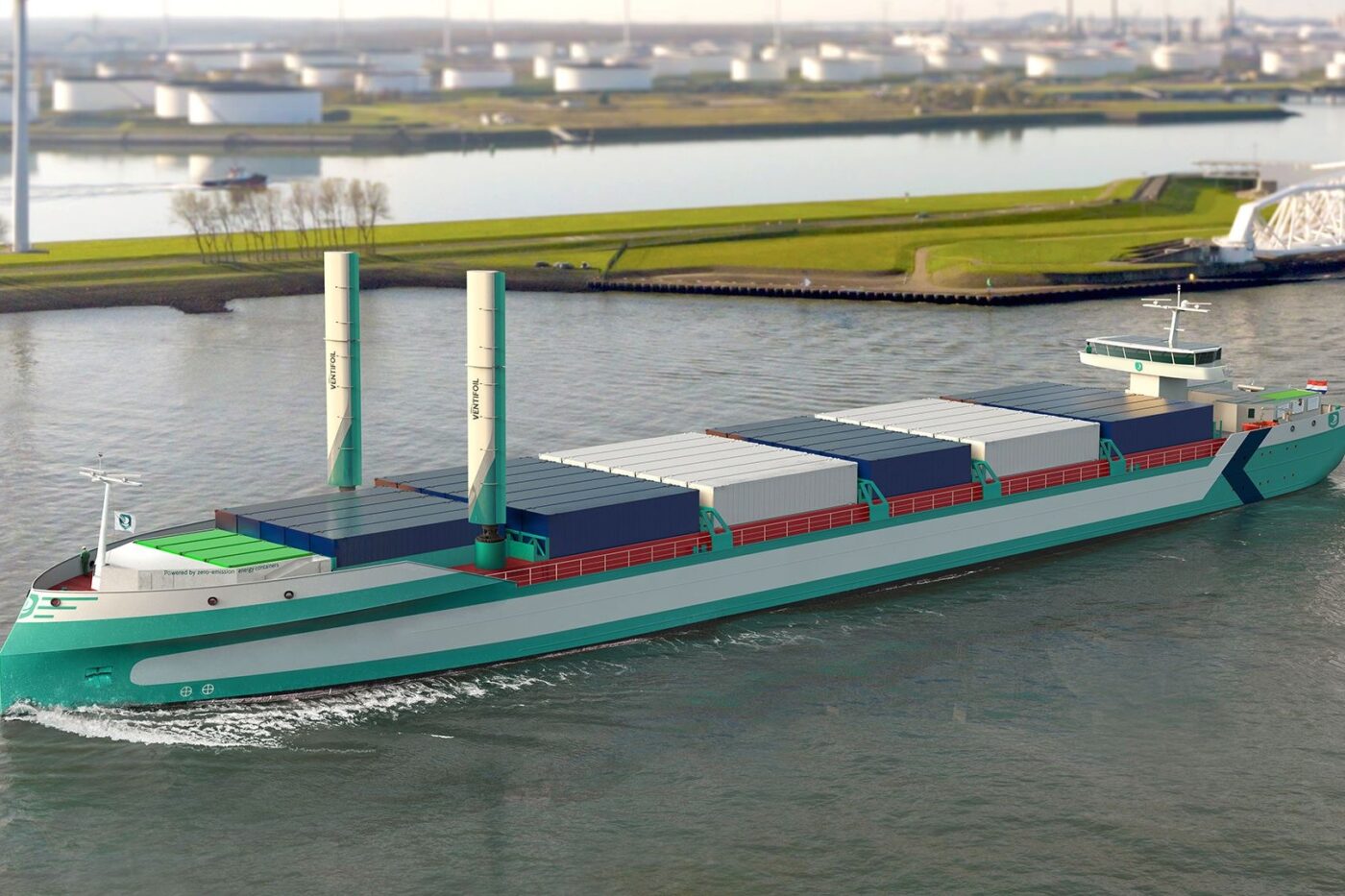



















At the heart of this project are two purpose-built vessels equipped with swappable battery containers from manufacturer Zero Emission Services and compatible with MCS charging technology. Construction is scheduled to begin in early 2027, with the ships expected to enter service in 2029. The project leaders describe them as “two first-of-a-kind zero-emission sea-river container vessels,” featuring dedicated storage spaces in the bow and stern for 16 swappable ISO ‘energy containers’. These containers are said to accommodate a variety of energy carriers, including batteries, hydrogen, or ammonia. Two biofuel generators will also provide emergency power supplies.In practice, the vessels will operate primarily on batteries—specifically, the so-called ZESpacks from Zero Emission Services. As previously reported, these swappable batteries are offered under an Energy- and Charging-as-a-Service (ECaaS) model, enabling zero-emission operations on the inland route between the Netherlands and the United Kingdom through rapid battery swaps at dedicated charging stations. The batteries onboard the ships are connected via Megawatt Charging System (MCS) connectors, allowing high-power energy transfer.The vessels’ open container decks are designed to handle both 30- and 45-foot freight containers and can accommodate up to 378 TEU, a unit specific to maritime logistics for measuring cargo volume. The project represents the first zero-emission container liner service of its kind for sea-river transport – a niche market that enables direct, seamless transport between European seaports and inland terminals, according to the project leaders.It is not yet known which shipyard will build the vessels, but they will be constructed entirely within the EU. The €21 million grant comes from its EU Innovation Fund, which supports pioneering low-carbon technologies. Jan Albert Bosma of Tharsis Ship Management emphasises: “This EU funding is a major milestone. It allows us to build, deploy, and operate these vessels, proving how innovative technologies like swappable energy containers and hybrid propulsion can decarbonise coastal and inland shipping in full commercial operations.”linkedin.com, swzmaritime.nl, splash247.com, ec.europa.eu (PDF)