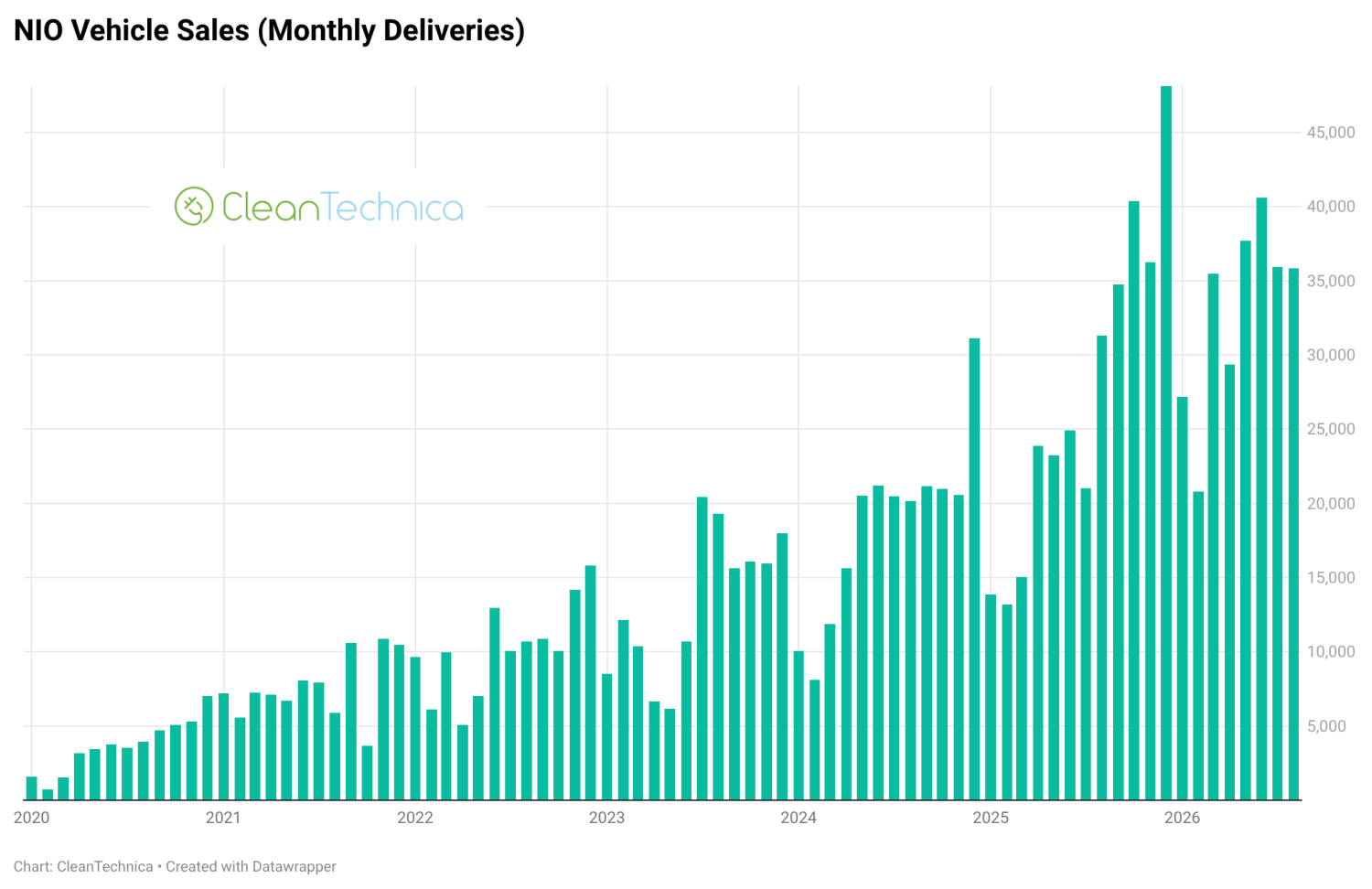
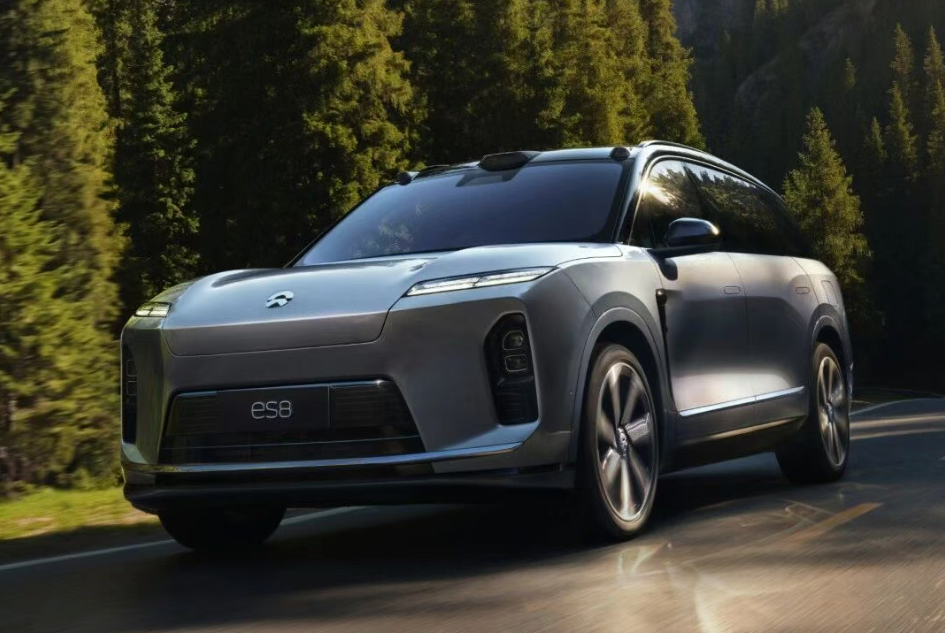
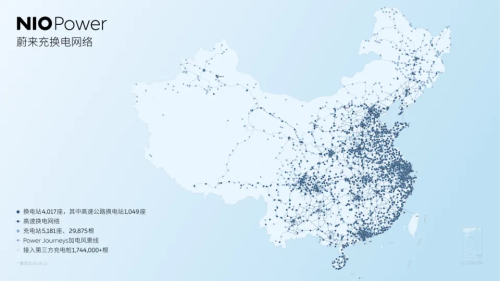
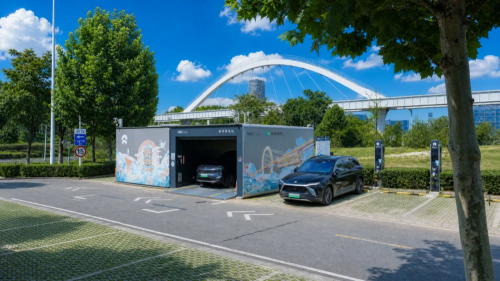
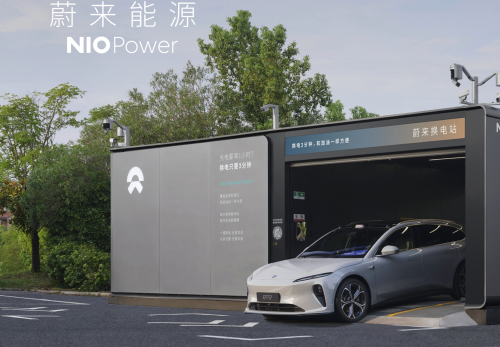
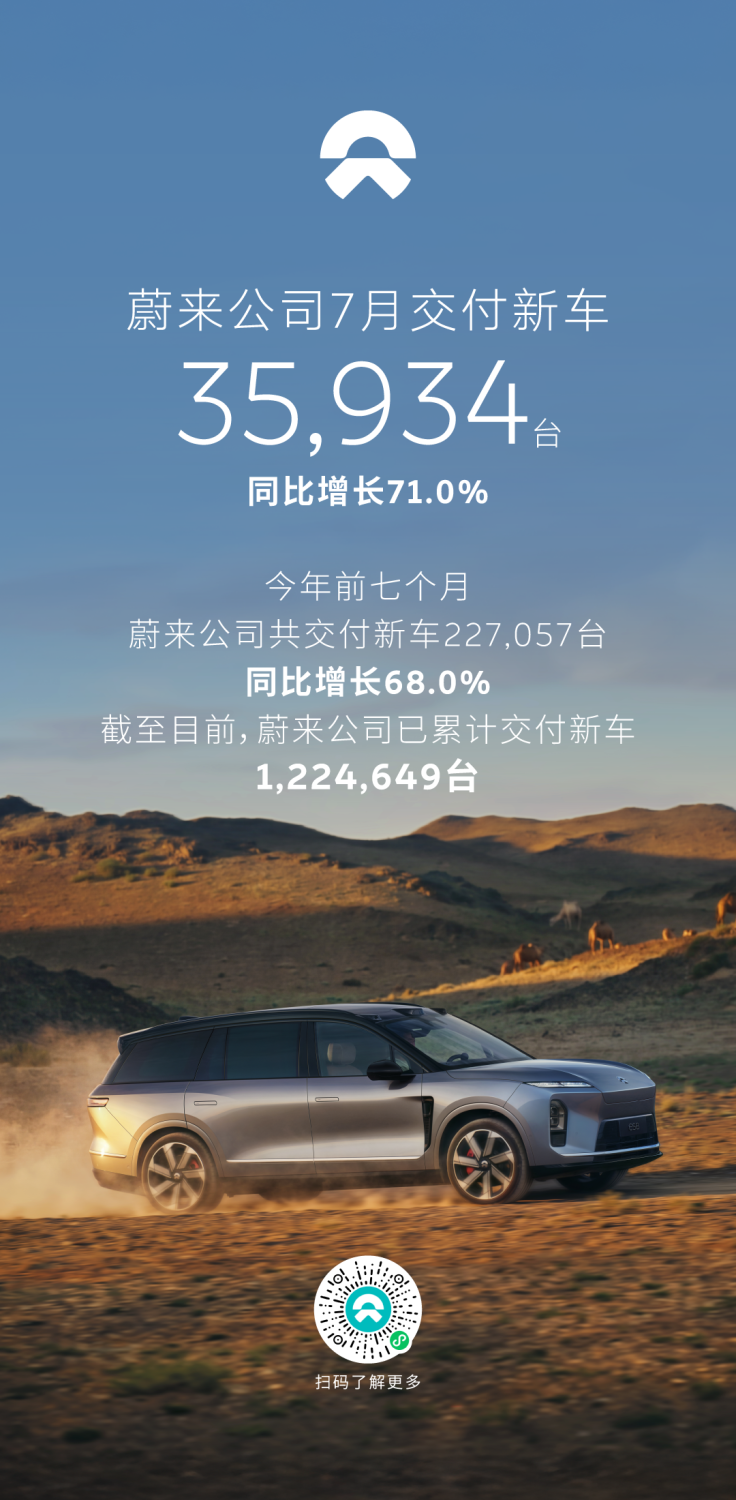
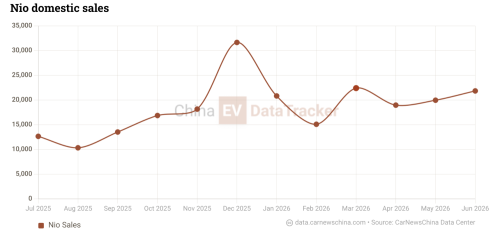
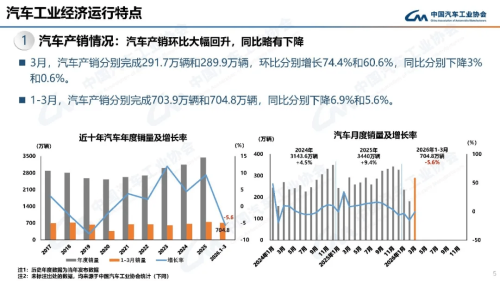
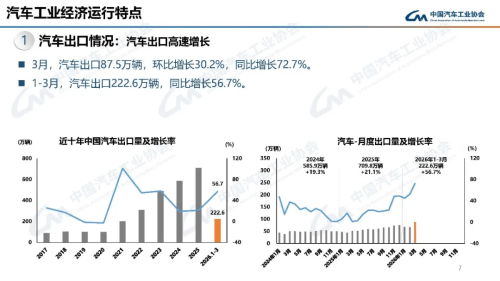
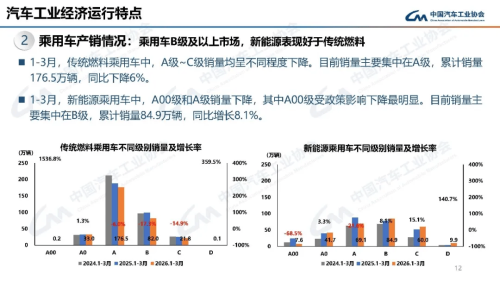
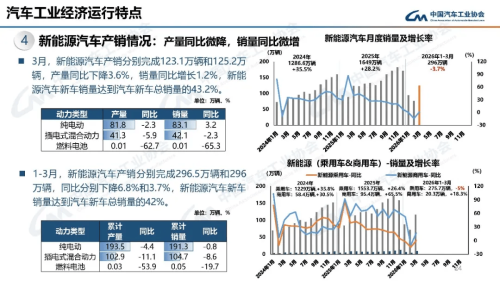
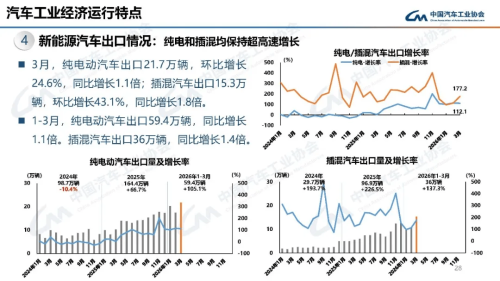
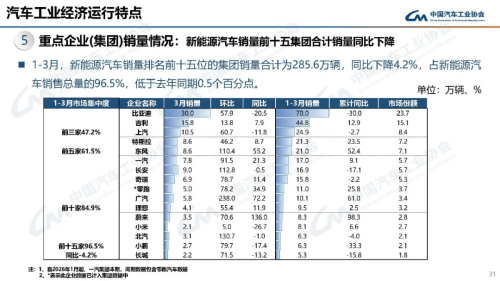
The China Association of Automobile Manufacturers (CAAM) has released the production and sales report for the automotive industry in March 2026. The report indicates that in March 2026, automobile production and sales rebounded significantly month-on-month, while declining slightly year-on-year, presenting a market pattern characterized by “strong exports and weak domestic demand.” China’s automobile production and sales situation Overall, market activity in the automotive sector improved notably in March. Production and sales reached 2.917 million and 2.899 million units respectively, up 74.4% and 60.6% month-on-month, but down 3% and 0.6% year-on-year. For the first quarter, automobile production and sales totaled 7.039 million and 7.048 million units respectively, down 6.9% and 5.6% year-on-year. However, the decline narrowed significantly compared to the January-February period. China’s automobile export situation Notably, automobile exports reached 875,000 units in March, up 30.2% month-on-month and surging 72.7% year-on-year. First-quarter exports totaled 2.226 million units, up 56.7% year-on-year, becoming a key driving force supporting industry development. Among these, new energy vehicle (NEV) exports performed particularly well. NEV exports reached 371,000 units, up 31.6% month-on-month and 130% year-on-year. Cumulative first-quarter exports hit 954,000 units, up 120% year-on-year. Passenger vehicle production and sales situation Looking specifically at the passenger vehicle market, production and sales in March reached 2.446 million and 2.412 million units respectively, up 74.8% and 57.1% month-on-month, but down 5% and 2.3% year-on-year. First-quarter passenger vehicle production and sales were 5.909 million and 5.934 million units respectively, down 9.3% and 7.6% year-on-year—a milder decline than the overall market. Examining specific vehicle segments, the report notes that in the B-segment and above passenger vehicle market, new energy models outperformed traditional fuel-powered vehicles. Additionally, among new energy passenger vehicles from January to March, sales of A00-segment and A-segment models declined, with the A00 segment showing the most significant drop due to policy impacts. Current sales are mainly concentrated in the B-segment, with cumulative sales of 849,000 units, up 8.1% year-on-year. New energy vehicle production and sales situation Looking specifically at the new energy vehicle market, NEV production and sales in March were 1.231 million and 1.252 million units respectively, accounting for 43.2% of total automobile sales. For the first quarter, NEV production and sales were 2.965 million and 2.96 million units respectively, down 6.8% and 3.7%, representing 42% of total automobile production and sales. In contrast to the overall downward trend in domestic sales, NEV exports in March reached 371,000 units, up 31.6% month-on-month and 130% year-on-year. From January to March, NEV exports totaled 954,000 units, up 120% year-on-year. From an energy structure perspective, pure electric vehicle exports in March reached 217,000 units, accounting for 58.5% of total NEV exports; plug-in hybrid exports were 153,000 units, representing 41.2% of total NEV exports. New energy vehicle export situation Finally, let’s examine the sales and export performance of major automakers. From January to March, the top 15 automotive groups by sales volume sold a combined 6.582 million units, down 6% year-on-year, accounting for 93.4% of total automobile sales. Among them, BYD ranked first with cumulative sales of 947,000 units, followed by Geely (823,000 units) and FAW (741,000 units). Leapmotor posted the fastest growth rate among the listed companies, with a year-on-year increase of 25.8%. Sales situation of key groups From January to March, the top 15 automotive groups by NEV sales sold a combined 2.856 million units, down 4.2% year-on-year, accounting for 96.5% of total NEV sales. The top three were BYD, Geely, and SAIC, with their combined sales representing 47.2% of the total market. Notably, among the top 15 companies, emerging EV brands occupied 5 positions. NIO recorded the fastest growth rate, with cumulative year-on-year growth of 98.3%, while XPeng experienced negative growth, with cumulative sales down 33.3% year-on-year.



















 +29 others