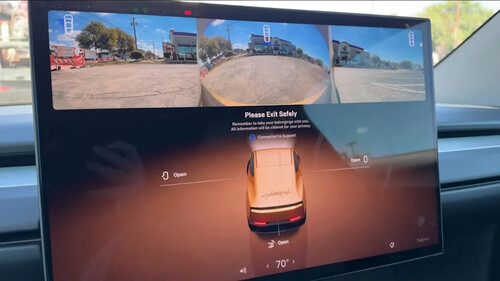
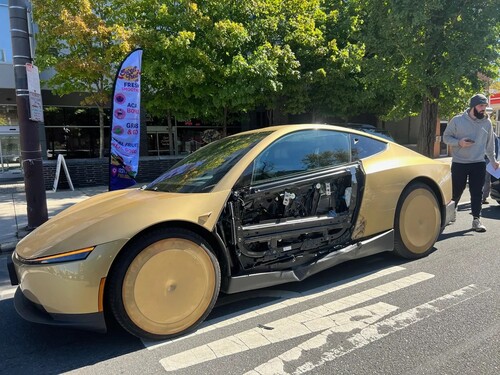
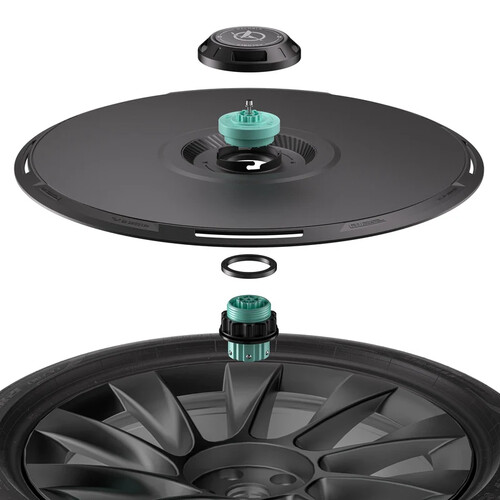
Rocsys launched the M1, which it calls the world’s first hands-free charging system capable of serving multiple bays in robotaxi depot operations. A single overhead-mounted unit can charge vehicles across up to 10 bays without human intervention. The Dutch-American company also announced a $13 million Series A extension, bringing total funding to $56 million, as it prepares to scale the system across North America and Europe starting in 2027. Solving the robotaxi charging bottleneck As robotaxi fleets grow, charging is likely to become an operational bottleneck. Waymo now operates roughly 500,000 paid rides per week across 10 US metropolitan areas with 3,000 vehicles. Each of those vehicles needs to be charged multiple times per day, and right now, that process still largely depends on human workers plugging and unplugging chargers at depots. Waymo currently relies on partners like Moove, Lyft’s Flexdrive, and Avis to handle depot operations, including charging, in different cities. Meanwhile, Tesla submitted plans for its first robotaxi-only Supercharger stations in Arizona, though Tesla’s purpose-built Cybercab actually uses wireless inductive charging, not plug-in Superchargers. Advertisement - scroll for more content Rocsys is betting that robotic plug-in charging is the more scalable solution. The M1 uses an overhead rail-mounted design with a flexible, long-reach robotic arm that autonomously detects when a vehicle arrives, opens the charging port, plugs in, charges, and disconnects. The company claims a 99.9%+ plug-in success rate in live environments, backed by AI-enhanced computer vision trained on more than six years of real-world data. The multi-bay architecture is the key differentiator. Rather than dedicating one charging robot per parking spot, a single M1 unit slides along an overhead rail to serve up to 10 bays. That preserves depot floor space and allows parallel operations like cleaning and inspection while vehicles charge. Rocsys claims a 50-bay depot equipped with M1 systems can achieve up to 75% higher operational efficiency from existing staff, translating to up to $1.7 million in annual savings. The system is fully interoperable across different EV models, charger brands, and connector types, meaning fleet operators don’t need to retrofit vehicles or lock into a specific charging vendor. $13M to scale for the 2027 robotaxi wave The $13 million Series A extension was led by Capricorn Partners, with participation from Scania Invest (the venture arm of truck maker Scania), Forward.One, SEB Greentech Venture Capital, and Graduate Ventures. Total funding now stands at $56 million. The money will fund the M1’s transition from pilot deployment to large-scale rollout. Rocsys says it plans to support thousands of charging bays across North America and Europe over the next five years. Crijn Bouman, CEO and co-founder of Rocsys, said: “Without hands-free operations, autonomy stops at the depot. The Rocsys M1 introduces smart charging infrastructure for continuous, real-world use at scale, validated by signing a major robotaxi deal.” Rocsys did not name the robotaxi operator behind that “major deal.” The company, headquartered in Rijswijk, Netherlands, and Portland, Oregon, has previously deployed its technology in port operations. We covered Rocsys showing off its tech with a self-charging, self-driving electric truck last year, and Autocar’s partnership with Rocsys to deploy hands-free chargers for electric trucks. The robotaxi market represents a significant expansion for the company. The global robotaxi market is projected to reach $45.7 billion by 2030, according to MarketsandMarkets, and the charging infrastructure question becomes more urgent with every fleet expansion. Rocsys holds over 130 granted patents and pending applications in the space. A visualization of the M1 will be showcased at Rocsys’ booth 3401 at ACT Expo in Las Vegas from May 4-6. Electrek’s Take The robotaxi charging problem is real and growing fast. When you have thousands of vehicles that need to be charged two to four times daily, the human labor cost of plugging and unplugging adds up quickly and becomes a genuine barrier to scaling. Rocsys isn’t the only company working on robotic charging, VW and Hyundai have both shown prototypes, but the multi-bay overhead rail approach is clever because it dramatically reduces the number of robots needed per depot. Charging is getting quicker and EVs can sometimes sit idle at charging stations, but with this solution, the chargers don’t have to sit idle. The fact that Scania’s venture arm invested is interesting. It signals that the commercial vehicle world sees automated depot charging as critical infrastructure, not just for robotaxis but for electric truck fleets too. The unnamed “major robotaxi deal” is the most intriguing detail here. With Waymo rapidly expanding and already outsourcing depot operations to third parties, it’s not hard to imagine who might benefit from automated charging at scale. Tesla, for its part, is going the wireless charging route with the Cybercab, which avoids the robotic plugging problem entirely — but that’s a purpose-built vehicle solution, not a retrofit for existing fleets. We’ll be watching for more details on that robotaxi deployment and whether the M1 can deliver on its 99.9% reliability claim at scale across different vehicle types and weather conditions. Stay up to date with the latest content by subscribing to Electrek on Google News. You’re reading Electrek— experts who break news about Tesla, electric vehicles, and green energy, day after day. Be sure to check out our homepage for all the latest news, and follow Electrek on Twitter, Facebook, and LinkedIn to stay in the loop. Don’t know where to start? Check out our YouTube channel for the latest reviews.