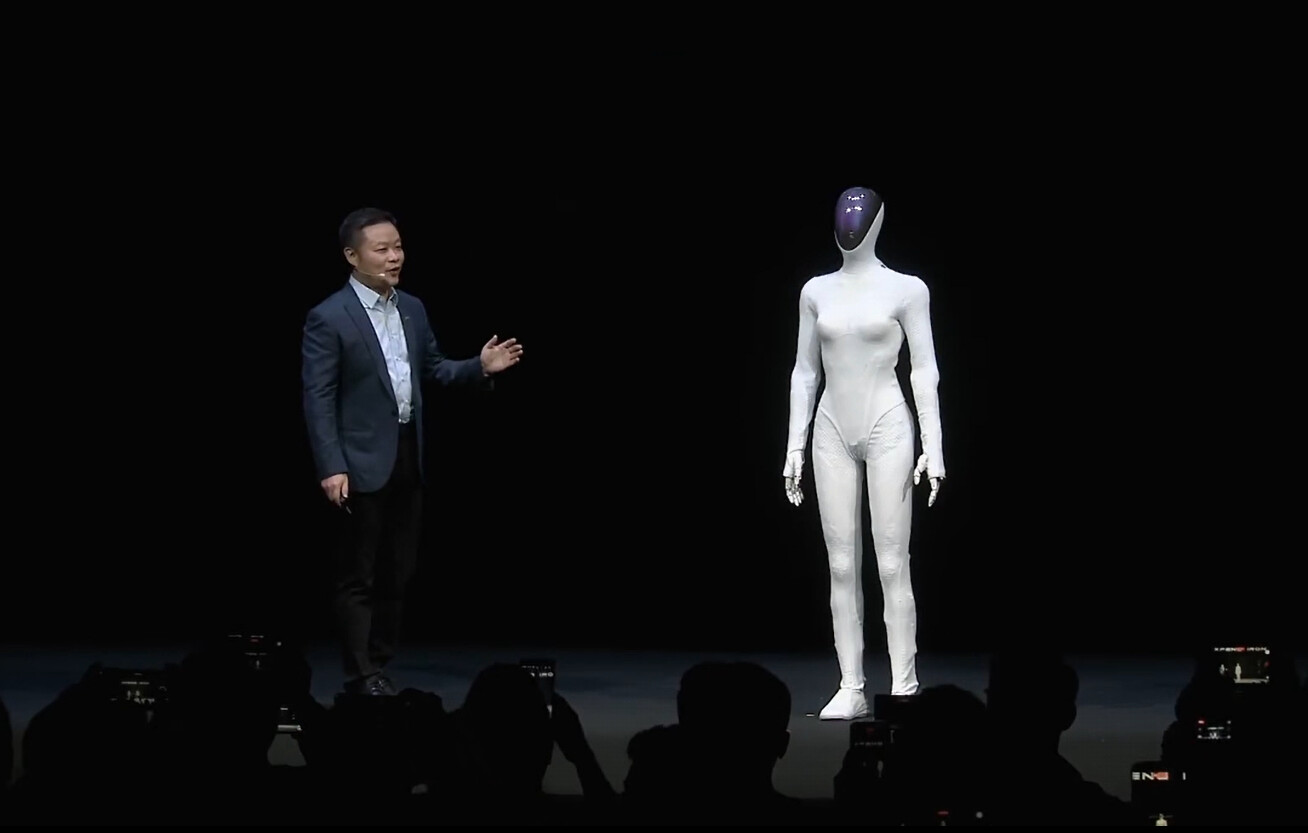
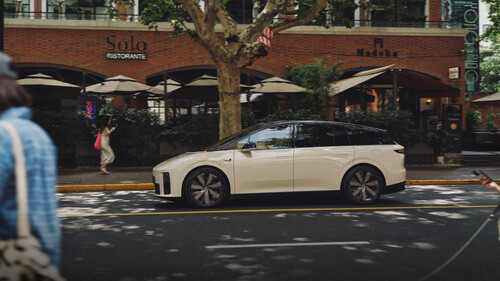
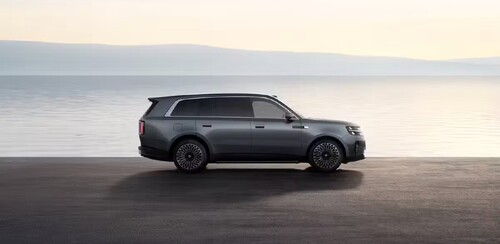
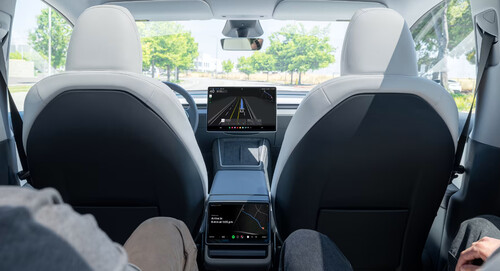
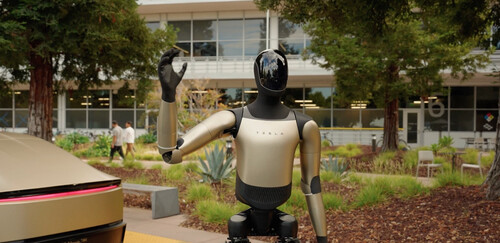
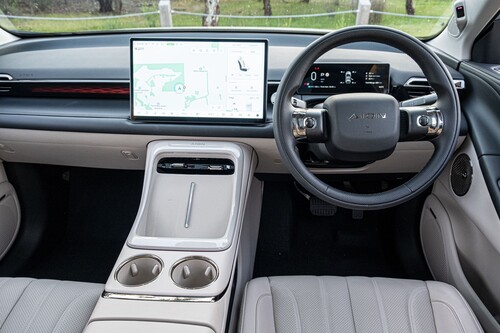
Gasgoo Munich- "For a while now, whenever I've discussed AI or embodied intelligence, some people have said, 'Carmakers should just focus on building cars'." Those words, posted recently on social media by Li Auto CEO Li Xiang, capture the dual narrative facing China's leading EV startup.Image credit: @Li XiangLi's rebuttal was swift: "I believe after watching our launch event, people will think we are 'doubling down on our core business.'" The clash between skepticism and defense underscores a deeper question: When an automaker pours resources into frontier fields like AI and robotics, is it a strategic upgrade—or a departure from its roots?Why the "Neglecting Core Business" Narrative Took HoldOn January 26, 2026, Li convened a nearly two-hour virtual all-hands meeting. The agenda bypassed product roadmaps and sales targets; instead, Li outlined his vision for AI trends and the company's push into humanoid robots. He explicitly stated that Li Auto must pivot from "creating a mobile home" to embodied intelligence, mapping out a full-scale deployment of humanoid robots and system-level general AI agents.To many employees, the meeting felt more like a strategic manifesto than a business review. Some admitted they "couldn't follow it," while others questioned whether AI alone could solve the company's challenges.The skepticism is also rooted in financial reality. Li Auto's first-quarter 2026 results show deliveries hit 95,142 units—a 2.5% year-on-year gain that outpaced the broader market and secured the top spot among Chinese brands in the NEV segment priced above 200,000 yuan. Revenue, however, came under pressure: total income fell 11.4% from a year earlier to 23 billion yuan, swinging to a net loss of 2.3 billion yuan from a profit of 647 million yuan in the same period last year.Notably, Li Auto's first-quarter R&D spending climbed 8.3% year-on-year to 2.7 billion yuan. For the full year, R&D investment is projected to hold steady at 12 billion yuan—with roughly half earmarked for AI-related initiatives.Since the second half of 2025, several core executives have departed, with the autonomous driving team hit hardest by the turnover.Image credit: Li AutoWith Li Auto pouring energy into AI and robotics just as its core auto business loses momentum and key talent walks out the door, it's hardly surprising that critics see a company drifting from its lane.There's also a deeper issue of perception. The public still tends to box "carmakers" into rigid categories; when a company steps outside that label, debate inevitably follows. Yet that debate overlooks a crucial shift: the transformation of the auto industry has already moved well beyond traditional manufacturing. Industry reports and experts increasingly argue that the car is evolving from a conventional vehicle into an "AI-driven intelligent agent." In that context, the very definition of "building cars" is being rewritten.The Industry Consensus and Strategic Logic Behind "CORSS-BOUNDARY"Step back from the scrutiny of a single company, and Li's claim of "focusing exactly on core business" finds solid ground across the broader industry landscape.By one rough count, at least 17 major automakers worldwide have announced forays into robotics—among them Tesla, Mercedes-Benz, Toyota, Hyundai, and China's leading NEV players. In 2025, Tesla's annual vehicle deliveries fell 8.6%, yet market attention had already pivoted to its non-automotive bets like AI and the Optimus humanoid robot.Image credit: XPENGIn China, XPENG plans to mass-produce its IRON humanoid robot by the end of 2026. GAC has rolled out its third-generation embodied intelligent robot, GoMate, while Chery's "Moyin" robot is already deployed at overseas dealerships. Zoom out from any single company, and a clear pattern emerges: automakers extending their tech and capital into "AI plus robotics" isn't some quirky detour—it's a collective step in the industry's evolution.The scale of Li Auto's AI spending also warrants attention. In 2025, the company poured 11.3 billion yuan into R&D, with roughly half directed at AI. Over the past three years, cumulative R&D spending has hit 33 billion yuan, and 2026 is projected to hold steady at around 12 billion yuan. Meanwhile, the company sits on a cash reserve of 94.3 billion yuan and has rolled out more than 4,077 fast-charging stations. By that measure, the pivot is hardly a distraction; with its core business still on solid footing, deploying significant resources toward next-generation capabilities makes strategic sense.Image credit: Li AutoEarly tech dividends are already surfacing. In the second half of 2025, Li Auto deployed the world's first VLA (Vision-Language-Action) driver model in its vehicles, logging an 80% monthly usage rate by year-end. By merging spatial awareness, language comprehension, and action planning into a single framework, VLA equips the car with a core skill set: the ability to "understand, see, and locate."Viewed through the lens of industry trends, Li Auto's logic has a clear through-line: the car isn't the endgame, but rather the first vessel for AI to enter the physical world. As Li wrote in a blog post, "We believe that embodied intelligence in automotive form could be the first AI robot to enter the physical world."Judging by that thesis, Li Auto's push to build its own foundation models, AI chips, operating systems, and embodied agents is a natural extension of the car's value boundary. Whether that makes the company "exactly focused on its core business," as Li insists, will ultimately hinge on technology delivery and commercial execution.