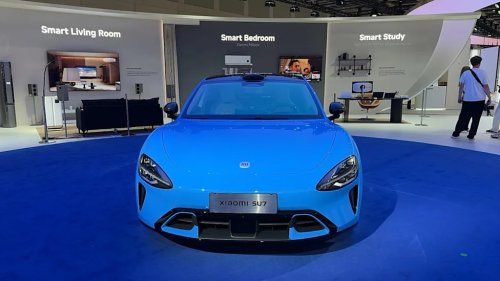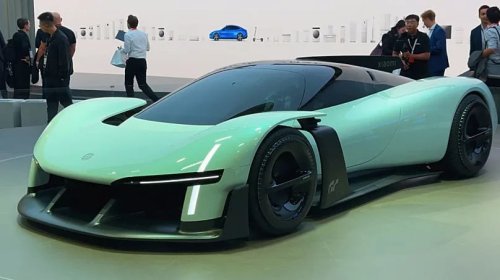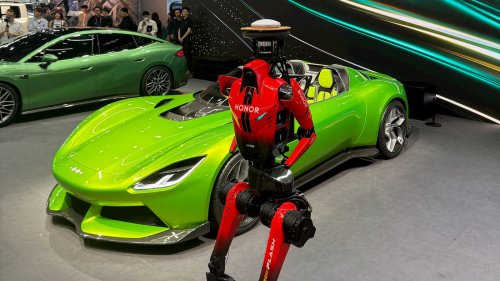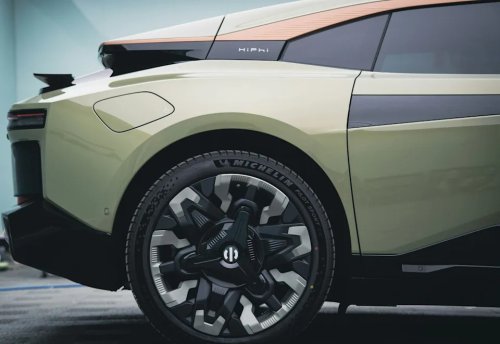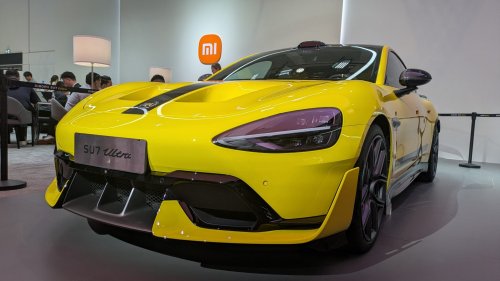
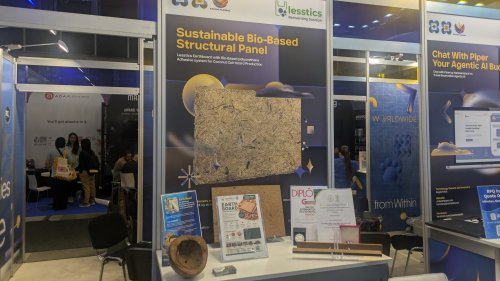
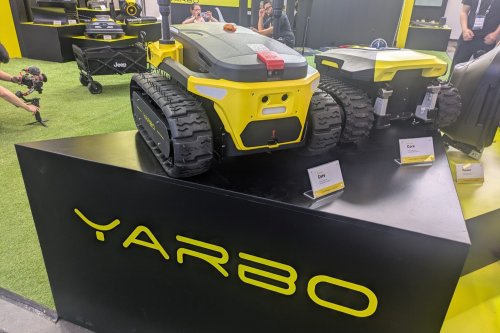
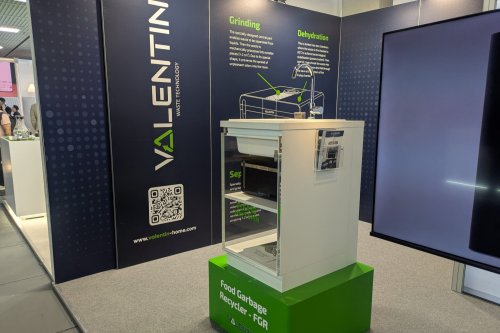
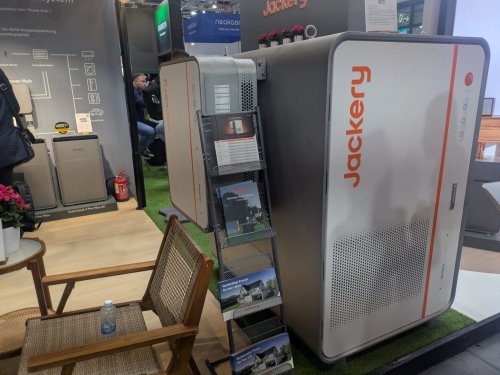



















IFA Berlin, which stands for “Innovation For All,” is a diverse technology show. There were numerous mobile, entertainment and AI-enabled devices, but there were also a range of clean technology products. On the first day of IFA, I saw several different paths to sustainability. Products from large companies and small startups. I will follow up on some of these in more depth in future articles, but a few products stood out on the first day of the show. Each of these on its own is just part of the solution. However, they each address environmental challenges and appeal to customers in unique ways. Xiaomi Brings EVs to Europe Xiaomi had one of the largest booths and some of the biggest news of the show. They will be bringing the SU7 and YU7 to Europe next year. Models on display included LiDAR sensors that will be used in their intelligent driving system, also to be activated next year, pending regulatory approval. No specific timing has been announced yet. Combined with their mobile devices and efficient appliances, the introduction provides an important link in the Xiaomi Human x Car x Home ecosystem. The SU7, SU7 Max and SU7 Ultra were on the show floor, with a YU7 SUV outside the event. Updated a few months ago, the cars have improved specifications. Onboard tech continues to evolve, including an AI Spatial Interaction sensor that enables gesture-based controls, reducing the need to use the touchscreen. These vehicles have been discussed widely before, so I will not go into detail here. But it is big news that the popular, typically supply constrained models will be exported. The sporty models seem well suited to European tastes and make EVs not just responsible but also potentially compelling to car enthusiasts. IFA Berlin Lesstics. Photo by Larry Evans Lesstics Builds With Coconut Waste Lesstics, a startup out of the Philippines with a history in plastics recycling, showed off Earth Board. This building product turns coconut husk waste into sustainable boards. This waste byproduct from the coconut industry has become a waste management challenge in many tropical areas and is frequently burned, creating pollution. Lesstics, using a proprietary technology, turns it into boards that can be used for walls, floors, ceilings, cabinets and furniture. The boards have a surface uniformity closer to particle board, but longer fibers give it strength similar to OSB. A proprietary bio-based polyurethane binder eliminates the formaldehyde found in typical plywood. Meanwhile, the resulting boards are fire retardant, noise absorbing, insulating and water resistant. And it is less expensive than traditional building alternatives. Especially in places like the Philippines, were pine trees commonly used for lumber do not grow and many trees are protected. As a result, customers can receive a better performing product at lower cost that is also better for the environment. IFA Berlin Yarbo. Photo by Larry Evans Yarbo displayed their Y series yard robots and introduced their new, more compact M series yard robots, intended for lots of a few acres. Yard care can be very carbon and pollution intensive. Multiple large machines needed for different tasks have significant carbon emissions embedded in their manufacturing. Then, the small engines that run them tend to have much higher emissions than cars. Electrification can be effective on smaller yards, but scaling up to multiple acres can be a challenge. The amount of time needed to use smaller lawnmowers and equipment would be significant, meanwhile large, electrified equipment can be costly and heavy. However, robotics can change the equation, as time becomes less of a concern with automation. While some robotic lawnmowers are lightweight and intended for small yards as a convenience, Yarbo makes rugged machines that are designed to operate almost continuously. Rather than needing a large machine to save on labor, the small lawn robots can operate autonomously and repeatedly throughout the week. Maintaining 6 acres can be easily accomplished with reduced noise and emissions. Even the smaller M series can mow 1.5-acre areas per day and cover multiple of those areas per week, unsupervised. Automation lets a relatively small machine replace larger equipment. In addition, the system is modular to manage tasks like leaf cleanup and snow removal. The tracks work under harsh weather conditions and reduce the potential to get stuck. Meanwhile high-speed wireless charging removes concerns of can recharge the battery from 10-90% in 65 minutes, reducing downtime. Meanwhile newly available LiDAR adds a level of safety. In the process, not only does lawn maintenance become more environmentally efficient, but also more convenient. IFA Berlin Valentin. Photo by Larry Evans Valentin Recycles Food Garbage From Kitchen Sinks Many people think what goes down the drain simply goes away. However, oils can create “fatbergs” in sewers, leading to blockages. That can result in overflows that contaminate nearby water. Clogged drains are often addressed with harsh chemicals, eroding pipes and potentially creating leaks. Meanwhile, any organic waste that goes down the drain, in addition to contributing to clogs, needs to be managed by sewage treatment plants. In the treatment process, methane is produced, amplifying potential climate change impacts. Slovenia-based startup Valentin has developed a novel approach that separates out fats and organic matter from drains in a compact unit that mounts under the kitchen sink. The organic matter is dried and can be used as fertilizer every few weeks. Exhaust air from the drying process is expelled through existing plumbing vents, eliminating odors. The oils are collected and can be disposed of in the garbage every few months. In the process, safety is improved and clogs are reduced, which is especially valuable in multi-story apartments. And there is no need to run a loud disposal or have to manually clean a strainer, improving quality of life while adding sustainability. IFA Berlin Jackery. Photo by Larry Evans Jackery Takes Customer-Centric Approach To Battery Storage Jackery, who brought me to the event, will be covered in more depth in future articles, but they impressed during the first day of IFA. Recent research from Frost & Sullivan has named Jackery “The World’s No.1 Solar Generator Brand, by Volume & Revenue” and “The Most Trusted Safety‑First Solar Generator Brand.” Their customer-centric approach not only offers impressive specifications at an affordable price but also pays attention to the details that make their products more user-friendly. And they are produced in the industry’s first carbon neutral factory. As many customers are concerned with safety, Jackery introduced the FortiShield Safety System at IFA. Jackery claims this is the “industry’s first comprehensive 7-layer security framework tailored to meet the specific operational demands of every device category.” With comprehensive safety measures, customers can feel confident using Jackery batteries in the home and on the go. The resulting increased usage of battery storage also increases the potential benefit to both the end customer and the environment. In terms of portable battery storage, the Explorer 2000 Plus V2 increases power output while becoming 12.6% smaller and 22.1% lighter. Meanwhile, the Explore 1000 Plus reduces size by 25% and weight by 9%. For battery storage integrated into the living space, Jackery had the sleek FridgeGuard on display, which we have covered before. Moving up in size, the modular Solar Vault 3 offers improved management capabilities for balcony solar. In addition, a partnership with SunBooster Vertical was announced, expanding potential applications using flexible solar strips that can be woven into wire fences, with the bifacial panels increasing winter output. On the larger end of the size spectrum is the new Energycore 100kWh liquid-cooled energy storage system. This could be used to supply energy storage to large residences or applications like a farm. With 100 kW of power and a UPS-like 10ms switchover speed, supplying stable power. This could be particularly where more storage is needed than he typical whole home battery, but not up to the size of many commercial ESS units. There was also a focus on resilience at Jackery, with the American Red Cross Explorer 2000 Plus V2 displayed ahead of its US release. The battery comes in a portable 2 kWh size with new integrated automated Storm Warning Function and Emergency Reserve Mode, providing benefits in responding to emergency situations, which have been increasing in prevalence due to climate change. However, beyond their products, my personal highlight of the show was an in-depth discussion with Jackery founder and CEO Jack Sun. We spoke about a number of topics, including many products in development that I cannot share yet. But one of the most impressive aspects about Jackery is their approach to innovation. The focus is placed on identifying customer pain points and developing sustainable solutions to address them. Those pain points could be around energy savings, resilience, affordability or even aesthetics. The problem could be with installation cost or useability. Then Jackery focuses on total solutions to address those problems. In finding those solutions, people live better in a more sustainable way. Which gets to a larger point. While some of us strongly dedicated to reducing emissions and protecting the environment are willing to make sacrifices and deal with complexities in the name of sustainability, many people want a more comfortable lifestyle with greater simplicity. For mass adoption, sustainable technology should address customer needs and improve their quality of life. Just as there are different paths to sustainability, there are different customer needs. By focusing on customer needs, sustainability can not just become possible but also more attractive overall.