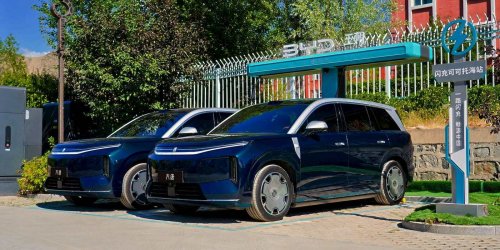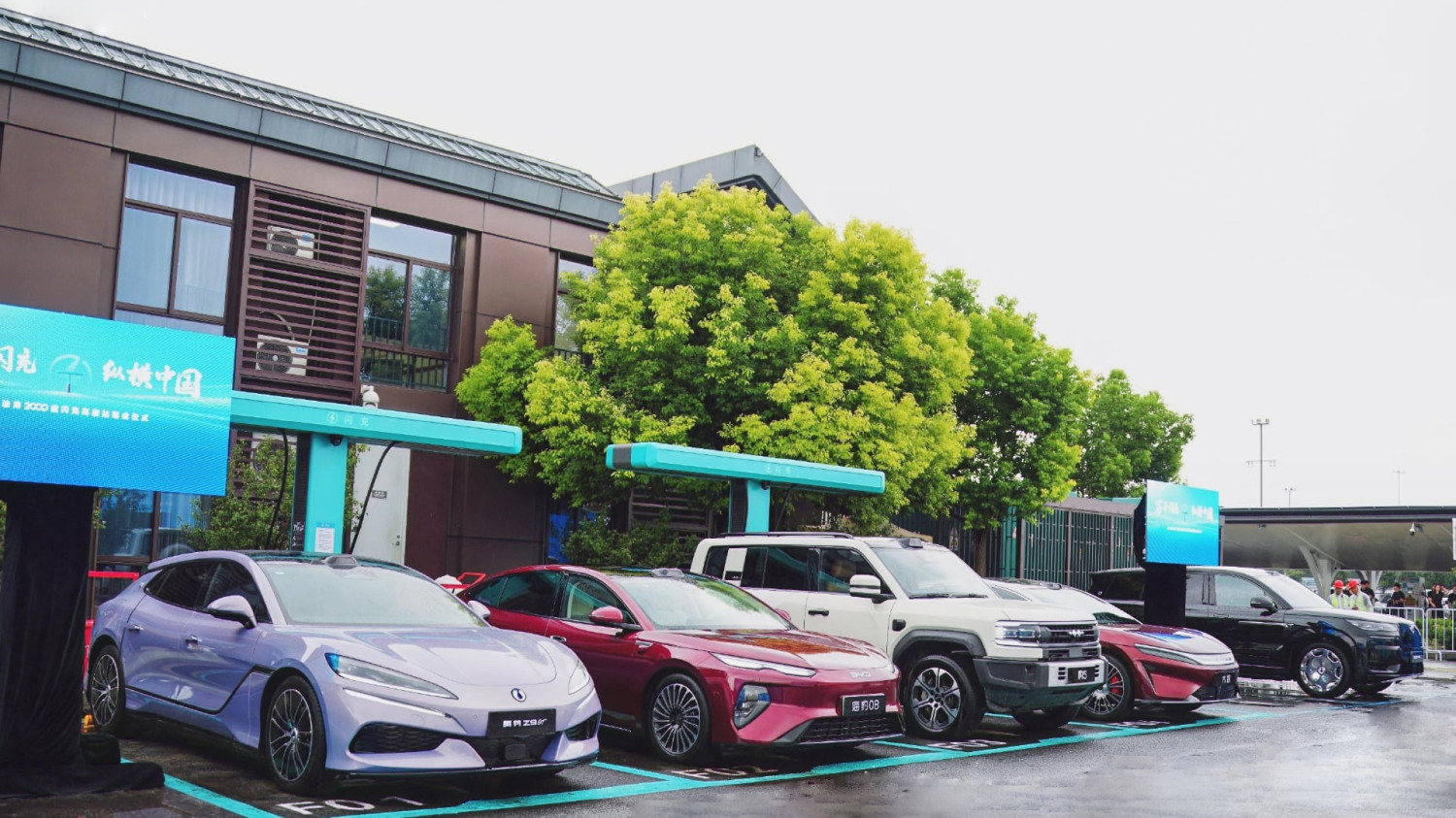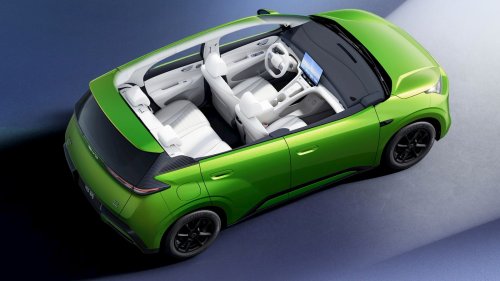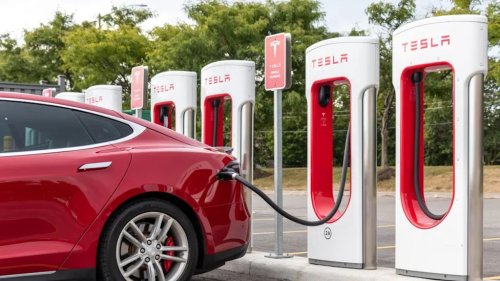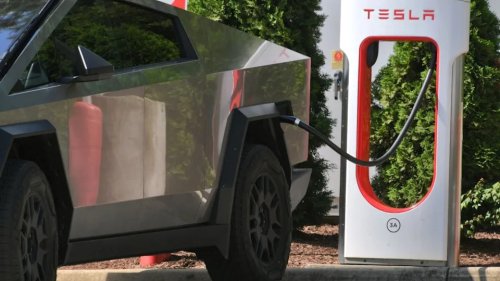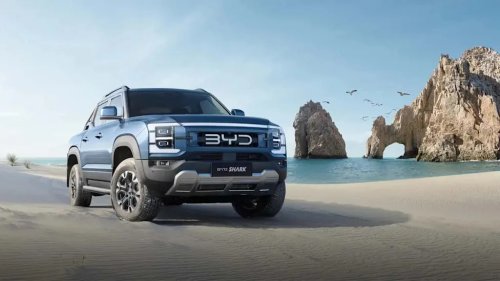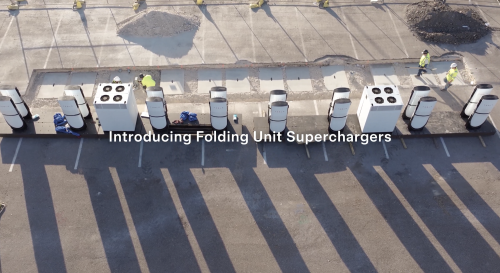
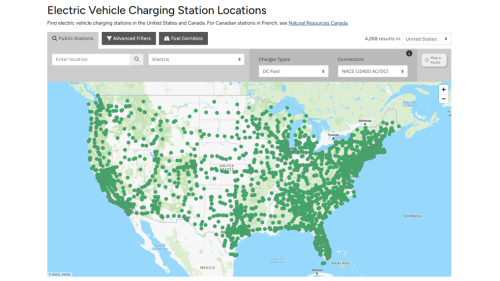
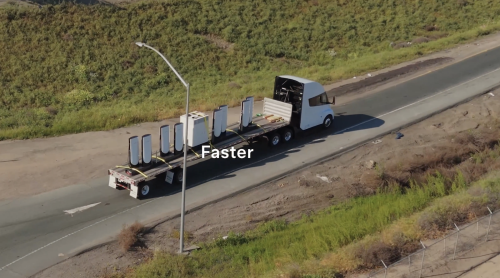



















Over the past week, announcements by Tesla and BYD have shown different approaches to building out DC charging systems. The differences have implication not just for charging infrastructure strategies, but also for the vehicle electrification trajectories in different markets. Along with announcing their sales totals for March, BYD also announced that its 5000th public flash charging station has been activated. This comes after the first charger officially launched on March 5th. Image Credit: BYD To dig in a little deeper, BYD also recently published details in the Jiangsu and Shanghai region. There was a total of 232 new flash charging stations in the area, covering every city in the region, with 485 charging piles in total. That averages out to a little over two piles per station. Each T-shaped pile has two charge guns and can charge two cars simultaneously. However, some BYD installations have multiple piles, indicating that many of the stations would only have one charging pile. But if we were to extrapolate an average of a little over two piles per station and two stalls per pile to the 5000 stations that went online in March, then we are looking at over 20,000 flash charging stalls. The designated 5000th station is located at the Qinglan Expressway service area in Lanzhou, Gansu Province. It is one of the first highway service area stations, which will likely have more charging piles per station and could include their solar canopy and convenience store. BYD previously announced that it would have at least 1000 service area stations installed before the May 1 holiday, indicating at least that many in April. This represents roughly ⅓ of the highway service areas in China. BYD also allows drivers to request a station installation. If at least 4 drivers of flash charging vehicles request a station and the location meets requirements, a new station can go from construction start to online within a week. The overall system is palletized and battery-buffered, making transportation relatively easy and allowing installation in a wide range of locations without the need for heavy equipment. Tesla Offers More Stalls, Charging Slower at Fewer Stations Tesla is taking a different approach. Last week, Tesla showed its Folding Unit (FU) Supercharger assembly. The assembly includes 8 V4 Supercharging piles, each with one gun that is capable of up to 500 kW output. The system uses the V4 Cabinet with a maximum output of 1.2 MW split between the piles. As such, only two piles can charge at 500 kW at a time. Split equally between all the piles driven simultaneously, the maximum output would be 150 kW per pile. Tesla claims 33% more units can be hauled per trailer, taking half the installation time at 20% lower cost. Image Credit: AFDC These chargers would be added to the 4,268 NACS/J3400 DC stations in operation in the US, according to the US Department of Energy at the time of writing. This includes both Tesla Superchargers and other companies using the NACS connector. These numbers are updated regularly and can fluctuate somewhat day to day. However, many of these stations average more stalls per station, with Tesla claiming over 36,000 stalls as of Q1, which brings up another consideration. In comparison, BYD’s single T-shaped pile has two charge guns, each with a maximum charge rate of 1500 kW, connected to a 2.1 MW power cabinet. Split equally, that would put the maximum output of each pile run simultaneously at 1050 kW. When considering that many of Tesla’s existing chargers are older and slower, BYD’s 5000 stations brought online more Flash Charging capacity in March than Tesla has cumulative total charging capacity in the US, despite Tesla currently likely having more stalls. However, there are considerations with the different approaches. Despite the smaller footprint, a single BYD charging pile, combined with flash charging vehicles, can charge more vehicles per hour than the 8-stall FU assembly. However, Tesla’s system is still fine for the slower-charging EVs currently on the road in the US. If slower-charging vehicles went to use a flash charging station, they would tie up stalls for an extended period. If only slower charging vehicles occupied the stalls, BYD’s system would charge fewer vehicles. But what about when more cars become capable of charging faster? That is happening rapidly in China, but how delayed will the US market be? Will Tesla’s slower charging assembly still be relevant in 2030, or will they need an upgrade? The FU needs to be loaded on a trailer in folded form at around 40 ft long, with up to two assemblies per semi trailer. Then it needs heavy equipment to lift it off the truck, place it on the ground, and unfold it. Unfolding a pre-assembled unit undoubtedly saves some time over installing 8 piles separately. But it needs a large, flat foundation and multiple parking spaces for vehicles to charge. In addition, if battery buffering is needed to reduce peak load on the grid, another container-sized battery needs to be shipped on a semi. In comparison, BYD’s flash chargers can be shipped on a medium-duty truck and positioned with a pallet jack, eliminating the need for heavy equipment. Batteries come as default. Although BYD also makes larger ESS batteries, the two pallet-sized batteries per pile are easier to position. Less room is needed, with only one pile capable of charging more vehicles per hour. Foundations are small, compared to what would go under an air conditioner. Tesla, rather than splitting the output amongst 8 stalls, could dedicate a 1.2 kW V4 Cabinet to one MCS charger, which is the plan for the Semi. However, it clearly is not planning on the mass adoption of MW-level car charging anytime soon. Tesla estimates that its chargers would not have to throttle back output split amongst the piles over 99% of the time. If its cars cannot benefit from the greater charging capability, the company probably does not feel motivated to offer it. There is an argument to be made for “future-proofing” the system, but that future could take a while in the US. Image Credit: Alex Celiz Gomez National Context is Important In China, there are already millions of slower DC chargers and far more EVs. Differentiating from existing chargers and vehicles takes greater capability. Slower existing EVs have options, making them less likely to tie up faster chargers. More people live in apartments, increasing the need for public charging. New EV sales are far greater, and there will also be millions of cars capable of charging in 5–9 minutes sold over the next year. In the US, overall, DC charging is more limited. The new chargers signify an improvement over V3 and earlier Superchargers. More chargers are needed. The V4 output is more than enough for the vast majority of EVs on the road currently. Many automakers have scaled back EV plans, and we are blocked from the top competition. It could be a while before we have a significant number of EVs capable of charging faster than 500 kW, especially from Tesla. So, from a certain perspective, it makes sense to build out infrastructure for the less capable EVs available now. Beyond just the cost of the chargers, there is the infrastructure and/or storage cost needed to support faster charging. The US population is more spread out, so the physical bulk of the FU and heavy equipment needed for installation is not as much of a limitation here. Does it make sense to hold back on installing more capable chargers for uncertain US EV adoption? Should greater capability be built in for a level of future-proofing? Either way, the US needs more chargers. EV infrastructure should not be waiting around while planners contemplate and debate these questions. New chargers can greatly benefit current EV drivers. We need to move faster in the US. Meanwhile, EVs that can charge as fast as ICE vehicle fueling and often have longer range are poised to take adoption into the next phase in China. MW-level charging is being implemented rapidly and shows no signs of slowing down. And companies like BYD are rapidly introducing new models capable of flash charging across their lineups, including the Seal 06GT last week. That mid-sized hatchback would fit in well in Europe, where BYD is also planning to roll out 3000 flash charging stations by the end of the year.