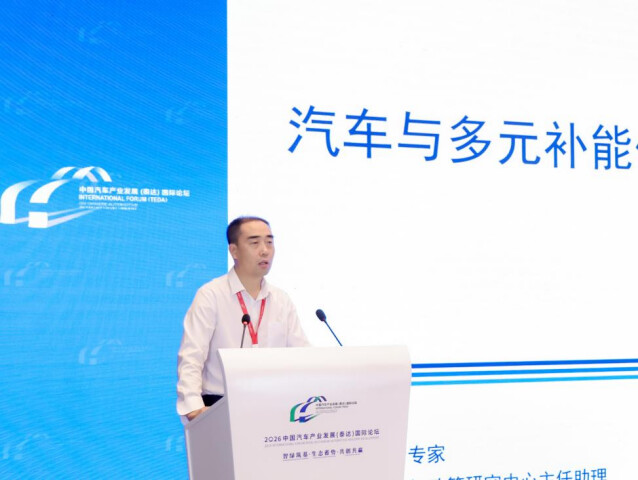
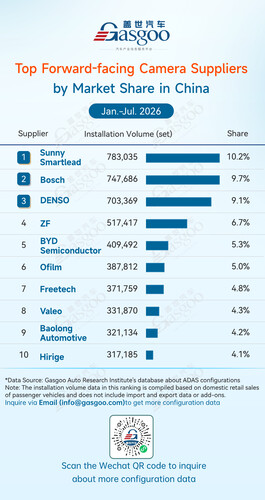
Abigail Walker · 20 days ago@abigailwalker44Yao Zhanhui: Building a Path for Integrated Development of Diverse Automotive Energy Replenishment Based on the New Energy System | 2026 Teda Forum Liked by+28 othersPost commentRelated PostsRankings of ADAS component suppliers in China (Jan. - Jul. 2026): Dual-chamber air suspension gains traction in mainstream vehicle models | Gasgoo Automotive Research Institute 34 · Parker Hall · 22 days agoPorsche Brings Back The Slantnose With 911 GT2 RS-Based Custom Build 54 · Zoë Green · 1 months agoRankings of smart cockpit component suppliers in China (Jan. - Jul. 2026): Market concentration continues to rise | Gasgoo Automotive Research Institute 44 · Justin Fortin · 24 days agoJLR May Build A Stellantis-Based Defender In America 98 · Chloé Labelle · 3 months agoRankings of ADAS component suppliers in China (Jan. - Jul. 2026): Market concentration continues to rise | Gasgoo Automotive Research Institute 32 · Ryan Smith · 24 days agoNanjing Base Topping Out: Ruihua Optoelectronics Builds One-Stop Full-Process Capabilities Led by LC Dimming Glass 43 · Olivia Girard · 4 months agoWang Weiming: Next Phase to Launch Special Campaign to Raise Automotive Standards | 2026 TEDA Forum 91 · Leo Mitchell · 24 days agoABT’s First Motorcycle Build Costs $15,600 More Than The Bike It’s Based On 18 · Carter King · 4 months agoGong Jinfeng: Four Recommendations for Building a Strong Automotive Nation | 2026 TEDA Forum 74 · Amélie Green · 24 days agoToyota May Finally Be Building A Ford Maverick Rival Based On The RAV4 12 · Caleb Pelletier · 5 months agoTurning 60 in 2026: 11 automotive icons that debuted the same year as the Toyota Corolla 50 · Olivia Lewis · 29 days agoDIY Guy Builds Ultimate Chore Fleet With Mini Bulldozer, Road Grader Based on Lawn Tractors 60 · Adam Anderson · 5 months agoChina's passenger vehicle exporters overview (Jan.-Jul. 2026): Geely surges 410.7% in Central & South America丨Gasgoo Automotive Research Institute 60 · Nathan Labelle · 1 months agoXPeng to Build Humanoid Robot Base for Mass Production by End-2026 42 · Lily Morgan · 6 months agoChina passenger vehicle export trends (July 2026): Middle East emerges as a key growth market丨Gasgoo Automotive Research Institute 92 · Ryan Leblanc · 1 months agoNASA wants twice-yearly flurry of missions to build moon base 69 · Charlotte Hall · 6 months agoChina's passenger vehicle export overview (Jan.-Jul. 2026): Russia leads with 524,428 units丨Gasgoo Automotive Research Institute 41 · Abigail Fortin · 1 months agoLincoln Might Build Its Own Bronco-Based Off-Roader 42 · Abigail Lavoie · 7 months agoTop 10 destinations by BYD passenger vehicle exports (Jan.–Jul. 2026): Brazil leads with 198,507 Units| Gasgoo Automotive Research Institute 57 · Hannah Brown · 1 months agoBMW Motorrad presents “The Speed Sisters” by [WOIDWERK] – custom builds based on R18 and R12 73 · Emily Brown · 1 years ago

 +28 others+28 others
 +28 others

























![BMW Motorrad presents “The Speed Sisters” by [WOIDWERK] – custom builds based on R18 and R12](https://cdn.topcarnews.net/en/433/media/id/aHR0cHM6Ly9wYXVsdGFuLm9yZy9pbWFnZS8yMDI1LzA3LzIwMjUtQk1XLU1vdG9ycmFkLXByZXNlbnRzLeKAnlRoZS1TcGVlZC1TaXN0ZXJz4oCcLWJ5LVdPSURXRVJLLTEyLTYzMHg0MjAuanBn/611d83cf982abb5214e63b85a0eca6a8.jpg)