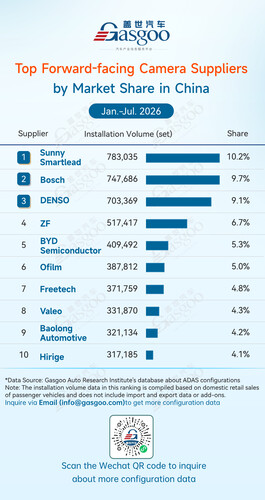
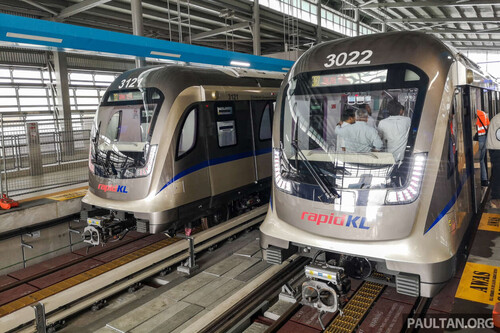
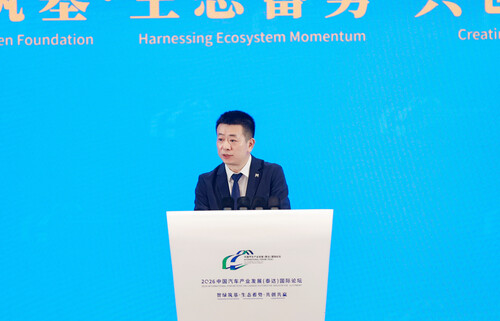
Leo Mitchell · 22 days ago@leomitchell91Wang Weiming: Next Phase to Launch Special Campaign to Raise Automotive Standards | 2026 TEDA Forum Liked by+75 othersPost commentRelated PostsRankings of ADAS component suppliers in China (Jan. - Jul. 2026): Dual-chamber air suspension gains traction in mainstream vehicle models | Gasgoo Automotive Research Institute 34 · Parker Hall · 20 days agoNext-Gen Nissan Skyline Finally Has A Launch Date 41 · Jackson Hill · 24 days agoLRT3 Shah Alam Line in final FFR testing phase – update on potential operational date next month 41 · Ethan Girard · 7 months agoRankings of smart cockpit component suppliers in China (Jan. - Jul. 2026): Market concentration continues to rise | Gasgoo Automotive Research Institute 44 · Justin Fortin · 22 days agoChery set to launch four new models over the next 12 months 34 · Ryan Johnson · 28 days agoRankings of ADAS component suppliers in China (Jan. - Jul. 2026): Market concentration continues to rise | Gasgoo Automotive Research Institute 32 · Ryan Smith · 22 days agoSchaeffler Launches Next-Generation Vehicle Zone Controller Platform 59 · Liam Labelle · 1 months agoNext-Gen MEGA Launches Sept. 2; Li Xiang Compares MPV Shift to "Nokia vs. iPhone" 68 · Parker Moreau · 1 months agoGong Jinfeng: Four Recommendations for Building a Strong Automotive Nation | 2026 TEDA Forum 74 · Amélie Green · 22 days ago21 Rich Guys Got Genesis To Launch A Bespoke Program In The Middle East, America Is Next 40 · Daniel Gagnon · 1 months agoTurning 60 in 2026: 11 automotive icons that debuted the same year as the Toyota Corolla 50 · Olivia Lewis · 27 days agoTesla's Cybercab Launch Is Next Week. Here's What Tesla Still Needs To Prove 56 · Kaitlyn Wilson · 1 months agoChina's passenger vehicle exporters overview (Jan.-Jul. 2026): Geely surges 410.7% in Central & South America丨Gasgoo Automotive Research Institute 60 · Nathan Labelle · 28 days agoTesla confirms Cybercab launch coming next week 13 · Emma Nelson · 1 months agoChina passenger vehicle export trends (July 2026): Middle East emerges as a key growth market丨Gasgoo Automotive Research Institute 92 · Ryan Leblanc · 1 months agoLi Auto's Second-Gen Livis AI Glasses, to Launch in Second Half of Next Year 50 · Owen Rogers · 2 months agoChina's passenger vehicle export overview (Jan.-Jul. 2026): Russia leads with 524,428 units丨Gasgoo Automotive Research Institute 41 · Abigail Fortin · 1 months agoFord Promises Major Product Launches over the Next Three Years 12 · Annabelle Bouchard · 2 months agoTop 10 destinations by BYD passenger vehicle exports (Jan.–Jul. 2026): Brazil leads with 198,507 Units| Gasgoo Automotive Research Institute 57 · Hannah Brown · 1 months agoNext-generation Li Auto L6 scheduled for July 16 launch; Li Xiang calls it "leader in experience" 22 · Hannah Moreau · 3 months ago


 +75 others+75 others
 +75 others