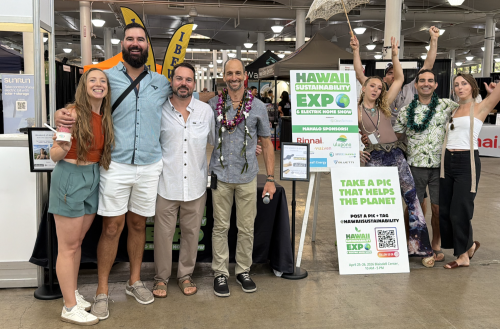
Originally published on Ililani Media, Life of the Land, by Henry Curtis Bill McKibben has spent forty years warning the world about the climate crisis. He co-founded 350.org and Third Act — an organization mobilizing Americans over sixty for progressive change — and has written bestsellers including The End of Nature, Falter, and Deep Economy. McKibben says he’s optimistic. Speaking at Dartmouth in March 2026, he pointed to one remarkable, undeniable fact: “About five years ago, we passed an invisible line where it became cheaper to produce power from the sun and the wind than from burning things—coal, gas, oil.” Over-reliance on fossil fuels, he warned, “will take down our civilizations if we’re not able to slow down the pace at which we are warming.” Solar power is growing faster than any energy source in human history. That’s not activist spin — that’s economics. The fossil fuel industry doesn’t just have a moral problem anymore. It has a math problem. McKibben’s message to communities everywhere, including right here in Honolulu, is that the tools to transform our energy future are in our hands — and the window to use them is open. Scott Cooney, Cofounder and COO of CleanTechnica, has been pushing forward the conversation on solar, wind, and electric vehicles for the past 17 years — having produced more than 75,000 articles, podcasts, and videos and reached more than 200 million unique users across dozens of events in four countries. Cooney doesn’t just write about it — he built Pono Home, performing energy and water-saving retrofits in over 15,000 homes across six Hawaiian islands. This spring, CleanTechnica brings that energy to its biggest Hawaii event yet: the Hawaii Sustainability Expo & Electric Home Show, April 24–26, 2026, at the Neal S. Blaisdell Exhibition Hall in Honolulu. Tickets are just $7 — one of the most accessible sustainability events this state has ever seen. A Three-Day Celebration of Possibility Pro Day (Friday, April 24) convenes contractors, electricians, plumbers, rebate professionals, realtors, and permitting experts for training, networking, and a Clean Energy Career Fair with students from Hawaii high schools, community colleges, UH, and HPU Trade Show & Expo (Saturday–Sunday, April 25–26) opens the doors to the public, featuring EV test drives, e-bike and e-skateboard rides, induction cookstove demos with local celebrity chefs, an all-electric BBQ & booch garden powered by V2X vehicle-to-grill technology, a solar-powered bounce house for keiki, farm-to-expo food, wellness sessions, and much more The weekend is designed to show that sustainability isn’t a sacrifice — it’s a better way to live. Tickets are just $7 at Ticketmaster. A Speaker Lineup That Delivers Sunday afternoon’s centerpiece is Bill McKibben in conversation with Scott Cooney — a fishbowl-style dialogue that promises to be frank, visionary, and galvanizing. The broader speaker program is equally compelling: Lorraine Akiba (former PUC Commissioner), Danielle Bass (State Sustainability Coordinator), and Senator Chris Lee on Hawaii’s sustainability journey Ed Sniffen, Director of the Hawaii Department of Transportation, on the state fleet’s greenhouse gas reduction plan Gwen Yamamoto Lau, Executive Director of the Hawaii Green Infrastructure Authority (Hawaii’s Green Bank), on financing the clean energy transition Dana L. Alden, Ph.D. (UH Shidler College of Business), on sustainable marketing Forest Frizzell of Shifted Energy and Ted Peck of Holu Hou Energy — two of Hawaii’s most accomplished clean energy practitioners Doorae Shin on the landmark Navahine climate settlement and what it means for Hawaii’s future The diversity of voices — utility regulators, state officials, entrepreneurs, academics, and community advocates — reflects exactly the kind of broad coalition Hawaii needs to finish the clean energy transition. McKibben’s message is clear: the trajectory is right, but the pace must accelerate. Federal headwinds are real, but the economics of clean energy are now irreversible. That means the most powerful thing communities can do is act locally and act fast — and events like the Electric Home Show are exactly where that action begins.