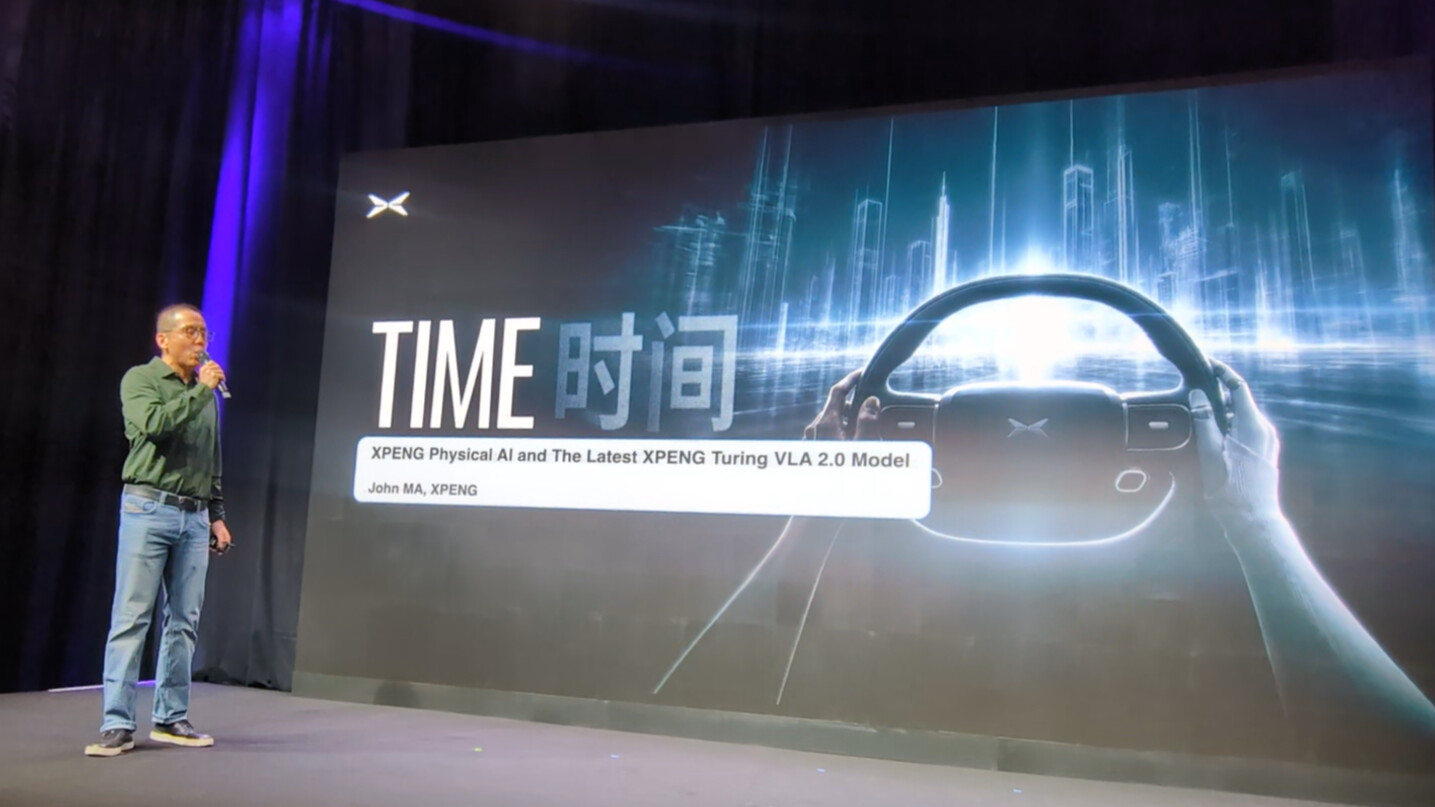
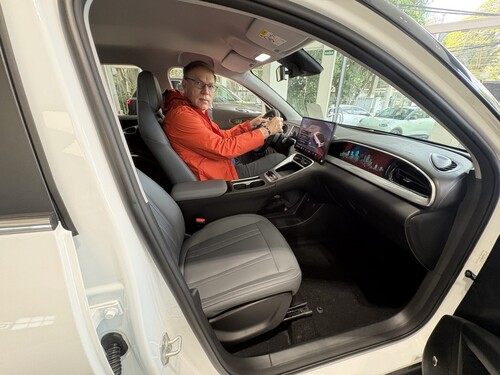
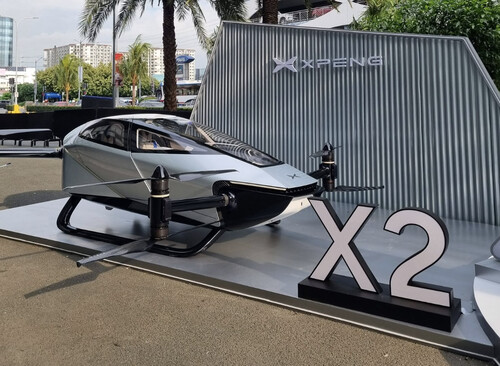
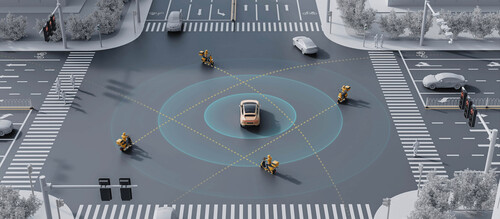
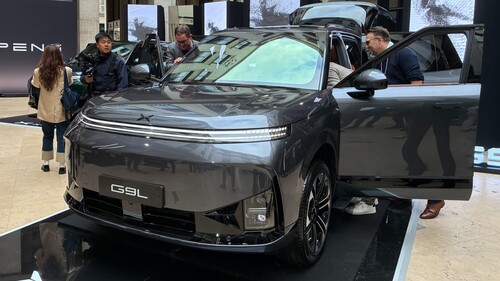
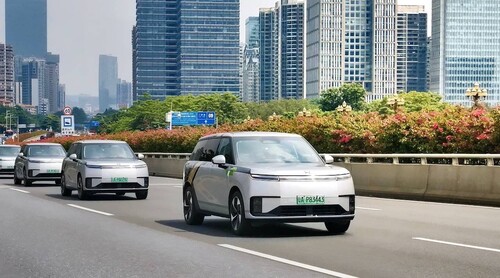
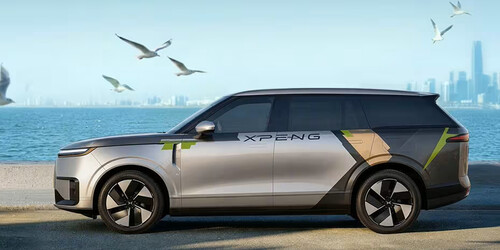
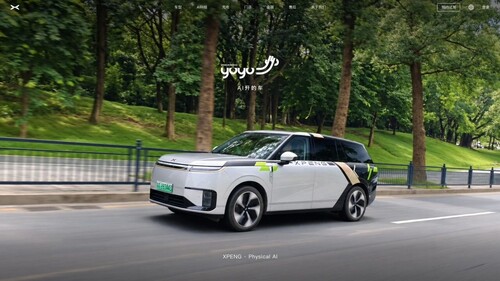
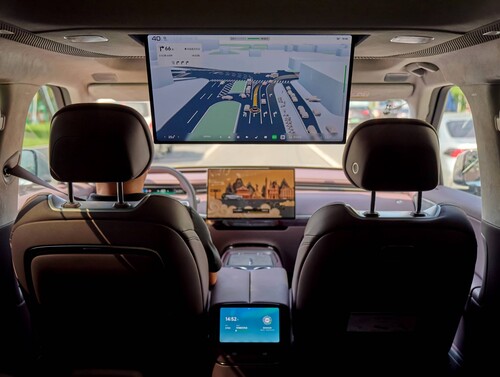
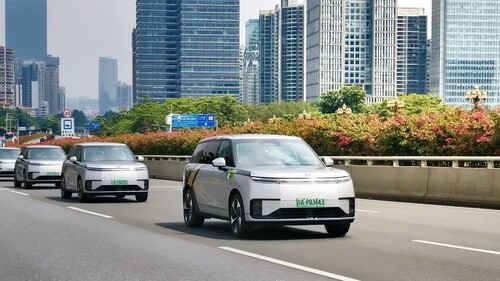
IFA Berlin showcases a wide range of innovation. Many companies tout AI as the latest catch phrase. But XPENG brought technical details and insights into physical AI within current and upcoming products that will soon become available to European customers. John MA, Senior Director, Head of ADAS & Smart Cabin Overseas Delivery for XPENG, gave a keynote presentation on XPENG Physical AI and the latest XPENG VLA 2.0 Turing model. After which, I had the opportunity to ask him a few questions and get some additional insights into the possibilities of physical AI at XPENG. Within the presentation, John MA addressed constraints of AI in the physical world. While XPENG has industry-leading processing power from their Turing chipset, onboard computing power faces limitations and must have low energy consumption. In the physical world, latency, or the time needed to respond, must also be minimal. Speed to respond leads to the most important requirement, safety. That safety then becomes a component of the need to meet regulatory compliance. The most significant part of the recent VLA 2.0 6.3.0 version update is likely the component of time. The model can understand the history of what has happened, leading to present actions and an understanding of what will happen in the future. Infini-VLA puts onboard decision making in a temporal context to improve effectiveness, limited to 30 seconds of historical data to conserve computing power. Building upon that historical data, Streaming Inference anticipates what will happen next, which improves response time by 300%. Taking it a step further, X-Foresight predicts what will happen in the next 6 seconds, also limited to conserve computing power. That then leads into Flow Matching, which plots out multiple potential solutions to pick the best trajectory. These technologies are being currently implemented in their vehicles in China, including their Robotaxi, which is now operating in Guangzhou with broader coverage planned for next year. The video below covers some of the highlights from the presentation, although the audio quality is somewhat poor due to the loud show environment. In the presentation at IFA, there was a little less technical information than in the launch of version 6.3.0 in China, which I covered in detail previously. A little more attention was paid to providing background to the audience. This was due to the broader audience at IFA with typically less experience with XPENG and not as much background in the engineering. So, it was kept a little less complex to avoid confusion. Interview With XPENG’s John MA I also had the opportunity to interview John MA after the presentation. Having experienced VLA 2.0 on several occasions and having followed the company closely, I had a few questions. XPENG currently offers VLA 2.0 technology on newer models with 3 in-house developed Turing chips, as well as on their Robotaxi with a fourth chip for redundancy. They are also planning on rolling out VLA 2.0 technology soon to single Turing chips, followed by previous models with dual Orin chips. However, XPENG is planning a “distilled” version of the model that can operate with less processing power, rather than cutting features. So, I asked John MA: what difference will users experience with the distilled version? We just did some public trials of our single Turing chipset machine, and Orin execution is still under development. I would not like to say that we want to do something for the experience. We still think that at least for safety. That must be guaranteed. There’s no safety issue. And for the smoothness, maybe some slight difference, because the computing power has some physical constraints, even though we try to distill the best part of the model to some small-size model. But still, it may have some slight differences in some scenarios. I don’t know for sure; we have not gotten the formal release to all the passengers. We are also gathering feedback. If we saw some cases or some scenarios are not good enough, maybe we will make it some OTA update, something like that. So, I don’t know for sure, but in theory, we do not want to lose anything. We will try our best to make sure that it can be something comparable with our Ultra machine (features 3 chipsets). But there must be some slight difference. So, by our current approach, we are also gathering feedback from customers. Another announcement in the 6.3.0 version launch was the Master Agent voice control of vehicle operations. This uses very conversational voice interaction to control vehicle functions, including intelligent driving, on Ultra vehicles with three Turing chipsets, as well as the Robotaxi. While the subtitled Chinese in a past presentation seemed to be very intuitive, I asked how it would roll out in other languages and dialects. With our Turing chipset, as you mentioned, it’s about the 3rd chipset. We use it for some voice control and audio interactions. It’s still based on our foundation model, and it’s a large language model itself, which means that it’s very natural. It can learn something about language. So, we have supported multiple languages, including not only English, but also the Mandarin and Cantonese. And also including some other foreign languages, French, German, and maybe some others: Spanish, Italian… But I think that there’ll be some news released during the Paris Car Show, and maybe we have some demos on that. So, stay tuned. I next asked about XLLM and if the technology can run a large language model AI locally on a single chip could be applied to almost anything. Yes, exactly. So that’s the beauty of our technology. We use the VLA 2.0 architecture, which means everything in the physical world with vision, language and actions… So, that’s why also we use this model as the base model or foundation model of our humanoid robots and also our flying cars. So, I think it does have a good potential to be derived into different applications, not only the vehicles, not only the robots, maybe anything could happen. I’m still asking. So maybe we can figure something out in the future. But for now, the key thing is that we can make very good quality for the European market. Very, very mature delivery to our customers and to pass homologation and to tune our models to be more adapted to European traffic and traffic laws and user habits… We have overseas development. We have one big mission, which is to embrace the different markets and adapt to the local market. While some companies rely heavily on centralized data centers and human data labeling for their AI implementations, XPENG does all decision making onboard. Initially this created a challenge, but it has led to several advantages, including compliance with data privacy regulations. However, I asked, what other potential benefits and new applications are created by being able to put so much AI processing power onboard? There’s one key thing, recently, that I’m always thinking about. It is a big next step of the physical AI. So, we want to change human daily life by the improvements of AI. We make the autonomous driving vehicles, we make the humanoid robots, we can fly in cars. In this event, I can see some other companies also trying to do something impacted by AI. So, I’m really thinking about that. But there’s one thing: if we only limit our AI to vehicles, it will be very narrow. So, another application is humanoid robots. Humanoid robots are our very central product. And the humanoid has recently got investment, independent investment…. So, I think that for me that for what’s next, I will check that we can do what we can do for the humanoid robots, but we can combine those physical AI devices together… The robots can be onboard the vehicles and do things for the customers. For example, you want to buy something. Previously, you have to go out and drive your vehicle and buy something. For now, maybe you can ask your vehicle to drive itself. But still need some delivery and ask your robot to step out from your vehicle to the supermarket and get the bag and can return to the vehicle and the vehicle drives back… Which means it’s closed loop. For example, you can use Xiaopeng APP in our device. We can make an XPENG Agent. We can ask the agent to be more than current digital agents. It’s a new physical agent. It’ll be fantastic. We could have kept going, but John MA had to catch a flight. It always impresses me how approachable XPENG executives are and how excited they get when discussing new ideas. There is more on the way, including things I can’t talk about yet. Especially around humanoid robots. XPENG at IFA Berlin. Photo by Larry Evans On The Show Floor Following the presentation and interview, I stopped by XPENG’s booth at IFA. The booth was filled with people checking out the IRON humanoid robot, flying car and L03. Many people were taking pictures with IRON. Several people assumed that the flying car on display was just a concept car and were surprised to find out that they were in the process of ramping up production this year while seeking regulatory approval. There were a lot of people exploring the L03, which I saw at the Munich launch. I watched people explore the car, asked them what they thought and asked some of the people at the booth about the reactions they were seeing. The people I spoke with thought felt it was a very spacious and premium vehicle. Someone connected to the stereo, which I hadn’t tested before, and the audio sounded clear and full range at volumes far beyond what I would ever listen to. A couple of people assumed it would have power-closing passenger doors, thinking it was a much more expensive car. They seemed legitimately shocked when they heard the actual price. Deliveries should start ramping up soon in Europe, and the L03 has the potential to be very successful. That success could accelerate rapidly once the VLA 2.0 intelligent driving system is activated early next year, pending regulatory approval. XPENG has grown to over 31,600 employees with 44.79% in R&D. Growing globally, both in production and R&D, sold through local dealer groups. Many of XPENG’s long-term projects will soon start coming to fruition. It seems like a very busy and exciting time at XPENG. More to come very soon. XPENG at IFA Berlin. Photo by Larry Evans