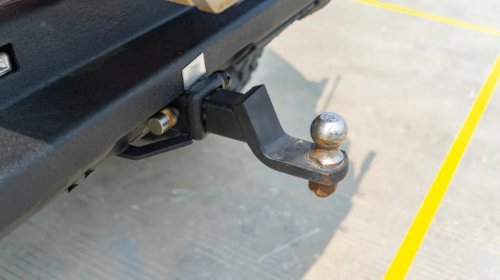
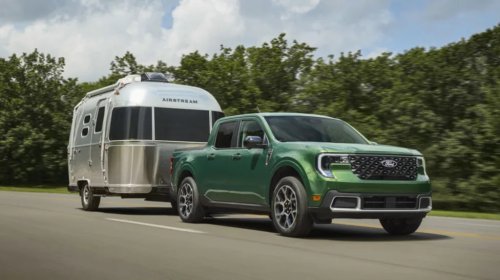
I installed the factory-approved tow package, and now the dealer says my electrical issue is “owner-modified”It’s the kind of car story that starts off wholesome: you do the responsible thing, buy the factory-approved accessory, install it by the book, and expect everything to just… work. Then a warning light pops up, the dash turns into a little Christmas display, and the service writer hits you with the phrase nobody wants to hear: “This looks owner-modified.” That exact frustration is bubbling up in driveways and service lanes all over the place, especially as more vehicles rely on sensitive modules, networked wiring, and software-coded options. And yes, it can happen even when the part you added is “approved,” “genuine,” or “OEM,” because the argument isn’t always about the part—it’s about who touched it, how it was installed, and what the dealer believes it changed. The promise of “factory-approved” (and the fine print nobody reads) When a tow package is advertised as factory-approved, most people hear, “You can’t get in trouble for this.” In reality, it usually means the accessory is designed to be compatible with the vehicle and meets the manufacturer’s standards—often when installed in a specific way, sometimes by a dealer or certified shop. Some kits are truly plug-and-play, while others require splicing, routing through tight body grommets, adding fuses, or integrating a module that talks to the car’s network. If anything in that chain is off—pinched wire, loose ground, wrong fuse rating, missed programming step—the vehicle can misbehave in ways that look unrelated to towing. And that’s where the “owner-modified” label starts creeping in. Why electrical problems are where blame games thrive Electrical issues are the perfect storm for finger-pointing. They can be intermittent, sensitive to temperature or moisture, and triggered by something as small as a connector not fully seated. Modern vehicles also monitor loads on lighting circuits, watch for trailer presence, and shut down circuits to protect themselves. Add a trailer module or harness, and you’ve introduced new variables—more connectors, more grounds, more places for corrosion, and more “who did what” questions. From the dealer’s side, the service department is juggling warranty rules, diagnostic time limits, and the risk of getting a claim denied by the manufacturer. If they suspect your tow wiring is involved, it can feel safer (for them) to label it “modified” and move it out of warranty territory. Common scenarios that trigger the “owner-modified” tag One of the biggest triggers is installation method. If the tow package required coding or software configuration and that step didn’t happen—or happened with aftermarket tools—the dealer may argue the vehicle’s configuration no longer matches factory spec. Another classic is wiring technique. Even a neat-looking splice can be a red flag if the manufacturer’s procedure calls for a replacement sub-harness, specific crimp connectors, or sealed joints. And if the harness runs near a pinch point, exhaust heat, or a sharp edge, a short can appear months later and still get pinned on the install. Then there’s the “it’s genuine OEM, but bought online” problem. Some dealers are perfectly fine with parts sourced elsewhere, but others get wary when the kit didn’t come through their parts counter, especially if they can’t verify the exact part number or revision. What “owner-modified” actually means in warranty language Here’s the frustrating but important nuance: adding an accessory doesn’t automatically void your warranty. In most places, warranty coverage can’t be denied just because you installed something; it has to be reasonably tied to the failure in question. But dealers and manufacturers can deny coverage for a specific repair if they believe the modification caused or contributed to the issue. That’s why you’ll hear wording like “related concern” or “aftermarket influence,” even when the part is factory-branded. It’s less “your warranty is gone” and more “we’re not paying for this particular fix unless we’re convinced it’s not connected.” The paperwork that saves people (and the stuff that doesn’t) If you’re in this situation, documentation is your best friend. A receipt showing the exact kit part number, installation instructions, and photos of the finished routing can change the tone of the conversation fast, especially if it demonstrates you followed the official procedure. If a dealer installed it, that’s even stronger—ask for the repair order that shows the tow package install and any programming performed. If you installed it yourself, keep the instruction sheet and take a few clear photos: connector points, grounds, fuse location, and harness routing away from moving parts. What usually doesn’t help: “It’s a common issue online,” or “A forum says this happens stock.” That might be true, but service advisors respond better to evidence tied to your specific vehicle, not the internet’s collective misery. How to talk to the dealer without turning it into a showdown A calm, specific approach works better than going in swinging. Ask them to put in writing what they found that indicates the tow package caused the electrical problem—actual test results, fault codes, and the failure point (for example, “short to ground in left rear lighting circuit at trailer connector”). Then ask one simple follow-up: what would they need to see to consider it warrantable? Sometimes they’ll say, “If the harness tests good when disconnected,” or “If we can confirm the issue is upstream of the trailer module.” That turns the conversation from vibe-based blame to measurable troubleshooting. If the answer stays vague, request a meeting with the service manager. Not to threaten anyone—just to clarify the reasoning and make sure “owner-modified” isn’t being used as a catch-all label for “electrical is hard and we’re busy.” A practical troubleshooting step that often clarifies responsibility Many tow harness systems have a clean separation point: you can unplug the trailer module or disconnect the harness and return the vehicle circuits to “as close to stock as possible.” If the problem disappears when the tow harness is isolated, that’s strong evidence the issue is related to the tow setup (or at least in that neighborhood). If the problem remains with the tow kit fully disconnected, that’s equally strong evidence the tow package might be unrelated. Dealers love this kind of A/B test because it’s quick, defensible, and makes warranty discussions less subjective. When “factory-approved” still needs dealer programming Some vehicles require the tow package to be enabled in software so the car knows how to manage lighting loads, trailer sway control, charging circuits, or parking sensor behavior. Without that step, the vehicle may throw faults because it “sees” unexpected electrical characteristics, even if the wiring is physically correct. This is one of those maddening modern-car realities: you can install everything perfectly and still be missing the one step that lives inside a scan tool. If your kit mentions “dealer activation,” “coding,” or “configuration,” it’s worth confirming that was actually done—and documented. If you need to escalate, do it cleanly If you believe the dealer is denying coverage unfairly, you can open a case with the manufacturer’s customer care line. Keep it simple: provide your VIN, dates, repair order numbers, the tow kit part number, and a concise summary of what the dealer claimed and what you’re requesting (usually, diagnosis under warranty or reconsideration of coverage). It also helps to ask for the old parts back if something gets replaced, or at least ask for photos. Not because you’re starting a courtroom drama, but because details tend to get clearer when everyone knows the record might be reviewed. And if you’re thinking, “I just wanted to tow a small trailer, not earn a minor in automotive law,” you’re not alone. The good news is that most of these standoffs soften once there’s a clear diagnostic path—and once “owner-modified” turns back into a specific, testable claim. More from Fast Lane Only Unboxing the WWII Jeep in a Crate 15 rare Chevys collectors are quietly buying 10 underrated V8s still worth hunting down Police notice this before you even roll window down The post I installed the factory-approved tow package, and now the dealer says my electrical issue is “owner-modified” appeared first on FAST LANE ONLY.



















 +50 others