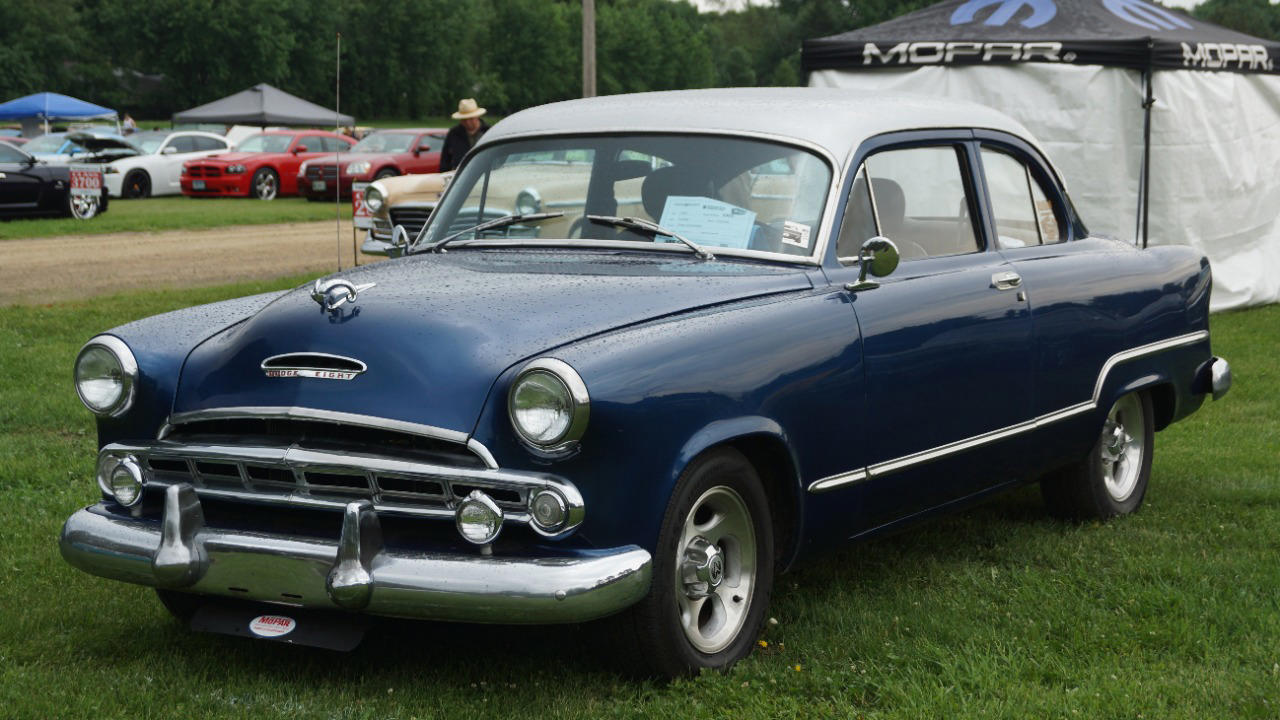
How the 1953 Dodge Coronet balanced work and performanceThe 1953 Dodge Coronet arrived at a moment when American drivers wanted a car that could haul families and luggage during the week yet still feel eager on an open highway. Rather than forcing a choice between utility and excitement, Dodge used the Coronet to show that a practical full-size sedan could also bring advanced V8 performance to everyday buyers. That balance of workhorse duty and emerging power made the model a quiet turning point for the brand. From postwar workhorse to flagship By the early 1950s, Dodge needed a car that could serve as a top-of-the-line model without alienating buyers who depended on their vehicles for daily work. The Coronet filled that role as a full-size offering that sat above more basic Dodge trims yet still shared the sturdy underpinnings owners associated with durability. Contemporary descriptions of the 1953 Dodge Coronet as a “classic example” of American utility stress how it “stood proudly among its more commercial rivals” while maintaining a distinct identity that did not feel like a stripped fleet car, a balance captured in a period account of a gray Coronet that praised how it combined presence with everyday usefulness in the cab and trunk inside the cabin. This positioning reflected the broader postwar market. Families were moving to suburbs and needed cars that could commute, run errands, and manage long trips. The Coronet range, which included sedans, hardtops, and wagons, was designed to meet those demands while signaling that Dodge could compete directly with other Detroit brands on comfort and style, not only on toughness. Engines that bridged duty and speed The heart of the Coronet’s dual character lay under the hood. The second generation of Dodge Coronet, which covered the 1953 and 1954 model years, offered a range of engines that started with reliable six-cylinder units and climbed to more advanced V8s. A detailed guide to Engine Options and notes that this generation introduced the first Dodge Hemi V8, which immediately distinguished the Coronet from more conservative family sedans. That Hemi, displacing 241 cubic inches, gave the Coronet genuine performance credentials while still being offered in body styles that families and tradespeople bought in large numbers. A separate examination of a 1953 Coronet highlights how this engine architecture, with its hemispherical combustion chambers, set the pattern for later Mopar performance cars and marked the first time Dodge applied such technology in a mainstream model. In that account, Magnante uses a vintage brochure to explain how the early Dodge Hemi differed from conventional flathead engines and why it mattered for power and efficiency, particularly in the first Hemi V8 Coronet. The first Dodge Hemi in context The Hemi story has become central to the Coronet’s legacy. A video walkaround of a junkyard Dodge, presented by Stephen with help from his colleagues at High Octane Classics in Auburn Mass, revisits that moment by tracing the origins of the first Dodge Hemi. In the footage, Stephen explains how the early V8 found in cars like the Coronet differed from later muscle-era engines and why enthusiasts still seek out these early blocks, using the junkyard setting to emphasize how advanced the engineering was for a work-focused brand. That same heritage appears in enthusiast discussions that describe how the engine was first introduced in 1953 and quickly became an iconic part of the Dodge lineup, particularly in models like the Dodge Coron. One such account in a muscle car group highlights the way Dodge positioned the Hemi not as an exotic racing motor but as an option that any Coronet buyer could select, effectively turning a family sedan into a performance showcase for the brand and ensuring that the Dodge Coron name would be closely associated with V8 innovation. Real-world performance and everyday drivability Performance figures from period-style catalogs illustrate how the Coronet translated its engineering into real-world speed. According to a detailed Dodge Coronet Catalog, the 1953 Coronet could reach highway velocities that kept pace with contemporary traffic while still delivering the kind of torque drivers needed for loaded trunks and full cabins. The same guide notes that specifications for classic cars are given to the best of its ability, since data from the period can vary, yet the broad picture is clear: this was a full-size car that did not feel strained at speed. Another enthusiast description of the 1953 Dodge Coronet, focused on its top-of-the-line status, mentions that it had an elliptical speedometer and was capable of reaching approximately 90 miles per hour, or 145 km/h, which placed it among the quicker family cars of its era. That discussion in a muscle car museum group highlights how the Dodge Coron combined such performance with a cabin designed for comfort rather than spartan racing use, reinforcing the idea that ordinary drivers could access higher speeds without stepping into a dedicated sports car. Body styles, wagons, and work-ready versatility The Coronet lineup also showed how Dodge intended to serve both family and work needs with a single nameplate. A guide to the Coronet generations describes the Coronet Station Wagon as a family-oriented four-door with early woodgrain detailing and later all-steel construction. It notes that its spacious interior and generous cargo area made it ideal for postwar suburban life, where a single vehicle often had to handle school runs, grocery trips, and weekend hauling. At the rarer end of the spectrum, enthusiasts have documented a 1953 Dodge Coronet Sierra 2 Door Wagon equipped with a 241 cubic inch Hemi V8. That car, highlighted by Jimmy Pitcher in a group dedicated to Classic Mopars Chrysler, DeSoto, Dodge, Imperial, Plymouth 1999 & Older, shows how Dodge was willing to pair its advanced engine with a body style that leaned heavily toward utility. The combination of a powerful V8 and a two-door wagon layout created a vehicle that could tow, carry equipment, and still accelerate with authority, a clear illustration of how the Coronet blurred the line between work vehicle and performance car. Comfort, options, and emerging luxury Inside, the Coronet aimed to keep occupants comfortable during long days behind the wheel. Enthusiast descriptions of the 1953 Dodge Coronet’s interior emphasize modest but thoughtful trim, with bench seats and materials that felt a step above bare-bones commercial vehicles while still being easy to keep clean. One discussion of the car’s key features notes styling touches such as a hood scoop and a chrome belt line, which gave even work-oriented models a hint of flair and helped the Dodge Coron name stand out on crowded streets. 1953 Dodge Coronet. Comfort extended beyond fabric and trim. A valuation guide for the 1953 Dodge Coronet notes that cars built after April 6 of that year could be ordered with air conditioning, a feature that was still rare outside luxury segments. The same guide explains that, for 1954, the new Dodge Royal series replaced the Coronet at the top of the range, but that for 1953 the Coronet represented the brand’s highest expression of comfort and equipment, with options like air conditioning becoming primary decision factors for buyers who wanted a car that could handle hot climates without sacrificing practicality. Why the 1953 Coronet still matters Viewed from the present, the 1953 Dodge Coronet sits at an intersection of trends that still define the American car market. It showed that a full-size sedan or wagon could carry families, support small businesses, and still introduce advanced powertrains like the first Dodge Hemi V8. It did so while offering emerging comforts such as factory air conditioning and styling that signaled pride of ownership rather than mere utility. More from Fast Lane Only Unboxing the WWII Jeep in a Crate 15 rare Chevys collectors are quietly buying 10 underrated V8s still worth hunting down Police notice this before you even roll window down



















 +24 others