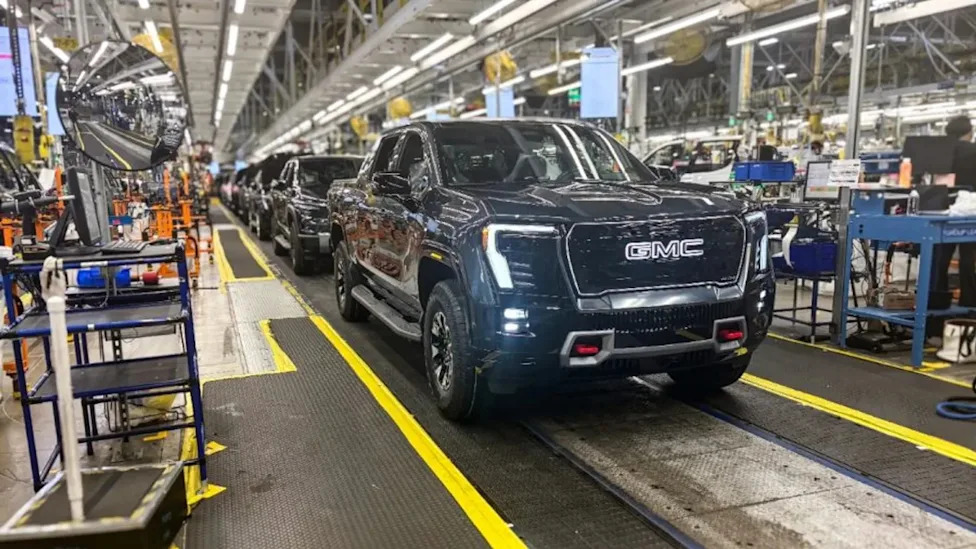
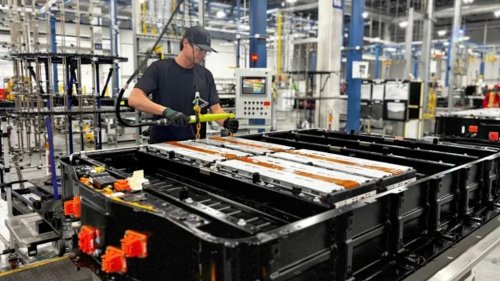
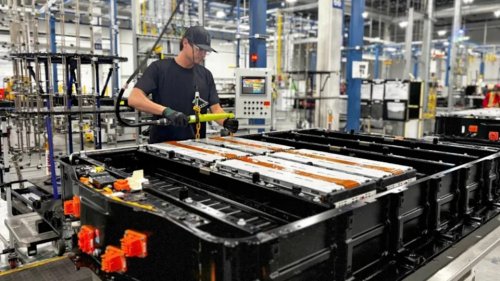
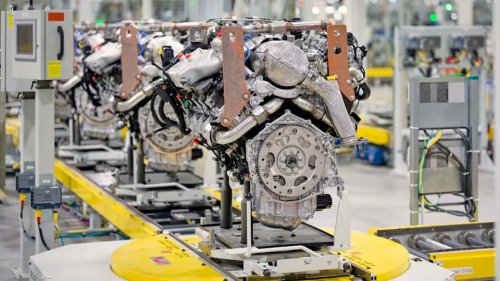
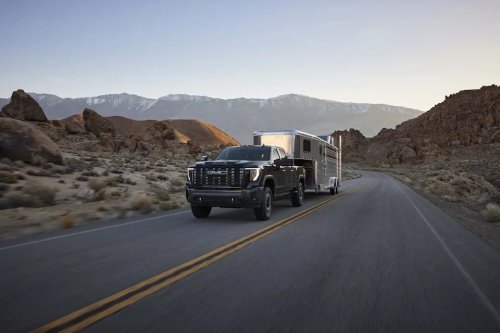
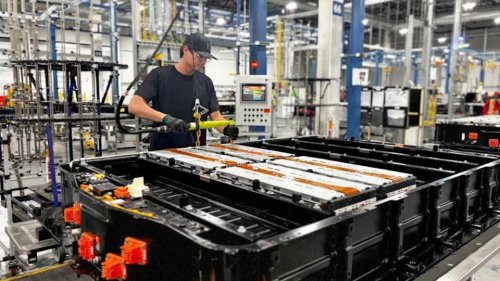
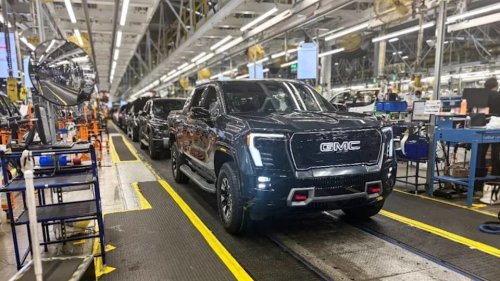
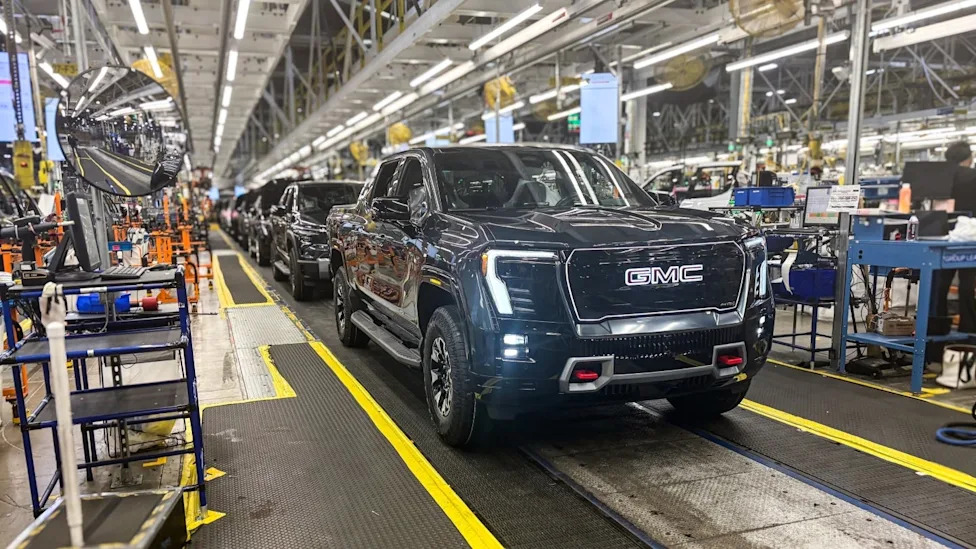
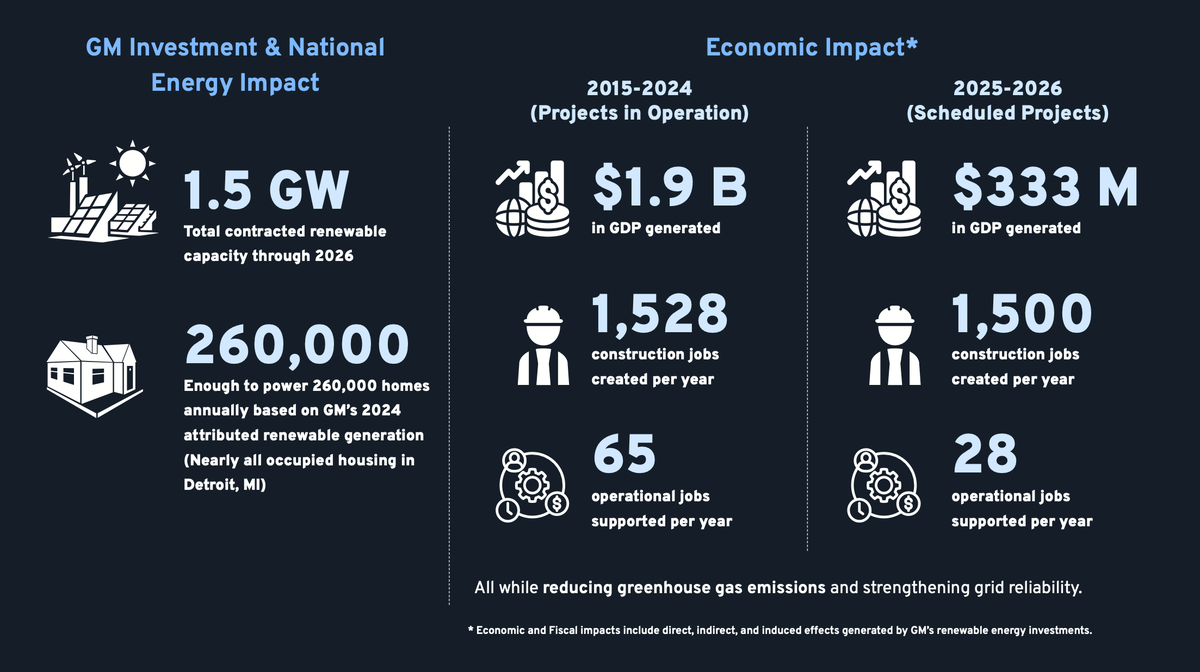
General Motors says it has reached an energy milestone, becoming the first US automaker to match 100% of the electricity used at its domestic facilities with renewable sources.The company announced that in 2025 it secured enough clean energy (wind, solar, and other programs) to offset every kilowatt-hour consumed across its US operations. While the electricity powering GM plants still flows through regional grids, the company contracts for an equivalent amount of renewable generation, effectively balancing its energy use.The attention surrounding the question of energy reduction has for a long time been centered on the vehicles themselves, with the focus on shedding a reliance on emissions from fossil fuel use and an increase in overall vehicle efficiency. But automakers have increasingly been turning their attention to the manufacturing side of the equation. GM said its efforts have already cut operational emissions by 52 percent since 2018, a key step toward its broader goal of carbon neutrality.Globally, GM says it has reached about 70 percent renewable energy matching, nearly doubling its level from 2023, with new projects in markets such as Mexico and Brazil helping drive the increase. The company continues to target 100 percent renewable electricity worldwide.gm renewable energy 2025 infographic.Executives frame the shift as having cake and eating it, as both an environmental and business decision. Long-term renewable energy contracts can help stabilize costs in volatile energy markets, while expanding clean energy capacity can improve grid reliability and reduce dependence on imported fuels.GM says its approach relies on a few different mechanisms. About 40 percent of its renewable energy comes from utility programs, with another 37 percent tied to virtual power purchase agreements, which fund large-scale wind and solar projects. Smaller portions come from renewable energy credits, on-site generation, and other sources.The company has invested in projects such as the Newport Solar facility in Arkansas, seen above, and Hilltopper Wind Farm in Illinois.Those investments have also resulted in other economic benefits. GM estimates its renewable energy projects have contributed roughly $1.9 billion to US GDP since 2015 and supported about 1,500 construction jobs annually across multiple states.Some of GM’s production sites directly contribute to the switch to renewables. Factory ZERO in Detroit, which builds several of GM’s electric vehicles, is powered through a clean-energy utility program, while the company’s Spring Hill, Tennessee plant relies on a similar initiative through the Tennessee Valley Authority.GM is also pushing its suppliers to follow suit, encouraging participation in programs aimed at reducing emissions across the broader automotive supply chain.



















 +46 others