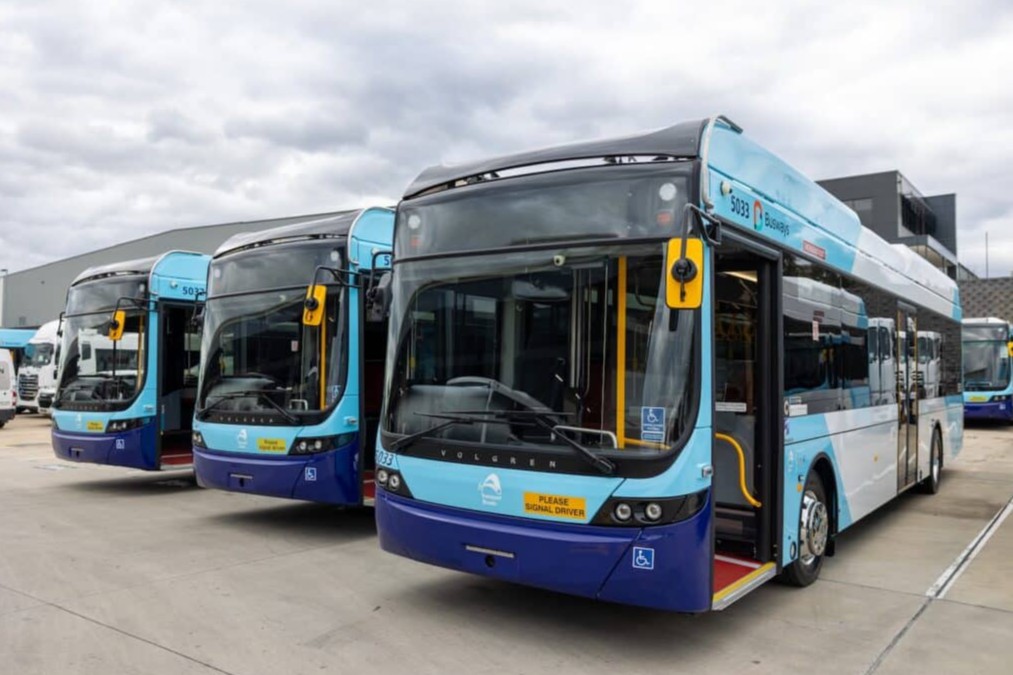
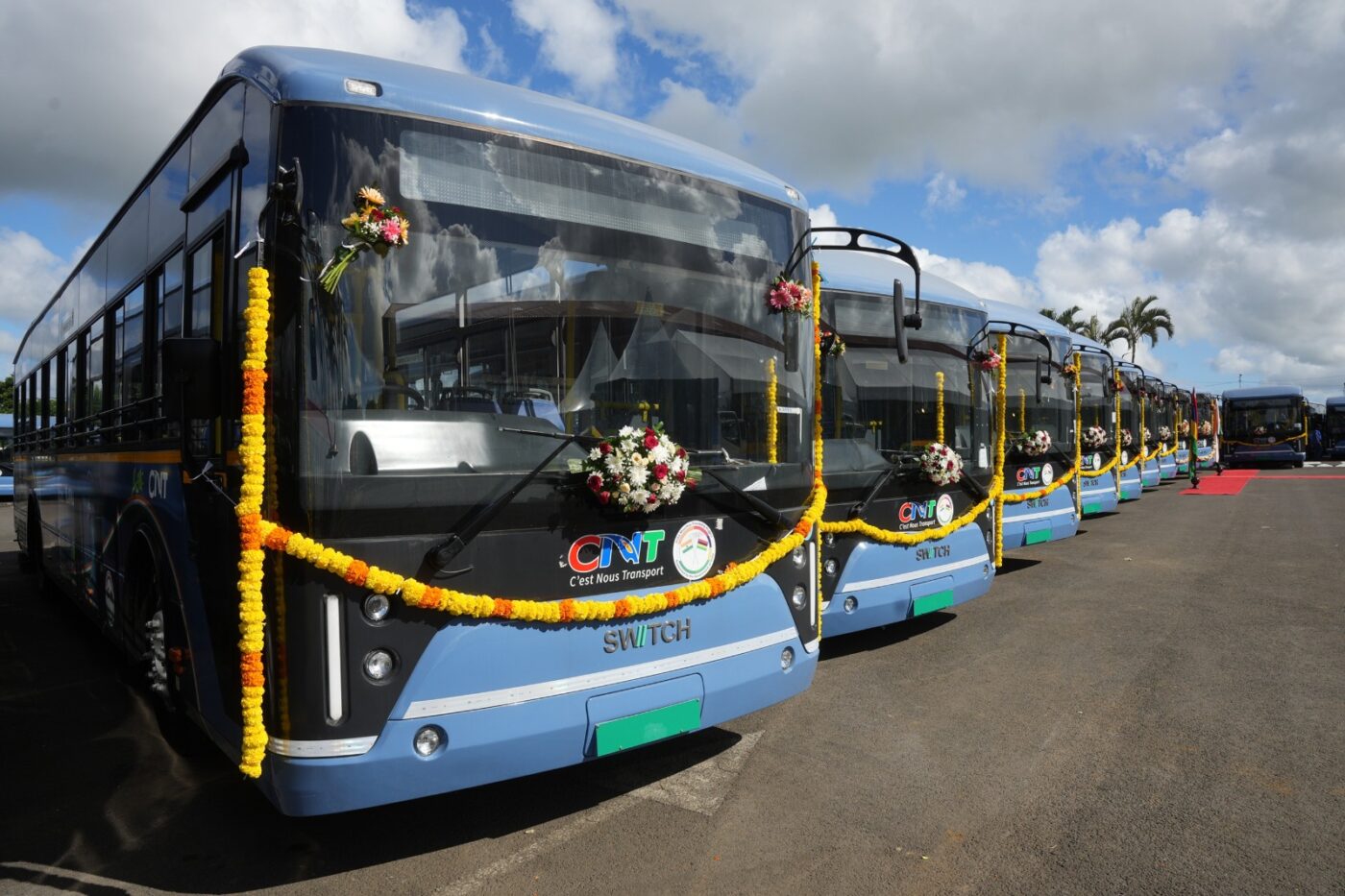
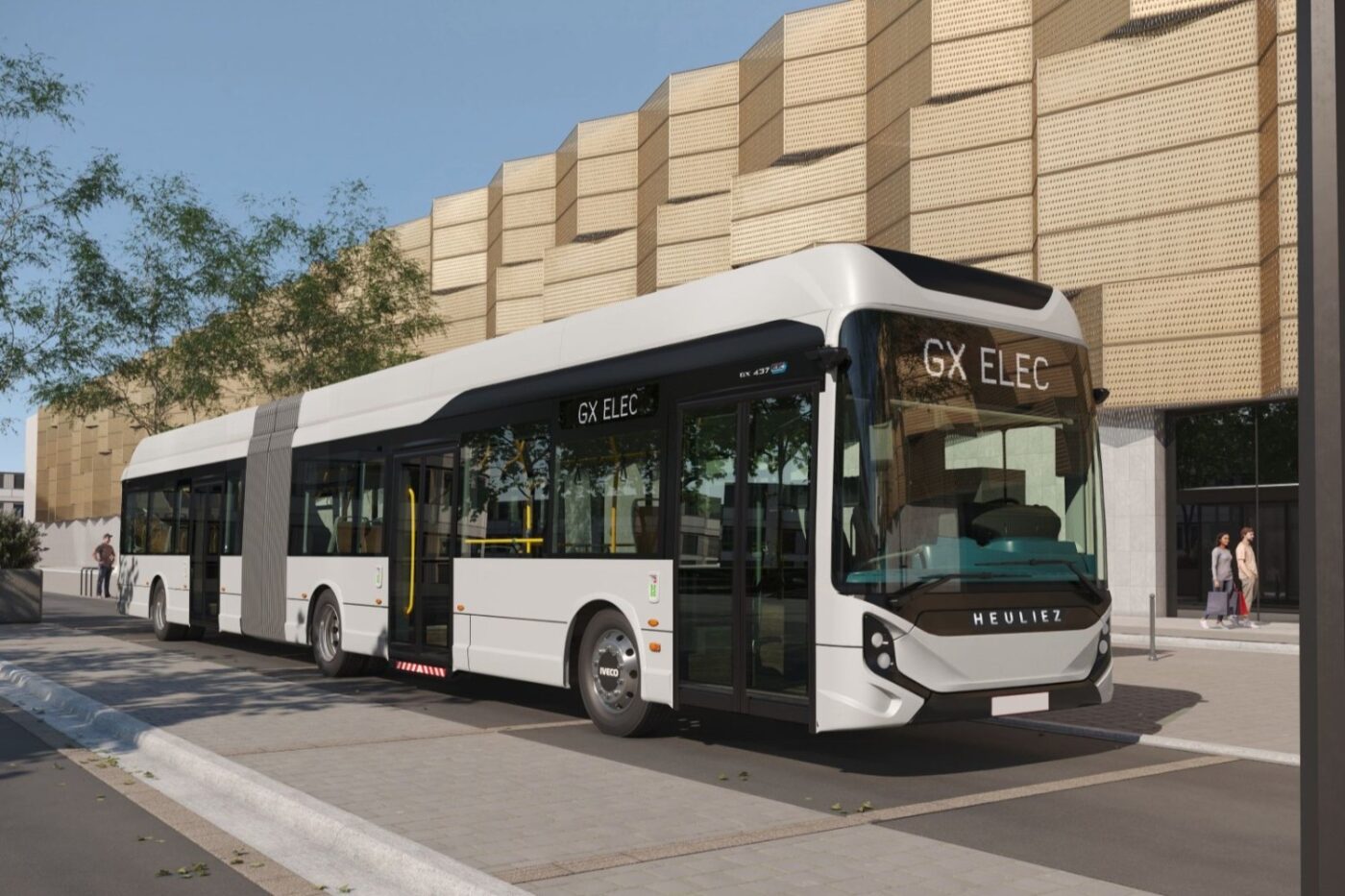
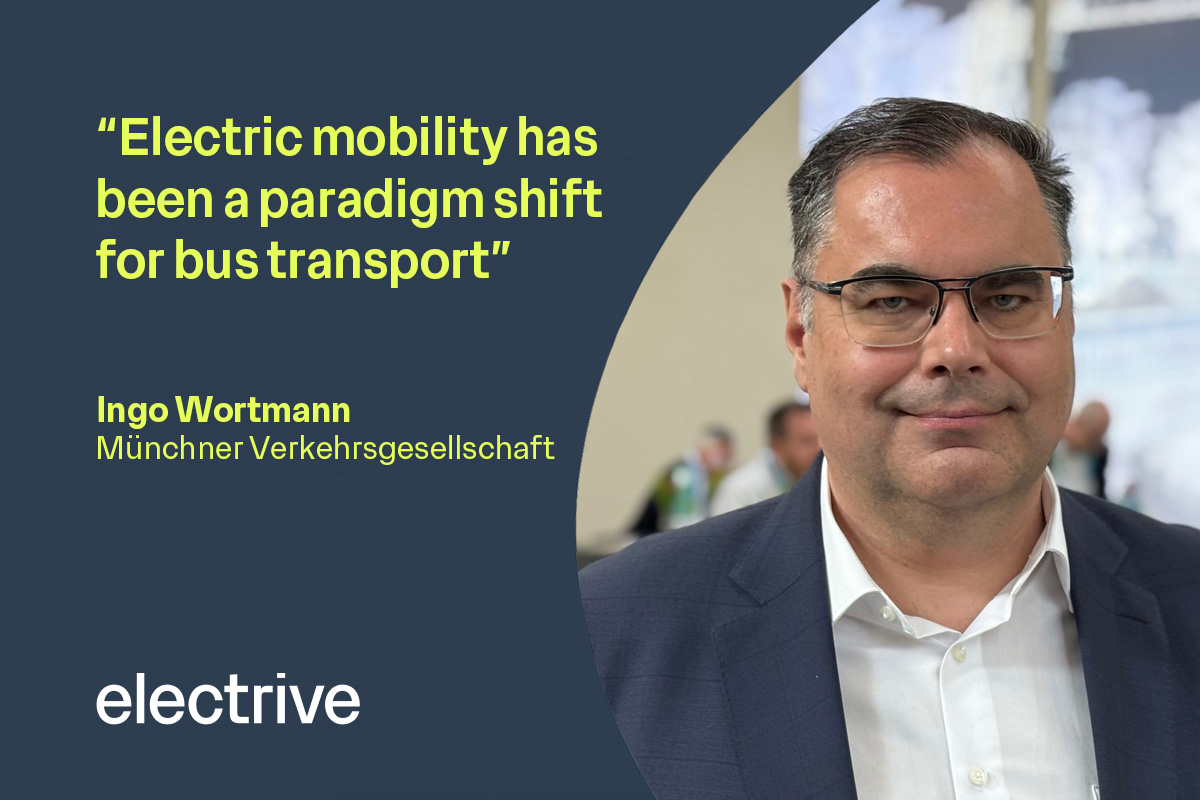
At the Mobility Move 2026 in Berlin, electrive.com spoke with Ingo Wortmann, President of the Verband Deutscher Verkehrsunternehmen (Association of German Transport Companies, VDV) and outgoing CEO of Münchner Verkehrsgesellschaft (Munich Transport Company, MVG). After ten years in Munich, Wortmann is preparing to return to his home region of North Rhine-Westphalia. His tenure coincided with a decisive phase for electric mobility in public transport, including the rollout of more than 100 electric buses in the Bavarian capital.In the video interview, recorded on site at the industry gathering, Wortmann describes the transition to electric drivetrains as “a paradigm shift for bus transport” and outlines how operators have moved from pilot projects to scaling fleets. He also highlights the early challenges, including limited vehicle range, high costs and technical teething issues, while pointing to ongoing progress in battery performance and charging strategies.Looking ahead, Wortmann assesses the maturity of electric bus technology, the role of public funding and the need to electrify regional services. He also comments on market developments in Germany, where electrified buses now account for around half of new registrations, and calls for continued momentum to meet regulatory targets.The interview is available as a video in German. You can activate subtitles on YouTube, or read the full transcript below for convenience.You are leaving Munich after ten years and returning to your home town of Oberhausen. Will you miss Munich?Yes, I will certainly miss Munich, especially the beer gardens, but I am also looking forward to North Rhine-Westphalia and to being closer to my family again.During your tenure, you initiated the electrification of the bus fleet. More than 100 electric buses are already in operation in Munich. What would you identify as the most important milestone?For bus transport, that was undoubtedly a paradigm shift, but we also made other important decisions. We expanded tram services, planned underground lines, developed a new app and built a new control centre. A lot has come together over the past ten years.Looking back at the start of this transformation and electrification, how do you assess it? What worked well and what would you do differently today?The start was certainly very difficult, but I think that was the case for everyone. We first needed buses with sufficient range. They also had to be priced at a level that was acceptable, even with subsidies.They also had to be ready for series production. We had buses that required extensive reworking on site, sometimes even in conventional mechanical areas, not just in the electric components. But we are now increasingly procuring buses with a longer range.We are also purchasing buses with charging rails so that we can charge them along the route. At the moment, we rely on plug-in charging, which gives us more flexibility. The better the batteries become and the more flexible we are with charging, the stronger the ramp-up of electric buses will be.From your perspective, what are currently the biggest challenges for your member companies in the VDV when electrifying?Firstly, the cost of the buses if subsidies are withdrawn. We urgently need funding for the ramp-up phase. At some point, that will no longer be necessary.Electric buses are also comparatively cost-effective in maintenance. That is one aspect. The other is that we need batteries with sufficient range and charging options along the route. These must be reliable enough to ensure that delays do not lead to further disruptions. So the design of on-route charging needs to be carefully considered.How would you assess the maturity of the technology currently available on the market, both for charging infrastructure and for buses?We are well above 50 per cent maturity, closer to 60 or 70 per cent. The buses we are receiving now are largely very good. However, we still see issues such as door problems, although these are not related to electric technology.We now need to continue improving battery technology. We also need to advance heat pump systems, particularly for heating and air conditioning. And we need to determine the optimal charging technology.How do you assess the German market? Electrified buses – including battery-electric and hydrogen models – reached a share of around 50 per cent. Regulation clearly points towards fully electric city buses. Would you describe the situation as half full or half empty?I am an optimist, and I see the glass as half full. We need to address electrification on long-distance regional bus routes. However, the industry has already indicated that battery ranges will continue to increase.The same applies to the truck market. But I believe we are on the right track. We must not slow down now.We will still need public funding for some time.Funding has been announced again, with €500 million expected this year. However, subsidies cannot be the long-term solution. Public transport financing has always been a key concern for you. What would you propose?It is certainly beneficial that we have general bus funding. That always helps, as otherwise costs would have to be passed on to fares. In this case, we are talking about specific funding for electric buses.I am convinced that this can eventually be phased out once we achieve sufficient scale, with enough buses operating across Germany. But at the moment, we still need it for the ramp-up phase.How overall bus funding is structured varies between countries. However, public transport requires financial support, particularly in the current situation. Bus funding remains an effective instrument.Should public transport not take a more confident stance on electrification and the transport transition? After all, it is helping to close the emissions gap in the sector. Germany still has considerable catching up to do, even if climate protection is currently not a top priority for the government.There are two effects. Firstly, we are electrifying. Rail systems are already largely electrified. Railways, trams and underground systems are fully electric. We are now electrifying buses, so the drive transition is well underway and we are making our contribution to climate protection.Secondly, the more people use public transport, the more climate-friendly it becomes, with lower specific energy consumption and reduced space requirements. Public transport is always a good option, regardless of the drive transition, but we are also pushing that forward.In Europe, there are already markets with a 100 per cent electric share. What are they doing differently, and what can be learned?I believe they are moving faster in many areas. I also see important developments in autonomous driving. If we do not want to fall behind, we need several things.We need committed companies, and we have them, that are purchasing electric buses or planning to deploy autonomous vehicles. But we also need initial funding, as many operators run at a deficit and cannot independently finance research and development. With targeted funding over a defined period, we can accelerate the ramp-up.We also need time, as depots must be adapted for electric buses and, in the future, for autonomous vehicles.The remaining question is how electrification can expand into rural areas. You have already mentioned regional bus services. Supply on the market remains limited, and many operators are only just starting to electrify. There is still significant work to be done in Germany.Yes, certainly. For rural areas, solutions could include hydrogen, on-route charging or eventually batteries with sufficient range for regional buses, depending on their mileage. There is still work to be done, but the industry is ready to implement it. We need funding to support the initial ramp-up.


















 +55 others