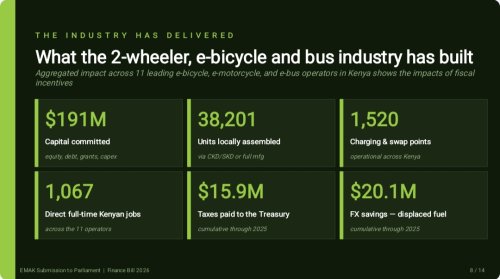
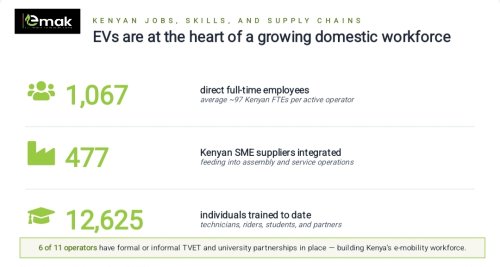
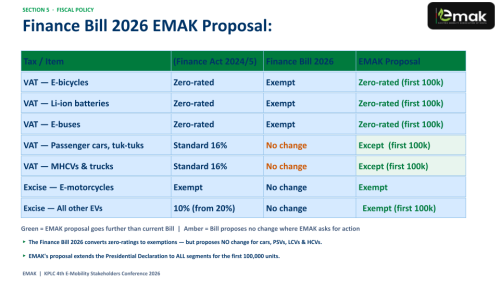
The Electric Mobility Association of Kenya (EMAK) is a diverse and dynamic community that includes industry experts, entrepreneurs, policymakers, academics, innovators, and enthusiastic individuals who believe in the potential of electric mobility to shape a sustainable future. EMAK assumes the role of a strong advocate for electric mobility at all levels, from local communities to national policies. Through engagements with government bodies, regulatory authorities, and relevant stakeholders, EMAK works to create an enabling environment for the growth of electric mobility in Kenya. In a recent submission to Kenya’s parliament as part of deliberations on Kenya’s Finance Bill for 2026, EMAK highlighted the significant progress made by players in Kenya’s electric mobility sector. Following the Finance Act 2023 incentives (mainly focusing on electric motorcycles and buses), annual registrations of electric vehicles surged from 4,048 to 28,754 from 2023 to 2025. 90% of these registrations were electric motorcycles. Cumulative registrations through 2025 surged from only 1,378 cumulative pre-2023 to 43,324 in 2025 — a 31× expansion in three years! Here is a slide showing a summary the progress: Here is another slide showing the impact made by the electric mobility sector in job creation in Kenya: We can see how the incentives introduced in 2023 helped to supercharge Kenya’s electric motorcycle industry. The main issue is every year a new Finance Bill is introduced with potentially industry-changing impact. These could be good or bad in terms of impact, as some proposals build on previous Finance Acts, and some roll back some of the progressive initiatives introduced in previous Finance Acts. There are calls for more consistent policy and more continuity to give players in the sector more runway to scale. There are also calls to harmonise these incentives across all electric vehicle segments. Given the progress made in the electric motorcycle sector, imagine if a similar framework was applied to electric cars and trucks! Kenya President William Ruto recently announced plans to encourage electric mobility adoption by removing import duties on 100,000 vehicles. No further details were given and there is no word yet on when or if this will be implemented and enacted into law. EMAK says this proposed duty-free EV import quota will be the largest fiscal commitment to e-mobility in Kenya’s history. If implemented, the call is to ensure that it should include all vehicle types, particularly passenger cars, trucks, and tuk-tuks to catalyse adoption in these segments that have lagged behind the electric motorcycle and bus sector so far in terms of growth. In the meantime, here is a summary of the of EMAK’s recommendations for 2026: Slides courtesy of EMAK. It’s always good to get real insights from people working in the industry on the progress being made in Kenya’s electric mobility sector. The numbers are clear. Kenya now has a real electric mobility industry that is having a significant and positive impact on Kenya’s economy. As an industry, Kenya is now well past the pilot stage and sectors like the electric motorcycle segment are well past the early adopter phase, with a market share of over 15% of new registrations in the overall motorcycle sector in 2025. The impact of incentives introduced in the Finance Act of 2023 are clear for everyone to see, a 31× expansion in three years! Now imagine if this was extended to electric cars and other segments that are lagging behind. The disruptions and price increases in the fossil fuel sector caused by the conflict in the Middle East are surely a reminder that we need to prioritise energy efficiency and energy security.



















 +42 others