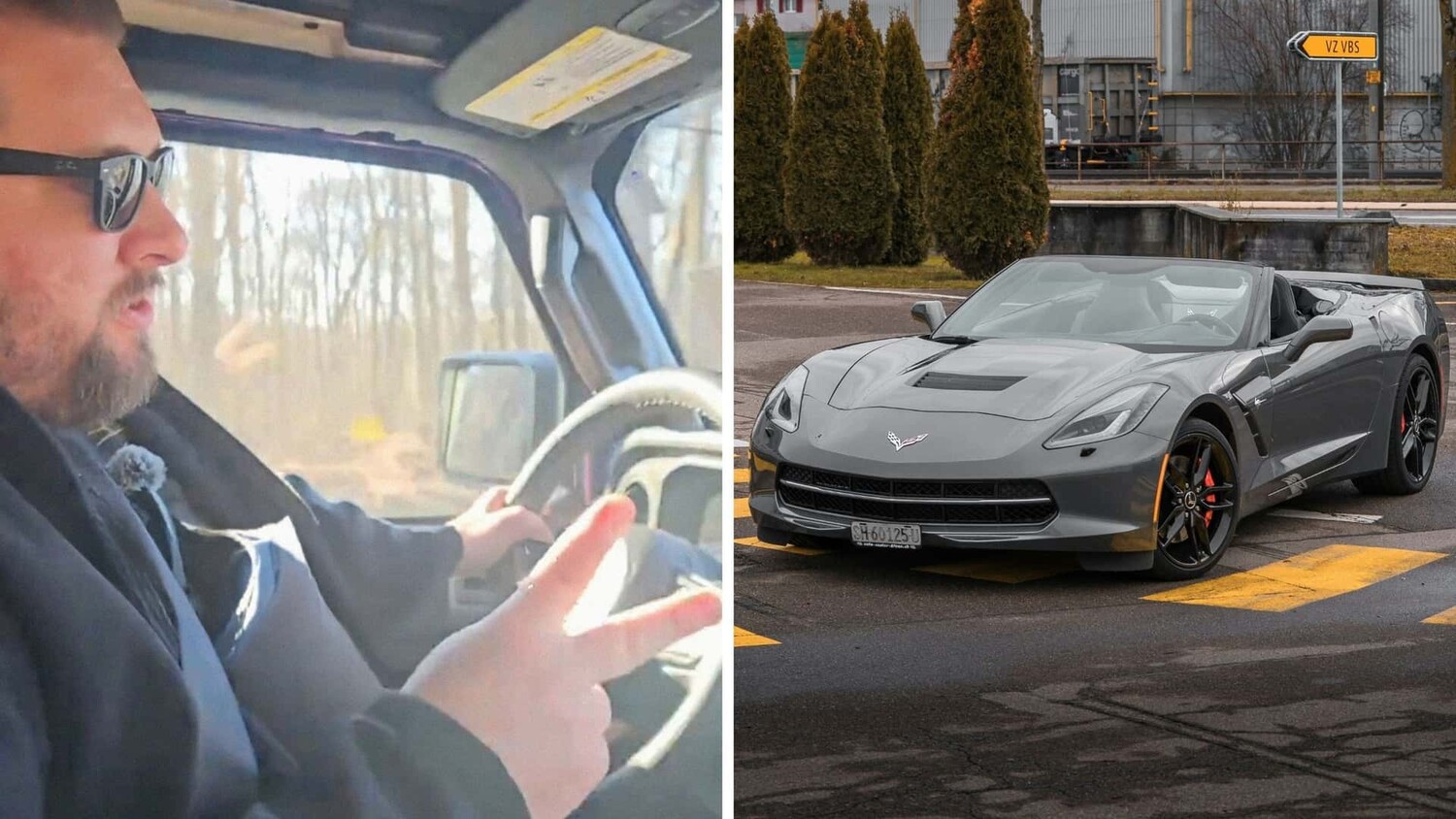
Image Credit: stingerzstung / TikTok.Trusting a transport company with a brand-new Corvette is already a leap of faith for any serious car person. You hand over the keys to a stranger, hope for the best, and try not to think too hard about what happens between the dealership and your driveway.For one Corvette buyer who goes by StingerStung on TikTok, that anxiety turned out to be completely justified — and he has the footage to prove it.The dealership, apparently keeping an eye on things the way any good shop should, caught the transport driver on camera doing a cold-start rev bomb on the freshly purchased Corvette. Not a gentle warm-up. Not a brief blip of the throttle to pull it onto the trailer. A full, sustained redline pull on a cold engine. The kind of thing that makes any gearhead's stomach drop.AdvertisementAdvertisementWhat makes the situation particularly aggravating is that this wasn't just any Corvette sitting at stock. According to StingerStung's TikTok post, the car had already been modified with an upgraded camshaft — which means it came with a specific break-in requirement that the driver either didn't know about, didn't care about, or both. The video, which has racked up over 2.3 million views, prompted StingerStung to warn other buyers away from the carriers involved: H&T Transportation and Nexus Auto Transport, the company he says dispatched the driver.The internet, predictably, had plenty to say. Comments ranged from outrage to dark humor, but one observation cut through the noise: the fact that whoever filmed the incident had enough time to pull out a phone and capture an extended clip suggests this wasn't a momentary lapse. It was a decision. And for a car enthusiast who just signed a check for a modified Corvette, that decision could have lasting consequences on an engine that had barely turned over for the first time.What "Cammed" Actually MeansFor readers who haven't spent time under a hood, a camshaft controls the timing of the intake and exhaust valves in an internal combustion engine. A stock camshaft is tuned for everyday driving: smooth idle, good fuel economy, reliable power delivery across a broad range. An aftermarket or performance camshaft changes that profile to allow more aggressive valve timing, which can dramatically increase high-RPM power at the cost of some low-end behavior. That characteristic lope you hear from a muscle car at idle is almost always a cam.When you install a new camshaft — or any significant internal engine component — there is a break-in process. New parts need time and proper operating conditions to seat correctly against each other. Pushing a freshly cammed engine to redline on a cold start is the mechanical equivalent of sprinting a marathon before you've stretched. The oil hasn't fully circulated, the metal components haven't expanded to operating temperature, and the new cam lobes haven't had any opportunity to mate with the lifters at controlled stress levels. It's a recipe for accelerated wear, and in a worst case, outright failure.What a Cold Start Rev Bomb Actually Does to an EngineCold start behavior matters even on completely stock vehicles. Engine oil is thicker when cold, meaning it takes a few seconds after startup for full pressure to build and reach all the critical contact points inside the engine. This is why virtually every automaker, and every experienced mechanic, recommends allowing a car to idle briefly before driving aggressively — especially in colder ambient temperatures.AdvertisementAdvertisementFor a modified engine, the stakes are higher. Performance camshafts are often paired with upgraded valvetrain components, stiffer valve springs, and other parts that have even tighter tolerances than stock. The proper break-in procedure for most cam installations involves several heat cycles at controlled RPM ranges, often with a specific break-in oil, before the engine is ever pushed hard. Whoever was behind the wheel of that Corvette was not following any of that protocol.Auto Transport Damage: What Are Your Options?This story raises a practical question that any car buyer shipping a vehicle should think through carefully. Auto transport companies are legally required to carry a minimum level of liability insurance, which is overseen at the federal level by the Department of Transportation. However, the gap between minimum required coverage and the actual cost of repairing or replacing a modified performance engine can be significant, especially when the damage is mechanical rather than cosmetic.If a vehicle is damaged in transport, owners have the option of filing a claim through the transport company's insurance or, in some cases, through their own auto insurance policy depending on the terms of their coverage. The challenge with something like a rev bomb is documentation. Cosmetic damage — a scratch, a dent — is straightforward to photograph and quantify. Internal engine wear is harder to prove without a teardown, which itself costs money and time. That's exactly why the dealership footage is so valuable to StingerStung's case.What This Story Gets Right About Enthusiast CultureThere's a reason this video hit 2.3 million views and kept climbing. It taps directly into something any serious car person has felt: the discomfort of handing your vehicle off to someone who doesn't understand — or respect — what it represents. A Corvette with an aftermarket cam isn't just transportation. It's a project. It reflects decisions made by someone who knows what they want from a car and pursued it deliberately.AdvertisementAdvertisementThe broader takeaway for anyone planning to ship a performance vehicle is worth spelling out. Research the carrier thoroughly, ask specifically about their handling procedures for modified or performance cars, document the vehicle's condition comprehensively before handoff, and if possible, choose a shipper that uses enclosed transport with professional handlers who have verifiable experience with enthusiast vehicles.A few extra dollars at the point of booking is a much better outcome than a disputed insurance claim and an engine that needs to come apart before you've even driven it home.If you want more stories like this, follow Guessing Headlights on Yahoo so you don’t miss what’s coming next.