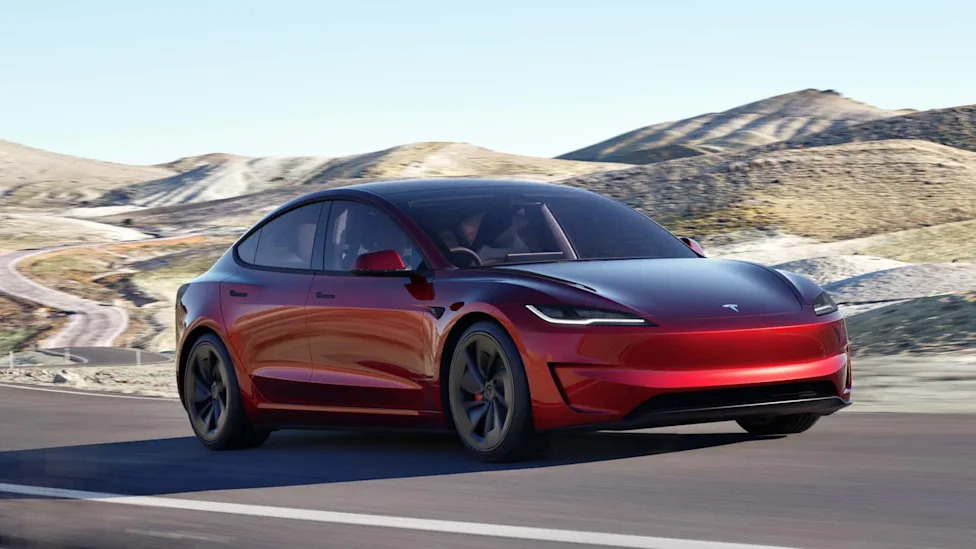
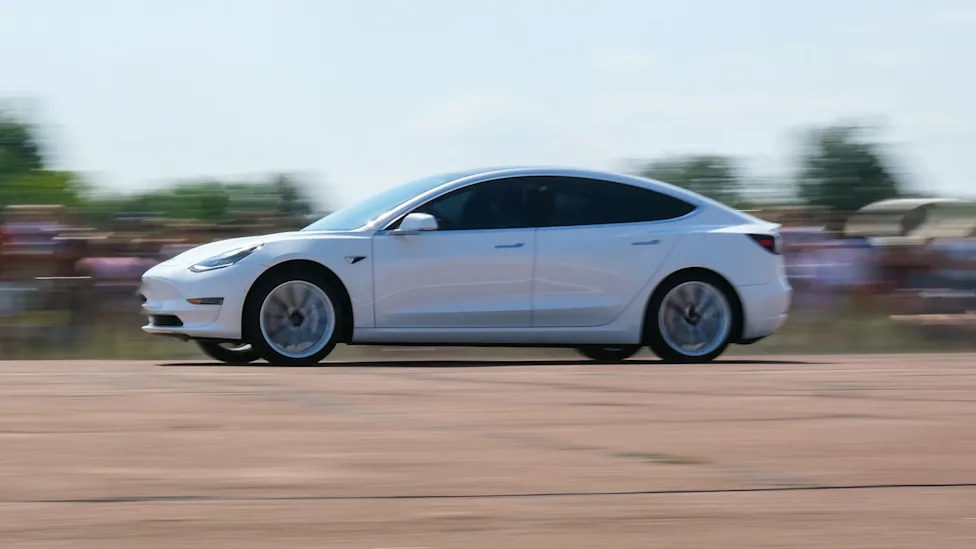
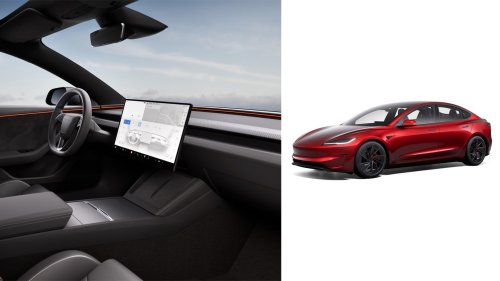
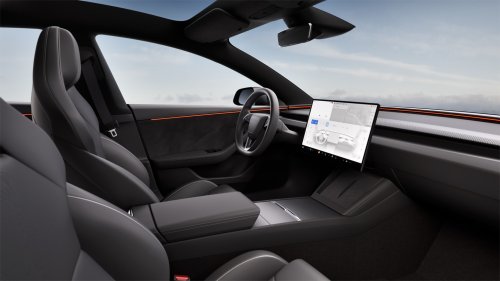
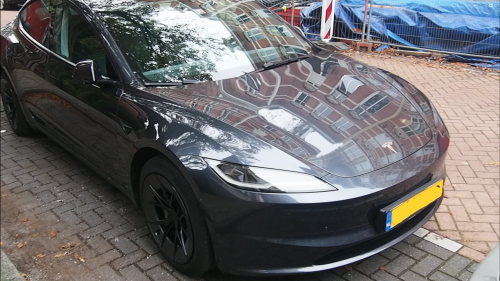
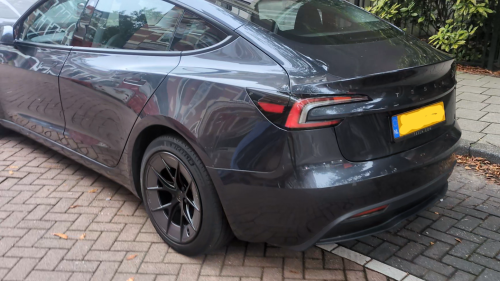
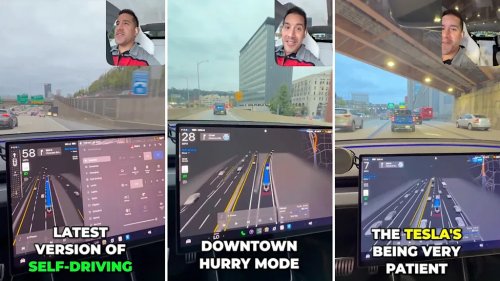
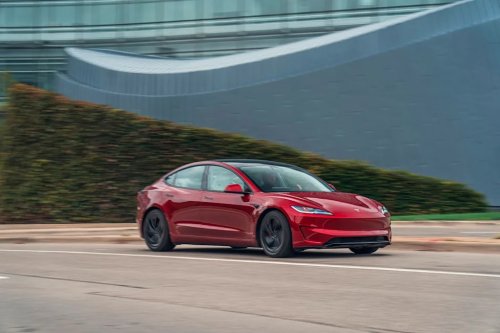
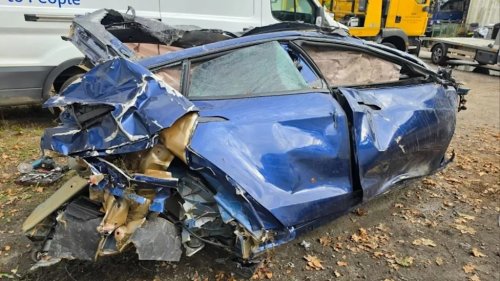
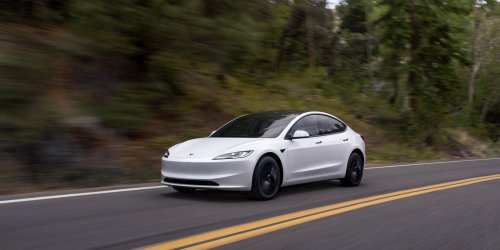
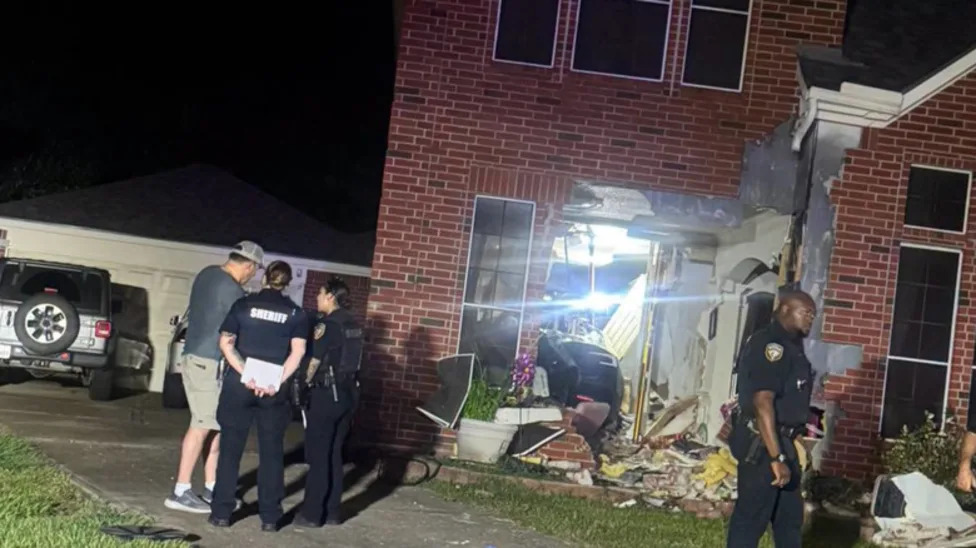
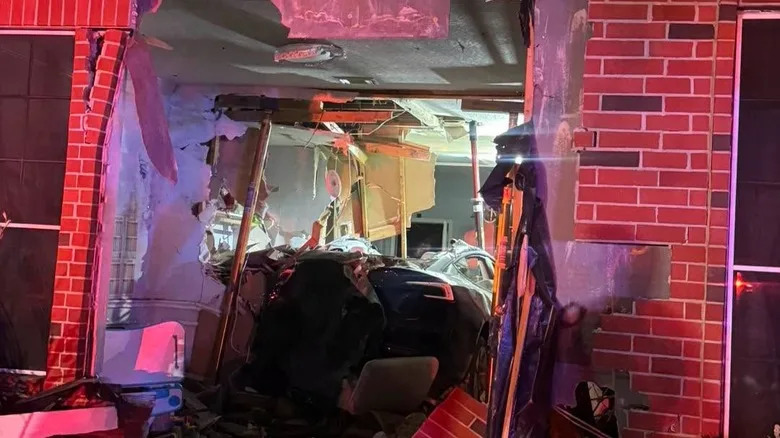
Cops surround a house where a Tesla sits inside, visible through a torn-down wall - Harris County Constable's OfficeTesla's attempts at autonomous driving software have been more than a little problematic, with crash after crash attributed to Autopilot in its day and FSD now. Now another Tesla driver is blaming Autopilot for a crash, after careening his Model 3 into a Texas home and killing a 76-year-old woman inside, but there's a big problem with the story: The car in question almost certainly didn't have Autopilot installed at the time of the crash. Both the driver and the home's 76-year-old resident were hospitalized after the crash, according to the Harris County Constable's Office, where the resident died from her injuries. The constable's office statement also claims that "The driver told deputies he had the Tesla on auto pilot [sic]." Autopilot was discontinued earlier this year, in an update pushed out to all Tesla models (an update that, itself, is now so out of date that no cars currently run that software version), replaced with the name "self-driving" as a contrast to Tesla's "Full Self-Driving" software suite. Read more: Long- Vs Short-Stroke Engines: What Are The Differences?ADAS or accident?Closeup of the car through the broken wall - Harris County Constable's OfficeIt's currently unclear what driver-assist software, if any, was involved in this fatal crash. Eyewitness testimony collected by Click 2 Houston is unclear, with witnesses saying the car was traveling in excess of 60 miles per hour but at least one report said the driver appeared to be screaming. While Tesla's self-driving suite can be set to exceed posted limits, the car's driver would still have to set an offset by which to exceed the posted limit. Many roads in that region of Texas lack speed limit information, but the specific stretch of road in question here — Rose Hollow Lane — does have a 25 mile per hour limit listed online despite seemingly lacking signage in Google Street View.AdvertisementAdvertisementNow, the National Highway Traffic Safety Administration has opened an investigation into the crash, based on Tesla's claim that the driver pressed the car's accelerator pedal to the floor and held it there until after the crash. It sounds like this may be a classic case of pressing the wrong pedal, especially considering Tesla's claim that the Model 3 did have Autosteer enabled before the driver hit the skinny pedal — the driver may have meant to tap the brake to disengage Autosteer, but instead hit the accelerator, froze, and plowed into the house. Regardless of the reasoning, this crash is a tragedy, and hopefully as more information comes out we'll get answers about exactly what happened happened — and how to prevent the next similar one. Want more like this? Join the Jalopnik newsletter to get the latest auto news sent straight to your inbox, and add us as a preferred search source on Google.Read the original article on Jalopnik.

















 +67 others