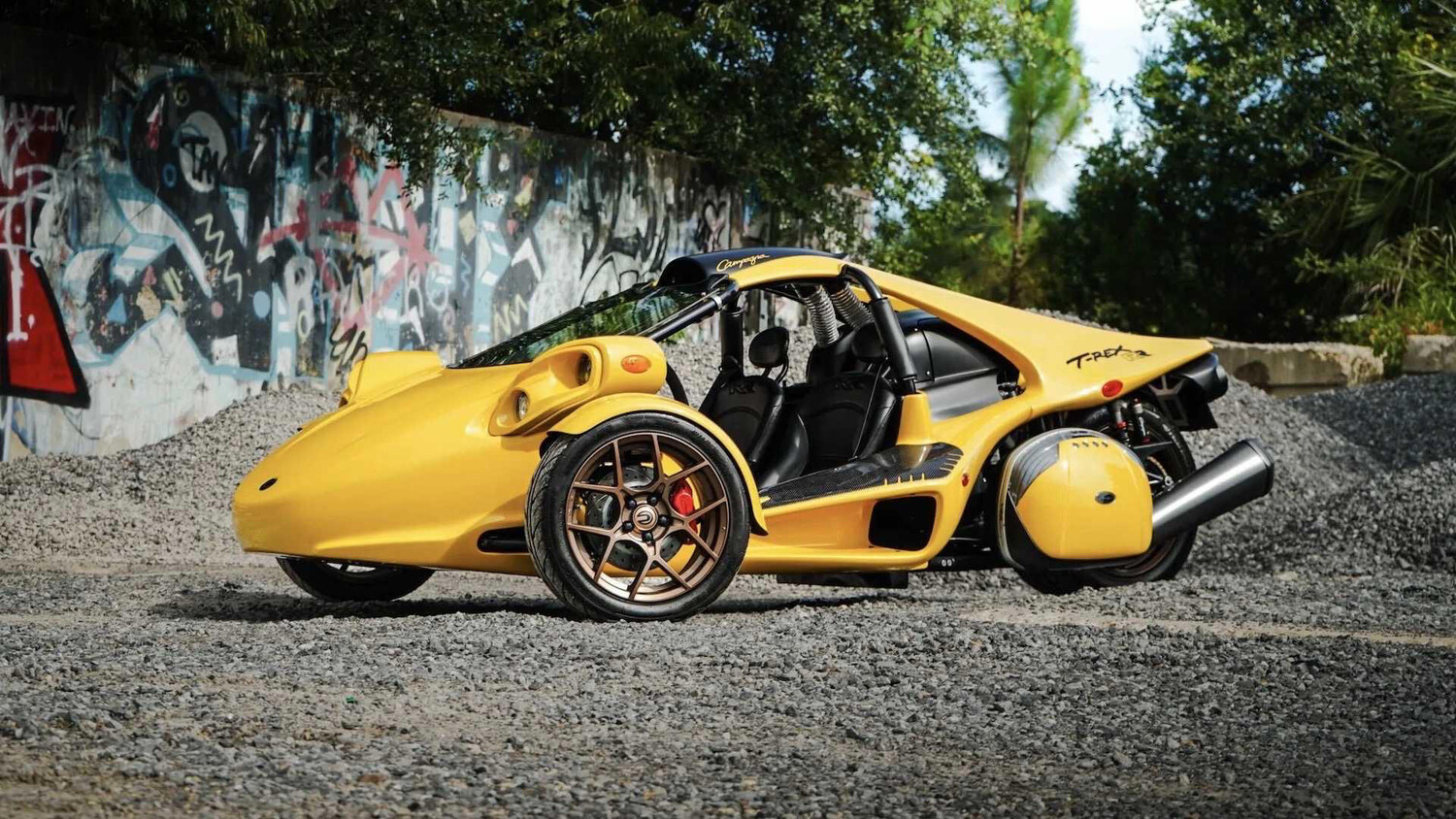
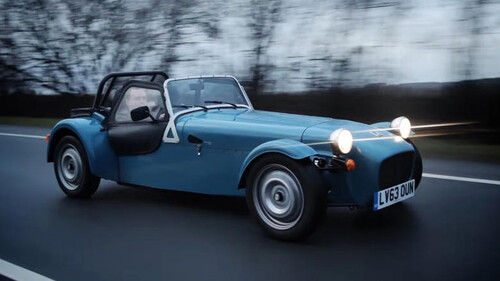
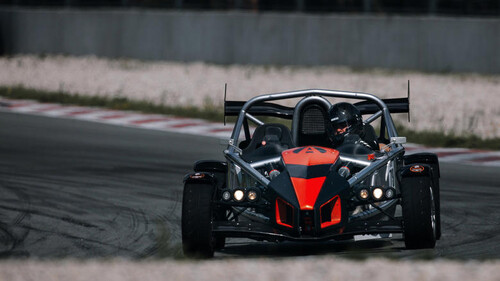
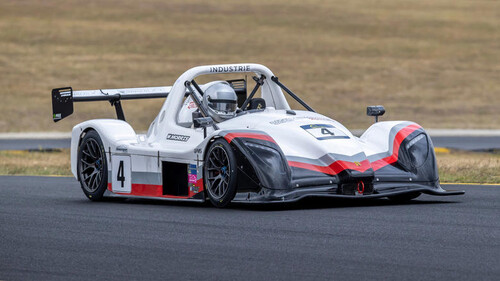
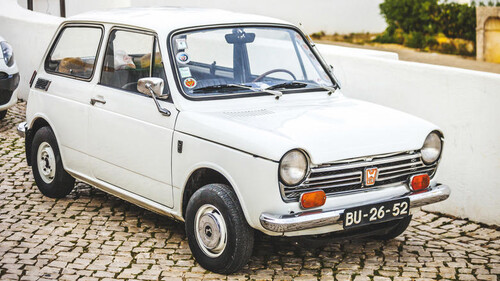
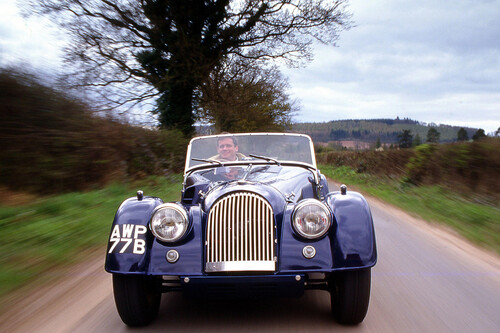
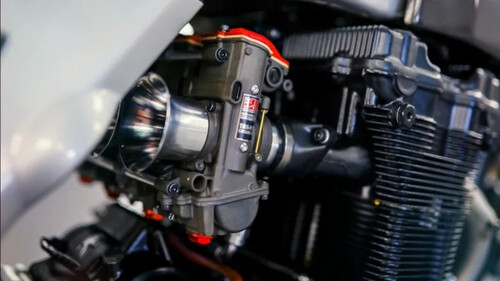
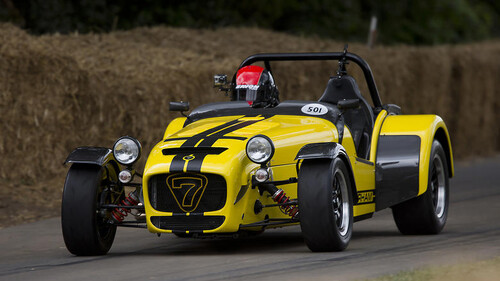
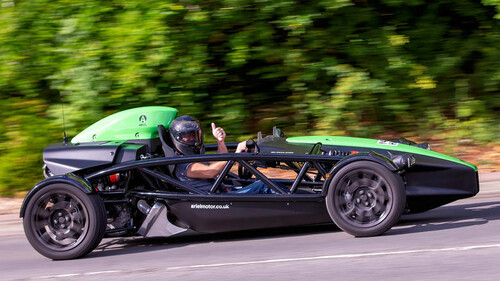
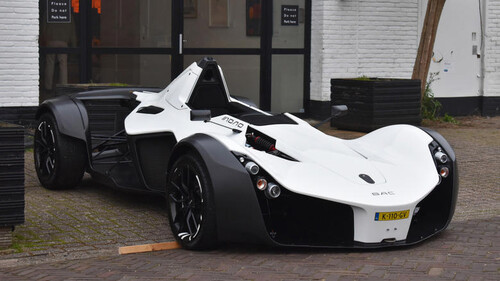
Putting a motorcycle engine in a car may sound like a completely crazy thing to do, but there have been a surprising number of times it has happened. The results come in a variety of shapes, sizes, and formats. From 4WDs to cool-looking cabriolets that can do 60 MPG, to sports cars that outperform hypercars.This is the weird and wonderful world of cars fitted with motorcycle engines. Hang on then, this is going to get frisky. Suzuki LJ50 Engine: 539 cc, three-cylinder, two-stroke 1975 Suzuki LJ50 front, three-quarterIn the 70s, Suzuki created a small 4WD that conformed to Japan's Kei car regulations, ensuring it qualified for some tax benefits. Despite its size, the LJ is a surprisingly capable 4WD, with a transfer gearbox, leaf-spring suspension and live axles. It is powered by a two-stroke, 539 cc three-cylinder engine, boasting around 32 hp.As any experienced off-road driver will tell you, torque is an important factor when tackling those big obstacles... and torque is not a particular highlight on the LJ's resume. Still, with some traditional two-stroke ring-a-ding-ding revs in the game, the LJ can hop and skip through and over most obstacles. Meadows Frisky Engine: 324 cc, twin-cylinder, two-stroke 1959 Meadows Frisky Convertible front, three-quarterThe three-wheeled Meadows Frisky has a rather unusual pedigree. Its British creator was based in Egypt when he came up with the idea of an affordable, economical "third-world" sports car, available in coupe, convertible and the Family Frisky Three formats. Forced out of Egypt following a regime change, creator Raymond Flower shared his plans with a British company headed by Henry Meadows. A concept car, with gull wing doors, made its debut in 1957 at the Geneva Show, and was an instant hit.Production versions followed, and a total of around 1,500 cars were eventually made. The majority are powered by a 16-hp, 324 cc inline-twin two-stroke engine. Most models had a top speed of 56 mph, and Meadows claimed a consumption figure of at least 60 MPG. Power is sent to the rear wheels via a four-speed manual gearbox. Less than 100 Friskys are apparently still around, and a prime version recently sold for $85,000. Honda Z600 Engine: 598 cc, twin-cylinder, inline-4 1972 Honda Z600 front, three-quarterThe Honda Z600 was on sale from 1970 to 1974, and is essentially a "lukewarm" hatch that shrunk at the car wash. The tiny little hatch is powered by a 598 cc Honda motorcycle engine that produces around 36 hp. It weighs next to nothing (1,300 lbs), and its performance is surprisingly nippy. The engine also revs to 9,000 rpm. Coupled to a manual gearbox, the power is sent to the front wheels. It was marketed as a sports coupe, and more than 40,000 cars were made.Interestingly, in the 2000s, a Honda Z600 called Evil Tweety, with a modified 700 cc version of the four-cylinder engine, apparently reached a record speed of 104 mph on the Bonneville Salt Flats. Caterham Seven 160 Engine: 660 cc, 3-cylinder turbocharged 2014 Caterham Seven 160 front, three-quarterThe spiritual successor of the iconic Lotus Seven, the Caterham Seven, has been powered by a vast variety of engines since the company started building the lightweight specials in 1972. From the original 1.6-liter Ford engine, to the 620R model with a supercharged two-liter engine producing 310 hp. The Seven 160 presides somewhere in the middle.It is powered by a 660 cc, three-cylinder engine, breathing through a turbocharger, producing 80 hp. Which seems like nothing, of course. But, considering the 160 weighs just over 1,000 lbs, thanks to that small and light Suzuki engine, the power-to-weight ratio is rated at 160 hp/ton... hence the 160 tag. Power is sent to the rear wheels via a manual gearbox, handling is excellent, and the driving experience a visceral, magnificent experience. Morgan Three-Wheeler Engine: 2.0-liter V-Twin 2021 Morgan 3 Wheeler front, three-quarterBritish company Morgan has been building three-wheeled cars since around 1911, with three main materials used for the construction of the light-weight cars: ash wood, aluminum and leather. The company made its famed and also controversial Morgan Three-Wheeler up to 2021. Although the last-generation Three is powered by a modern Ford 1.5-liter three-cylinder engine, the company traditionally used a British 2.0-liter V-Twin engine from a company called S&S. The engine, located prominently at the front of the car, makes 82 hp, ensuring lively performance.More recently, the Morgan Three – which has no electronic safety aids or substantial rollover protection – copped some bad press after a serious accident during a film shoot for the Top Gear series. Presenter Freddie Flintoff was seriously injured in the accident, eventually leading to the cancellation of the series. Campagna T-Rex RR Engine: 1.4-liter, inline-4 2024 Campagna T-Rex RR front, three-quarterDaniel Campagna is a French Canadian mechanic who was also a personal friend of the late Formula One driver, Gilles Villeneuve. Campagna had a dream to create a performance vehicle for the road with Formula One-inspired performance. The Campagna three-wheeler made its debut in 1988, and the company continues to create performance cars that provide a truly exhilarating drive. Take the T-Rex RR, for instance. It is powered by a modified version of the Kawasaki ZX-14's 1.3-liter engine, producing 208 hp at 10,000 rpm.The RR weighs just 1,000 lbs, and with that ZX-14 engine in the game, the performance is stupendous. It will do 0-60 mph in less than four seconds, and reach a top speed of 144 mph. Magnum Mark 5 Engine: 1.3-liter, inline-4 2013 Magnum Mk5 front, three-quarterThe Magnum Mk5 also hails from Canada, and made its debut in 2013. Constructed from carbon fiber, it weighs about 1,200 lbs. A modified Suzuki Hayabusa 1.3-liter engine delivers a tasty 250 hp at 11,000 rpm, and a six-speed sequential gearbox sends the power to the rear wheels. Claimed performance is prodigious: The 0-60 mph sprint is completed in just 3.2 seconds, and it will go on to a top speed of 150 mph.Designed and marketed as a track car that can also hit public roads, the Magnum comes with a Formula One-style push-rod suspension, and the brake bias can be adjusted from the cabin. The Magnum Mk5 never reached the heights its makers envisioned in 2013. At the time, with a price tag starting at $140,000, as well as factors like high production costs, the unproven nature of the machine, and government regulations, the project did not last very long. Magnum Cars had intended to build 20 cars per year, but it seems like less than a handful were actually completed. Westfield Megabusa Engine: 1.3-liter, inline-4 2015 Westfield Megabusa front, three-quarterBritish car company Westfield is renowned for turning the inimitable Mazda MX5 roadster into a super-light track weapon with more than 250 hp. But back in 2015, Westfield sold the Megabusa... and as the name suggests, it is a combination of a 178-hp Suzuki Hyabusa 1-3-liter superbike engine, and a lightweight Westfield car. Tipping the scale at only 970 lbs, the Superbusa is, well, super. It can blast from 0-60 mph in just over three seconds, the engine revving to 11,000 rpm, a six-speed sequential gearbox sending the power to the rear wheels.Customers can also add a limited slip rear differential and parts like a dry sump kit. If all the boxes are ticked, the Superbusa will, with a pro driver behind the wheel, stick with just about anything on a short and winding racetrack. Radical SR3 Engine: 1.3-liter, inline-4 2022 Radical SR3 front, trackRadical has been building racing and road-legal track day cars since 1997. Since then, it has sold more than 3,000 cars around the world, making it the best-selling racing car brand on the planet. The SR3 model is the most popular in the extensive line-up.In the SR3, you can have your Radical with a 201 hp Suzuki Hayabusa 1.3-liter engine (sounds familiar, right?). For its track role, the engine has been modified by Powertec Racing Europe, with a custom dry-sump lubrication system, special induction system and other performance modifications. If the 1.3-liter 'Busa motor doesn't cut it, you can also have the SR3 with a 1.5-liter version of the engine, producing 232 hp. A 654-hp 3.5-liter twin-turbo V6 racing engine is also available. The SR3 SL version is the street legal version for folks who want to daily their Radical. This version is fitted with a more practical 240-hp 2.0-liter Ford EcoBoost engine. Tasty. Ariel Atom 500 Engine: 2.9-liter V8 2007 Ariel Atom front, three-quarterIn case you have not noticed, the Suzuki Hayabusa engine is quite a popular option in this line-up. But it still wasn't enough for British company Ariel. So Ariel commissioned famed engine builder John Hartley to take two Hayabusa engines and make one V8 engine. In 2008, when the engine made its debut, it was the highest-revving production car V8 in the world, spinning to more than 10,000 rpm. Oh, and it also makes 500 hp. In the lightweight Ariel, that equates to a power-to-weight ratio of more than 900 hp/ton.The Atom 500's performance is obviously staggering. It completes the 0-60 mph sprint in about 2.2 seconds, and will only run out of steam at around 170 mph. What an engine(s)! What a car! Only 25 cars were ever made, and the chances of one of those ever going up for sale are extremely unlikely.