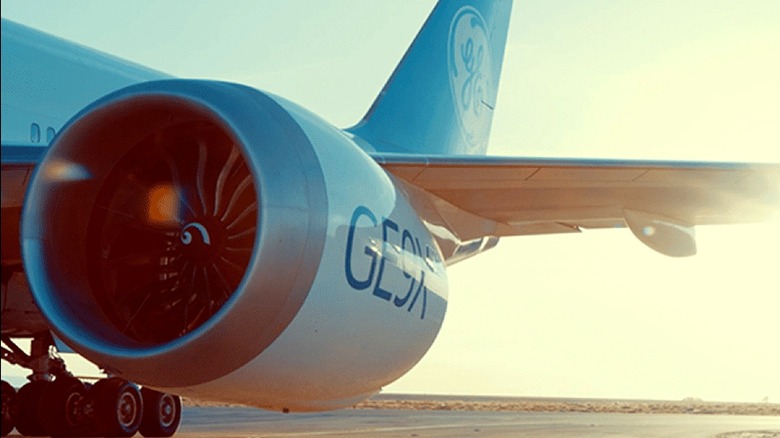
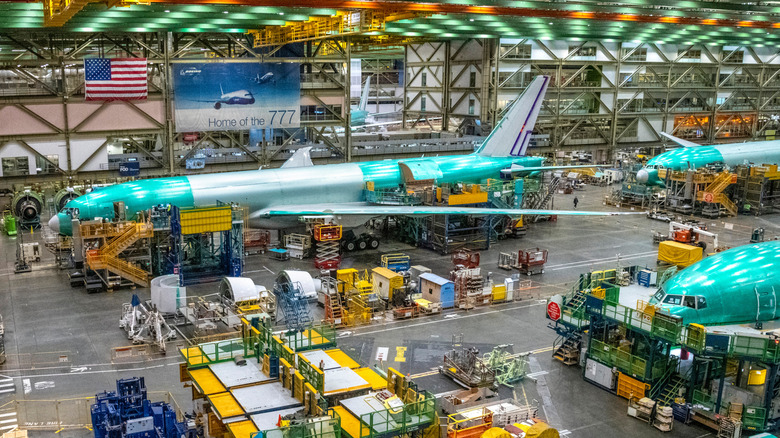
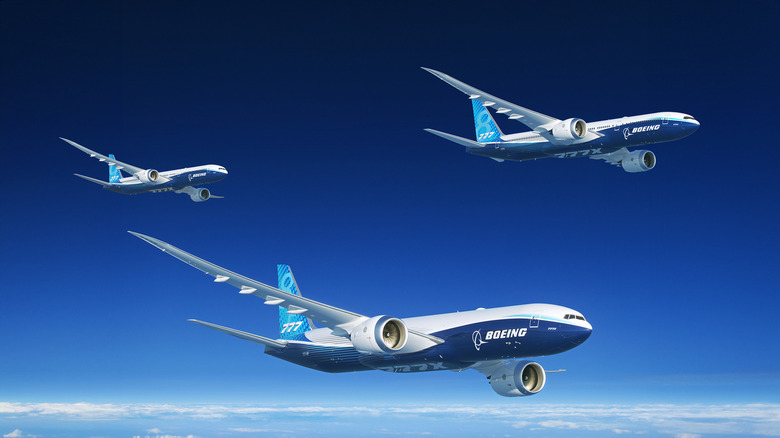



















GE Aerospace media When General Electric set out to build a jet engine for the Boeing 777X, they didn't just repeat the previous GE90,they decided to push the laws of physics to the extreme. With a fan diameter of 134 inches, the GE9X jet engine's fan diameter is almost the same size as the fuselage of a Boeing 737. It is the world's largest and most powerful commercial jet engine ever built, capable of generating up to 134,300 pounds of thrust. But as any gearhead knows, when you build the biggest, most complex version of any engine, you're not just scaling up the performance, you are scaling up its issues as well. The Boeing 777X program is currently 6 years behind schedule, with a staggering $15 billion in spending. Most of that money has been spent on solving unique problems that simply do not exist on smaller engines, and it starts with the fans. In the world of turbofans, efficiency is driven by the bypass ratio -– the amount of air that goes around the core versus through it. To make the 777X the most efficient jet engine on the planet, GE needed a massive bypass ratio of 10:1. To achieve that, they built a 134-inch front fan. A fan that large creates several issues. Because the diameter is so vast, the tips of the 16 carbon fiber blades travel at supersonic speeds even at low engine rpm. This creates immense centrifugal forces and vibrations that smaller engines never have to account for. Weight, cracked links, and sealing issues with the GE9X Boeing media The sheer size of the GE9X's nacelle created a ground clearance problem. To get around it, Boeing had to design the 777X with longer landing gear and a specialized wing mounting, all just to keep the GE9X from scraping the tarmac. The weight was another problem. Despite using next-generation carbon fiber and 3D printed parts to keep components light, the GE9X tips the scales at over 21,000 pounds. This mass creates rotational inertia, meaning it needs a lot of energy to get the fan spinning, and even more to slow it down. This engine needs specialized software for the plane to perform optimally. The most dramatic chapter of the GE9X story involves a surgery that Boeing is currently performing on roughly 30 stored aircraft. Because Boeing began building 777X airframes before certification was granted, they now have a fleet of technically obsolete planes sitting at Paine Field. The problem dates back to 2024 when the test fleet was grounded after inspectors found failed thrust links –- the structural components that hold the engine to the wings. These links had developed cracks, forcing Boeing to go back to the drawing board. It was just a part of Boeing's awful 2024 in the skies and space. In early 2026, a new durability issue was identified on the power plant. It was a crack in the GE9X's mid-seal. This mid-seal acts like a boundary between the turbine stages, and the extreme pressures and temperatures inside the core were more than the seal could handle. The cost of innovation: 7 years and $15 billion Boeing media The Boeing 777X was originally supposed to enter service in 2020. A lot has happened to the 777X since then. It is now slated for a 2027 launch. This five-year delay has cost Boeing over $15 billion in development costs till now, making it one of the most expensive certification campaigns in aviation history. It may be a much-needed one for the company's future, considering Boeing faced criminal charges over its 737 Max crashes in 2018 and 2019. The delay affects General Electric as much as it does Boeing. Because the 777X was built around the GE9X, there is no plan B. Unlike the original Boeing 777, which was offered with engines from GE, Pratt & Whitney, and Rolls-Royce, the GE9X will be the sole engine option for the 777X. If the engine has a durability issue, the entire Boeing 777X program grinds to a halt. This lack of flexibility is costing Boeing dearly. As of last year, Boeing had to contend with cancelled 777X aircraft orders, including 15 from Etihad Airways. Why stick with the project? When the GE9X does enter service with its launch customer, Lufthansa, in 2027, it will offer a 10% improvement in fuel burn over the GE90. Considering the razor-thin margins of the airline world, that's a big win. The GE9X is set to be a technical marvel, but it's also a sobering reminder that, in aerospace engineering, the bigger the engine, the bigger the gamble.