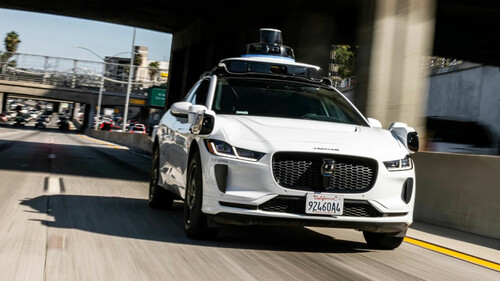
Liam Scott · 5 months ago@liamscott28California Closed The Loophole That Made Robotaxis Immune To Traffic Tickets Liked by+12 othersPost commentRelated PostsFlorida Kicked Flock Cameras Off State Roads, Then Police Found A Pretty Obvious LoopholeMason Rogers · 10 days agoCalifornia’s 3-Day Used Car Return Law: Fees, Limits and Loopholes ExplainedLauren Girard · 15 days agoThat Viral Bugatti Police Parade Wasn't a Flex — It Was a Legal Loophole 17 · Claire Johnson · 1 months agoHands-Free Laws Were Never About Safety. New Crash Data Proves They Were About Loopholes 53 · Charlotte White · 1 months agoThe 1966 Loophole Behind California's Emissions Power, and the Senate Push to Kill It 86 · Kayla Scott · 2 months agoSierra Club Urges Rejection of Meta’s Attempt to Use Minor Source Loophole 46 · Gabriel King · 2 months agoTesla's 'Free Supercharging For Life' Promise Just Triggered A Class Action Payout — And The Loophole That Caused It Is Still Legal 65 · Justin Young · 2 months agoThese Salesmen Beat 176 Stolen-Car Charges in Court. A Paperwork Loophole Still Destroyed Their Careers 39 · Camille Tremblay · 3 months agoAston Martin Found A Loophole To Keep The V12 Alive 86 · Alexander Morgan · 3 months agoMercedes and Red Bull’s engine loophole fight shows F1’s 2026 rule war has already begun 56 · Mason Green · 4 months agoEverything Is An SUV Today Because of This Fuel Economy Loophole 32 · Sophie Hall · 4 months agoF1 teams exploit rear wing loophole for Monaco 94 · Alexander Mitchell · 4 months agoA Wisconsin Woman Put 223,000 Miles on a Leased Toyota Camry — Then Used a Loophole To Avoid a $46,000 Penalty 43 · Caleb Brown · 4 months ago'Their Pricing Is Not Better': Ford Salesman Says CarMax Loophole May Be Costing You Money. Then He Reveals How It Works 44 · Oliver Hall · 6 months agoFerrari gets 'major changes' to close 15-horsepower gap—but Mercedes has loophole FIA won't touch 85 · Lily Bouchard · 6 months agoAMC built a $2,663 insurance loophole that could embarrass cars costing twice as much 81 · Nathan Labelle · 6 months agoStates Are Finally Cracking Down On Montana's Supercar Registration Loophole 47 · Kaitlyn Roy · 7 months ago'You Can Fight Me': Mobile Mechanic Works On Toyota Camry. Then The Man Uses A Loophole To Avoid Paying After 4 Hours Of Work 16 · Hannah Wilson · 8 months ago'It Works Every Time:' Man Presses 'Help' Button While Exiting Parking Garage. Then He Discovers a Loophole To Get Out For Free 19 · Morgan Labelle · 10 months ago'She Almost Took It:' Woman Gets Offered $3,000 After Car Crash. Then Her Lawyer Gets Her $87,000. Here's the Loophole She Found 52 · Adam Pelletier · 11 months ago




 +12 others