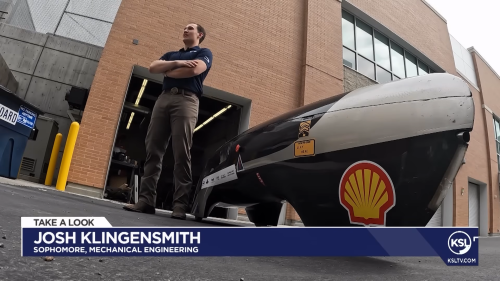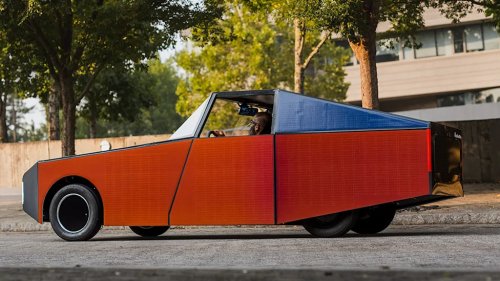



















This three-wheeler could travel from Utah to NYC on one gallon of fuel. Brigham Young University students built it for the Shell Eco-marathon. It completed a 10-mile test in Indianapolis with a 30-milliliter fuel tank. As many of the world’s largest automakers shifted their focus towards EVs and away from combustion-powered vehicles, it seemed as if they had given up on further developing ICEs to make them more efficient. However, a bunch of students from the US have just shown that if a car is small and light enough, and slices through the air, combustion cars can achieve some incredible things. Admittedly, describing the vehicle created by students from Brigham Young University in Utah as a ‘car’ might not be completely accurate, but that doesn’t make it any less impressive. Created to compete in the Shell Eco-marathon, it can deliver a remarkable 2,145 mpg. Read: As Gas Prices Soar, Here’s How To Cut Your Fuel Bill Now Known as the Supermileage, the vehicle could perhaps be viewed as a mash-up between a trike and a car. It’s built from lightweight carbon fiber and is incredibly compact, only capable of supporting someone who is 5’4” or less, and who weighs a maximum of 120 lbs (54 kg). The vehicle itself weighs a measly 108 lbs (49 kg), which is a very impressive achievement in itself. As part of the Shell challenge, the vehicle was put through its paces at the Indianapolis Motor Speedway for a ten-mile run. To keep weight as low as possible, the vehicle doesn’t have a regular fuel tank but instead sips ethanol from a minuscule 30-milliliter (1 fl oz) container hooked up to the engine. Officially rated at 2,145 mpg, the vehicle could theoretically travel from Provo, Utah, to New York City while using just one gallon of fuel. However, such a trip wouldn’t be quick, as the vehicle is limited to just 23 mph (37 km/h). Efficiency would inevitably be affected by weather conditions, as even a slight headwind or crosswind would reduce the vehicle’s range. Now that many car manufacturers are walking back their commitments to EVs, and instead shifting focus to hybrids, a vehicle like this serves as an important reminder of how far engine and vehicle design can be pushed to boost efficiency. Perhaps legacy firms should take note.