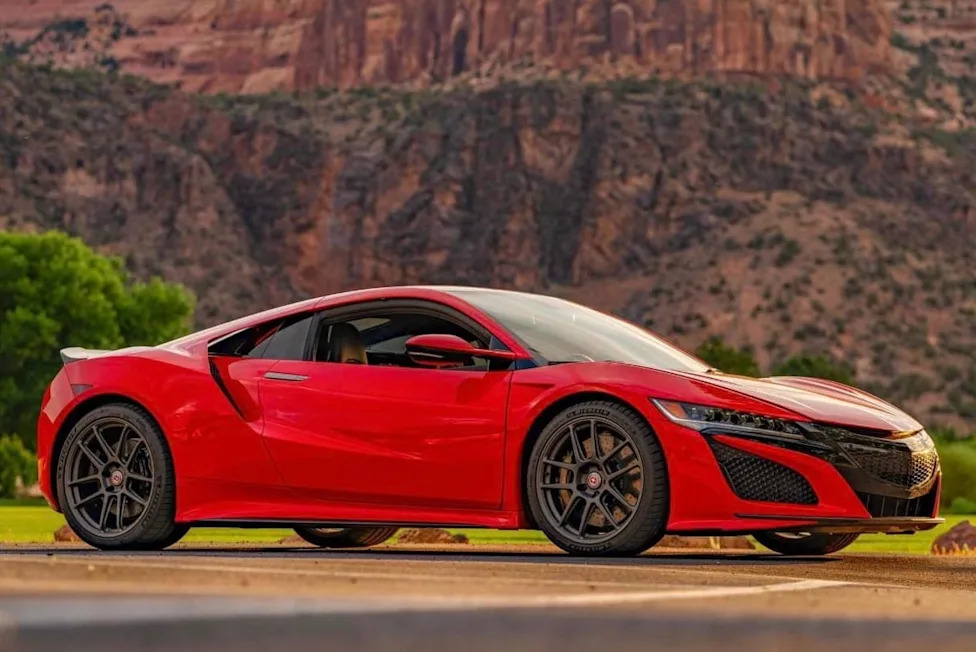
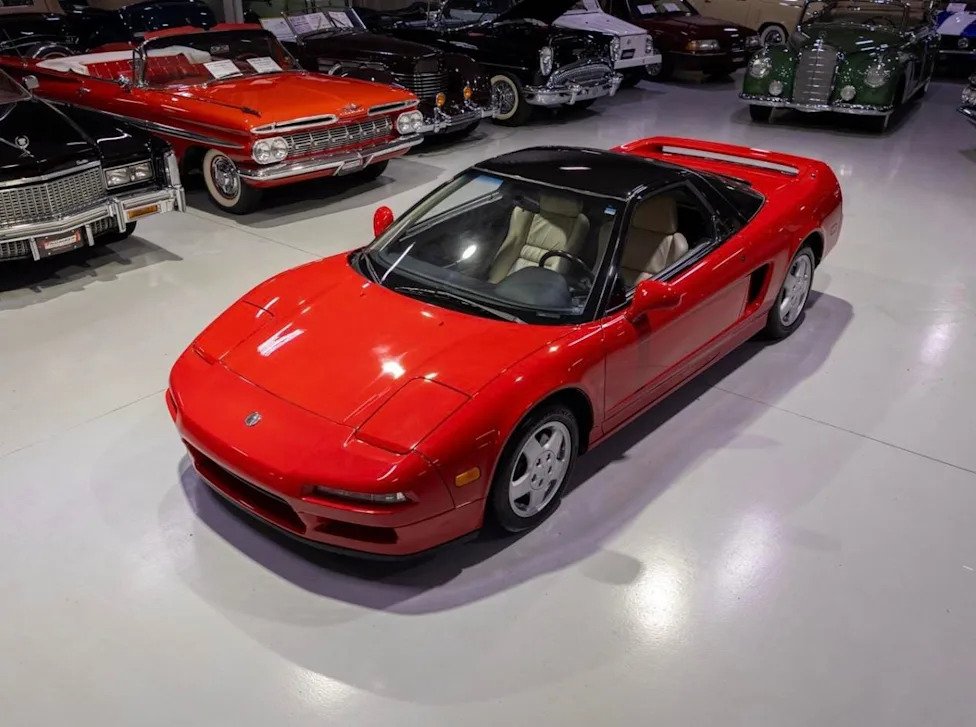
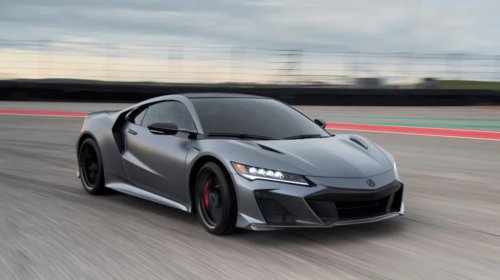
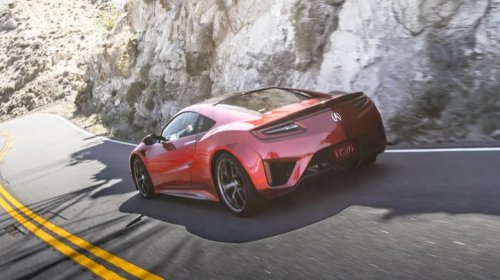
For younger enthusiasts, the Acura NSX just seems like another supercar in the list of 1990s fantasies. Almost three and half decades have passed since the NSX launched in the US market and time has blurred just what a huge impact it had on the sports car world in general. Mid-engined supercars from manufacturers like Ferrari, Lamborghini, and Lotus had traditionally put styling and performance front and center, while things like comfort and visibility were relegated to the bottom of the priority list. The Honda designers famously looked to the General Dynamics F-16 fighter jet for inspiration. The aircraft's big bubble canopy led to the NSX having larger windows and more upright seating position for great visibility while the tapering rear-end was better for aerodynamics. If you've ever wondered what other aero secrets the NSX holds, this video analysis is a must-watch. Acura Was Looking Far Down The Road The video was uploaded by Premier Aerodynamics, a consulting company for the automotive and aerospace industries. The NSX was modeled and evaluated using open-source software called OpenFoam. Yes, it is free to use, and also, yes, you'll need to dedicate some serious time to learning to use it. It also won't hurt if you have a background in engineering. I won't get too far into the nerdery, but one of OpenFOAM's uses is something called computational fluid dynamics, or CFD for short. When I arrive at parties, I sometimes walk to the center of the room and say "CFD" and "FEA" with a raised voice, and if anyone turns their head, I know who I can talk to for the rest of the night. In the simplest terms, think of it as a virtual wind tunnel. In the video, the host demonstrates how air flows around the NSX's body and explains some of the innovative solutions Honda used in the days when other supercars had bulbous flares, big spoilers, and raked windshields that required passengers to either be small and flexible or lie down in the car.Acura The NSX Changed Everything With Shocking Normality Traditional sports car styling prior to the NSX was all about big fenders, long hoods, and everything the visually represented power and performance. You ended up with cars like the mid-engine Miura that still had the hood of a front-engine GT car. Or you had the Countach and Testarossa with low rooflines, flat windshields and huge amounts of mass in the back half of the body. We all know a teardrop or airfoil shape is not only aerodynamic, but also stable. Prior to the NSX, very few sports, supercars, or exotics had followed that simple design. The seating position in an NSX is still low to floor, but allows a more upright seatback, more like a Porsche 911. Driving An NSX Is All About Getting Out What You Put In More supercars, and even more normal sports cars of the era, only worked well when driven hard. They didn't want to idle in traffic. They either wanted to be accelerating hard or braking, they weren't great at slow cruising. They were always loud, always rough, and required constant attention from the driver, and in fairness, from a mechanic as well. The NSX changed that. It could be driven normally like any other Honda. The first few times I drove NSXs, I was shocked at how much they felt like driving around in a Prelude or CRX. The clutch was easy to use, the steering is light even at parking lot speeds, and at normal RPMs, there isn't a lot of noise. But when you start pushing harder, the NSX comes alive. Moving radiator inlets to rear fenders allows for a small frontal area and pointed front bumper. Minimal fender flares clean up flow along the side of the car and contribute to small wake. Rounded corners on the front bumper and placement of ducts minimize separation on front bumper. The roof curves down before the rear glass starts, keeping air attached down to the rear deck. NSX was one of the first production cars to have a functional rear diffuser. Learning Automotive History From The Atmosphere's View Premier Aerodynamics YouTube Premier Aerodynamics' YouTube channel has analysis videos of everything you can imagine. Cars range from the latest GT3RS and go back as far the Ford Model T. There are also aircraft, rockets, and even some animals. Set aside some time and watch some videos. You'll learn a lot more from these than watching yet another supercar drag race or car crash collection.





















 +24 others