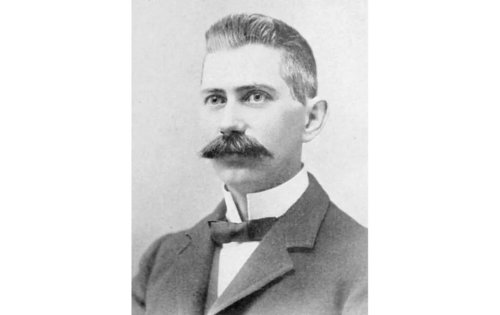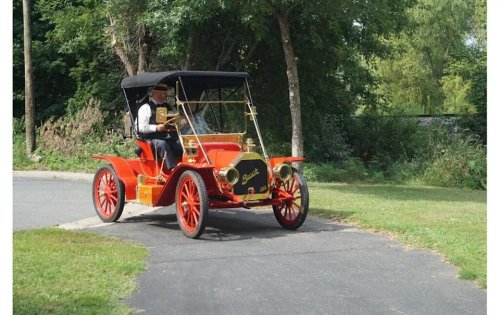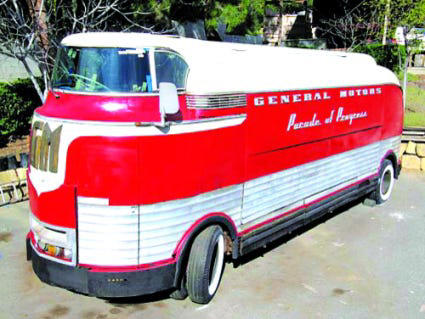
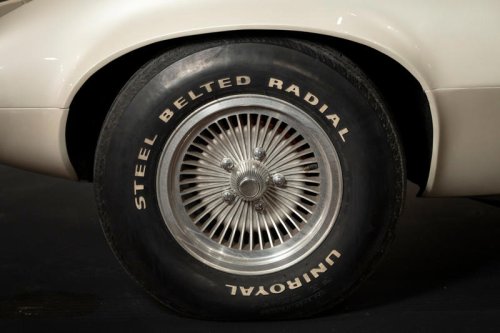
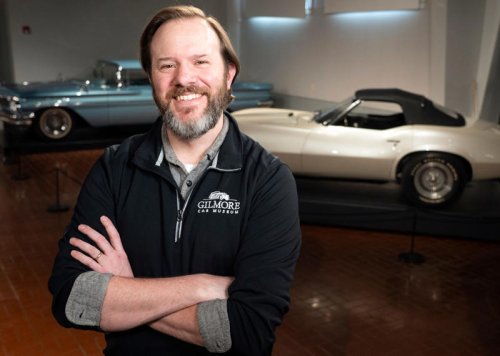
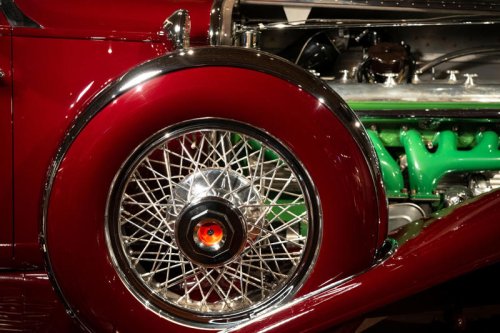
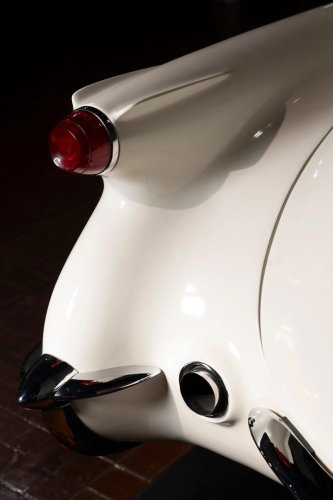



















HICKORY CORNERS, Michigan — Eight of the wildest and most influential concept cars ever built — all products of General Motors' 1950s-‘60s design revolution — are on display together for the first time. That’s just the start of “Defined by Design,” a revealing look at 120 years of automobile design opening April 11 at the Gilmore Car Museum in Hickory Corners, Michigan, midway between Chicago and Detroit. Created for GM’s “Motorama” rolling auto show, which visited cities from New York to Los Angeles, the concepts range from aviation-inspired Jet Age creations to the dawn of the Muscle Car era. Six of the vehicles just completed a yearlong run at the Petersen Automotive Museum in Los Angeles. All eight have never been displayed publicly together before. Just outside the gallery of Motorama concepts and looking like the love child of a Greyhound bus and Hot Wheels display box, one of the “Futurliner” car haulers GM built to ferry its vision of the future will be on display through April 12. GM's Futurliner buses carried concept cars and other products to its Motorama shows in the 1950s and '60s. That bonanza is complemented on opening day by a conversation with Richard Earl, grandson of legendary GM design chief Harley Earl. The 33-foot-long art deco Futurliner, normally in the National Automotive and Truck Museum, or NATMUS, in Auburn, Indiana, will return to the Gilmore Aug. 1-2. GM Motorama concepts on display at Gilmore Car Museum 1953 Buick Wildcat1953 Pontiac Parisienne1954 Pontiac Bonneville Special1955 LaSalle II roadster1955 LaSalle sedan1955 Chevrolet Biscayne1960 Pontiac X-400 convertible1964 Pontiac XP-833 Banshee A wheel of a 1964 Pontiac XP-833 Banshee is seen at Gilmore Car Museum on Wednesday, March 25, 2026, in Hickory Corners. Not just a bunch of pretty faces “Design is about more than how a car looks,” Gilmore Car Museum Executive Director Nick LaCasse told me as we strolled through the collection recently. “It’s the stories of the people who created them and the people who used them," he said. “Why does your car have cupholders?” LaCasse asked as we walked past a Duesenberg with a one-of-a-kind “coach built” body. “Because drive-throughs boomed in the 1970s. They were design’s response to a change in the culture. Gilmore Car Museum Executive Director Nick LaCasse poses for a portrait in front of a 1960 Pontiac X-400 convertible concept car, left, and a 1964 Pontiac XP-833 Banshee at Gilmore Car Museum on Wednesday, March 25, 2026, in Hickory Corners. “GM’s concept cars shaped American society, but society also shaped the cars.” The exhibit is about much more than a collection of pretty cars. In fact, one of its themes — “Love it/Hate it” — consists entirely of polarizing vehicles like the Pontiac Aztek. Other themes will track everything from the transition from one-of-a-kind coach-built cars to mass production, vehicle safety, and halo cars — vehicles created to change the image of a whole brand or automaker. What’s the Gilmore Car Museum? Located on 90 acres of rolling farmland between Kalamazoo and Lansing, the Gilmore Car Museum includes 250,000 square feet of vehicles, a 1920s Shell gas station, 1941 diner — Chicago-style dogs, sandwiches and more, open April-November — open daily except Thanksgiving, Christmas Eve and Christmas, New Year’s Day and Easter. Its collection includes more than 400 vehicles. Billing itself as the midpoint between Chicago and Detroit, the Gilmore began with an Upjohn pharmaceuticals executive’s private car collection. Donald S. Gilmore bought and relocated century-old barns for the vehicles. The museum opened to the public July 1, 1966. Since then, it has added a research library with more than 400,000 automotive patents, vintage ads, artwork, publications and more. Collections at the museum include more than 1,500 hood ornaments and brand badges, 1,500 toy pedal cars and museums created by classic car clubs including Pierce-Arrow, H. Franklin, Ford Model A, Lincoln Motor, Cadillac LaSalle, Checker Motors, Museum of the Horseless Carriage and Classic Car Club of America Museum. Visitors can tour it all. Defined by Design runs for 12 months beginning April 11. The first six months focus on vehicles up to the mid-1960s. Part two with vehicles from the last 60 years follows. The collection of GM concepts, which bridges the two 60-year eras will remain for the full year. 'Defined by Design' themes Pinnacle of designLove it/hate itSociety influenced designDesign influenced societyForm vs. functionInterior automotive designPaintObsolescenceHalo carsAssembly lineCoach builtSafetyMaterialsAlternative combustionDream cars Where concept cars came from The idea of concept cars — one-off vehicles that paved the way for new ideas in design and futuristic technologies — arose from Harley Earl, who created the first concept car — the 1938 Buick Y-Job — and ran GM’s styling studios for decades as they set global design trends. “Do you like mid-century modern design?” Harley’s grandson Richard, a champion of Harley’s legacy, asked me. “Automotive was the place where it had the greatest influence on all design. “GM was the largest and most prestigious company in the world on the strength of its design office.” Industry vs. executive ego Wide, low and lovely, the XP-833 Pontiac Banshee’s history reads like a corporate soap opera. In the late 1950s, John Z. DeLorean — who would later give his name to the failed exotic car immortalized in “Back to the Future" — ran GM’s Pontiac brand. Flush with the postwar economic boom, GM was so powerful that its brands considered one another their chief competition, not foreign brands, or even crosstown rivals like Ford and Chrysler. It galled John Z., as he was called, that GM’s sportiest car, the then-new Corvette, was a Chevy, not a Pontiac. Operating with an autonomy no modern brand manager can approach, he had the XP-833 created to outdo the ‘Vette on looks, performance and technology. We’ll never know if he succeeded, but he came close enough that GM’s top brass recoiled at the idea of dissing their halo car. They vetoed the XP-833. John Z. tucked the concept in a corner and licked his wounds. A couple of years later, he dusted the concept off and took another run at the bosses. Unamused at the attempted end run, they nixed production again and told John Z. to have the concept cut in half and crushed. At the last minute, human frailty, or perhaps a universe that appreciates beauty, intervened, I was told by Joe Bortz, the collector who owns all eight Motorama concepts in the exhibit The executive dispatched to oversee the destruction didn’t stay to see the deed done, probably heading out for a martini, if "Mad Men’s" depiction if early ‘60s management can be trusted. When the cat was away, the mice again tucked the XP-833 out of sight, swearing it had been annihilated. Vehicles included in 'Defined by Design' A 1933 Duesenberg Model J-231 Torpedo Victoria is seen at Gilmore Car Museum on Wednesday, March 25, 2026, in Hickory Corners. Stanley SteamerEarly electric vehicles, including 1915 Baker-Rauch “Electric coach”1934 Birdseye Maple Ford station wagonStout Scarab1930s Duesenberg1938 Buick Y-Job1950 Ford F-100Three postwar Jaguar XK sedansThree Jaguar E-types1953 Chevrolet CorvetteKaiser DarrinMid-century Mercedes-Benz 300 SL1957 Lamborghini sedanVarious Avantis A detail of a 1953 Chevrolet Corvette Roadster is seen at Gilmore Car Museum on Wednesday, March 25, 2026, in Hickory Corners. The patron saint of concept cars Bortz became aware of the XP-833’s existence a few years later. By then, it had picked up the Banshee name, never used in its days as a project number for car that would never be built. It’s not the first car Bortz saved from the crusher. The earlier Motorama cars were scheduled for destruction when money got tight in the recession on 1958. They literally hid in the weeds of a suburban Detroit junkyard for decades before Bortz rescued and restored them. Bortz’s collection of vintage concept cars is unmatched. Automakers build concepts to promote technologies, marketing themes and sell this year’s cars, not to create a lasting legacy, but sometimes conscience triumphs over commerce “This will be more Motorama cars than were ever under one roof before,” Bortz told me. “I’ve spent 50 years collecting concept cars. The Harley Earl cars are the most significant in history.” This article originally appeared on Detroit Free Press: 8 cars GM wanted to destroy are the stars of a new exhibit in Michigan