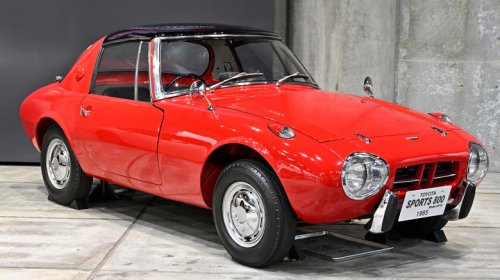
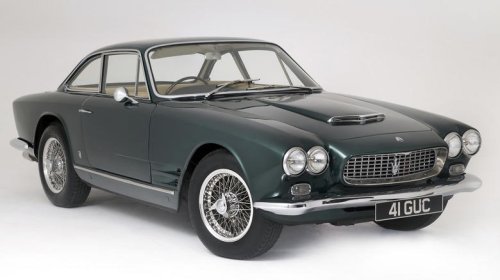
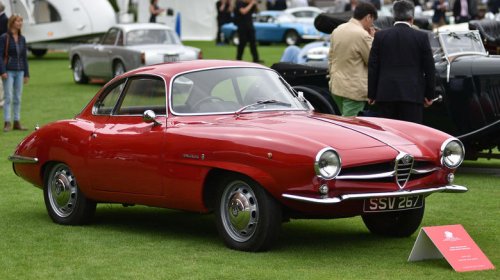
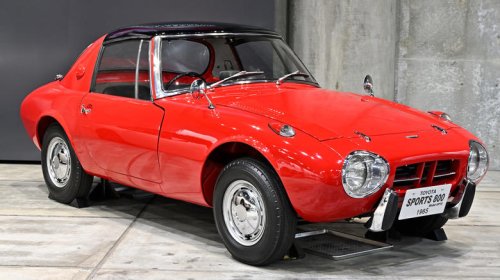
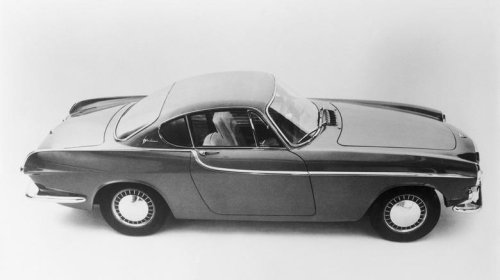
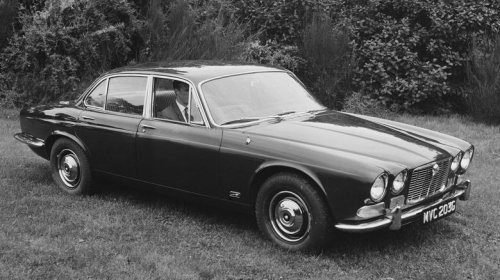
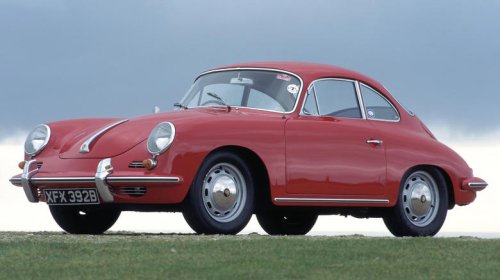
Toyota 800 SportAlmost every decade in the books can make a solid case for being the best for cars. The 2010's adoption of hybrid tech gave us the Holy Trinity, and the 1990s gave birth to icons like the MK4 Supra, and the original Dodge Viper. However, the 1960s might have the strongest argument of all. Cars of the era seem to have ascended to revelrous status in ways that other decades have yet to top. Think Jaguar E-Type, the first Mustang, or the Lamborghini Miura. These names and their contemporaries have adorned the bedroom wall posters of gearheads young and old long beyond their heyday. In fact, the icons of the time shine so brightly that they sometimes wash out the light of other great cars.The superstars are so famous that they're identifiable by darting glances or brief flashes, but there are other automobiles of the time that are just as great, but without the grandeur of the main characters. Many are symbolic of the era in the same way, but show someone a picture of them, and they won't be able to identify them as easily as with some of the aforementioned vehicles. The 1960s were so good to the automobile that there are tons of cars equally as impressive as the celebrity examples that, for whatever reason, did not receive the same level of consecration. Here are six cars from the 1960s that you've definitely seen, but probably can't name. Maserati 3500 GTMaserati 3500 GTFerrari is often hailed as the monarch of any decade you examine, but in the 1960s, their Modena neighbor, Maserati, was producing a car deserving of similar praise. Today, the brand is a bit of a ghost, of what it once was, and it's often easy to forget just how fantastic their cars used to be. The 3500 GT comes from this time exact, when the brand was under no conglomerate ownership, and the focus was purely on racing. At its inception, the brand was crushing it in the racing scene, with Juan Manuel Fangio winning himself Formula 1 championships in a Maserati 250F, and Maserati cars occupying the top ranks of the World Sportscar Championship. People wanted Maserati racecars, and the brand realized it needed to expand to road cars.The project became the 3500 GT, a car now regarded as Maserati's first real production car. At the head of development was Maserati's Formula 1 team engineering whiz, Guilio Alfieri, and with his touch the 3500 became not only a beautiful car to look at, but an impressive one to pilot. Under the long and curvaceous hood was a 3.5-liter inline six, originally from their 350S racecar, though retuned for road use. The engine put out 217 horsepower, which was distributed by either a four- or five-speed manual. This ability, along with its gorgeous Carrozzeria Touring design, made it a commercial success and an icon in every fashion but title. Alfa Romeo Sprint SpecialeAlfa Romeo Sprint SpecialeIntroduced at the Turin Motor Show in 1957, the Sprint Speciale was one of the first cars from Alfa to take aerodynamics seriously. Predating the Sprint Speciale, Alfa Romeo had commissioned legendary Italian design house Bertone to design a trifecta of concept cars that would act as studies in design language and aerodynamics called the Berlina Aerodinamica Tecnica. Following these, Alfa tasked Bertone's Franco Scaglione with putting this design language to a production car. The Sprint Speciale took this task seriously, even conducting a primitive form of wind testing in which test cars would drive with fabric taped to the bodywork so engineers in a following car could observe the airflow over the body.As is the case with many Italian cars of the era and beyond, the Alfa Romeo Sprint Speciale is supremely beautiful. Its aluminum body panels are round and extended, with some body lines reminiscent of the Disco Volante. It was very light, weighing just under 1,800 pounds, which was an even more attractive number when combined with its 113-horsepower output that was available with the later-introduced 1600cc engine. Although the design is wonderfully classic today, it was seen as over-the-top and flashy when it came out. Despite its extensive development and aerodynamic chops, the Sprint Speciale was a bit of a commercial flop, with production ending after only 2,800 units were made. Still, it is a prime example of what Alfa does best, as seen when they did it best. Toyota Sport 800Toyota Sport 800When you imagine Toyota Sports cars from the 1960s, it's easy to jump to the famous 2000GT. However, there was a precursor of the same era that is often overlooked, though not for lack of qualifications. In post-war Japan, every carmaker was focused on making cars for the masses that were cheap and utilitarian. Toyota's entry into this foray was called the Publica, but after the economy began to stabilize, the demand for more fun and stylish automobiles increased, and Toyota had to fulfill that demand. Tatsuo Hasegawa, who would go down as Toyota royalty for his involvement in the inception of the Corolla and Celica, was put to the task. They unveiled what was first called the Publica Sport at the 1962 Tokyo Motor Show. The car was a clever conglomeration of pre-existing parts in the Toyota catalog, but that didn't mean it wasn't great.Shozo Sato, who headed the design side, had made the final version beautiful, and it would go on to be produced from 1965 to 1969. By launch, it had adopted the Sport 800 name, and bore a shape reminiscent of Italian masterpieces of the time, and it was even fitted with a removable Targa top for open-air driving. The body panels were made of aluminum, and the whole thing weighed just 1,280 pounds, a figure that made its 44-horsepower output more palatable. The 2000GT often steals the spotlight, but the Sport 800 is Toyota's true first sports car. Volvo P1800Volvo P1800Before James Bond drove an Aston Martin in "Goldfinger," he actually drove a Volvo. Well, not really, but the Volvo P1800 was the star car of a spy thriller TV show called "The Saint," in which it was driven by future Bond star Roger Moore. The P1800 itself has become a bit of a cult classic since its inception; even today, people are making restomod tributes to this Swedish cruiser. The P1800's story begins in 1960, when Volvo unveiled it at the Brussels Motor Show. Production of this little sports car began a year later though, at the time, the brand was underpowered in its industrial capabilities, and had to contract English carmaker Jensen for the first two years of production.Volvo took over production of the P1800 in 1963, which was based on the floor of the 121 sedan. It was fitted with their 1.8-liter inline four-cylinder engine, which produced up to 120 horsepower in later model years, and could seat up to four people thanks to its 2+2 seating configuration. Stopping power came from disc brakes on two, or all four wheels, depending on the model year. Its greatest strength, though, is its looks. Designed by Pelle Peterson, a yacht designer who worked for an offshoot of Carrozzeria Ghia, the P1800 was a small and handsome thing with a rounded grille and streamlined fins at the rear. It was a commercial success, with the brand selling 39,407 by the end of production. Jaguar XJJaguar XJOne of Jaguar's most iconic cars, and one of the most Iconic cars full-stop, is the beautiful Jaguar E-Type. The sports car is seen by many as the brand's crowning achievement throughout all decades, and its stardom is so well established that it becomes hard to take your eyes off it. However, if you can resist its pull at your glance, you'll see that Jaguar was producing another wonderful car in the same era. Introduced in 1968, the Jaguar XJ's initials stood for "experimental Jaguar" in-house, and that's because this experiment had a lot to prove.After Jaguar merged with the British Motor Company, the brand realized they had become bloated with highly specialized sedans that were at the same time too similar as they were different. William Lyons, the founder of Jaguar, headed the development of the XJ, which would replace four Jaguar sedans in one swoop. The first generation XJ was a hit when it was released in 1968. It was on par with the luxury and quality of its Rolls Royce contemporaries, but sold for a fraction of the price. Its wood and leather-clad interior was quiet thanks to its insulation and isolated cabin subframe. Its muscle matched its beauty as well, with its 2.8-liter straight six engine that was good for 140 horsepower, and a 117 mph top speed. Had the E-Type not shot into the stratosphere of fame, the XJ may have been a likely substitute. Porsche 356Porsche 356Similar to the E-Type, the Porsche 911 is praised by many as one of the finest cars ever produced. Different from the E-Type, though, is that the 911 is a family name that has spread across decades rather than being a standalone model, but the dynasty is so powerful, its origin is often overlooked. Before the 911 was the benchmark for sports cars, Ferdinand Porsche was busy making the Volkswagen Beetle. His son, Ferdinand Jr. wanted something more, and picked and pulled at the DNA of the Beetle to suit its concepts for his needs. The result was the Porsche 356, Porsche's first production car. Like the Beetle, and like the 911 would be, the 356 was rear-engined and Rear Wheel Drive. Production started in 1948, but the model really fell into stride as it was updated and polished through four generations.The latter-half examples, being the 356 B and 356 C, were the generations that graced the 1960s, and did so with finesse. The 356 B updated the looks and structural rigidity, adding more prominent bumpers to make the car less fragile and more appealing to a wider market. The final generation in the 356 C mastered the formula, adding disc brakes all around and an engine upgrade good for 95 horsepower. This classic Porsche is timeless and a blueprint that laid the foundation for what would become one of the most successful sports cars in history.