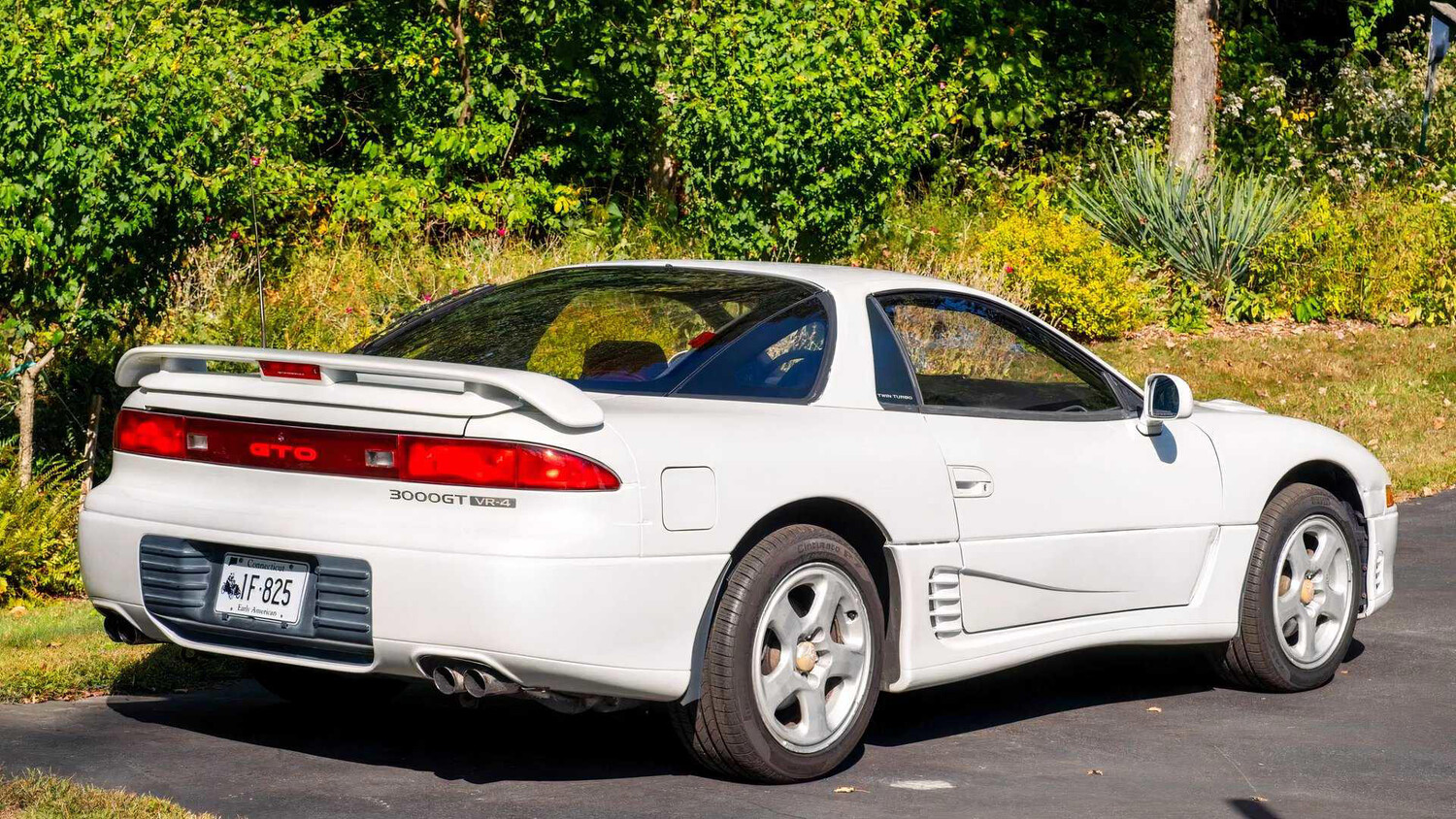
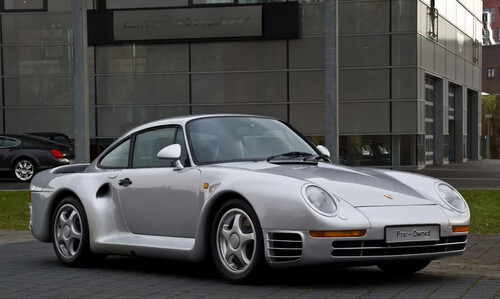
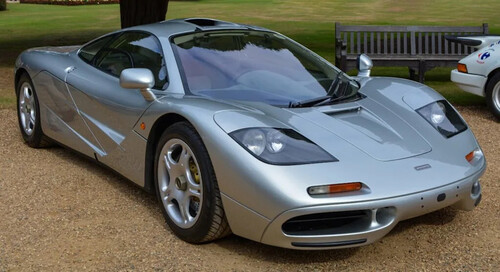
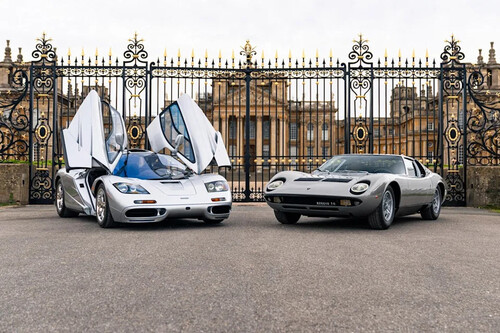
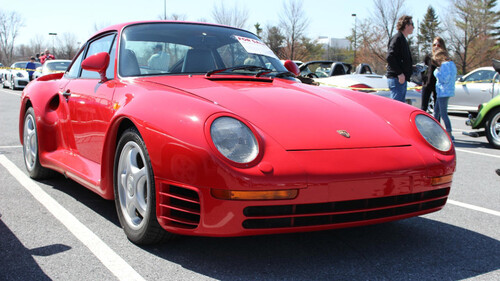
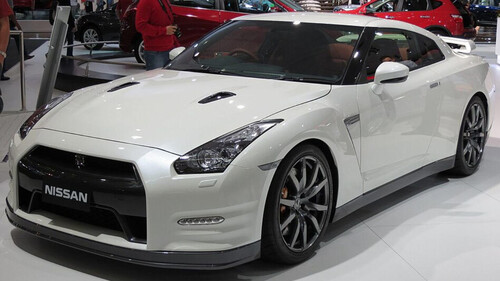
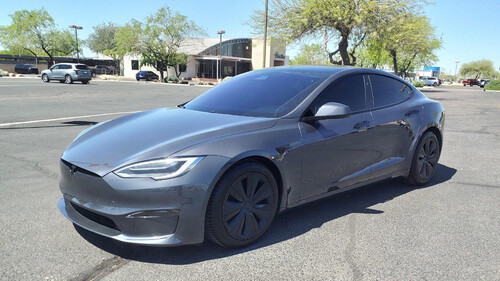
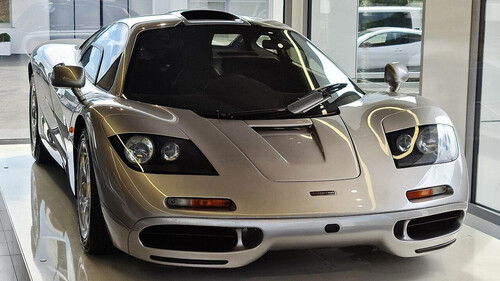
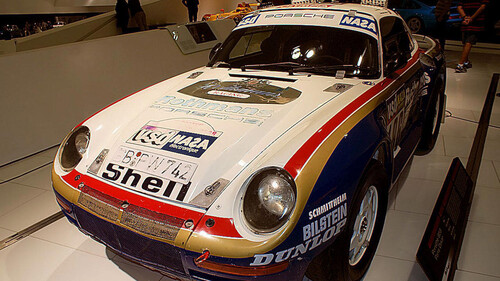
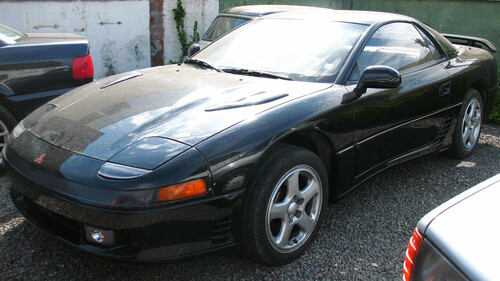
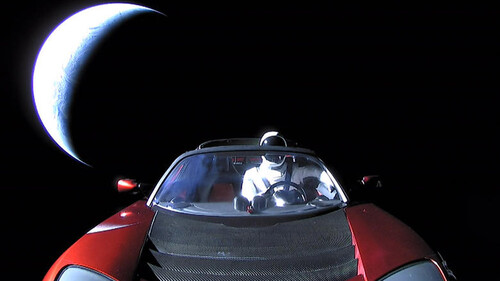
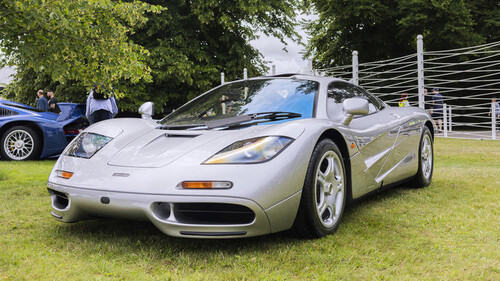
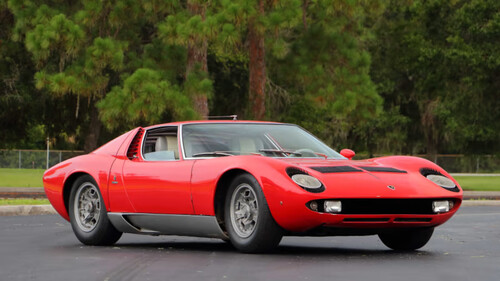
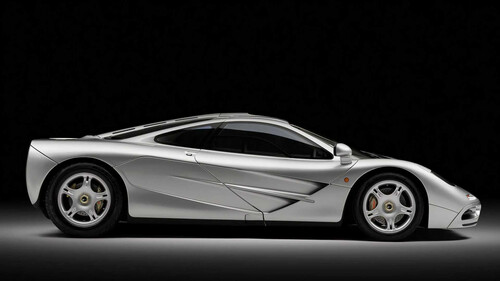
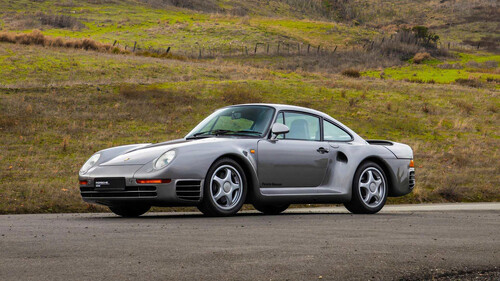
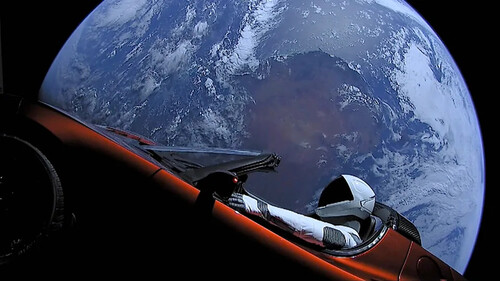
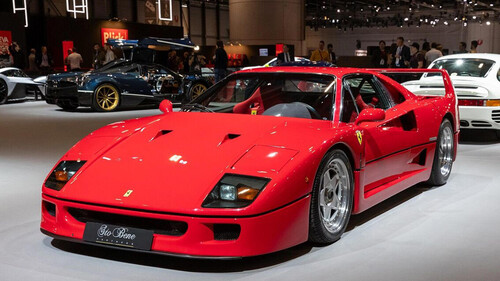
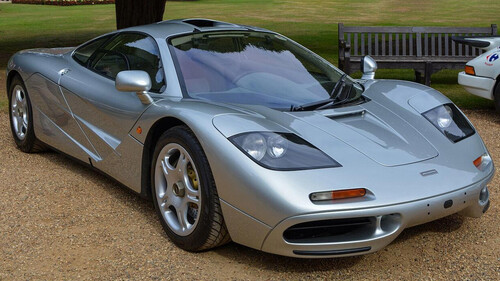
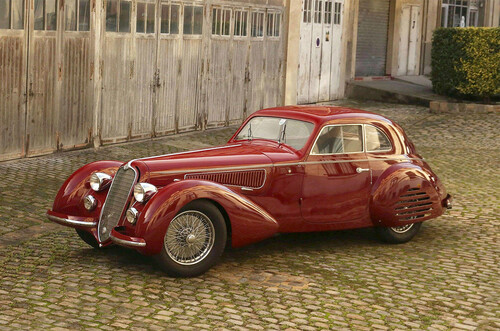
If you were to travel back in time to the 1800s in a run-of-the-mill Tesla Model 3, you'd probably be accused of witchcraft. We currently live in the most technologically advanced era of the auto industry, where even normal cars have features that seemed otherworldly just a few decades ago.However, we didn't get here quickly or by accident. Adaptive cruise control, massaging seats, adaptive suspension, and other modern features we take for granted today started with a eureka moment that shaped an idea, then evolved into groundbreaking innovations that pushed the boundaries and altered the automotive landscape forever. We've taken a trip through automotive history and uncovered five sports cars that were far ahead of their time, delving into the technologies they pioneered and the lasting impact they had on the cars we drive today. 2008 Tesla Roadster Power: 248 HP Via Bring A TrailerElectric sports cars are slowly taking over today, but in the 2000s, they were virtually non-existent and commonly viewed as “golf carts”. That perception changed in 2008 when Tesla introduced the Roadster, proving that electric cars could be stylish, fast, and practical for long-distance travel. Via Bring a TrailerThe Tesla Roadster was the first highway-legal, serial production car to use lithium-ion battery cells and the first production EV with a range of over 200 miles per charge. The Roadster also proved that EVs could match their gas-powered counterparts in the performance department, achieving 0-60 mph in just 3.7 seconds.The Roadster served as a proof of concept for electric production cars, and barely two decades after its debut, they are taking over the auto industry and breaking records previously held by ICE cars. Cars like the Tesla Model S Plaid and Lucid Air Sapphire are already blasting past 60 mph in under 2 seconds, while the BYD Yangwang U9 Xtreme obliterated the production car top speed record when it hit 308.4 mph. 1990 Mitsubishi 3000GT VR-4 Power: 320 Horsepower Via Bring A Trailer Before Mitsubishi became a boring manufacturer of everyday crossovers and SUVs, it was an ambitious and innovative automaker with a diverse lineup of exciting performance vehicles like the Lancer Evolution and Eclipse, particularly in the ‘90s. Although it doesn't get the recognition it deserves, the 3000GT is one of the coolest Mitsubishi models from that period, born from Japan's “bubble economy” era when automakers had unlimited budgets to push engineering boundaries. Via Bring A Trailer The 3000GT had technologies that most gearheads didn't expect from a Mitsubishi, especially at its price point. Most notably, the 3000GT was one of the first production cars to feature active aerodynamics. It had motorized front and rear spoilers that adjusted automatically to increase downforce, a feature now found in expensive hypercars like the McLaren P1. It also had an advanced full-time all-wheel-drive system for improved acceleration, while its all-wheel steering system improved handling. 1966 Lamborghini Miura Power: 350 Horsepower Lamborghini Miura Front 3/4In 1963, Ferruccio Lamborghini established Automobili Lamborghini with one goal - to take on Ferrari in the sports car world. About three years later, the Sant’Agata Bolognese-based company introduced the Miura, turning the auto industry on its head and changing how the fastest cars were built. Lamborghini The Miura's innovation was being the first high-performance production road car to popularize the rear mid-engine, rear-wheel-drive layout. Before the Miura, mid-engine setups were mostly reserved for race cars for their superior weight distribution, with the best sports cars of the era adopting the familiar front-engine, rear-wheel-drive layout. While there were a few mid-engined sports cars built before the Miura, it was the first car to combine the layout with the exotic performance of a powerful V12 engine — a 3.9-liter transversely mounted unit dishing out 350 ponies in the original ‘P400’ version. It's no surprise that the Miura is widely regarded as the first modern supercar.Beyond its technological advancements, the Miura was a design masterclass, featuring a low-slung silhouette with bold, sleek lines and elegant curves in the right places. Although its successor — the Countach — adopted a markedly different design that eventually became the quintessential Raging Bull design language, the Miura is undoubtedly one of the most beautiful sports cars ever created. 1986 Porsche 959 Power: 450-500 Horsepower Porsche In the early '80s, Porsche executives wanted to replace the aging 911 with the front-engined 928. Porsche engineer Helmuth Bott was convinced that this was a bad move, so he proposed a new model that would act as a technology demonstrator to prove that the Porsche 911 still had a bright future. This is how the 959 was born, and with the FIA's Group B rally category fairly new at the time, Bott felt that it would be the perfect place to test the 959's new ideas. Porsche The 959 went on sale in 1986 with a slew of technologies that would define Porsche for decades. Most notably, the 959 had an intelligent Porsche-Steuer Kupplung (PSK) AWD system with a variable front-to-rear torque split (up to 80% to the rear) depending on driving conditions. The 959 also featured a pioneering sequential twin-turbo setup which eliminated the “turbo lag” issue that plagued early turbocharged cars. The 959 was also the first production car with active suspension and an electronic tire pressure monitoring system. It was offered in two main trims: the standard road-going version producing around 450 hp, and the ultra-rare Porsche 959 Sport, which bumped output to 500 hp for maximum performanceAlthough the FIA canceled Group B before the 959 could really shine, its technologies were famously proven with a 1-2 finish at the Paris-Dakar rally. These features also propelled the rare road-legal versions to a top speed of 197 mph, making the 959 the fastest production car in the world briefly in 1986. 1992 McLaren F1 Power: 627 Horsepower McLaren After dominating Formula One racing for much of the '80s, McLaren hatched a plan to build the ultimate road-going sports car that would combine F1-level performance with daily usability. Created with the help of the renowned Gordon Murray, the result was the iconic McLaren F1, and it introduced engineering feats that remain benchmarks to date. Via: RM Sotheby's For one, the McLaren F1 was one of the earliest production road cars to use a carbon fiber monocoque chassis and body, keeping weight at roughly 2,509 pounds without compromising on rigidity. Inspired by race cars, the F1 also had a three-seat layout with a central driving position and two passenger seats set slightly back on either side. Other features included two electric fans that improved aerodynamics by sucking air from beneath the car and a gold-lined engine bay that reportedly helped cool the engine more effectively.Speaking of the engine, the F1 was powered by a naturally aspirated BMW V12 engine cranking out 627 hp. This power and advanced tech helped the F1 clinch the production car speed record with a 240.1-mph average top speed in 1998. To date, the F1 remains the fastest naturally aspirated production car ever.Sources: Lamborghini, McLaren, Porsche