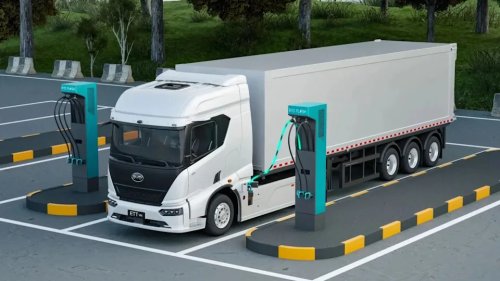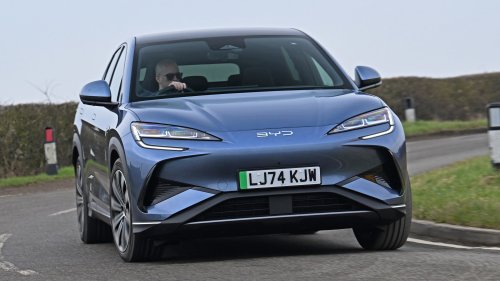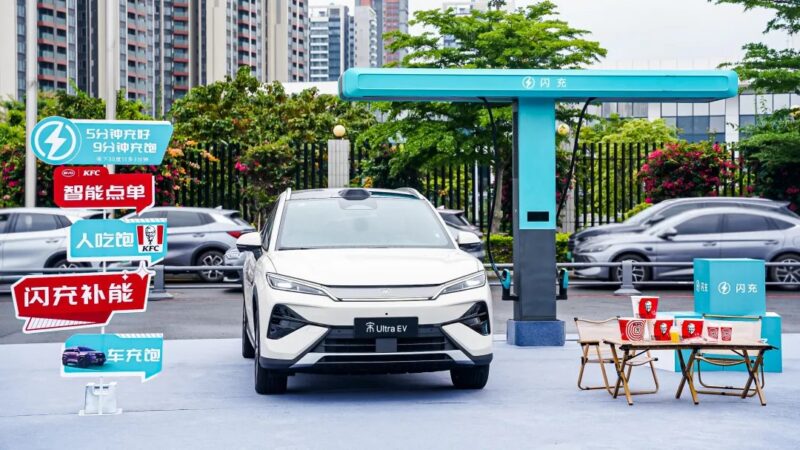



















BYD is planning to install 3,000 new “Flash” EV chargers in Europe by 2027. These are ultrafast chargers that can charge an EV in about 5 minutes, depending on the EV model. About 600 of the new chargers will be installed in the UK. Apparently, the new chargers will be paired with their own battery systems so that the chargers will use electricity from batteries fully or partially in order to not overly burden local grids. “It’s a lot of money per station, it’s almost like half a million pounds. First we need to build a very strong infrastructure network,” said Stella Li, the Chinese group’s top international executive. Practically speaking, it may not be necessary for EV drivers to charge in five minutes because they are likely not facing an emergency or urgent situation every time they drive their vehicles. At the same time, some members of the public may have a belief that EV chargers are too slow, so installing ultrafast public EV chargers could help them understand there are actually many public EV chargers in certain places that charge quickly enough. Ultrafast and fast chargers, particularly, help EV drivers on long trips who drive for several hours and then stop for a rest break or a meal and/or beverage and want to charge at the same time. A typical rest break might be 20–40 minutes, which may be ample time to charge with a common fast charger. Even though a 35-minute charge during a lunch break may be sufficient for many long-distance drivers, there still could be those who believe they need to charge in 10 minutes or less. Ultrafast chargers with rates over 400 kW, or well over in this case, may reassure the impatient or anxious EV drivers. It may turn out that this group of impatient, unaware, or anxious EV drivers on long-distance trips learn over time their fears were unfounded and stop complaining eventually. Another key trend in these large public EV charger installations is the speed at which they can be built and made operational. In some cases, this speed is faster than permitting and building new gas stations. That is, it may take less time to develop public EV infrastructure than it took to build and operationalize all the gas, diesel, and petrol stations in existence, which required decades. “The challenge is not the set-up. It’s really how quickly the councils can give their permission. We can roll out really quickly,” said Bono Ge, BYD’s UK business head.