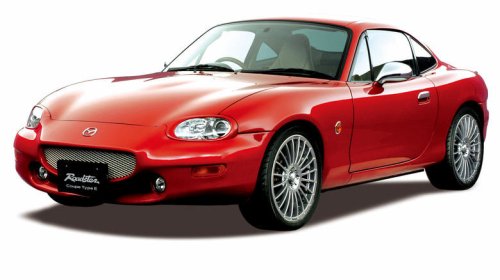
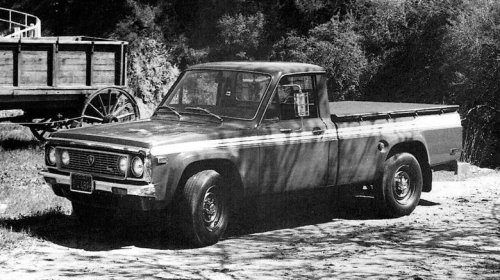
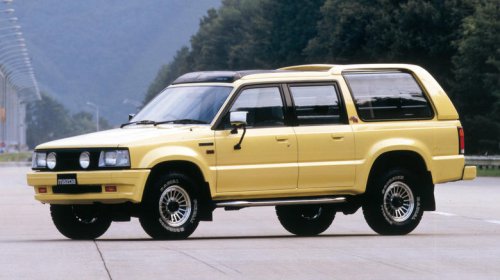
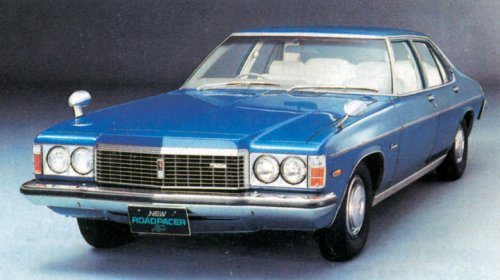



















Mazda Roadster CoupeMazda's Engineering & Technology division usually handles projects like building vehicles for emergency service use or cars for driving schools. However, in 2003, it was tasked with building a unique version of the brand's best selling MX-5 Miata. The Roadster Coupe was handcrafted with a fixed roof and remains, to date, the only fixed-roof coupe Miata model to ever hit dealerships. Those dealerships were all in Japan, as the Roadster Coupe was built exclusively for domestic sale, and it was always intended to be a low-volume car.The Roadster Coupe would turn out to be even more low-volume than even Mazda anticipated, as the model's significantly higher price compared to the standard Miata made it an extremely slow seller. Only 179 examples were reportedly built across all variants between October 2003 and the Roadster Coupe's discontinuation in August 2005.In addition to the base-spec Roadster Coupe, three special variants were available: Type S, Type E, and Type A. The Type S equipped the car with a larger 1.8L engine, up from the 1.6L unit of the stock model, and churned out around 160 horsepower. The Type A was essentially a Type S with a body kit that was styled like a classic British sports car. The Type E was designed to be the most upscale variant of the Roadster Coupe, with an automatic transmission instead of a manual and a plusher interior.Mazda Rotary Engined Pick UpIt wasn't just cars that Mazda fitted with its rotary engine. In 1974, it also launched a pickup with a Wankel rotary under the hood exclusively for the North American market. It was, rather unimaginatively, called the Rotary Engined Pick Up (REPU). It was designed to offer an alternative to the other small Japanese trucks that were starting to gain traction in America at the time, and was smoother and handled better than any of them. However, the rotary engine meant that it lacked the low-end torque that pickup truck owners commonly required, and it wasn't very efficient either.It was also more expensive than its similarly sized competition, and as a result, it didn't sell well. Around 16,000 examples were built before Mazda killed off the truck in 1977. In the decades since, they've become a cult collectors' item both in the U.S. and in Japan, where a significant number of examples have been imported. Perhaps unsurprisingly, no other manufacturer has since launched a production rotary powered pickup, and it seems likely that it will stay that way.Mazda Proceed MarvieWhen demand for SUVs began to increase in the early '90s, Mazda found itself caught off guard. Unlike Toyota, Mitsubishi, and Nissan, it didn't have an SUV in its lineup, and so it hastily created one from its B-Series pickup. The result was the Proceed Marvie, which was introduced in 1991. Its tough, boxy looks were a result of its truck roots, with Mazda essentially grafting a rear end onto its four-seater Cab Plus pickup and adding an extra row of seats to bring the Proceed Marvie's total capacity up to seven passengers.Mazda sold the SUV in Japan for several years, gradually adding new variants over time. An optional automatic transmission was added in 1992, and a diesel version arrived in 1996, but it was never enough to make the Proceed Marvie popular with Japanese buyers. A new generation of the B-Series pickup was launched for international markets in 1998, but the Proceed Marvie didn't survive to see a second generation.Mazda Roadpacer APMazda's insistence on fitting rotary engines to all kinds of vehicles has resulted in a number of odd pairings. Few are odder than the ill-fated Roadpacer AP, which combined a 1.3L rotary engine with the body and underpinnings of the Australian-built Holden Premier sedan. The idea was that the Roadpacer AP would be an alternative to Toyota's long-running Century model and Nissan's similarly-sized President, both of which were popular as transport for government officials or high-ranking executives.The AP in the name reportedly stood for Anti-Pollution, although this wasn't a particularly accurate moniker. The Holden Premier body that Mazda had borrowed for the Roadpacer AP was designed to house a V8 engine, and so the tiny Wankel rotary had to work hard to provide enough grunt to move it. That meant that fuel economy was greatly reduced, which entirely negated the point of fitting the rotary in the first place. The car was both very slow on the road and slow to sell in dealerships, with Mazda reportedly selling just 800 examples between 1975 and 1977 before discontinuing the model.