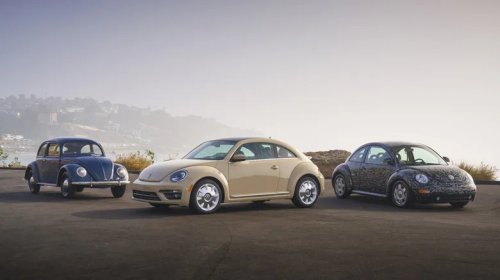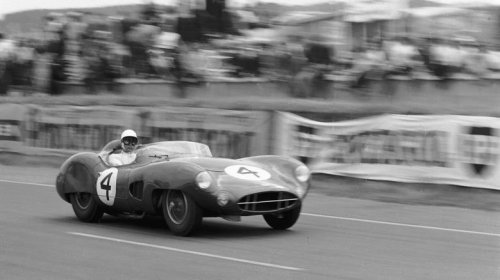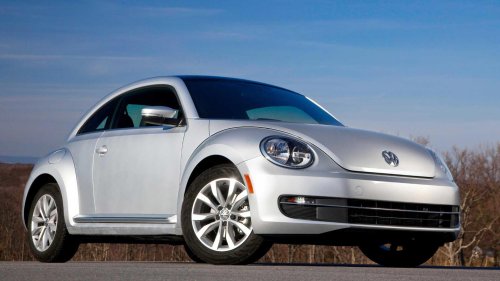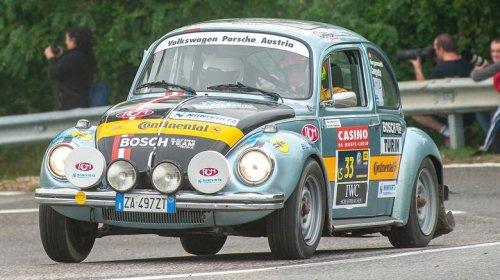
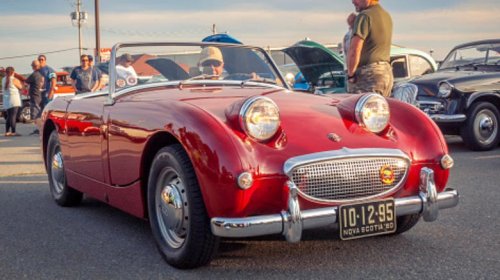
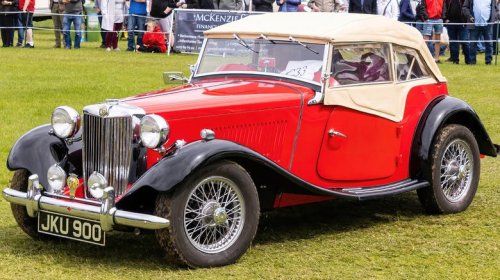
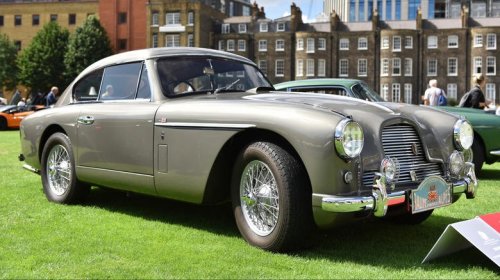


















Volkswagen BeetleIf you are wondering what a Volkswagen Beetle was ever doing participating in NASCAR, it is possible the driver did, too. Yet, in 1953 and 1955, the thrifty little German car entered a NASCAR event. With just 36 horsepower, you might think the Beetle would be at a disadvantage to pretty much everybody. That was true, but driver Jim Graham, a San Fransisco VW dealer, felt the handling and reliability would gain enough of an advantage to overcome the lack of power. Furthermore, he said the tire wear should be less of a concern and he had expected the car to run the entire race without a pit stop.While the VW failed to take any checkered flags it did manage a 6th and an 8th place finish in 1955. Furthermore, a day before legendary driver Dale Earnhardt made his NASCAR debut, a Beetle raced in the Baby Grand Series, finishing 26th of 19 cars.Austin-HealeyDonald Healey was a renowned British automotive engineer making boutique sports cars beginning in 1945. He produced several cars bearing his name alone and some through partnerships, including the Nash-Healey, Jensen-Healey, and Austin-Healey. The Austin-Healey partnership was the most successful, having been created from a partnership between Donald Healey and the British Motor Corporation, of which Austin was a division. Cars from this partnership were all classic English roadsters, making them natural choices for racing.While Austin-Healey cars are a regular sight at races sanctioned by the Sports Car Club of America, you might not think they would be a good fit for NASCAR. Yet, an Austin-Healey 100 entered the 1954 International 100 race at Linden in 1954, finishing in a respectable 12th place out of 43 cars.You might have thought that was the end for Austin-Healey in Nascar, but it wasn't. In 1961, three tiny Austin-Healey "Bugeye" Sprites entered a NASCAR race. Measuring only 53 inches wide and 137 inches long, these are some of the most adorable cars ever sold to be driven on legal roads. The Sprite was powered by a 948cc engine making all of 48 horsepower when it left the factory. Of the three that entered the race, Doc Lee drove his car to 15th place out of 23 cars. However, it should be noted that every car he beat failed to complete the race.MG TD MidgetIn post-war England, auto manufacturers were putting the pieces of their businesses back together and began building new cars. With the British economy seriously depressed, automaker MG sought to build cars for export to the United States, finding customers smitten with the charming little cars. This led to a decades-long period of Americans buying and enjoying MG vehicles, as well as a not-so-long period of NASCAR racing them.In fact, five MGs entered the 1954 NASCAR road race in Linden, New Jersey. While none stood a chance against Al Keller in his Jaguar XK120, at least one placed as high as 14th place. With a 1250cc four-cylinder producing just 54 horsepower, it is surprising any were competitive at all. In 1960, Smokey Cook entered a race at Bowman Gray with an 8-year-old MG, failing to complete its second lap due to a steering problem. In the same race, Bill Massey, driving a more modern 1959 model, also failed to complete due to an axle failure. The last time an MG would attempt NASCAR was in 1963 when Smokey Cook once again failed to complete the race, this time because of overheating.Chevrolet Bel Air convertiblesOne of the strangest of NASCAR oddities has to be its convertible races in the 1950s. As the sport was still in its infancy, NASCAR was still trying out some different ideas in attempts to find out what would stick. This led to a series of races featuring cars with fabric roofs.In the '50s, convertibles were seen as the more sporty and youth-oriented models, even though they were otherwise the same as sedans and coupes. To get the cars in front of their intended audience, manufacturers wanted to see their sporty cars go around a track so they could promote them for marketing purposes. NASCAR purchased the Society of Auto Sports Fellowship and Education, which already had an all-convertible racing series that would then become part of NASCAR.The first race was in 1956 at Daytona Beach and Road Course. Cars racing in this series included the Chevy Bel Air, Plymouth Fury, Mercury Turnpike Cruiser, Ford Galaxie, and more. The final race occurred in 1959, and NASCAR racing has been safer ever since.Aston MartinWhile Aston Martin has been known for making the most elegant luxury grand touring for decades, the company has been equally involved in motorsports. Aston Martin cars have been participating in a variety of racing series since the early days of the sport, winning many championships over the years, including its first victory in the 1914 Aston Clinton Hill Climb. It should come as no surprise that the company would join an American race when invited, although that happened only once when an Aston Martin was entered in the NASCAR International 200 at Langhorne Speedway in 1954.At the time, the car would have most likely been the Aston Martin DB2, although it could have been the updated DB2/4 -– information about the car is scant. The DB2 was powered by a twin-cam 2.0-liter straight-six that could push the car to a top speed of 116 mph, which was faster than most cars of the period. Furthermore, being small and low, it handled corners famously well, which would have also given it an advantage over larger American vehicles. Despite these apparent advantages, the number 1 car started at 16 of 38 cars and finished in 27th place, a disappointing result for anyone. This was the only entry of an Aston Martin in NASCAR as far as available information can tell.