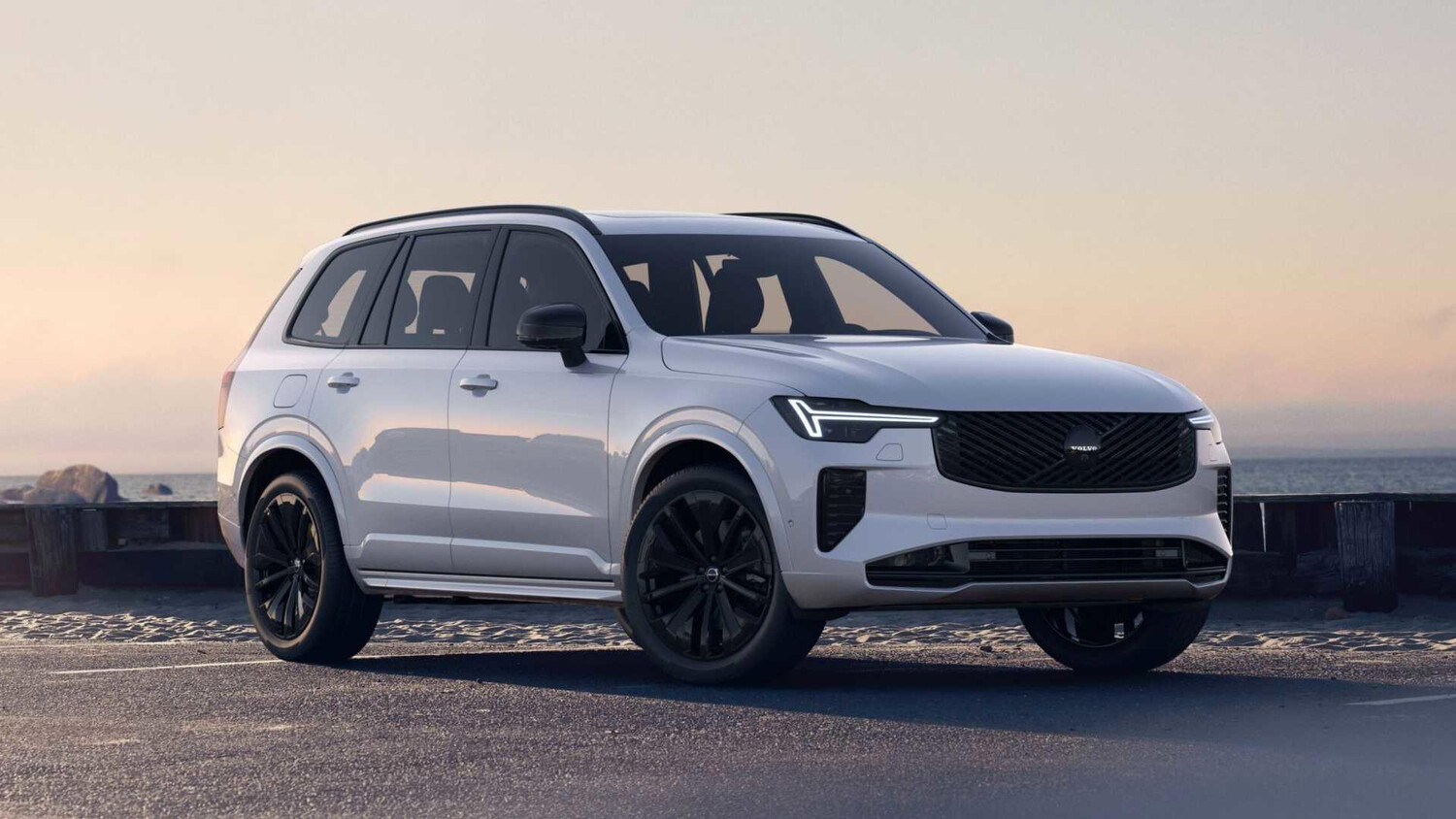
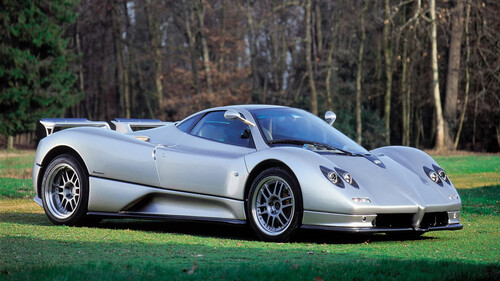
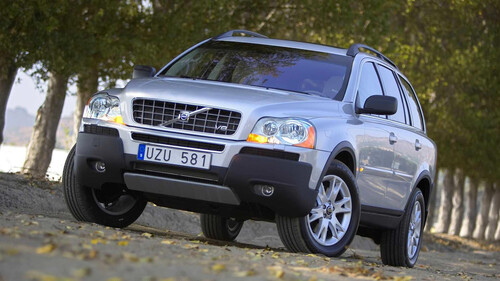
Once upon a time, combining the two main forms of forced induction was about the only way to get the benefits of both. That's not the case anymore. Turbocharging technology has advanced dramatically in the last two decades. Improvements in bearings and other materials, housing designs, and even the ability to adjust the angle of the turbines' blades themselves have made turbos faster-spooling than ever before.Porsche Some automakers are even experimenting with adding tiny electric motors to their turbochargers to perfectly eliminate any kind of delay in boost. Mercedes was among the first, having drawn on their experience with similar technology in its F1 cars. You'll find the tech in the four-cylinder Mercedes-AMG SL 43. Porsche is doing a similar thing with its 911 GTS. In fact, the combination of its electrified turbocharger and other improvements allowed the automaker to remove a turbo compared with the last GTS, which saves even more weight and space.Zenvo Fancy electrified turbos aren't the only way electrons are eliminating the need for twin-charging. Because of the truly instant response and torque of electric motors, some automakers are using much bigger electric motors applied directly to the driveline to fill in where a supercharger would have. The Lamborghini Temerario is a perfect example, which uses its electric motor to aid the car at low rpm, in turn allowing for a burly, peaky turbo and an engine tuned for extremely high revs with a high power peak to take over at the top end. How do they work? Lamborghini / Andy Cassano Internal combustion engines can be configured in myriad ways, but they can also be divided into some basic categories. Take aspiration, for instance, or how air gets into the engine. You have natural aspiration, where the vacuum created by the pistons (or rotors) sucks in air. Then there's forced induction, which uses an external device to force more air into the engine than it could naturally.Among forced induction options, the two main ones are supercharging and turbocharging. Each has a unique set of advantages and disadvantages. Supercharging, for instance, offers amazing throttle response. Turbocharging offers impressive efficiency. Most cars, though, only use one of the two types of forced induction, leaving the automakers to work around some of their less desirable characteristics. Some companies, though, have combined the two systems in an effort to create the best of both worlds.In some ways, the automakers that dared try what's known as "twin-charging," managed to do exactly that. However, they also ran into some pretty obvious drawbacks to combining them. It's also becoming less and less appealing as newer technologies eliminate old forced induction issues, if not the idea of the combustion engine altogether. What Is Twin-Charging, And Why Would You Use It? BMWAs we already mentioned, there are two main ways to force more air into an engine (which produces more power when combined with more fuel). The one that you're probably most familiar with at this point, and may even have in your own car, is turbocharging. It uses the flow of exhaust gases from the engine to spin one side of a turbine. The other side spins, too, and it forces more intake air into the engine.The main advantage with turbocharging is that it's efficient. All the power to run the turbine comes from exhaust gases that would otherwise do nothing. The main disadvantage is that you need exhaust flow to spin up the turbine, and that can take a bit of time, resulting in a delay between pressing the throttle pedal and getting full boost. The issue gets worse with bigger turbochargers. Also, being connected to hot exhaust gases can result in hotter intake charges, though that will be an issue any time gases are compressed.Supercharging solves the problem of boost response. The compressor, regardless of design, is driven directly by the engine via a drive belt. Because of this, the compressor is always spinning, and it spins faster with more rpm. This results in extremely smooth, linear, and quick power delivery. The main problem, though, is that it's much less efficient, since it takes engine power to run the compressor.Volvo You may have noticed that the advantages and disadvantages of these two types of forced induction are basically the inverse of each other. So, if you could combine them, you could basically eliminate the issues. That's what twin-charging is. One engine gets both a supercharger and a turbocharger. The supercharger handles low-rpm boost and provides immediate power while the turbocharger spools up to handle high-rpm boost. It's a system that can give you better response than an engine with just a turbo, and better top-end power and efficiency than one with just a supercharger. What Are The Drawbacks? VolvoThere are two main issues with twin-charging that are pretty easy to spot. The first is that it's complicated. It's one thing to tune an engine with a single or twin turbos (as long as they're not sequential), or with a supercharger. It's another when you have to get the two to get along. If it's like one of the more recent twin-charged engines, the Volvo T6 2.0-liter four-cylinder, you have the supercharger for low-end and the turbo for high-end, and you have to be able to transition between the two boost sources. You have to have plumbing and cooling for each system. There's a lot to manage.That also leads to the other issue: weight and space. Neither supercharging nor turbocharging are especially lightweight. You're adding large metal compressors to the engine, along with all the aforementioned cooling and air plumbing. Using both systems means you're – very roughly – doubling the amount of weight from power adders. It also adds bulk which can be a pain for packaging. What Cars Used Twin-Charging? NissanOnly a few automakers have dabbled with twin-charging in their production vehicles, and they span a shockingly wide range from fairly mainstream economy cars up to mad supercars. You can find a short list of some of the more notable examples below. Nissan March Super Turbo: Introduced at the end of the 1980s, this tiny hatchback had a 930-cc four-cylinder making 109 hp and 96 lb-ft. Zenvo ST1: The Danish supercar company's first model applied the twin-charging idea to a 5.8-liter V8, yielding 1,104 hp and 1,055 lb-ft. Volkswagen Scirocco: One of many that used a twin-charged 1.4-liter four-cylinder. It made 158 hp and 177 lb-ft. Volvo XC90: Like the Scirocco, the XC90 is just one of many Volvos to get the same basic engine, a 2.0-liter four-cylinder. The current version makes 295 hp and 310 lb-ft. Lancia Delta S4: A homologation special designed for Group B rally racing. It had a 1.8-liter four-cylinder and made about 250 hp. Volvo Volvo is the most recent champion of twin-charging. The company revealed its twin-charged 2.0-liter four-cylinder engine in 2013, and it made 302 hp and 295 lb-ft of torque. It was a version of the company's Drive-E engine range, and the version of the engine with only a turbocharger made 240 hp and 258 lb-ft of torque. The engine rolled out to basically every model in the Volvo range.Joel Stocksdale As for the first car to get twin-charging, that goes to the Lancia Delta S4, which launched in 1985. This was a major shift for Lancia not just because of its engine, but also because it adopted all-wheel-drive and even had carbon-fiber body parts.The previous supercharged 037 Group B car was rear-wheel-drive and used fiberglass body parts. Although the road-going Delta S4's mid-mounted twin-charged 1.8-liter engine only made around 250 hp, the race-spec models could make around 500 hp.These days, technologies have improved enough that twin-charging doesn't have any real advantages, so automakers don't need to keep playing with it. Further into the future, we may not even be using combustion at all, eliminating forced induction solutions entirely.