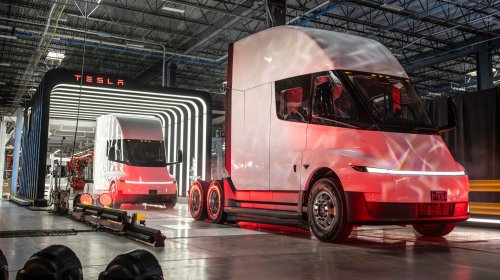
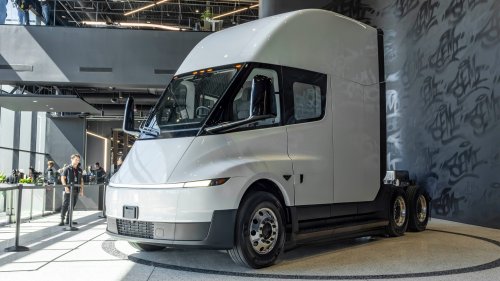
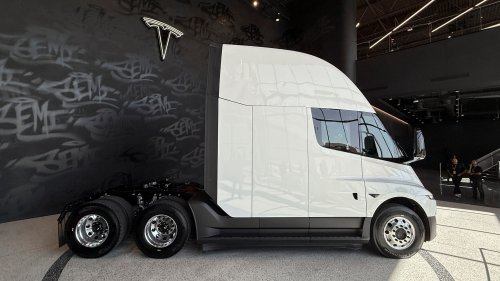
Image: TeslaAfter the end of the tax credit in the USA—driving record sales in Q3 followed by a slump in Q4 2025—and CEO Elon Musk stepped back from a controversial political involvement, Tesla has now presented its first financial results beyond these effects. The takeaway: the company’s automotive business shows only limited growth, but the first-quarter figures remain solid. Tesla generated nearly $22.4 billion in revenue, up 16% year-on-year. The automotive segment contributed $16.2 billion, also an increase of 16%. On the bottom line, the company reported a GAAP profit of $477 million, up 17%.At first glance, the double-digit gains look encouraging. However, the comparison base is weak: Q1 2025 marked a particularly poor start for Tesla. The company produced and delivered fewer vehicles than in any quarter since Q2 2022, while profit of around $409 million was the lowest since mid-2021. Tesla did not fully recover over the course of the year. For full-year 2025, deliveries fell by nine per cent to around 1.6 million vehicles, and the manufacturer also reported an annual decline in revenue for the first time.The internal and external factors behind this weak performance are largely well-known: CEO Elon Musk did the electric vehicle manufacturer no favours with his controversial political involvement. The USA scrapped the $7,500 tax credit for electric vehicle purchases at the end of September, which weakened the US market across the board. Additionally, the once-promising Cybertruck failed to gain traction in 2025, while Tesla had little else to offer throughout the year aside from the Juniper facelift of the Model Y.The big question now was whether Tesla could recover after this year of crisis. The low Q1 profit (the second-lowest quarterly result since mid-2021) does not suggest a strong rebound. However, there are financial indicators that offer a glimpse of hope.Tesla reported free cash flow of $1.4 billion, while net cash flow from operating activities also increased. At the same time, a clear trend is emerging: the automotive business is gradually losing weight—not only in Elon Musk’s narrative, but also in the company’s financials and overall output. Growth is increasingly driven by the energy and services segments, although the energy division recorded a rare year-on-year revenue decline of 12% in the first quarter.A brief look at the production and delivery figures announced for January to March: As is typical at the start of almost every year, Tesla’s sales began cautiously. However, with 358,023 electric vehicles delivered and 408,386 units produced, the EV manufacturer avoided a repeat of the disastrous start to 2025. Compared to that low point, the figures represent a 12.6% increase in production and a 6.3% rise in deliveries.Incidentally, for the first time, the outgoing models Model S and Model X have disappeared entirely from the financial report. Instead, Tesla has reaffirmed its commitment to volume production of the electric truck Semi and the robotaxi Cybertruck for this year. There is little news regarding the volume models themselves.“We are focused on optimizing our vehicle product portfolio, with an emphasis on vehicles designed for a fully autonomous future,” Tesla stated. “We continued the launch of Model 3 and Model Y trims globally, including the roll-out of the Model YL in markets outside of China and more affordable trims of both models. We also began deliveries of Cybertruck in the UAE.”The financial report dedicates far more space to trend topics such as AI, robotics, and autonomous driving than to the current state of the automotive business. Page after page, Tesla outlines how it plans to pave the way for its transformation into a robotics and robotaxi giant.assets-ir.tesla.com (PDF)



















 +52 others