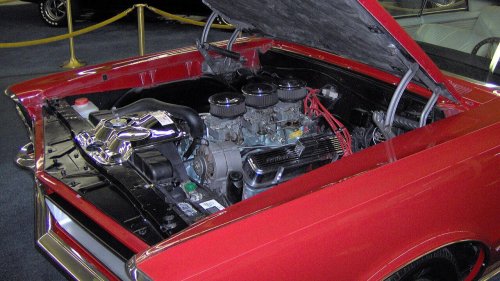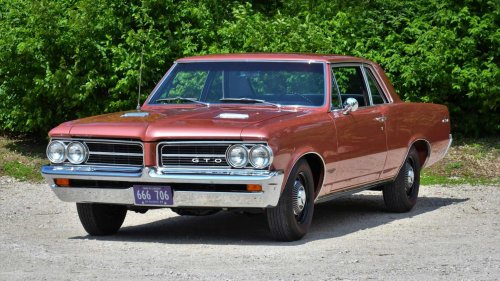
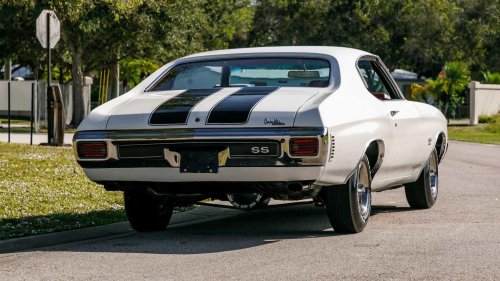
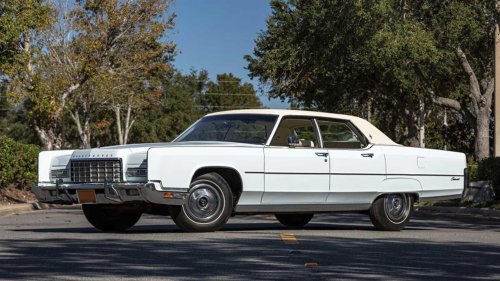
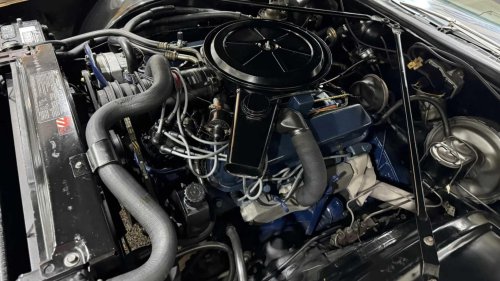
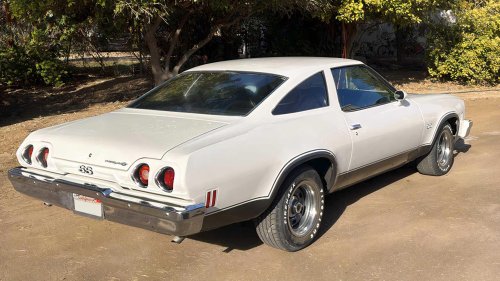
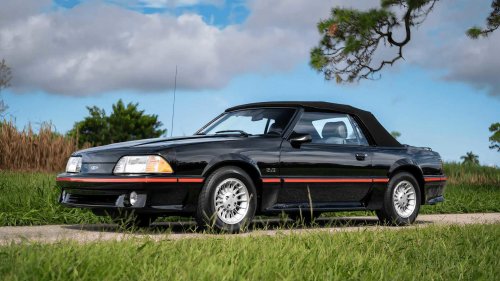
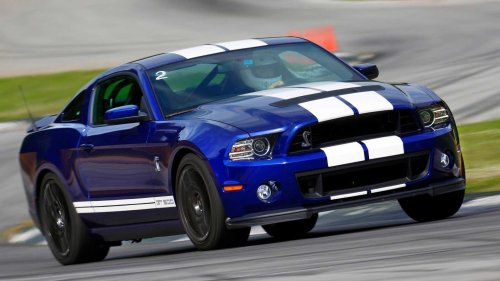



















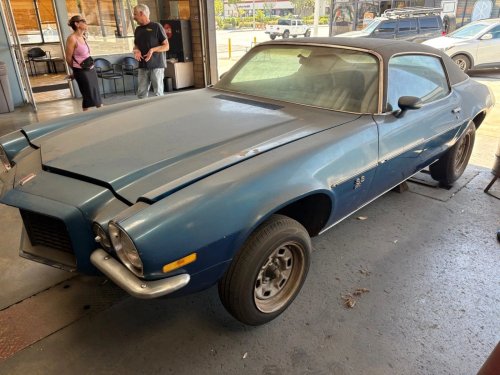
Jump LinksPower Levels Kept Increasing During The DecadeThe Government Started To Crack Down On Big PowerMain Reasons Cars Lost Power After 1972Higher Insurance Costs Were Driving Buyers AwayThe American auto industry looked unstoppable toward the end of the 1960s and into the early 1970s, with manufacturers from the nation continuously finding ways to bump up the power of their vehicles. This was principally achieved by developing new and ever larger V8 engines, with the drive to offer the most commanding vehicles pushing each to explore the limits more every year. It seemed like the automotive space race would never run out of fuel, but like every good thing, the tank eventually ran dry.By the mid-1970s, cars were making a small fraction of the grunt they had been just a few years earlier. There were a few good reasons for the approach of American marques changing tactics, and why the power race eventually returned with a vengeance. The Muscle Car Golden Era Was A Glorious Time Bring A Trailer While the United States was kept busy rebuilding itself and the world following the devastating World War II of the 1940s throughout the 1950s, it started to get aggressive once more as the swinging '60s kicked off. This was especially evident in the nation's automotive industry, with brands like Ford and Oldsmobile playing around with building performance-focused vehicles in the late '50s. The floodgates truly opened in 1964, when Pontiac launched its legendary GTO, which kicked out 325 hp courtesy of a huge 6.4-liter V8 engine.Not wanting to be outdone by General Motors, the likes of AMC, the Chrysler Group, and Ford got to work on trying to beat it. These more aggressive machines sold like hot cakes, so before long, any manufacturer worth their salt was desperately trying to shove bigger engines and racing stripes on anything it sold. The muscle car golden era had arrived, and it was glorious. Power Levels Kept Increasing During The Decade Mecum With the GTO producing a healthy 325 hp at the start of the decade, by the end of it the model was looking a little toothless by comparison. By 1967, the Chevrolet Camaro SS 396 was sending 375 hp to its rear wheels, and Plymouth had managed to extract an awesome 425 hp from its Hemi-powered Road Runner just a year later. The real zenith of the muscle car era was the 1970 Chevrolet Chevelle SS 454, which forced out 450 hp thanks to its monstrous 7.4-liter LS6 V8.The race was on to hit 500 hp, but sadly, a few different factors stopped these dreams dead in their tracks. Public Attitudes Towards Muscle Cars Started To Change Mecum Auctions By 1972, the general public was starting to get a little bored with the muscle car craze. While it initially put the US on the map as a big hitter in the automotive sector, by the start of the decade the cars had gotten so quick that they were becoming dangerous. They were so cheap to buy and insure that all kinds of inexperienced and young drivers could get their hands on them, so the crashes were big when they inevitably occurred as everyone did their best Steve McQueen impressions. The US government had started to have enough too, given these ultra-powerful cars were throwing a number of harmful gases out of their exhausts and into the atmosphere.Having been partied out by the end of the 1970s, many buyers had also started to look more towards luxury cars when the time came to spend their hard-earned cash. Sales of these kinds of vehicles had begun to rise in the early 1970s, and pure performance was the last metric considered when making a good luxury model. While this movement had an effect on reducing power outputs, other elements were more influential. The Government Started To Crack Down On Big Power Bring a Trailer To try and get the power levels of these vehicles under control to help safety, the government wanted to reduce the power they produced. The measurement used to decide this was changed too, with the typical gross horsepower value being switched to net horsepower numbers instead. Gross horsepower measures the pure power of a given engine on a dyno, without other components that it has to run on a car that sap power. Net horsepower measures an engine's grunt with all these components connected, which naturally lowers a car's peak power output. Vehicle Engines Were Becoming More Restricted Alongside The Regulatory Changes Mecum Auctions While models were advertised with much less power as a result of changing to net horsepower figures, they were also becoming more mechanically squeezed for grunt alongside this. Wanting to restrict the performance of the cars, both from a safety and environmental standpoint, automakers were put under pressure to lessen the power levels of their models. In addition, the oil crisis of the time was making running a potent muscle car extremely expensive. To get around these issues, manufacturers decided to reduce the compression ratio of their V8s, rather than design new units. This also allowed them to use unleaded fuel, which was being introdcued throughout the decade as a result of widespread concern over the dangers of leaded fuel. Main Reasons Cars Lost Power After 1972 Change from Gross horsepower figures to Net horsepower Compression ratios were reduced to restrict power and improve emissions High-power models became too expensive to run, leading brands to offer less powerful versions Lower compression in the engine's cylinders essentially means that the fuel-air mixture is squeezed less tightly, which produces a smaller explosion, and thus less power and wasted energy. This means that a car is both less powerful, and emits less harmful substances from its exhaust. The consequences of all these changes were dramatically clear, with the respective 1971, 1972, and 1973 Chevrolet Chevelle SS 454 illustrating the effects. While the 7.5-liter monster produced 365 hp in 1971, this number had dropped to just 270 hp once the gross power figures were embraced in 1972. By the time the engine's compression ratio was decreased in 1973, it emitted just 245 hp, more than 100 hp short of its potential two years prior. Higher Insurance Costs Were Driving Buyers Away Bring A Trailer The greater frequency of accidents with the rapid machines had also taken its toll when it came to insurance prices, with muscle cars becoming prohibitively expensive to run in this regard. Factor in the rising fuel costs due to the oil crisis, and any remaining interest in owning a high-power vehicle had completely disappeared. Sporty models remained over the following couple of decades, but they were limited to having much smaller V6 and V8 engines. The muscle car golden era had been and gone, though it would make a popular comeback a while later. The Proper V8 Muscle Car Made A Return In The 1990s Ford Luckily, the automotive industry never stands still. Engine technology, primarily led by the development of efficient fuel injection systems that deemed carburetors obsolete, had advanced to the point where larger engines could still produce big power, but kick out far less harmful emissions. This allowed for the good old naturally aspirated V8 to start making big power again, having remained in a somewhat reserved state in the likes of the Mustang GT over preceding decades. While the likes of the Pontiac Firebird Trans Am produced 320 hp, things went crazy over the following years.North of 500 hp became possible in the 2000s thanks to models like the Shelby Mustang GT500, while more modern muscle cars such as the Dodge Challenger Hellcat pushed these figures to well over 700 hp. The muscle car was well and truly back, though we're currently going through a similar period to the early 1970s. The push for electrification and lower emissions is slowly killing the V8, with more efficient four and six-cylinder powerplants that utilize forced induction now taking over. Will the V8 return with a vengeance for a third time? It looked unlikely the first time, so you never know...