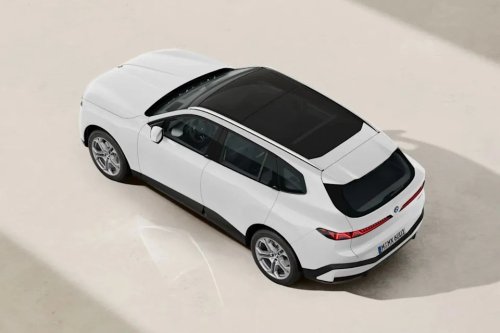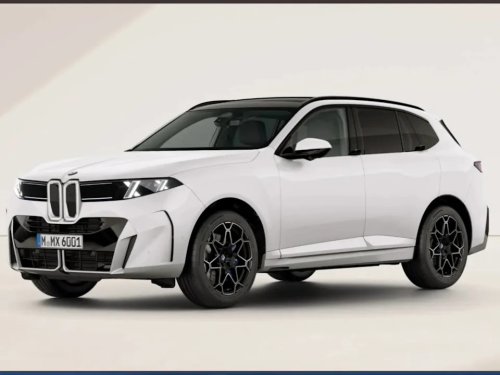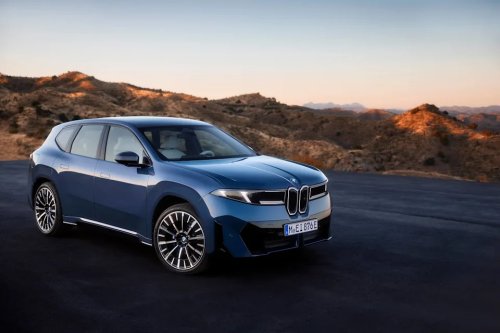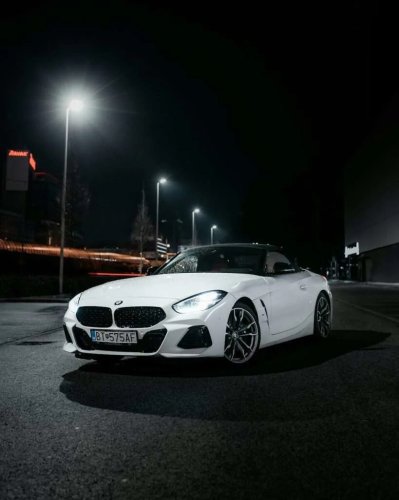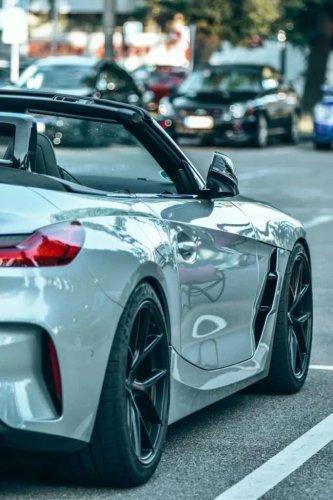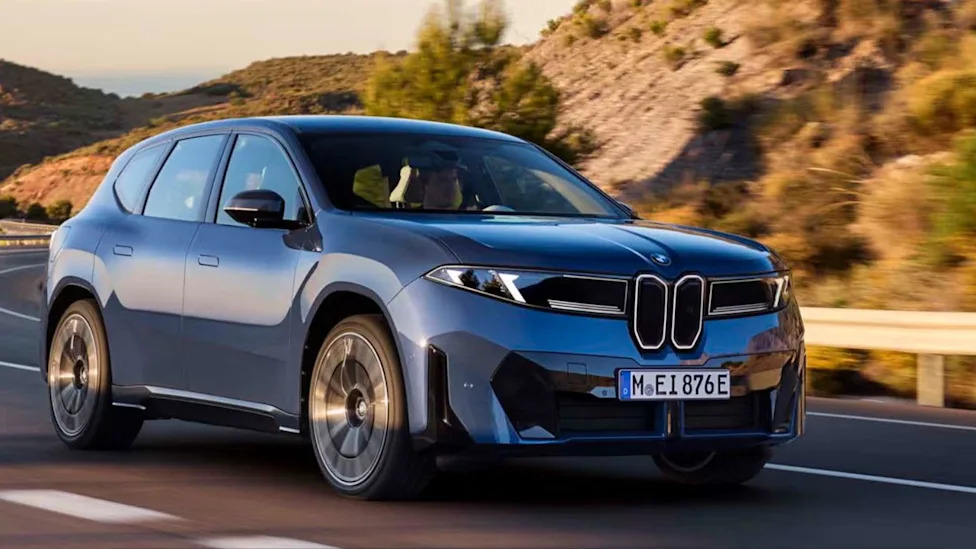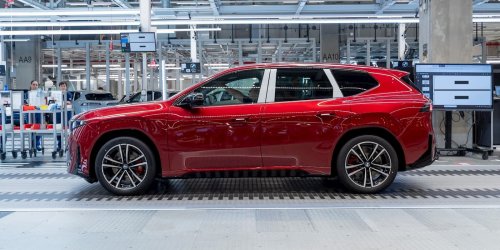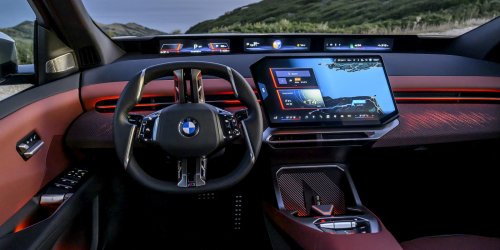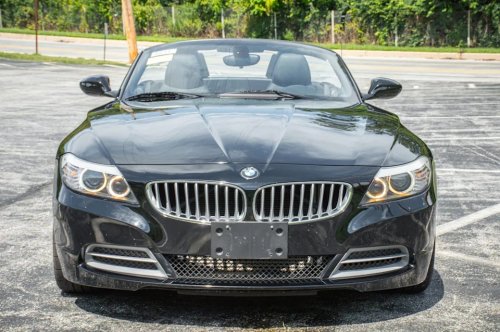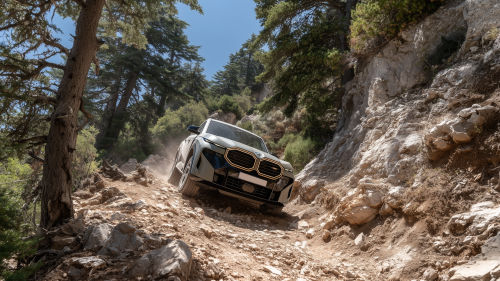
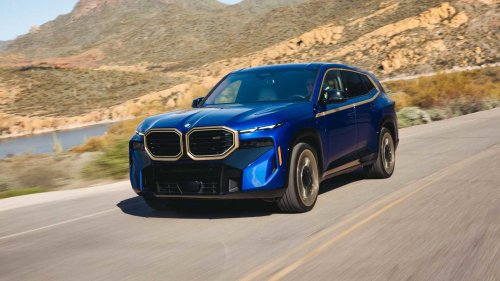
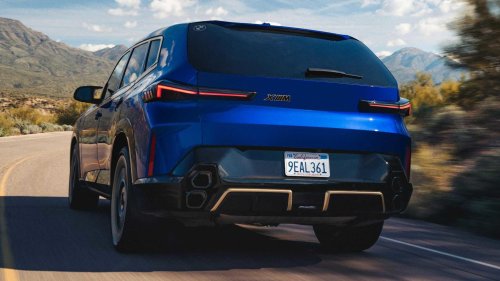
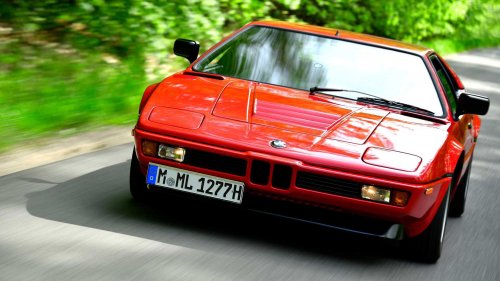



















There are certain vehicles that are just all about the numbers - big numbers in every aspect are part of their appeal, and few German vehicles stack up in this regard in the same way as the BMW XM does. It's big, it's fast, it's heavy, and it's striking to look at, but scratch the surface, and there's actually quite a lot more to the big Bavarian than meets the eye. Here is the BMW XM by the numbers... 6,062 lbs: Weight The XM's defining contradiction is its weight, the thing each and every stat has to fight against. And yet despite the BMW XM's weight, it achieves remarkable acceleration and braking times as well as handling metrics. BMW managed to achieve this by throwing extraordinary engineering at the problem with active anti-roll bars, adaptive dampers, rear-wheel steering and torque vectoring all working relentlessly to make a three-tonne vehicle handle like something half that weight. This could be hailed for being an example of incredible engineering or an expansive solution to a self-created problem; however, one cannot deny that the net result is impressive.BMW claims a near 50:50 front-to-rear weight ratio and this is aided by the floor-mounted 25.7-kWh battery pack, which lowers the center of gravity somewhat. However, by comparison, the immense Rolls-Royce Cullinan comes in at just 5,864 lbs and a Ford F-150 (base 4x4 crew cab) weighs approximately 4,700–5,200 lbs. BMW’s iconic sports sedan, the M3 (G80) is an astonishing 2,200 lbs lighter than the XM at just 3,840 lbs.That weight isn't for nothing, though. A number of key components that make the XM the powerhouse that it is come together in contributing to that curb weight, the most significant of which is the S68 4.4-liter twin-turbo V8 motor, a heavily reworked version of the much-loved S63. Other powertrain components are also significant contributors, like the aforementioned 25.7-kWh lithium-ion battery pack mounted under the floor and the 194-hp electric motor found in the eight-speed transmission to which the battery is connected. Another key component in disguising the XM's mass is the M xDrive all-wheel-drive system with M Sport rear differential, effortlessly transferring power between axles as and when the weight shifts around the vehicle.Transferring power is one thing, but managing all of that weight moving to and fro requires a 48-volt active anti-roll bar system, another heavy component. Additionally, active rear-wheel steering hardware tidies this all up while also providing additional maneuverability at low speeds. To top it all off, the XM features a generous, luxurious interior with Merino leather, Alcantara, and premium materials throughout, which significantly adds to the curb weight of the vehicle. Upon closer inspection, one can see why an XM weighs as much as it does. 738 HP: Total Power For XM Label BMW XM Rocky Trail AIThe range-topping XM Label's combined system output of 738 hp and 738 lb-ft of torque comes from a combination of two power units. The first of which is the S68 V8, tuned specifically for the Label model, which outputs 577 hp and 553 lb-ft with the S68 featuring a strengthened crankshaft, as well as turbochargers repositioned closer to the exhaust manifold vs the older S63.An additional 194 hp and 207 lb-ft comes from an electric motor that is integrated into the eight-speed M Steptronic transmission. This combined figure means that the XM Label is the most powerful production BMW M car ever built. For comparison, the XM Label has 111 hp more than the F90 M5 CS (627 hp) and a 135-hp advantage over the Mercedes-AMG GLE 63 S (603 hp). The last standalone BMW M model was the M1, which launched 44 years before the XM, and in that time, power has increased by 2.6 times, with an almost proportionate weight increase, too. 3.6 Seconds: 0–60 MPH Perhaps one of the XM Label's biggest flexes is its staggering sprint time of just 3.6 seconds. Being able to launch the XM from 0–60 so quickly requires both the V8 engine and electric motor to work together in perfect harmony - the M xDrive system putting all that power down without lighting up all four tires. Immediate torque comes from the electric motor while the V8s turbochargers are still spooling up, the torque gaps between gearshifts then also being filled by the electric motor's shunt. The quarter mile is done in just 11.6 seconds at 122.6 mph (MotorTrend). The BMW XM's specs are impressive, whichever way you look at it. 0.98 g: Lateral Grip Figure One of the most impressive figures listed here is the fact that a three-tonne vehicle is able to pull almost 1 g of lateral grip - an engineering achievement that can only be considered to be absolutely absurd. Key to this astonishing achievement is some impressive hardware. The XM's anti-roll system is the star player, almost eliminating body roll entirely by reacting within milliseconds. Adaptive M dampers allow for various modes and tuning of damping. However, a deliberate decision by the M division to opt for steel springs as opposed to air-suspension does compromise ride comfort. Rear-wheel steering turns the rear wheels by up to 2.5 degrees opposite to the front wheels at low speed for agility and in the same direction at high speed for added stability. The M xDrive all-wheel drive system is rear-biased in the XM but constantly varying torque distribution based on driving conditions and driver inputs, working in tandem with the M Sport rear differential which provides torque vectoring.To put this figure into context, a Porsche 911 Carrera (992) achieves approximately 1.05 g lateral grip on the skid pan, yet has a curb weight of half of the BMW XM's. 87 MPH: Pure EV Top Speed BMWCapable of cruising at 87 mph in near silence in a vehicle that has 738 hp in reserve is an interesting party piece. However, the XM does have a rather interesting quirk: the V8 is unable to recharge the battery while driving. A spokesperson for BMW confirmed this to CarBuzz and explained that running the internal combustion engine to charge the battery “would simply kill the fuel economy.” And while the XM does have regenerative braking, which is able to recover some energy, and an eControl that is able to maintain the battery’s current state of charge while driving, these will only do so much, ultimately rendering the XM a 6,000-lb V8-only SUV once the 25.7-kWh of usable battery capacity has been depleted - returning an EPA combined 14 mpg. 30 Miles Without Needing Gas BMWThe EPA-estimated all-electric range is 30 miles, using pure electric power before the engine kicks in. Thanks to that plug-in hybrid powertrain, the XM returns impressive figures when merging electric and gasoline power. The EPA rates the BMW XM at a combined 47 MPGe, which drops to 14 mpg on gas alone.The XM's AC charging rate has now been increased to 11 kW for 2026, up from 7.4 kW (2023–2025), with a full charge now taking just three hours 15 minutes connected to 240 V. 23 Inches: Standard Wheel Size For XM The gold-finished 23-inch wheels are a no-cost option in the US and fill the arches beautifully, really making a statement with no M car having ever shipped on wheels this large before. That flair comes at a cost, though. Ultra-low-profile sidewalls mean that there is very little rubber to absorb impacts, and combined with the XM's lack of air suspension, leads to the single most cited complaint of the XM - ride comfort. Nevertheless, the low profile rubber is also one of the contributing components to the XM's impressive handling, along with the staggered fitment of 275/35R23 front and 315/30R23 rear. For those who favor comfort over looks, optional 22-inch wheels are also available, the fitment of which undoubtedly improves the XM's ride quality. $27k: Price Cut For MY2026 In January of 2026, we reported that the XM's MSRP was slashed for MY2026 - perhaps a prime example of a manufacturer paying close attention to how a market has responded to a product and its pricing. With dealers sitting on inventory and struggling to move units without substantial discounts, changing the sticker price is likely to result in less brand damage than the narrative of new vehicles being discounted. With the standard XM model having been axed from the lineup for 2026, the Label is now the only XM model available. At $159,600, the Label comes in at $900 cheaper than the 2025 base model ($160,500) and there are even a number of improvements to the XM for MY26, such as the aforementioned increase in charging rate, 738 hp and 738 lb-ft compared to the base model's 644 hp and 590 lb-ft, as well as interior upholstery choices, wheel designs, exterior paint colors and welcome light animation. 1,878: Total US Sales In 2025 (Fewer Than Z4) Nobody thought that the XM was going to be a high-volume seller, with part of its appeal, of course, being its exclusivity and low-volume halo car image. It would seem, though, that even BMW's projections were a little off here, with the BMW Z4 outselling BMW's ultimate statement product, despite it being a niche two-seat roadster. Perhaps a different positioning or pricing from the get-go might have resulted in a different picture. However, one could argue that these low sales numbers only add to the exclusivity of the few XM's that are on the road with numbers declining 24% year-over-year from 2024, just a year after the XM's debut in 2023. A number of factors could be the reason for lower than anticipated sales, including divisive styling, a higher MSRP than many of its competitors and competition within the BMW stable from the X5 M Competition and X7 M60i which offer similar performance and luxury at not insignificantly lower price points. 44: Years Between XM And The Last Standalone M Model - The M1 1978 BMW M1 Front ViewWith 44 years between standalone cars from BMW's fabled M division, these two vehicles could not be more different. If one were to be blunt, one could argue that the M1 was a motorsport weapon disguised as a road car, while the XM is, in fact, a luxury lifestyle product disguised as an M car.There are a number of stark contrasts between the two. First, the power output. The M1 was considered underpowered in its era, with a 930 Turbo producing more power, while the XM is the most powerful M car ever. The M1 was also a mid-engined, RWD, manual racing homologation special with a fiberglass body, while the XM is a front-engined PHEV, AWD, automatic SUV with a steel and aluminum unibody chassis. Each M1 was built across multiple countries due to a collapsing business deal with Lamborghini, whereas the XM is a production vehicle that rolls off the Spartanburg production line in South Carolina.These two models have very little in common, the connecting thread between the two of them being the small design throwback on the XM, the twin BMW roundels etched into the rear glass and the fact that both models represent clean-sheet developments by BMW M.Sources: BMW USA, Porsche USA, Lamborghini USA