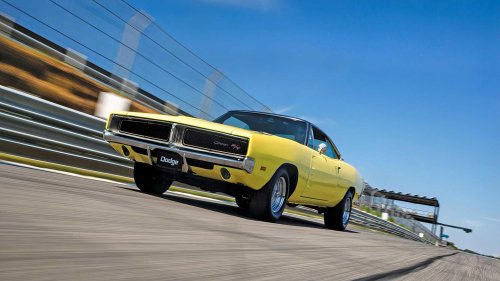
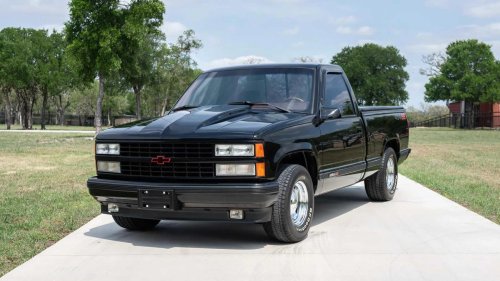
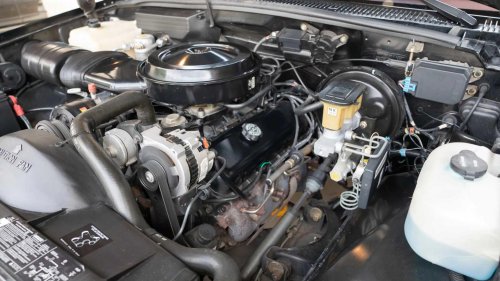
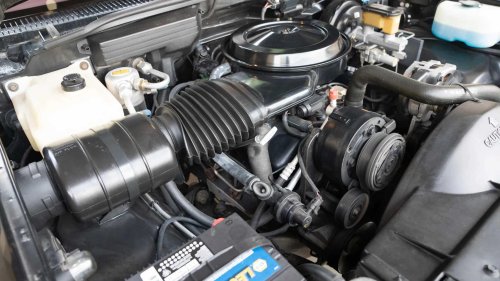
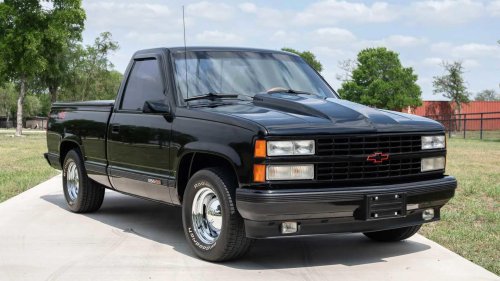
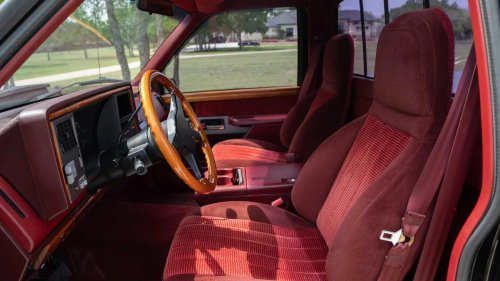
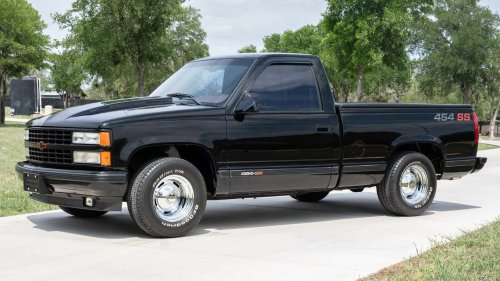
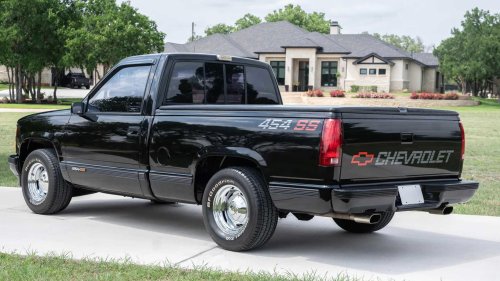
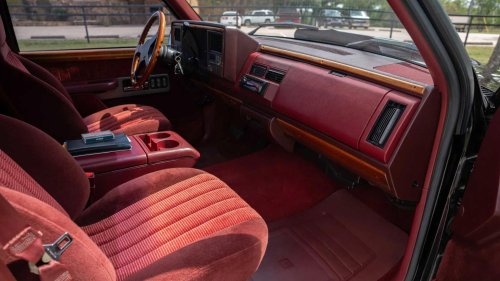
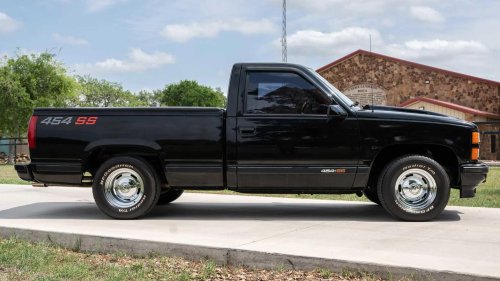
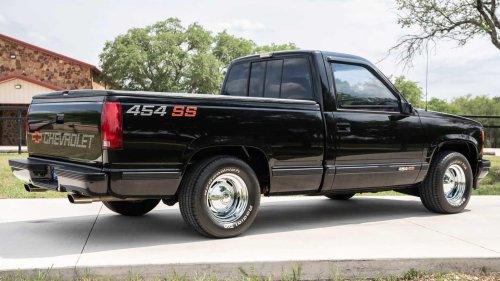
Every December, Hagerty drops its Bull Market list, and the collector car world pays attention. The insurance and valuation giant tracks auction results, insurance data, and broader market trends to identify vehicles it believes have passed the bottom of their depreciation curves and are poised for real value growth. For 2026, the list covers 11 vehicles, and the conversation has understandably centered on the big names.The 1968-1970 Dodge Charger is leading most of the coverage, and it deserves the attention. But the most interesting vehicle on the entire list is not a classic muscle car with a famous name and a Hollywood film to its credit. It is something obscure, stranger, and, in hindsight, far more subversive.One entry on the 2026 list is a plain-looking Chevrolet full-size pickup truck that buyers largely ignored when it was new, that muscle car enthusiasts did not take seriously for decades, and that just sold a pristine example at auction for $121,000. The story of how it got there is worth telling properly. What Hagerty's 2026 Bull Market List Gets Right Hagerty Hagerty has continuously published its Bull Market list annually since 2017, and it has built a strong track record for identifying collector vehicles before the broader market catches up. The methodology is grounded in real data rather than nostalgia: auction results, Hagerty's own insurance valuations across hundreds of thousands of policies, and directional signals from the enthusiast community. When a vehicle makes the list, it is because the numbers suggest its floor is already in and its ceiling has room to move.The 2026 edition leans heavily into a specific era and attitude. Most of the 11 selections are analog performance vehicles from the 1990s and early 2000s, machines built before drive-by-wire throttles and stability control became standard equipment. These are vehicles that reward the driver, ask something of them, and exist entirely outside the world of over-the-air software updates.Hagerty The headline names are easy to understand. The 1968-1970 Dodge Charger sits at an average insured value of $91,450, carrying decades of cultural weight behind it. The 1995-1998 Nissan Skyline GT-R, known as the R33, represents the growing appetite for Japanese performance machinery from that generation. The 1981-1993 Dodge Ramcharger brings full-size American SUV muscle into the conversation at a time when that segment is finally getting collector respect.Together, these vehicles point to something consistent across the list. Buyers who grew up with these machines in the 1990s are now in their peak earning years, and they are spending. The vehicles they wanted then but could not afford are the ones moving at auction now, and Hagerty's analysts are reading that signal clearly. But one vehicle on the 2026 Bull Market list tells a different kind of story. It is not a muscle car or a sports car or even a recognizable performance nameplate. It is a truck, and it has been hiding in plain sight for thirty years. How Chevy Hid A Big Block Monster Inside A Work Truck Via: Bring a TrailerThe 1990-1993 Chevrolet 454 SS does not look like a collector vehicle at first glance. It is a regular-cab, short-bed C/K 1500 pickup in rear-wheel-drive configuration, built on the same platform Chevrolet had been selling to contractors and ranchers for years. The body is upright and boxy, the stance is stock, and nothing about the exterior screams performance in any obvious way.Via: Bring a Trailer What Chevrolet did was drop a 7.4-liter Big Block V8 under the hood of that entirely ordinary truck body, add a sport suspension tune, and send it to dealerships with almost no fanfare. In 1990, the engine produced 230 hp and 385 lb-ft of torque, backed by a three-speed Turbo-Hydramatic 400 automatic. Those numbers were serious for the era, particularly in a vehicle that the casual observer would assume was heading to a job site.For 1991, Chevrolet upgraded the drivetrain with the 4L80-E four-speed automatic, and output climbed to 255 hp and 405 lb-ft of torque. The mechanical package was now genuinely formidable, and the suspension tuning meant the truck handled with more composure than its workhorse appearance suggested.Via: Bring a Trailer The problem, if you could call it that, was the disguise. Buyers shopping for muscle in 1990 were looking at Camaros and Corvettes. A full-size pickup with blackout trim and rally wheels was not what they pictured when they thought about performance. The 454 SS sat in a strange middle ground, too sporty for the truck crowd and too "trucky" for the performance crowd, and it sold just 16,953 units across its four-year run.That limited production is exactly why collectors are paying attention now. The same quality that made buyers hesitate then, the truck's refusal to announce itself, is precisely what makes it compelling today. It is a muscle car that wore a work shirt to the fight, and the enthusiast world is only now fully reckoning with what that actually meant. How A Work Truck Became A $60,000 Collector Vehicle Via: Bring a TrailerThe valuation data on the 454 SS is where the story gets hard to ignore. Since 2021, the average insured value has climbed 57%, landing at $60,400 today. That is not a gradual drift upward — that is the market making a decision.The auction results are making the same point even louder. A pristine example with just 10 miles on the odometer recently sold for $121,000, a number that would have seemed absurd for a plain-cab Chevy pickup not long ago. That result signals that top-condition examples have already broken through the six-figure ceiling, and serious collectors are treating the truck accordingly.Via: Bring a Trailer For context, the 454 SS still sits below the Dodge Charger's average insured value of $121,000, which means there is a reasonable argument that the truck has more room to run. The gap between the $59,800 average and that $121,000 auction result is also telling. It means the market has not yet fully standardized, and buyers who find clean, well-preserved survivors are still getting in ahead of the curve.The truck's appeal is not purely about straight-line performance, either. The upgraded sport suspension gives it real-world handling ability that a standard C/K 1500 never had, which makes driving one a more complete experience than the basic specs might suggest. That broader drivability is part of why enthusiasm for the truck keeps building among people who have actually spent time behind the wheel. The 1990s Wave That Is Rewriting Collector Car Values Via: Bring a Trailer The 454 SS was built between 1990 and 1993, which puts it squarely in the childhood memory window for buyers who are now in their mid-30s to mid-40s. These are people who saw this truck on the street as kids, processed it as something cool without fully understanding why, and now have the income to act on that feeling. That generational dynamic is one of the most reliable engines of collector car value, and it is running at full speed here.Via: Bring a Trailer The 454 SS is part of a broader wave of 1990s vehicles crossing into serious collector territory at the same time. The R33 Skyline on Hagerty's same Bull Market list is being pulled upward by identical forces — a generation of enthusiasts aging into their buying years and reaching for the machines that defined their automotive youth. When multiple vehicles from the same era start moving together, it tends to be self-reinforcing.Via: Bring a Trailer In a market increasingly defined by electric powertrains and driver-assist systems that filter out the mechanical experience, a truck with a 7.4-liter Big Block and a direct connection between throttle and rear wheels feels like a counter-statement. Younger enthusiasts are not just buying a truck. They are buying a philosophy.The 454 SS fits that mindset almost perfectly. It is rare without being exotic, genuinely fast without requiring explanation, and understated in a way that appeals to buyers who would rather know something than show something. What Comes Next For The 454 SS Via: Bring a Trailer Hagerty's Bull Market list has a solid track record of identifying vehicles before the broader collector market fully prices them in. The attention that comes with being named to the list tends to introduce a vehicle to a wider audience of buyers, and that increased visibility typically does real work on values over the following 12 to 24 months.Top-condition examples have already crossed six figures, but the average truck has not caught up yet. That gap is where the opportunity lives for buyers who move before the market finishes closing it. Clean, unmodified examples with documented history are the ones most likely to see the sharpest gains, and they are still findable at prices that will look reasonable in hindsight.Via: Bring a TrailerThe broader point is simpler than the numbers make it sound. Gearheads who paid attention always knew the 454 SS was something special— a Big Block in a work truck that nobody respected, built in small numbers, and capable of genuine performance straight from the factory. The rest of the market is just now catching up, and the auction results are the proof.Source: Hagerty




















 +74 others