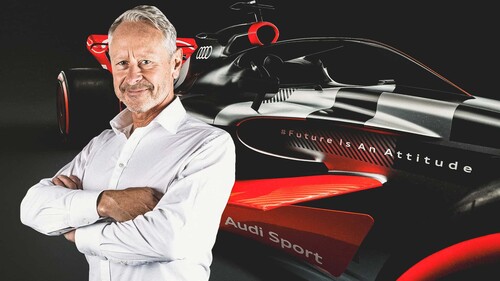
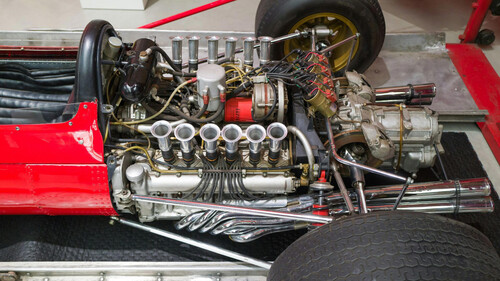
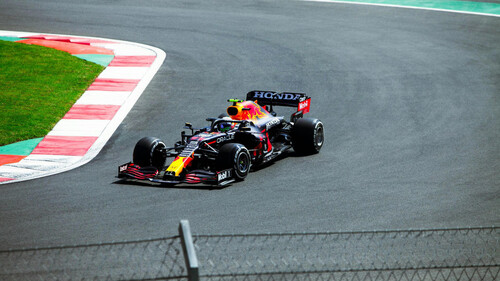
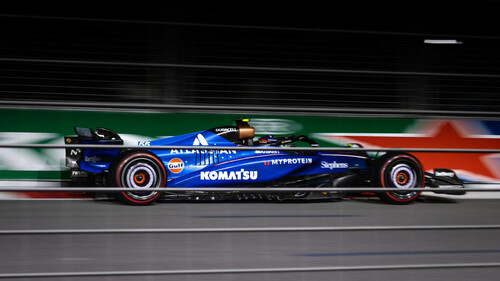
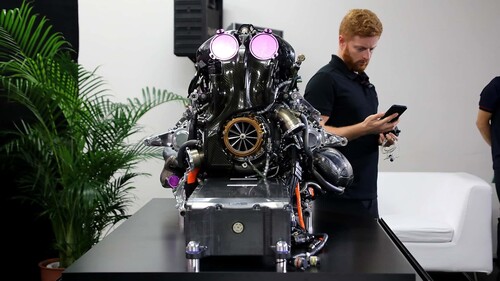
Why Formula 1 Is Talking About V8 Engines AgainFormula 1 Is Already Arguing About What Comes After 2026Formula 1 has barely begun its new power-unit era, yet the next engine debate has already arrived.The current regulations were built around a major hybrid shift: more electrical power, sustainable fuels, the removal of the MGU-H, and a more balanced split between combustion and electric performance. Formula 1’s own explainer says the 2026 rules aim for roughly half the car’s power to come from the electrical system, with the MGU-K delivering 350kW, nearly three times the previous 120kW figure.That was supposed to define the sport’s technical direction for years.Instead, FIA president Mohammed Ben Sulayem has put V8 engines back into the conversation. He has said Formula 1 will move to V8s by 2031, possibly as early as 2030, with less electrification, simpler technology, lower weight, more noise, and sustainable fuel.That is why V8s have entered the F1 chat again: not because nostalgia alone has won, but because the 2026 direction has exposed a deeper argument about what Formula 1 should be.The 2026 Rules Created the OpeningThe new regulations were designed to keep F1 technically relevant while attracting and retaining major manufacturers.They removed the complex MGU-H, increased the importance of electrical deployment, and moved the sport further toward sustainable fuels. Formula 1 describes the 2026 concept as a “50-50” power split between electric and internal combustion output, with advanced sustainable fuels forming a central part of the package.On paper, that sounds modern and responsible. In practice, it has also made the cars and race management harder to explain.The concern is not simply that the engines are hybrid. F1 has been hybrid since 2014. The concern is that the new rules place even more strategic emphasis on energy recovery, deployment, boost, recharge, and management. Reuters has reported that F1 introduced terms such as “Boost,” “Overtake,” and “Recharge” to explain the new era to fans.That language tells its own story. If the sport needs a glossary to explain how drivers are using power, some fans and insiders will inevitably ask whether the technology has become too complex for the spectacle it is meant to serve.Ben Sulayem Wants Simpler, Louder, Lighter F1Ben Sulayem’s argument is built around a clear idea: Formula 1 should reduce complexity.According to Reuters, the FIA president believes V8 engines would bring more noise, lower weight, simpler technology and less electrification, while still running on sustainable fuels. He has also suggested that if enough engine manufacturers agree, the switch could happen in 2030; otherwise, the FIA may have the authority to enforce a change by 2031.Autosport reported the same broad tension: the FIA president wants F1 to abandon turbos and minimize electrification sooner rather than later, but powerful forces stand in the way even as he says consensus is not necessarily required.The appeal is obvious.A naturally aspirated V8 would be simpler to understand than a heavily managed hybrid system. It would likely sound more dramatic. It could reduce weight. It would also reconnect F1 with the 2006-2013 V8 era, when the cars had a sharper, higher-revving sound that many fans still associate with modern F1’s last truly visceral engine period.But wanting that direction is easier than delivering it.The Manufacturers Are the Biggest ObstacleFormula 1’s engine rules are not just sporting rules. They are investment decisions.Manufacturers build factories, recruit engineers, develop dyno programs, design batteries, create turbo systems, sign long-term plans, and justify all of it internally. The 2026 rules attracted major brands and projects, including Audi’s full F1 entry and Red Bull Powertrains’ partnership with Ford. Telling those companies that the rules may change again earlier than expected is not a small political move.That is why former F1 technical figure Pat Symonds argued in 2025 that a return to V8s or V10s was unlikely for at least a decade. He noted that new entrants such as Cadillac, Audi and Red Bull Powertrains needed time to recover the investments made for the 2026 engine cycle.That remains the core resistance.Manufacturers may like the idea of simpler, cheaper engines in theory. But they may not like writing off expensive hybrid programs too soon. They also may not agree on how much electrification should remain, what the fuel rules should look like, or whether abandoning turbo hybrids damages the road-car relevance they used to justify being in F1.The Sustainability Question Will Not Go AwayThe V8 proposal is not a simple return to the past.Ben Sulayem’s preferred direction still includes sustainable fuels. That matters because F1 has spent years presenting its future as cleaner, more efficient, and more relevant to mobility and energy transition. Formula 1’s 2026 rules already lean heavily on advanced sustainable fuels, alongside the increased electrical contribution.A future V8 would therefore need to answer a difficult question: can F1 reduce electrification while still presenting itself as technologically and environmentally credible?Supporters will argue yes. They can say sustainable fuel matters more than electric complexity, that lighter cars are better for racing, and that F1 does not need to copy road-car powertrains directly to remain relevant.Critics will argue the opposite. They will say less electrification sends the wrong message, especially after manufacturers invested in hybrid systems and F1 promoted efficiency as part of its identity.This is why the V8 debate is not only technical. It is about image.The Sound Argument Still MattersIt is easy to dismiss the V8 push as nostalgia, but that would miss something real.Sound has always been part of Formula 1’s identity. Fans do not only watch F1; they feel it. The old V10 and V8 eras created a kind of sensory impact the turbo-hybrid era never fully replaced.Modern F1 cars are extraordinarily fast, but many fans still feel they are less emotional. The hybrid engines are efficient and technically impressive, yet they do not produce the same raw soundtrack that older cars did. That matters in a sport that sells drama, speed, danger, and spectacle.Ben Sulayem’s V8 push taps into that frustration.The argument is not simply “old engines were better.” It is that F1 may have become too quiet, too heavy, too managed, and too difficult to explain. A simpler V8 formula would be a way to restore some instinctive appeal.But F1 Cannot Just Rewind the ClockThe danger is pretending the solution is simple.Formula 1 cannot simply bring back the 2013 engine rules and call it progress. The sport is bigger, more global, more commercially sophisticated, and more politically exposed than it was during the last V8 era. It has manufacturers with different priorities, sustainability commitments, and technical investments.There is also the question of performance balance.If F1 reduces hybrid power and removes turbos, it must still deliver cars that are fast enough, efficient enough, and safe enough. Engine weight, fuel load, chassis integration, cooling, reliability, and cost all become part of the equation. A lighter, louder car sounds attractive, but the regulations would have to be written carefully enough to avoid creating a new spending war.That is where the FIA president’s ambition meets the reality of F1 rule-making.The Politics Could Be as Hard as the EngineeringBen Sulayem has suggested that the FIA can push the sport toward V8s by 2031 even without full manufacturer agreement. Reuters reported that an earlier 2030 move would require support from a majority of engine manufacturers, while 2031 gives the FIA more room to impose a new direction.That creates a political standoff.The FIA governs the regulations, but Formula 1 depends on teams, manufacturers, commercial rights, sponsors, broadcasters, and fans. A power-unit decision that alienates manufacturers could damage the grid. A decision that ignores fan frustration could damage the spectacle. A decision that moves too slowly could leave the sport stuck with rules many drivers and viewers find awkward.No side has a simple winning hand.That is why the V8 debate will probably become one of the defining political arguments of the next few seasons.The Real Debate Is What F1 Wants to BeThe V8 discussion is about engines, but it is really about identity.Should Formula 1 be a laboratory for electrified technology? Should it be the loudest and most emotional form of circuit racing? Should it chase road relevance, or should it focus on spectacle? Should sustainable fuel give the sport freedom to simplify the cars, or should hybrid technology remain central?The current 2026 rules answered those questions one way: more electrification, sustainable fuel, and complex energy management. Ben Sulayem’s V8 push answers them differently: less complexity, more sound, lower weight, and simpler engines.Neither vision is automatically wrong.The challenge is that F1 is trying to satisfy too many masters at once. It wants manufacturers, but also fans. It wants sustainability, but also noise. It wants road relevance, but also pure racing drama. It wants advanced technology, but not so much complexity that the racing becomes hard to follow.Why V8s Are Back in the ConversationV8s have returned to the F1 debate because the sport is questioning whether its technical future has become too complicated for its own good.The new hybrid era has ambition, but also confusion. It promises efficiency, but also more management. It attracts manufacturers, but risks frustrating drivers and fans who want lighter, louder, more instinctive racing.Ben Sulayem’s proposal is therefore not just a nostalgic fantasy. It is a reaction to a real tension inside modern Formula 1.Still, the obstacles are serious. Manufacturers have invested heavily in the current direction. Sustainability messaging matters. The rule-making process is political. And any new engine formula would have to avoid creating another expensive technical arms race.The V8 may be back in the conversation.Whether it actually returns will depend on whether F1 decides that the future of the sport should sound more like its past or whether the past is only useful as a warning about what fans feel has been lost.