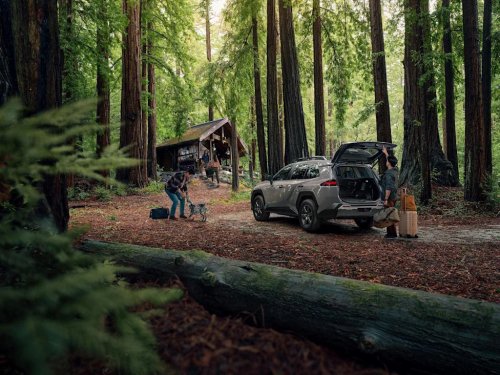
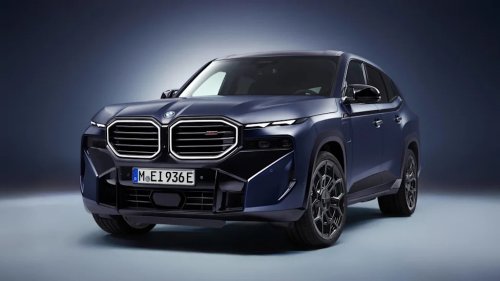
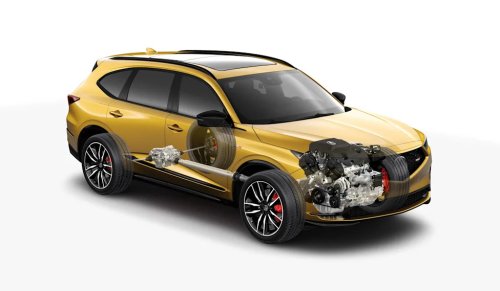
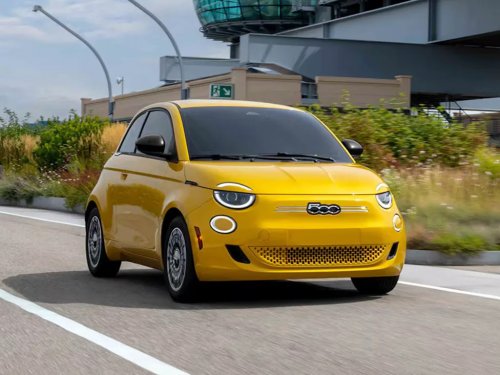
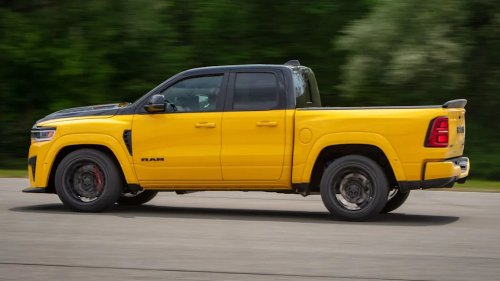
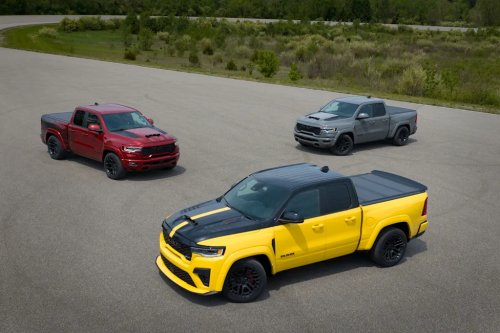
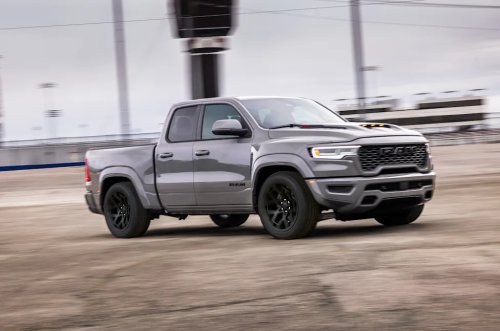
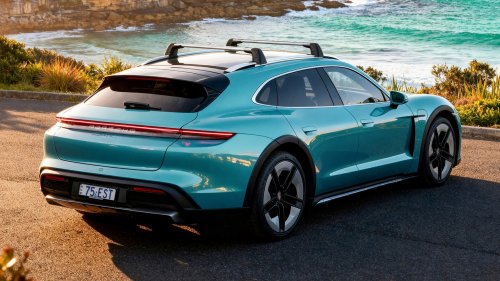
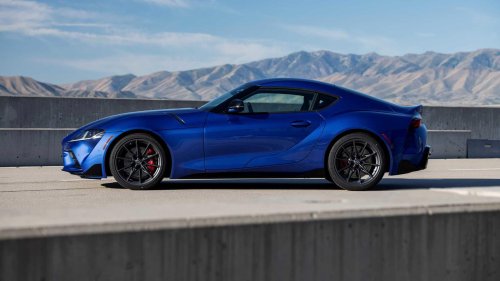
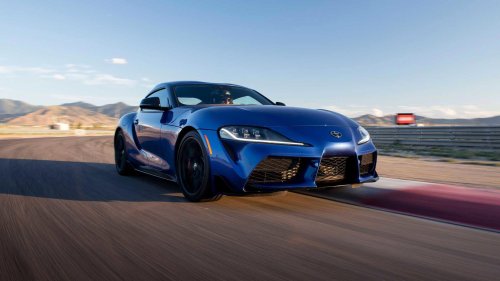
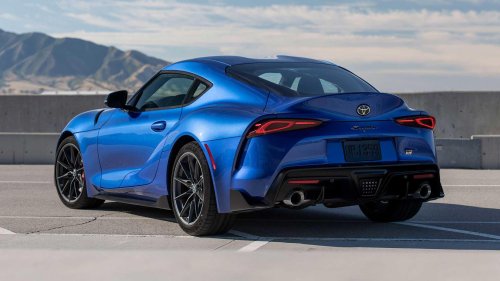
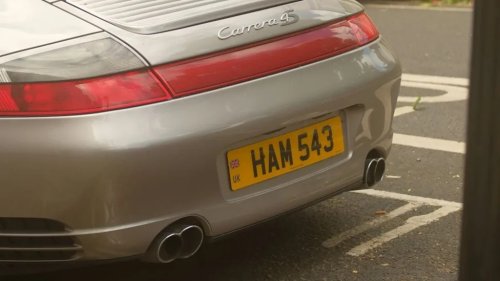
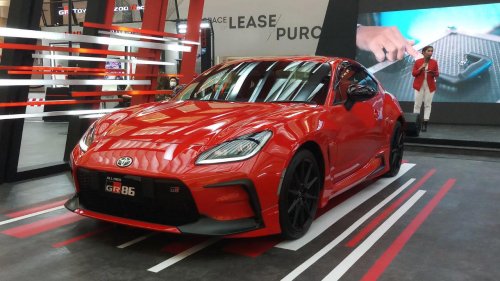
Autoblog and Yahoo may earn commission from links in this article.More! That is the usual answer from most car enthusiasts, after all, how could do world's most influential motoring journalist be wrong? We've all heard Jeremy Clarkson screaming 'More Power!' as he slid yet another supercar around the Dunsfold Autodrome in the UK, but outside the rather unique world of Top Gear and its many rivals, the answer is not always so simple.In the real world too much (or too little) power can be a rather frustrating experience, and peak power alone is only part of the equation, drivability, and intended usage as well as many other factors come into play here. We cover it all here to give you the answer.What Do You Do With Your Car?View the 3 images of this gallery on the original articleAdvertisementAdvertisementLet's start with a simple question. What do you use your car for? Is it to commute to work, for road trips, track days or maybe a combination of all three? If 90% of your driving falls into just one of these categories, then you can get a more focused vehicle for that task, if not you will need an all-rounder with a broader range of abilities.A Porsche 911 is generally considered to be the ultimate one car garage solution, but if you aren't doing track days every other weekend, the Porsche Macan may be an even better fit. A more wallet-friendly alternative could be a Toyota GR86 and RAV4, for example. Now 228-hp in the GR86 is just enough to deliver decent performance, but the heavier RAV4 will need a fair bit more to feel as sprightly in a straight line. If you spend your days in traffic jams, then its drivability and ease of use that matter more than outright performance, but more on that below.Power-To-Weight RatiosBMWView the 3 images of this gallery on the original articleMake and ModelBMW XM LabelPorsche 911 CarreraMazda MiataPower738 hp388 hp181 hpCurb Weight6,091 lbs3,342 lbs2,366 lbsPower-to-weight ratio8.25 lbs/hp8.61 lbs/hp13 lbs/hp0-60 mph3.6 seconds3.7 seconds5.7 seconds (est)That brings us to power-to-weight. Most people focus on the max power output of a vehicle, but the curb weight is just as crucial. A BMW XM weighs in at over 6,000 lbs, and that requires a lot more power to propel down the road than a Mazda Miata, which is almost two thirds lighter.AdvertisementAdvertisementThe table above demonstrates why sporty luxury SUVs need so much power to match much lighter sports cars in acceleration. There are many ways to work out power-to-weight, and the ratio above shows just how much weight each horsepower has to haul around. The higher the figure, the slower the car will feel.Another factor that is often overlooked is the engine/transmission/drivetrain combination, and each of the vehicles above has a very different layout. The BMW is four-wheel drive and has a hybrid assisted 4.4-liter twin turbo V8 under its hood. The Porsche is turbocharged, rear-engined, and rear wheel drive, while the Mazda is naturally aspirated and has its engine up front. This brings us neatly into the next category: Powertrain types.Powertrain TypesView the 3 images of this gallery on the original articleA 500-hp naturally aspirated gas engine will feel markedly different to a turbocharged, hybrid or electric alternative. That's because of its power delivery and responsiveness. A turbocharged car may feel more powerful thanks to its huge mid-range torque in comparison, while an EV will feel quicker still due to its immediate throttle response and always-on torque delivery. They may all post similar 0-60 mph times, but the way they go about their business will have a big effect on how you perceive the performance.AdvertisementAdvertisementThe type of transmission used as well as the wheels that are driven are also important, and the more power you have, the more they affect the driving experience. A Porsche 911 GT3 is perfect for the track. Being rear-wheel drive and rear-engined gives it great traction and controllability around corners, while the naturally aspirated engine delivers a predictable ramp up in power, unlike many spiky turbocharged rivals. It makes 502hp, yet is quicker than some 1,000hp supercars around a racetrack. But head out to the shops in the middle of winter in Michigan and it's the last car you'd want for the trip.When 100hp beats 1000hpFiatThat's when a 100hp AWD crossover is a better choice than the GT3 or any 1000hp+ supercar that's designed for ultimate lap times around a bone-dry race track. If more was always the answer to the power question, then cars like the Tesla Model S Plaid, Porsche Turbo S and Lucid Air Sapphire would be dominating the sales charts.But living with one of these cars on a daily basis can often be a frustrating experience, as you're always just 3 seconds away from being arrested for speeding. And that's if there is space on our congested roads to actually make use of all that power. So, less can be more, but how much less is actually, umm, more?So, What's The Sweetspot?If you were looking for an exact power figure that applies for all scenarios, then prepare to be disappointed. The perfect number comes down to a combination of the factors mentioned above. But there are a few general rules that can help you decide.AdvertisementAdvertisementEVs tend to feel a lot faster than similarly powered gas or hybrid vehicles, but this advantage tends to fade as speeds rise. Hybrids can deliver mixed results depending on whether they are mild hybrids, plug-in hybrids or have simply run out of juice and you are left relying on the gas engine alone to pull you along.Gas engines are more consistent, and forced induction (turbo or supercharging) can greatly increase the mid-range torque which can be make a big difference in overtaking and general responsiveness when you aren't revving each gear to the redline.More is More, Except When It's NotChatGPTView the 3 images of this gallery on the original articleOk, great, but what sort of power figures should you look for in a car? Trucks need torque to overcome their hefty curb weights, and that's why a massive V8 profiled for low-rev responsiveness is best here. Any big gas engine with 350hp or more should deliver that effortless responsiveness you want in a truck.AdvertisementAdvertisementFor sports cars, a 0-60 mph time of 5.0-seconds or under feels quick, and that means at least 300 to 400hp depending on their curb weight. Some very light cars, like the Toyota GR 86 and Mazda Miata can get away with less power as their low weight makes them feel hyper responsive and agile.SUVs, luxury cars and other family-friendly vehicles tend to spend more time doing school runs and shopping trips, and here a torquey, large capacity turbocharged engine or an electric powerplant that delivers a satisfying surge of power without hesitation is best. Aim for around 350 to 450hp here to account for the additional curb weight over a sports car.If you never venture more than 5 miles from home and stick within the city limits, then you'll be best served by an entry-level EV, and here the power output can be as low as 150hp. The instantaneous torque delivery will make it feel far quicker than it really is.Now, the one time that more really is more is when it comes to hypercars and drag racing machines. Whether for boasting purposes or record-breaking quarter mile times, you'll want to ensure that you have more than the next guy.AdvertisementAdvertisementThis story was originally published by Autoblog on Aug 8, 2026, where it first appeared in the Features section. Add Autoblog as a Preferred Source by clicking here.