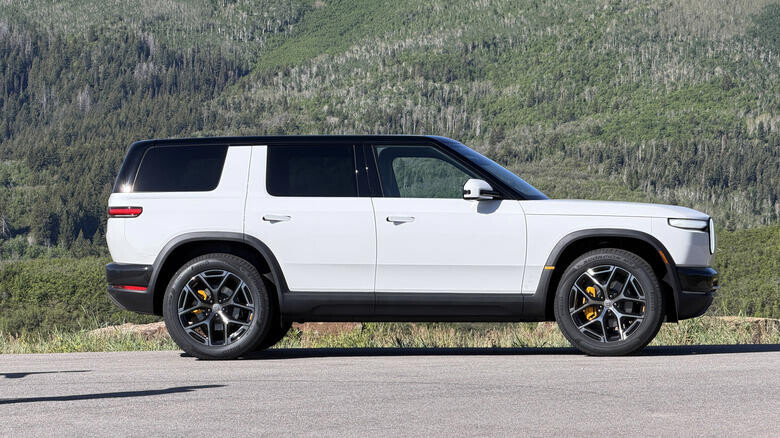
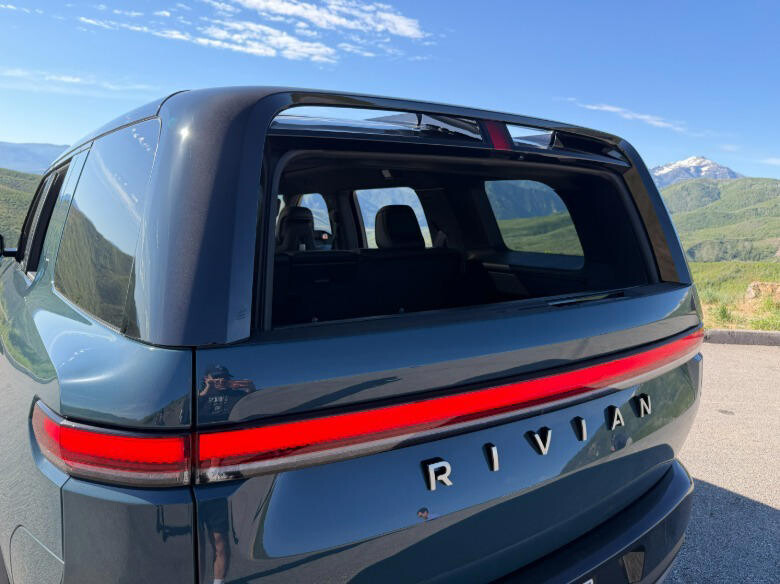
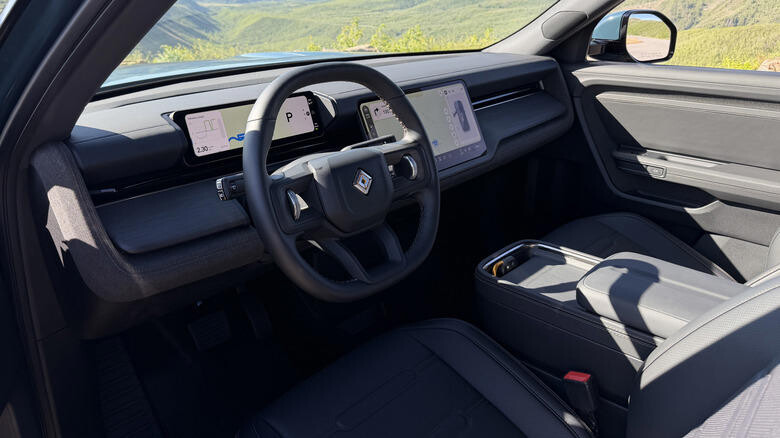
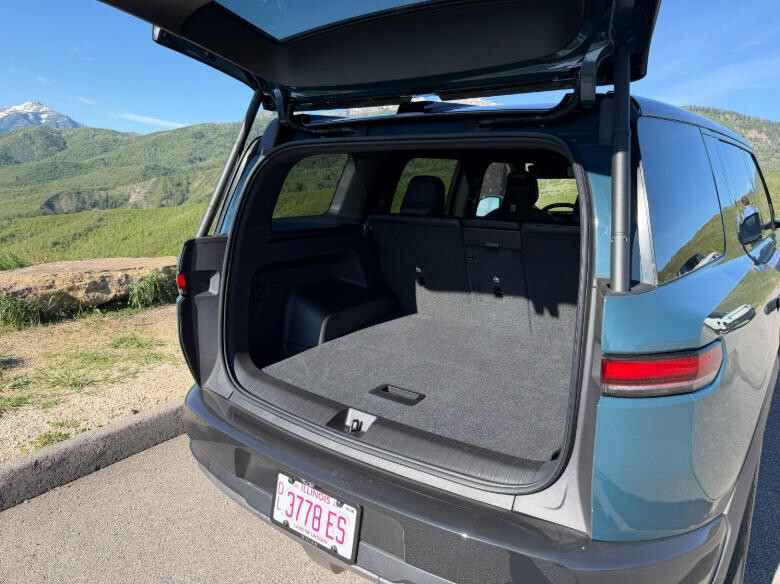
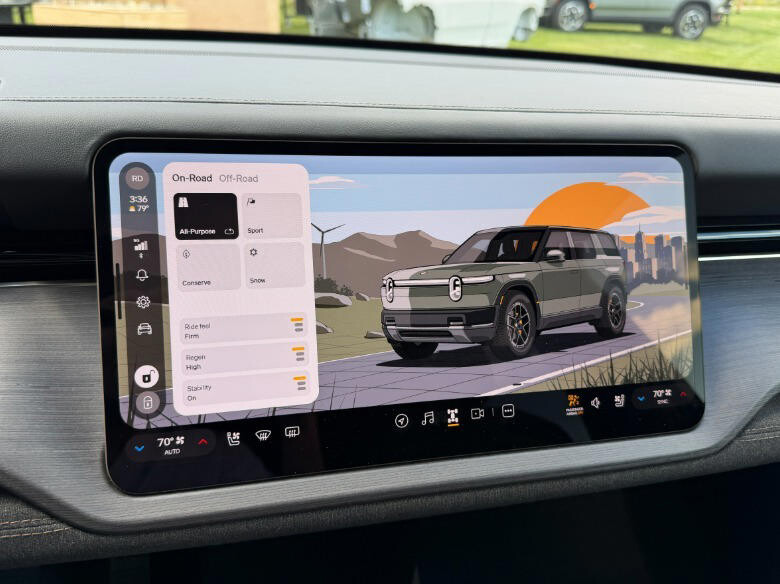
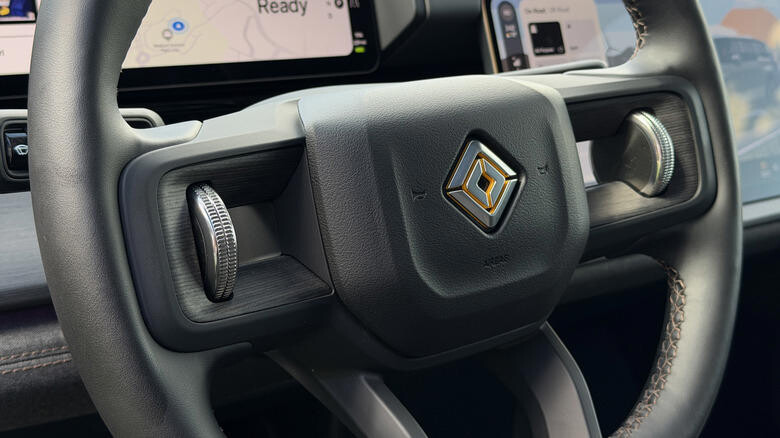
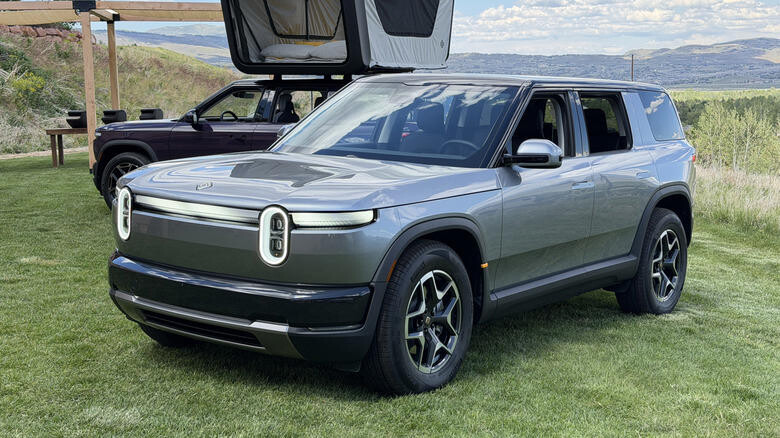
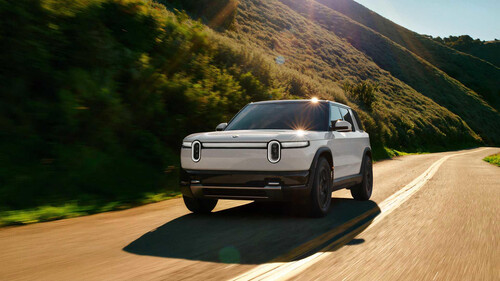
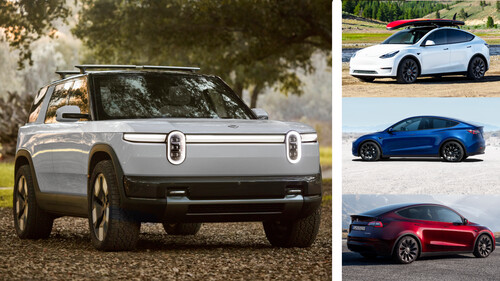
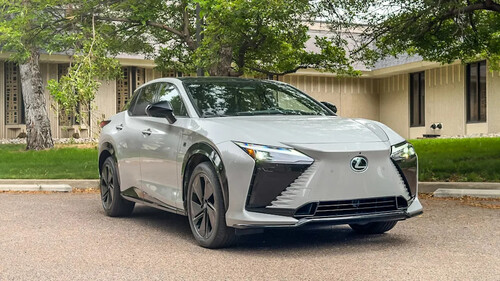
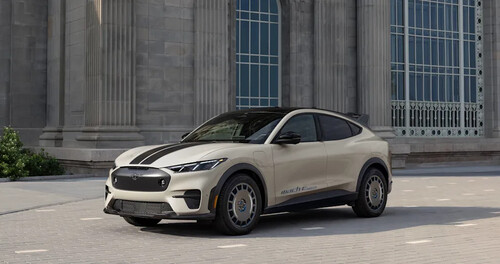
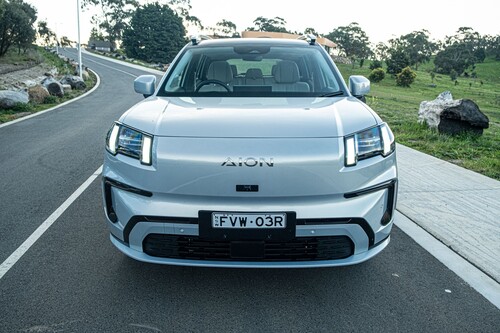
Daniel Golson/Jalopnik I'll just get right to the point: The 2027 Rivian R2 is really good. Like, really good. Now, this shouldn't come as a surprise. Rivian's first models, the larger and more expensive R1T pickup and R1S SUV, are fantastic. They're some of the most well-engineered, well-thought-out vehicles of any size, type or category, and they've only gotten better with time. But it still wasn't a given that Rivian would get the R2 right. It's much harder to make a smaller, cheaper car as good, especially when that car needs to be a lot more mass-market in terms of sales volume and consumer appeal. And the compact crossover segment is an especially competitive one, whether you're looking just at EVs or at SUVs broadly. Luckily, Rivian seems to have nailed it with the R2. It's fantastic to drive on- and off-road, just as thoughtfully engineered and designed as its big siblings, and its packaging and pricing are aimed right at the heart of the market. The Rivian R2 might be even better than you hoped — it certainly exceeded my own high expectations. Full disclosure: Rivian flew me to Salt Lake City, put me up in the Waldorf for a night and fed me a few meals so I could drive the R2. There were dozens of Mormon missionaries on my flight home, which I think is why I've spent the past week sick at home. It lives up to the Performance name Daniel Golson/Jalopnik The only R2s we get to drive are the dual-motor Performance model, which has 656 horsepower and 609 pound-feet of torque. That's only 9 hp less than an R1S Dual Performance (but 220 fewer torques), and the R2's 3.6-second 0-to-60-mph time is just two tenths behind its bigger sibling. It certainly feels quick in practice, especially when in Sport mode, but not in the same way as the R1. Rivian chose to sacrifice some off-the-line punch in favor of improved mid-range acceleration, and it is especially impressive when pressing the throttle on corner exit or on the freeway. The car never feels too reactive or twitchy, though, and it's easy to drive smoothly. New for the R2 is a front motor that automatically disconnects for better efficiency, as opposed to the rear motor being the one that disconnects in the R1 models, and the transition is imperceptible and immediate. In Sport mode the front motor is always engaged, which is why the whirr from the motors is a lot louder and more noticeable — but don't worry, there's still no fakery or volume enhancement going on. Torque distribution between the axles is constantly variable, defaulting to 40:60 front/rear, though it more often sends more twist to the rear, and the amount sent to the front wheels doesn't typically exceed 60%. Rivian continues to be one of the best at tuning regenerative braking, with the R2's strongest setting offering true one-pedal driving that feels telepathic whether driving around town or in the canyons. Daniel Golson/Jalopnik There's no air suspension like you get in an R1, but you really don't need it. The Performance's semi-active setup has three different settings for the adaptive dampers, with the softest still being composed enough in corners and the stiffest being far from harsh. There isn't much body roll, and it handles weight transfer and quick changes in direction well. It's a comfortable ride no matter the setting, perhaps even more so than the occasionally flinty R1S. The R2 Performance we're driving has 21-inch wheels with Rivian-specific Pirelli Scorpion MS tires, sized 255/55, that are pretty quiet at highway speeds and offer more than enough grip for spirited driving. And you will want to do some spirited driving. The R2's steering rack is from a different supplier and has a different setup than the R1, and it feels more accurate and provides a bit more feedback. But surely most of the R2's nimbleness can be chalked up to its weight: Rivian has yet to say a curb weight, but the R2 weighs around 2,000 pounds less than an R1S (so peg it at around 4,600 pounds) and it feels even lighter than that. In Sport mode on a very tight and twisty road near Mill Canyon Peak, the R2 is a joy to drive quickly, more akin to a big hot hatch than a small SUV. Making it all even better is the confirmation that a tri-motor, rally-inspired R2X model is coming soon. Sufficient specs Daniel Golson/Jalopnik Where the R2 doesn't really stand out is its battery and efficiency. Though all three are more expensive than the R2 Performance to start and are more outright luxury cars, the R2's biggest competitors are also new on the scene this year: the BMW iX3, Mercedes-Benz GLC EV and Volvo EX60. Those Europeans all use 800-volt architectures where the R2 only has a 400-volt setup, and all three boast charging speeds of over 300 kW and ranges of more than 400 miles, with the R2 falling short in both regards. I mean, the R2's range is totally fine; great, even. Dual-motor R2s get an EPA-estimate range of 330 miles depending on the wheel and tire package, beating out cars like the Tesla Model Y, Hyundai Ioniq 5 and Cadillac Optiq. The upcoming rear-wheel-drive Standard Long Range model, which uses the same 87.9-kWh battery pack, will do 345 miles. Rivian hasn't yet said what the R2's peak fast-charging rate is, and that's probably because it's not that impressive — the company says it can charge from 10% to 80% in 29 minutes, about the same as a Toyota bZ. Not exactly class-leading. It has a NACS port on the driver's side rear quarter-panel for easy access at Tesla Superchargers, and in another first for Rivian, it can do bi-directional charging of up to 11 kW. Daniel Golson/Jalopnik Though the R2 won't travel as far on the highway as its competitors, its Autonomy+ suite of driver-assistance systems is very good and makes highway driving a lot nicer. The system's hardware (11 cameras and five radar sensors) is built into every R2, with Launch Package cars getting lifetime access while later buyers will have to pay a $49.99 monthly subscription or a $2,500 one-time fee. In addition to all your regular features like adaptive cruise control, blind-spot monitoring, lane-departure warning and lane-keeping assist, Autonomy+ adds Rivian's Level 2 hands-free driving system that can be activated on 3.5 million miles of roads in the U.S. and Canada. It's easy to turn on, requiring a simple tug on the shifter while on the freeway, and the system works extremely well. It stays nicely centered in the lane, and the car doesn't yell at me to take control or look ahead if I gaze at the landscape for a couple seconds. While it won't pull off unprompted lane changes, hitting the blinker will activate an automatic lane change. Rivian is working on a Level 2 point-to-point hands-free system that's also possible with the R2's current hardware, with the aim to launch it later this year through an OTA update. What a cutie! Daniel Golson/Jalopnik If you're reading this review then the R2's exterior design is probably very familiar to you already, but I will at least say the longer I look at it in person and the more specs I see, the better it looks — and the more different it is from the R1S. Yes, they're clearly siblings, but the R2 has a lot of details that set it apart and make it look even better to my eyes. For instance, I really love the crisp line that flows from the top of the pill-like headlights to form the U-shaped valley in the hood, how the shorter headlights' three-dimensional surrounds stick out from the nose, and the turn signals built into the front wheel arch trim. The hood itself is a nice clamshell, with the shutlines aligning with a crease along the body side, and short overhangs, tucked-in bumpers and strong shoulders give the R2 a great stance. Daniel Golson/Jalopnik There's one major problem with the design, though — the incredible Borealis purple paint won't be available until next year, and if you want the darker Forest Green that won't be available until later this year. The Catalina Cove blue is nice, at least, but other than those options and the Launch Green color, the R2's color palette is pretty tame. The wheel designs are also boring. Come on, Rivian, at least give us one rally-style wheel option! Performance and Premium trims get one feature that's very rare in the automotive world, and one that could end up being solely responsible for a big chunk of R2 sales: the rear drop glass. Like on a Toyota 4Runner, the rear window is powered, lowering down into the tailgate so you can fit longer stuff in the cargo area or, more likely, so you and your dog can enjoy some fresh air. In addition to a button near the rear view mirror that lowers just the rear glass there's another button that lowers all five windows, and it can also be lowered from outside the car by pressing a touch-sensitive button in the rear window surround. Rivian really knows how to design interiors Daniel Golson/Jalopnik The interior design will also look and feel very familiar to anyone who's been in an R1, but Rivian has made a lot of little tweaks based on customer feedback and its experience making the larger cars. People wanted more storage space, so Rivian moved the door speakers to the center console, improving audio quality and allowing for large water bottles to fit in the door pockets. There are two gloveboxes, one in the normal spot and another beneath the center screen, and the center armrest has a good amount of room inside and two sizable slide-out cupholders. Ahead of the center console there's an open space to place bags. Despite the R2 being so much smaller than an R1S, even the tallest among us won't be lacking for space, especially if you sit in the back seat. There's 40.4 inches of legroom and 40.4 inches of headroom in the second row, both figures more than you get in an R1S, and the flat floor is pretty low, so your knees aren't angled up high. The front seats are supportive for my 5-foot-9 self, and while the driving position is definitely assertive and SUV-like, I don't feel like I'm sitting too high up. Visibility is also great, especially out the front. The R2's hood design gives me a good idea of where the corners of the car are and where the wheels are placed, but it doesn't feel too tall or long. The side windows are big, too. Daniel Golson/Jalopnik With the rear seats up the R2 has 28.7 cubic feet of cargo space, two and a half cubes more than an Ioniq 5, and folding the 40/20/40-split rear seats down flat opens that space to 79.4 cubic feet, 21 whole cubes more than the Hyundai. You also get an underfloor storage area that's big enough to fit a carry-on suitcase, and the frunk will hold 5.2 cubic feet of stuff, big enough for a carry-on and a backpack or six grocery bags. The hood is power-opening, and while you have to close it yourself, it'll latch itself. In addition to looking very similar to the R1's interior, the R2's cabin feels just as well-built and high-quality, certainly worth the Performance's price tag. Rivian's Adventex bio-based leather alternative is nicer than a lot of other leatherettes, with real accent stitching all over the place. Almost everything you touch has padding behind it, including the grab handles on the doors. There's a big swath of birch wood trim on the dashboard, and a great textile is used on the door panels and seatbacks. Sadly, if you want the off-white Ocean Coast interior color you'll have to wait until later this year. Daniel Golson/Jalopnik Rivian continues to have one of the best (if not the best) infotainment systems in the industry, and the R2's software has undergone a subtle redesign. The bezels around the screens are thinner, and the 11.5-inch gauge screen is short and wider than what you get in the R1. The 15.6-inch touchscreen has redesigned menus, a shortcut bar on the left and some new functionality, like the ability to swipe pop-up boxes showing your current audio from the left to the right of the screen. Rivian has thankfully retained the cel-shaded look, which I absolutely love. All of the graphics, fonts, icons and other bits look wonderful and are easy to read at a glance. There's still no Apple CarPlay or Android Auto. Good. I would never want to use CarPlay when Rivian's system is this fantastic, especially given how well-integrated everything is to the vehicle functions, and the presence of built-in apps like Apple Music. Rivian's navigation system and built-in route planning is wonderful, and it uses Google Maps data anyway, so why would I want to navigate from my phone's connection? I'm sure some of you in the comments will be mad about this, but you shouldn't be. CarPlay sucks, and Rivian is never going to add it. Daniel Golson/Jalopnik New in the R2 (and added to existing R1s) is the very cleverly named Rivian Assistant, the automaker's in-house-designed voice assistant. In addition to being able to control various infotainment functions, the assistant can change things like the drive modes and answer all sorts of questions about the car, even if it's offline. But because I'm having too good of a time talking with my drive partner, friend of Jalopnik (and former intern) Mack Hogan, I don't try it out while driving, only doing a static demo. Still, it seems like one of the better voice assistants on the market. I can see your halos Daniel Golson/Jalopnik The R2's real party piece is something you definitely haven't seen on any other car: the Haptic Halo wheels that are placed in the steering wheel, negating the need for any other buttons or controls. First of all, they look fantastic, appearing to float within the wood-trimmed spokes. There's a knurled finish on the rims, with a nice lined texture on the inner side. But then you actually use them, and your eyes will really widen. Daniel Golson/Jalopnik In addition to spinning them like you'd expect, you can click the halos in like a button or click them over side to side in either direction, and there's a different sort of haptic feedback to each type of action. When you get to the bottom of a menu, resistance is added into the haptics so you aren't just spinning it aimlessly. In addition to controlling things you'd expect, like the audio volume and track, they can also adjust the temperature and fan speed, change the gauge cluster display, and set the speed, follow distance and other settings for the driver-assist features. You can also spin or click the halos from the back side of the steering wheel, and doing so can have different functionality — for example, clicking in from the back of the right wheel brings up the drive mode selector. I find myself adapting to the halos very quickly — it helps that what they're doing is clearly shown in the gauge cluster — but sometimes I scroll the wheel when I mean to click it to the side, especially when doing it from the back side. Rivian's engineers acknowledged they're still tweaking how the halos feel, and adjustments to both the action and functionality will be possible through over-the-air updates. Though they didn't say any specifics, in the future the halos will be able to control and adjust even more aspects of the car. Ready for adventures Daniel Golson/Jalopnik After our initial street drive we swap into R2s equipped with the 20-inch wheels and all-terrain tires, specifically 255/60 BF Goodrich Trail Terrain T/As. On tarmac there is barely more roughness and road noise than the bigger all-seasons, though they bring the range down to 307 miles. Still, it's not a bad trade-off for the capability you get, and it's just an extra $1,000. We start the off-road portion of the drive on a hard-packed dirt road, on which the R2 remains very smooth and quiet, with no annoying chattering or shudders. The general All-Terrain mode is suited for basically everything, but the Performance trim also has a Soft Sand mode and, best of all, Rally mode. Rally reduces the stability control (you can fully turn it off, too) and gives the car a more tail-happy setup, and it is pretty easy to slide around in the dirt, though I don't have much opportunity to drive sportily here. Daniel Golson/Jalopnik When we get onto the actual slow-going off-road trail, we switch back into All-Terrain. Every R2 regardless of wheel/tire setup has 9.6 inches of ground clearance, a tenth more than an Outback Wilderness, and it can wade through nearly 20 inches of water. Every obstacle the trail throws at us is tackled with ease in the R2, from steep inclines covered in huge rocks to off-camber turns with treacherous ruts. There's never a moment where it feels like the car is struggling for traction, and the regenerative braking and powertrain tuning makes it really easy to modulate the throttle in tricky sections. The 360-degree cameras are even higher-resolution than the facelift R1, and unlike some other cars, Rivian doesn't cut out the feed above low speeds. While the initial trail could probably be tackled by your average crossover on all-terrains, Rivian also has us go up an especially tough route that's even narrower and rockier. Again, the R2 bounds up it no problem, like a happy little mountain goat. There's only a couple moments where we hear the underbody scrape, and when we do get some two- or three-wheel action to show off the articulation, the R2 always feels stable. There's no need for any hill-descent control, off-road crawl function, anti-roll bar disconnect or other fancy off-roader features. Out of the box, the R2 is well set-up and ready to go do whatever outdoorsy stuff you want. The base model is no penalty box Daniel Golson/Jalopnik The first production R2s have already made it into the hands of customers, with the Performance being the only variant currently rolling off the line. All the R2s come with the Launch Package right now, which comes with lifetime Autonomy+, the towing package, a special finish for the key fob and the ability to get Launch Green paint. Its starting price of $59,485 really ain't bad, especially given how much stuff it comes with. Every R2 Performance has heated and ventilated front seats with 12-way adjustment and power lumbar, heated rear outboard seats, a 9-speaker premium audio system with 2 midwoofers and 2 subwoofers, matrix LED headlights with adaptive high beams, integrated tow hooks, a pop-out flashlight in the driver's door that also doubles as a hand warmer, and the rear drop glass. Coming later this year will be the dual-motor Premium, starting at $55,485. It's got 450 hp and 537 lb-ft with a 0-to-60 time of 4.6 seconds, still nothing to sneeze at, and the same 330-mile range as the Performance. Aside from the extra, um, performance, the only actual features that the Performance gets over the Premium is the semi-active suspension, the Soft Sand and Rally modes, and launch control. All that other stuff I mentioned above is present in the Premium. Daniel Golson/Jalopnik In the first half of next year Rivian will start building the Standard model (the silver one seen above), which will cost you $49,985. It has 19-inch wheels, a less-nice interior without heated seats, a less-nice sound system, no matrix headlights and none of the off-road drive modes. The rear-wheel-drive Standard has 350 hp and 355 lb-ft, but it'll be available with dual-motor all-wheel drive as an option. But that won't be the cheapest one. Originally Rivian said it wouldn't be putting the real base-trim R2 Standard into production until late 2027, but that timeline has been moved up by half a year due to strong demand, with the car now set to launch in the summer. While the Standard Long Range has the same battery pack as other R2s, the base one will get a smaller pack with a range of only 275 miles. Rivian says it will start at $46,485, and though it doesn't have as many features, you aren't getting a penalty box. The automaker brought along an R2 Standard for us to poke around while parked, and the interior is still really damn nice. Its surfaces are just as padded, there's cool flecked plastic trim, and wonderful textiles on the dash and doors. Rivian is aiming to sell around 25,000 R2s this year, more than half the total vehicles it sold in 2025, and eventually, Rivian says its plant in Normal, Illinois, could produce more than 150,000 R2s annually. That's a big goal, especially given the current appetite for EVs in the U.S., but given how damn good the R2 is, I don't think it'll be a hard one to hit if Rivian can pull off the launch. This is a real Goldilocks product — it's the right size, it's the right price, it's got the right specs, it's got the right design and engineering. The 2027 Rivian R2 is simply satisfying in basically every regard, a crossover all sorts of people will easily fall in love with. And that bodes really well for the R3, which is still on track to come out next year with an even better design and an even lower price.