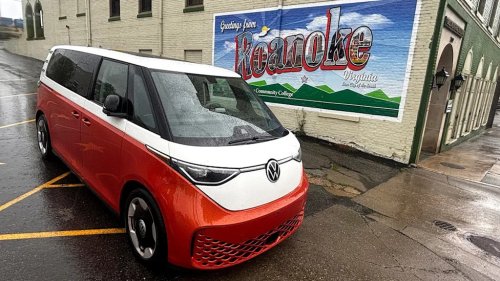
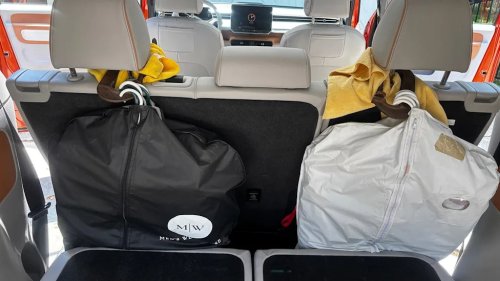
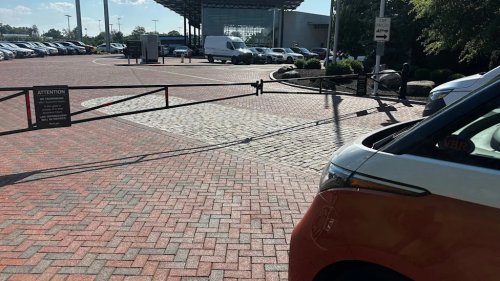
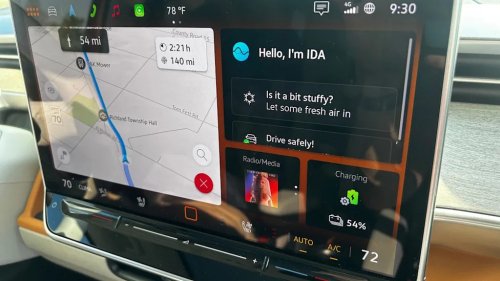
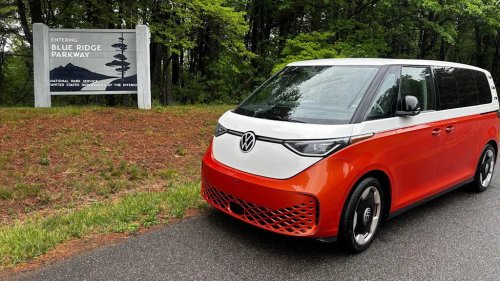
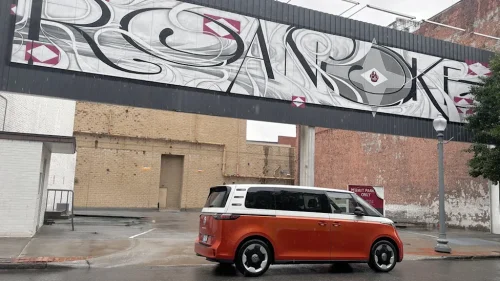
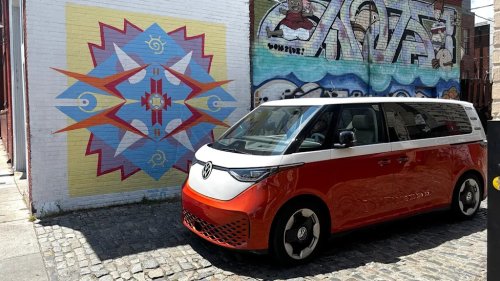
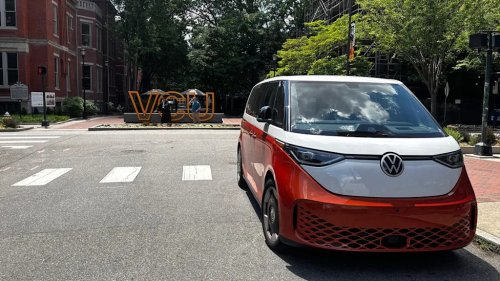
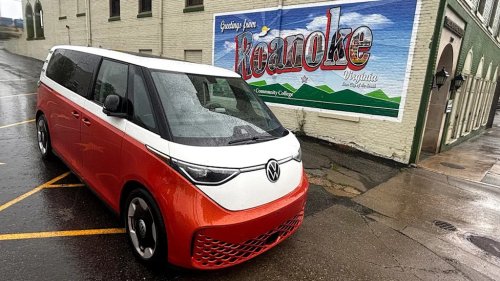
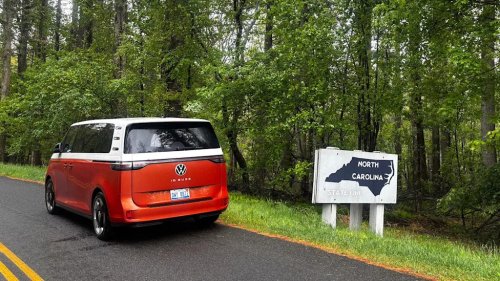
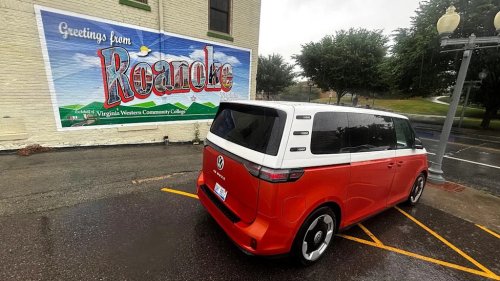
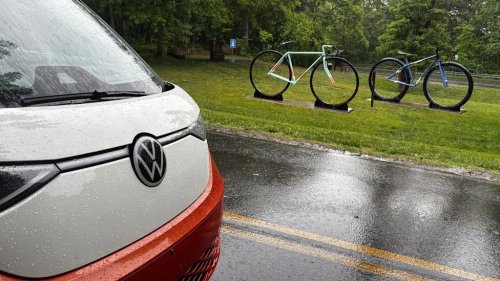
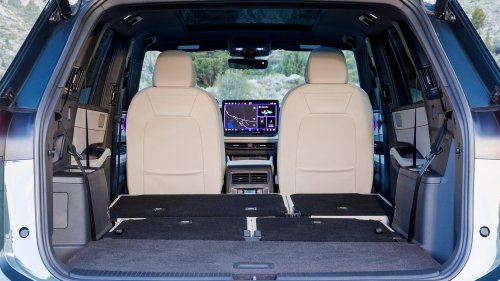
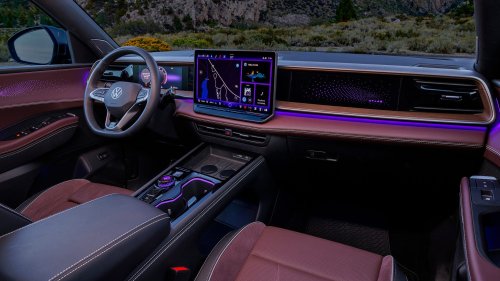
2025 Volkswagen ID Buzz Long-Term Road TripFrank Markus - MotorTrendMinivans boast a form factor that's purpose-built for road trips, but how does a minivan with a low-fuel light that flickers well before 200 miles, like our long-term 2025 Volkswagen ID Buzz, work as a road warrior? We set out with a bit less angst and dread than usual, thanks to regular repetitions of our new mantra: "We're on vacation, and we don't have to be anywhere at any exact time."The trip involved leaving Detroit, where our Buzz is based, to visit a nephew in Richmond, Virginia—a charming college town that happened to be celebrating graduation the weekend we were there. Next stop was Roanoke, Virgina, which indeed served us as "Gateway to the Blue Ridge Parkway." Turns out the Parkway is an excellent route for an EV with an EPA-estimated 234 miles of range (and a MT-tested 213 miles in our real-world range test), with it its 45-mph speed limit, beautiful vistas, and downhills that recharge some of what gets expended on the uphills. An overnight stop in Little Switzerland, North Carolina, capped our Parkway drive, before visiting Greenville, South Carolina, and reaching our ultimate destination: a car show in Atlanta, Georgia.With 145.5 cubic feet of cargo space for only two people to fill up, we weren't choosy about what to bring. No seats fold into the floor in an ID Buzz (the battery has dibs on that space), but all the seat backs fold to form a flat surface 9 to 13 inches above the floor. There's a shelf at that level to bridge the gap behind the folded rear seats, and VW provides handy baskets that fit under this space, organizing loose items like host gifts (the portable charger also lives in one of them). We've since also used them to keep groceries and nursery plants from rolling around.Frank Markus - MotorTrendWhen space is no object, we like to bring a lot of clothes on hangers to simplify the hotel "moving in" process. Here the Buzz's nostalgia interfered a bit. Instead of a handy rigid horizontal grab handle over the door like everyone else offers, VW provides B-pillar-mounted vinyl assist straps like in an original Type 2 Bus. You can't hang anything from these, so we MacGyver'd a couple "hanger bars" out of C-clamps slung around the second-row headrest posts.AdvertisementAdvertisementFor this first trip, we relied entirely on the native navigation, and while we could choose destinations from the MyVW app and send them to the car, the app cannot yet preview the route—a feature common on other automaker apps. Once on board, there seems to be a three-destination routing limit. We tried asking IDA, the VW's Chat GPT–powered onboard assistant, to add a lunch stop and were told there were too many stops already. OK, can you find us charging near this stop? "I still need to learn how to do that," was her response. Here's hoping she's a quick study.Another shortcoming: When you stop to recharge, the screen doesn't display the target charge level. It just displays time to whatever max charge level you have set in the charging screen (e.g., 80 percent for max battery life or 100 percent for maximum range). If you click on the stop before arriving, it tells you the target charge level and time, but it's on you to jot this down or make a mental note, or else go into the nav and see how far away the next stop is and ensure you have enough to make that.Other oddities: The indicated battery state of charge showing on a charger is almost always considerably higher than what the app shows in real time. Inaccuracy at the charger? Time delay on the app? Having topped up at a hotel charger, the driver display showed 275 miles of range, the infotainment screen said 265, and the app said 259. We had similar problems with our long-term Ford F-150 Lightning.Frank Markus - MotorTrendWe may just have gotten lucky, but all the chargers Volkswagen's native navigation system led us to proved fast, available, and functional. Only once did it route us to a ChargePoint charger in a locked parking lot (Mercedes-Benz of Fort Mitchell on a Sunday evening). We pulled out our phones and found a Tesla station 3.2 miles away.AdvertisementAdvertisementIt was here that we realized the nav had not once directed us to a Tesla station, even though VW EVs are now welcome at them (if anything, it seems to favor Electrify America, the network VW was forced to build as Dieselgate restitution). This Tesla station featured older-style short-cord towers, at which our Buzz could only drink from the endmost units without blocking a stall. A Model S driver was fast asleep in one of these spots, but a Cybertruck occupying the other topped up within 10 minutes, allowing us to charge from 14 to 61 percent (44.9 kWh) in 20 minutes at a charge of $24.67 (paid via our Tesla app). As it happens, we stopped for the night just 25 miles north at an Aloft with complimentary Tesla AC chargers, so we exercised both our J1772- and CCS-to-NACS adapters that same day.Elsewhere on the Sunday return trip, a massive construction shutdown on I-75 had the native nav alternately routing us through Nashville (adding 60 miles and 1.5 hours to the drive) then back to the more direct route … over and over again. We ended up shutting it off and letting Waze navigate us around the closure.The conservative native navigation system plans stops at roughly 11–19 percent battery (20–30 miles of indicated range) remaining. That resulted in trip durations of roughly 120 to 180 miles in between stops. Note that all these numbers have improved somewhat as the bus breaks in and gets used to our driving style.Frank Markus - MotorTrendAnother consequence of using the native navigation system is that media streaming from a phone via CarPlay gets relegated to a tiny square on the screen that's too small to display artist/title info. It's about a quarter the size of a seemingly useless one above it devoted to IDA, the personal assistant, who makes dubious suggestions like, "It's stuffy in here, how about some fresh air?"Frank Markus - MotorTrendOn the Blue Ridge Parkway, with the cruise set at 45 mph, the system slowed just enough to negotiate the bends comfortably, and the nannies never squawked when clipping an apex slightly over the line. Bravo. But then once, after hopping out to snap a picture, the system refused to reengage, noting, "Driver cannot be detected." Huh? Sitting in the seat, hands on the wheel, how'd the car start driving if I'm not here?AdvertisementAdvertisementFor this trip, we locked the cruise control at 70 mph, so we're talking two- to three-hour stints, max. Hence, road-tripping in an ID Buzz means hydrating yourself to your heart's content, because there's always another potty stop just ahead. This pace also affords fellow motorists ample opportunity to pass by, smiling and flashing peace signs. Throw in fantastic visibility and superbly comfortable and supportive massaging seats, with hard buttons on the seat to easily resume the last massage program you set up on the central screen, and this is one righteous road-tripper.The entire trip stretched 2,116 miles, averaging 2.4 miles/kWh at a cost of 18 cents per mile. Despite its punching a large hole in the air like our F-150 Lightning long-term truck did, the ID Buzz is quite a bit slipperier (VW claims a 0.285 Cd versus an estimated 0.440 for the Ford), and sure enough, so far, our ID Buzz appears to be going about a third farther on every kilowatt-hour of juice.Knowing this, maybe next road trip we see what happens to range and charging intervals if we step our speed up to the 80-mph flow-of-traffic norm in these parts.More on Our Long-Term 2025 Volkswagen ID Buzz Pro S Plus:Arrival: Weighing Charm Against RangeSetting Up the 2025 Volkswagen ID Buzz Was Surprisingly PainlessPhoto credit: Frank Markus - MotorTrendPhoto credit: Frank Markus - MotorTrendPhoto credit: Frank Markus - MotorTrendPhoto credit: Frank Markus - MotorTrendAdvertisementAdvertisementPhoto credit: Frank Markus - MotorTrendPhoto credit: Frank Markus - MotorTrendPhoto credit: Frank Markus - MotorTrendPhoto credit: Frank Markus - MotorTrendAdvertisementAdvertisementPhoto credit: Frank Markus - MotorTrendPhoto credit: Frank Markus - MotorTrendPhoto credit: Frank Markus - MotorTrend




















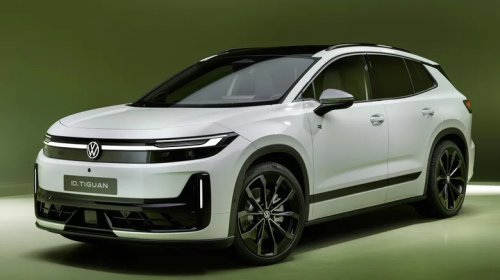
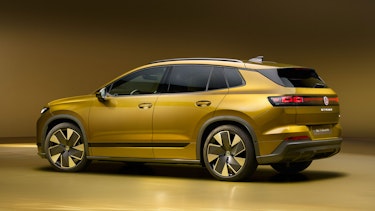
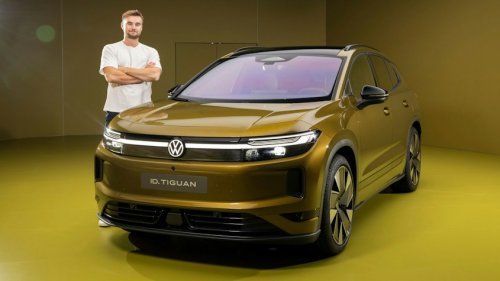
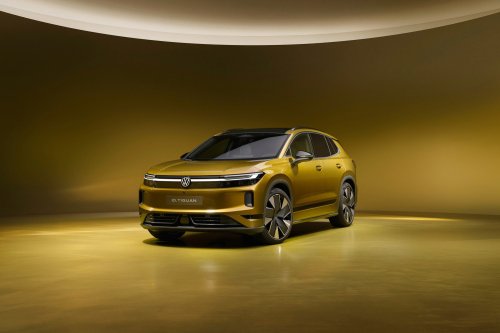
![Volkswagen's best-seller goes EV to replace the ID.4 [Images]](https://cdn.topcarnews.net/thumb/id/aHR0cHM6Ly9pMC53cC5jb20vZWxlY3Ry-ZWsuY28vd3AtY29udGVudC91cGxvYWRz-L3NpdGVzLzMvMjAyNi8xMC9Wb2xrc3dh-Z2VuLUlELVRpZ3Vhbi1JRC00LWltYWdl-cy5qcGVnP3c9MTUwMCZhbXA7cXVhbGl0-eT04MiZhbXA7c3RyaXA9YWxsJmFtcDtz-c2w9MQ/0ccd3b3b36acc251cd0f5ee652e9aa5a.jpeg?t=20261010&post_id=69282)