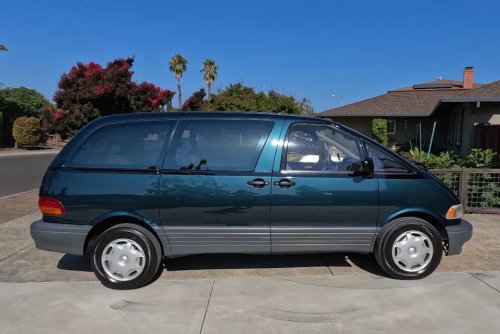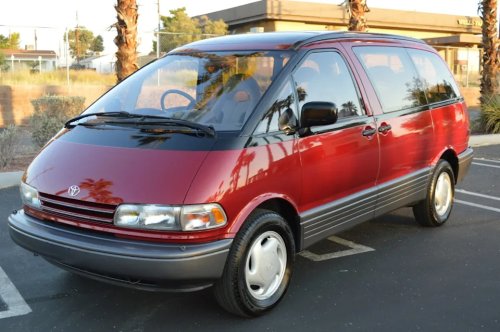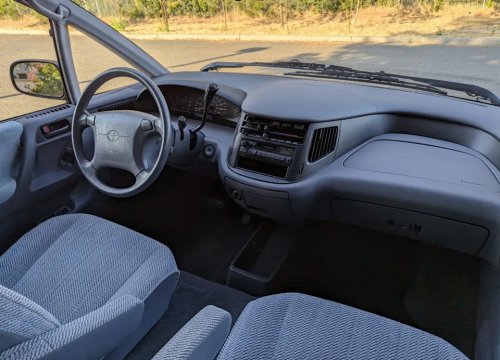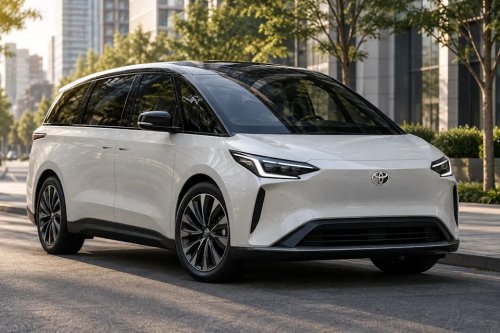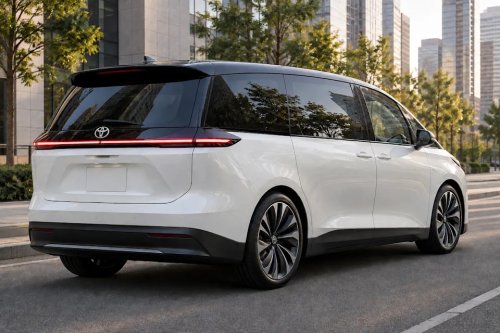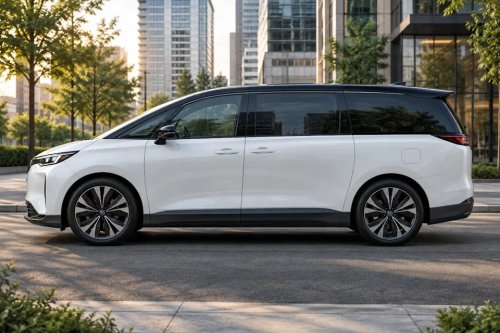




















The 1990s were a golden age for Toyota. The company launched cars that would go on to become legends. The Supra turned into a performance icon. The Land Cruiser cemented its place as a go-anywhere workhorse. The MR2 gave enthusiasts a slice of mid-engine magic at a bargain price. Even the humble Corolla of the era was bulletproof and beloved.But in the middle of this success story, Toyota quietly released something strange. Something that didn’t look like anything else on the road. It was a car so unusual, so packed with innovation, that it didn’t just stand out – it confused people. It looked like a jellybean. It was a minivan. And it was completely overengineered. The Toyota Previa Was A Supercharged Mid-Engine Minivan Silver 1991 Toyota PreviaThe Toyota Previa debuted in 1990. Known as the Estima in Japan, it was Toyota's answer to the growing minivan market in the U.S. The idea was to compete with the Dodge Caravan and Chrysler Town & Country. But Toyota didn’t want to copy anyone. Instead, they decided to go their own way.Underneath its soft, oval shape was a radical layout. The Previa was mid-engined. It had its powerplant mounted beneath the front seats, lying sideways and tilted at a 75-degree angle. This unusual setup gave it a low center of gravity and decent weight distribution for a van. It also meant the Previa had a surprisingly balanced feel on the road.To improve power, Toyota added a supercharger in 1994 for the U.S. market. The earlier naturally aspirated version of the 2.4-liter 2TZ-FE inline-four engine struggled with the Previa’s weight, especially when loaded with passengers. The supercharged version, the 2TZ-FZE, helped push output to 158 horsepower and 203 lb-ft of torque. Not mind-blowing, but enough to give it a boost.What really made the Previa stand out wasn’t just the engine layout. It was the overall engineering philosophy. Toyota designed it like they were building a prototype for a future that never came. It had a driveshaft running under the floor to power the rear wheels, with an optional all-wheel-drive system called All-Trac. The mid-engine setup required a unique cooling system with long coolant lines running to the front radiator. Even the battery was tucked under the driver’s seat.All of this made servicing a nightmare for mechanics. But for engineers, the Previa was a marvel. It was a minivan designed like a sports car, but meant for soccer moms. Toyota Previa Changes By Model Year (US specification) 1991 - Previa debuts in the U.S.; Rear-wheel drive standard; All-Trac AWD optional; 2.4L 2TZ-FE inline-4 engine; Available 5-speed manual or 4-speed automatic. 1992 - Minor trim updates; Anti-lock brakes (ABS) become optional on more trims; Slight equipment upgrades. 1993 - Driver-side airbag added; Manual transmission availability reduced; New optional features introduced, including upgraded audio systems. 1994 - Introduction of the supercharged 2TZ-FZE engine (on LE/All-Trac models); Output increased to 158 hp and 203 lb-ft torque; Improved performance and towing capacity; Exterior color and trim revisions 1995 - Dual front airbags become standard; Optional traction control added for AWD models; Interior materials upgraded slightly 1996 - Final full model year; Standard features increased; Safety improvements refined; Previa begins being phased out in favor of the upcoming Sienna; supercharged engine becomes standard 1997 - Only sold in limited numbers; largely fleet and carryover stock; Officially replaced by the front-engine Toyota Sienna in U.S. lineup. Superchaged Engine, Optional AWD Toyota Toyota Previa Key Specs Source: ToyotaThe Previa was built on the XR10 (RWD) and XR30 (AWD) platforms. The 2TZ series engine, both the base and the supercharged variant, were paired with either a 5-speed manual or a 4-speed automatic. Most Previas in the U.S. were automatics, especially after 1993. The van came with either rear-wheel or full-time all-wheel drive, rare options for a family vehicle.The engine’s placement meant that the Previa offered nearly 50:50 weight distribution. It also had a surprisingly low step-in height, making it easy for passengers to get in and out. But to achieve that, Toyota had to tuck major components under the floor. That led to complex packaging. The driveshaft tunnel, coolant plumbing, and exhaust routing were anything but conventional.The supercharged version used a Roots-type blower with an intercooler. Toyota didn’t offer a V6 for the Previa during its run in the U.S., despite competitors doing just that. Instead, the 2TZ-FZE with the supercharger was meant to hold its own. It offered decent torque and better highway passing power. However, it still lagged behind V6 rivals in raw acceleration.Another notable feature was Toyota's All-Trac system. This full-time all-wheel-drive setup used a center differential and gave the Previa added grip in poor weather. Combined with its low center of gravity and balanced chassis, it handled winter roads better than most vans of its time.The Previa also came with features ahead of its time. Anti-lock brakes were available. Some versions even had a dual sunroof setup and a second air conditioning unit for rear passengers. Safety features included dual front airbags later in the model’s life, and the body structure was robust, offering decent crash protection for its time. Awkward Design But Great Functionality The Previa’s design was polarizing. It looked like a rolling egg, or more generously, a jellybean. Its curved shape wasn’t just for style, though – it was meant to improve aerodynamics and maximize interior space. The front end sloped down steeply, giving drivers excellent visibility. The rear end was nearly vertical, which made loading cargo easier.Inside, the Previa was a packaging masterclass. The flat floor and tall roofline meant it felt airy and open. Seating configurations varied, but most models had room for seven or eight passengers. The middle row could swivel to face the rear, turning the cabin into a mini lounge. Some versions even had a fold-out table.The dashboard was mounted high and flat, with big, easy-to-read gauges. The controls were simple and logically laid out. Storage cubbies were everywhere. Cupholders, trays, and bins made the van feel like it was built with families in mind.One of the Previa’s standout features was its dual sunroof setup on higher trims. The front sunroof tilted and slid back, while the rear one popped up for ventilation. It gave the interior a bright and airy feel, unusual for a minivan.Cargo space was also solid. With the third row folded or removed, the Previa offered ample room for luggage, gear, or even a bike or two. The low floor helped with loading heavy items. Despite its odd looks, the Previa was incredibly functional. Every design choice seemed to have a reason behind it. It wasn’t pretty, but it worked. Toyota Already Had A Mid-Engine Car In The 1990s Toyota MR2 GT-S back 3/4 view Toyota MR2 (W20) Key Specs Source: ToyotaWhile the Previa stood out as a mid-engine minivan, it wasn’t Toyota's only mid-engine offering in the 1990s. The MR2, especially the second-generation model (W20), shared that same layout but served a completely different purpose.The MR2 was a sports car, pure and simple. It came with a range of engines, including a turbocharged 2.0-liter 3S-GTE that made over 200 horsepower. It was light, nimble, and agile. Everything about the MR2 was designed for performance.In contrast, the Previa used its mid-engine layout for packaging and balance, not speed. But it's fascinating that Toyota explored this architecture in such different vehicles. One was built for twisty mountain roads; the other for hauling kids and groceries.Still, both vehicles showed how far Toyota was willing to go with engineering. Neither the MR2 nor the Previa took the easy route. They were technical experiments that somehow made it to the showroom floor.The MR2 earned praise for its driving feel and affordability. The Previa earned respect for being one of the most unique family haulers ever built. In their own ways, both cars proved that Toyota wasn’t afraid to get weird – and sometimes, weird works. As a result, both models have a cult following these days.