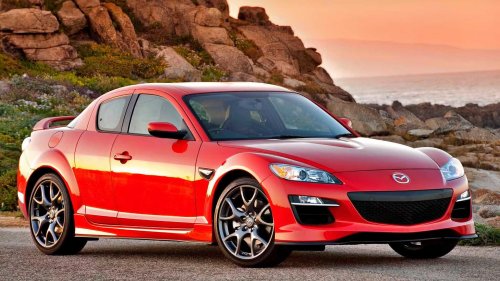
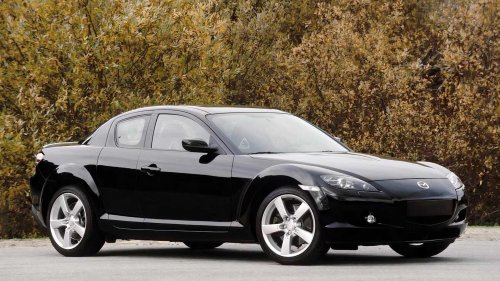
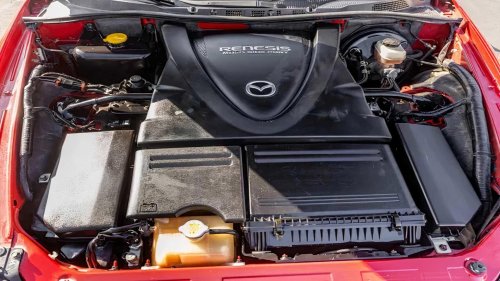
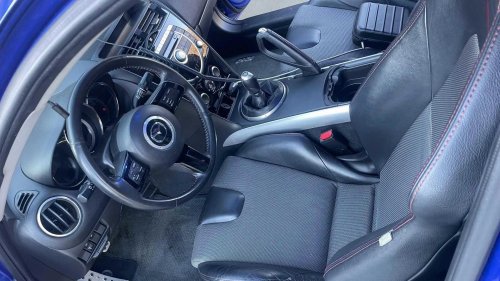
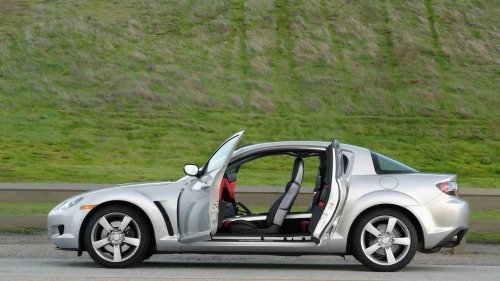
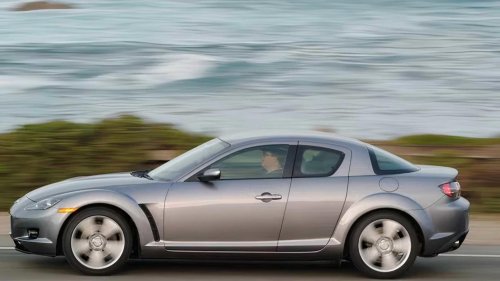
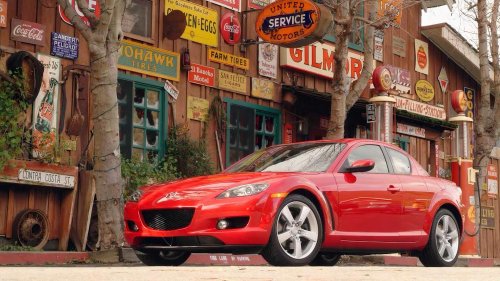
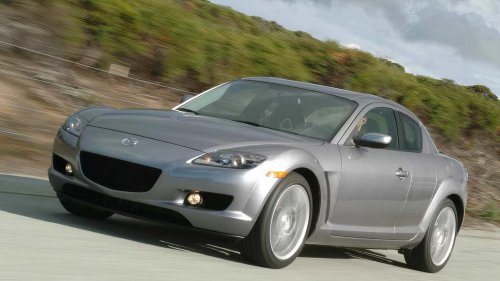
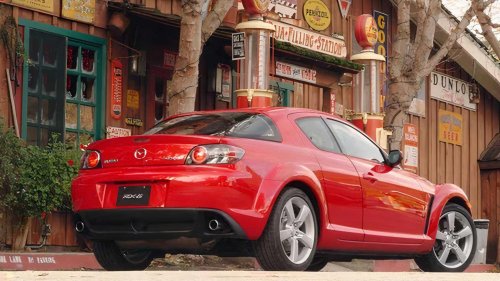
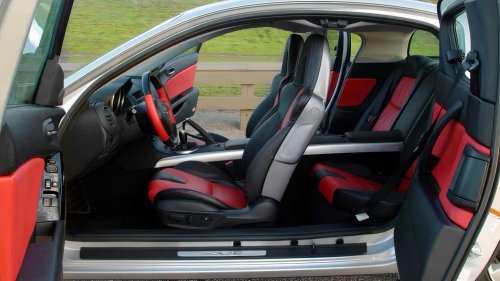
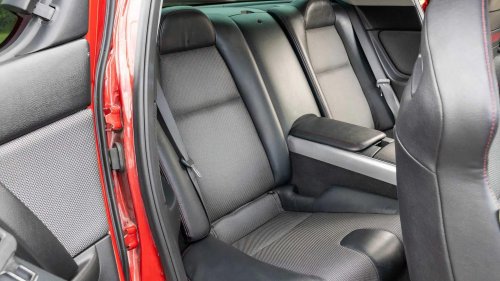
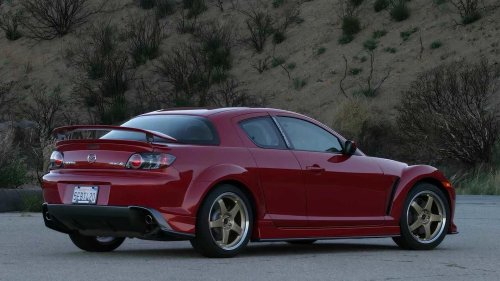
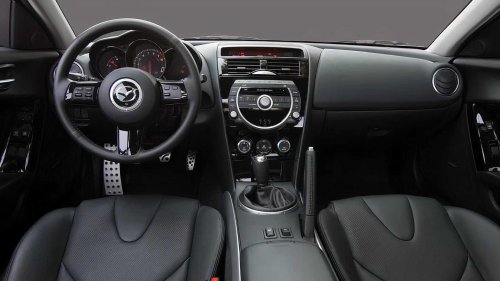
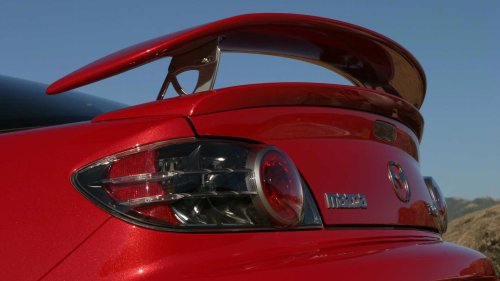
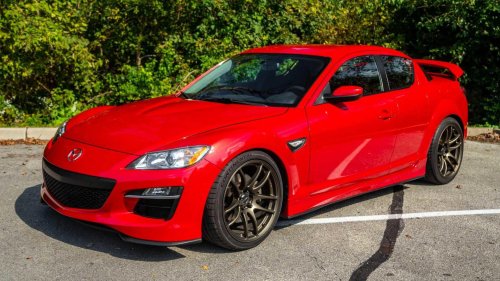


















Most cars fade into used-car obscurity. Another of many buzzing around the roads and slowly dying behind some guy's barn until they get crushed. Others hang around just long enough to become the car equivalent of squirrels. And then there are the special ones. The cars that zig when everyone else zags. The ones that might seem to lose to spec-sheet warriors but win over hearts. And, it's these cars that become collectible classics. The Mazda RX-8 (2003–2012) is one such car.It’s a four-door sports coupe with rear-hinged doors, a screaming rotary engine, perfect weight distribution, and one of the best chassis Mazda has ever built. It’s also misunderstood, occasionally maligned, and currently very affordable. Which, historically speaking, is exactly how future classics tend to start.The RX-8 never fit neatly into a category. It was/is weird. It wasn’t a muscle car. It wasn’t a luxury coupe. It wasn’t chasing Nürburgring lap records. Instead, Mazda built something they wanted to see on the road: a lightweight, high-revving driver’s car that prioritized balance over force. Two decades later, that decision feels more important than ever. A Rotary-Powered Rebel In A World Of Turbo Fours MazdaThe RX-8 arrived at a strange moment in automotive history. Turbocharged engines were becoming the default. SUVs were taking over driveways. And Mazda? Mazda decided to double down on a naturally aspirated rotary. Renesis Rotary Specs: Why The RX-8 Still Feels Special Mazda At the heart of every RX-8 sits Mazda’s 13B-MSP 1.3-liter rotary engine. Early models (2004–2008 manual cars) made 232 horsepower and 159 pound-feet of torque, while automatic versions produced 212 horsepower. This strange discrepancy was due to the old style of automatic transmission Mazda used. It couldn't handle the higher revs, so Mazda limited the automatic cars to 7,500 RPM. Later Series II cars (2009–2012) came in at 232 horsepower for manuals and 212 for automatics, thanks to some other updates, but RPM was still limited.Bring A Trailer Displacement doesn’t tell the whole story here, but technically, the Renesis measures 1.3 liters. What matters more is how it delivers power. The engine spins to a 9,000-rpm redline, sounds like mechanical jazz at full song, and weighs far less than a comparable piston motor. That low mass helps give the RX-8 its signature 50/50 weight distribution, one of the reasons it feels so planted in corners.Bring A Trailer Paired with a slick six-speed manual (or a less-loved six-speed automatic), most sources report the RX-8 hits 60 mph in around 6.1-6.5 sec for manuals topping out around 146 mph. Those numbers won’t scare modern hot hatches, but they’re not the point. This car is about momentum, steering feel, and balance. And Then There Are The Doors Mazda Mazda gave the RX-8 rear-hinged “freestyle” doors, allowing genuine access to a usable back seat. That means you can haul friends, camera gear, or groceries without pretending you’re in a hardcore coupe. It remains one of the most practical sports cars ever built, even if it never got credit for it. RX-8 Has Chassis Magic And Steering Feel You Just Don’t Get Every Day Mazda The RX-8 rides on Mazda’s SE platform with double-wishbone front suspension and a multi-link rear setup. Curb weight sits between 3,020 and 3,100 pounds, depending on trim, which is refreshingly light by modern standards. Steering is hydraulic, not electric. Feedback comes through your palms instead of being filtered through software. The car rotates beautifully mid-corner, communicates grip honestly, and rewards smooth inputs. In other words, it drives like something from a different era. Because it is. Mazda tuned this car for people who enjoy driving, not people just going from here to there however they can. That alone makes it increasingly rare. RX-8 Values Are Rising Slowly, And That’s Exactly How It Starts Mazda Here’s where things get interesting. For years, RX-8s were cheap, plentiful, and often neglected. Many suffered from poor maintenance, misunderstood rotary ownership, or owners who treated oil changes like optional DLC. But the survivors? They’re starting to matter. RX-8 Price Trends Over The Past Decade Mazda According to valuation data from Hagerty, average RX-8 values have risen a little over the past ten years, but not outside the rising tide of the market, at least, depending on condition and trim. Clean, low-mileage manual examples are now regularly cresting $12,000–$15,000, with pristine cars pushing higher.Mazda Meanwhile, Kelley Blue Book shows private-party values climbing steadily since 2020, particularly for later Series II models and Grand Touring trims. What used to be a $4,000 curiosity is increasingly a $10,000 enthusiast car. That curve matters. Future classics rarely explode overnight. They creep upward as supply shrinks and appreciation grows organically. The RX-8 is following that exact pattern. Why Clean RX-8s Are Getting Harder To Find Mazda Mazda sold roughly 192,000 RX-8s worldwide, but attrition has been brutal. Rotary engines demand proper warm-up, consistent oil checks, and attentive maintenance. Many owners didn’t get the memo.Bring A Trailer As a result, clean, unmodified RX-8s with documented service histories are becoming scarce. Manuals are especially desirable. Stock suspension. Factory wheels. Uncut interiors. These details are starting to matter. Sound familiar? It should. That’s exactly how the Mazda RX-7, Toyota Supra, and Nissan 300ZX started their climb. The RX-8’s Reputation Is Finally Getting A Rewrite Mazda Let’s address the elephant in the room: reliability. Yes, early RX-8s suffered from apex seal issues, hot-start problems, and carbon buildup. But much of that stemmed from improper ownership. Rotaries aren’t fragile. They’re just different and require a bit of looking after. A Properly Maintained RX-8 Needs: • Regular oil checks (it burns oil by design)• Proper warm-up before spirited driving• Occasional high-rpm runs to clear carbon• Compression testing during pre-purchase inspectionsThat’s it. Follow those rules, and these engines routinely exceed 100,000–150,000 miles, with many enthusiasts reporting far more on refreshed motors. Mazda even improved durability on later models with revised oil metering and upgraded ignition components. The RX-8 isn’t unreliable. It wants attention. Why This Car Makes Sense As A Collectible Mazda The RX-8 represents the last mass-market rotary sports car ever sold. Mazda has flirted with rotary hybrids since, but nothing like this. No successor arrived. No replacement followed. The Ingredients That Make The RX-8 A Future Classic: A naturally aspirated rotary engine Unique body shape and design Hydraulic steering Rear-hinged doors on a sports coupe Near-perfect weight balance Genuine rear seats A passionate community Modern sports cars are heavier, turbocharged, digitally filtered, and increasingly automated. The RX-8 feels analog by comparison. It rewards involvement. It punishes laziness. It makes every drive feel intentional. TopSpeed's Take Mazda The Mazda RX-8 never tried to dominate headlines. It wasn't trying to be the biggest or baddest thing around. It simply showed up with a weird engine, a brilliant chassis, and a stubborn commitment to doing its own thing.Bring-A-Trailer Today, it sits at a rare crossroads: still affordable, increasingly appreciated, and quietly entering its “wait, these were actually great” era. If you want a sports car that sounds like nothing else, drives like few modern cars can, and carries genuine historical significance, the RX-8 deserves a serious look. As we all know, the window won’t stay open forever.