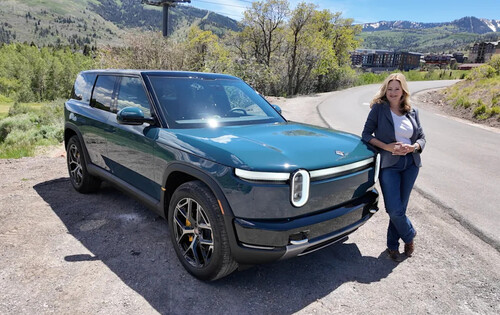
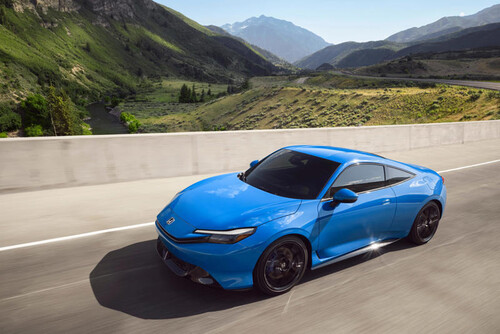
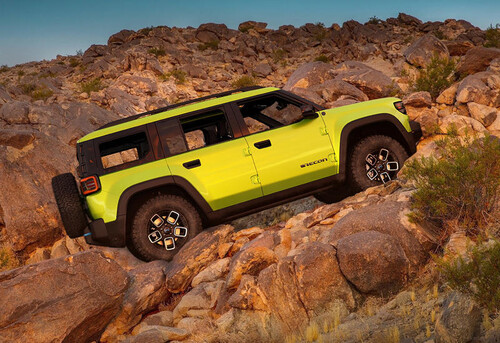
Morgan Labelle · 3 months ago@morganlabelle44Rivian's Little Electric Sports Car Prototype Probably Would Have Killed The Company Liked by+28 othersElectricHondaHonda CR-ZHonda PreludeSports carPost commentRelated Posts10 cars that quietly last longer than drivers expect 16 · Kaitlyn Nelson · 5 months agoHonda Pilot 4WD vs. AWD: What the i-VTM4 System Really DoesMadeleine White · 11 days agoWant to get off gas? Learn how at Drive Electric Month events across the US 64 · Jackson Labelle · 27 days agoToyota Thinks Hydrogen Can Do What Its Electric Pickup Can’t 91 · Owen Pelletier · 1 months agoThe hybrid sports car that depreciated like a rock, but runs like a tank 46 · Isabelle Moreau · 6 months agoHonda Gives America’s Best-Selling Compact Fresh Refinement and an Added Enthusiast AppealLiam Poirier · 13 days agoWheel-E Podcast: South Park e-bikes, Honda eMTB, more 59 · Parker Hill · 28 days agoThe 2007 Mazda CX-7 Had a Wild Idea: Make an Affordable SUV Drive Like a Sports Car 81 · Kayla Wright · 1 months ago10 cars that never got the respect they deserved 30 · Victoria Smith · 7 months ago2027 Honda Civic's Top Hybrid Gets the Prelude's Fake GearshiftsAudrey Roy · 13 days agoGeely Can Now Charge An EV Battery In Under 5 Minutes 75 · Caleb Moreau · 29 days agoThese Fun-to-Drive Hybrid Cars Use Gas-Electric Powertrains to Improve the Driving Experience 30 · Lucas Turner · 1 months agoThe sporty cars that looked fast - but actually weren’t really 29 · Lily Wilson · 7 months agoThe 2027 Honda Civic Gets a New Sport-L Trim, Mild Price Hike, and the Prelude’s Shift TrickClaire Turner · 14 days agoRivian Recalls Almost 99,000 Electric Vehicles Over Rearview Camera Software Issue 71 · Sophie Girard · 1 months agoBuilding Your Own Electric Honda ATV Is Quite the DIY Project 60 · Nathan Lewis · 2 months ago10 Cars That Failed To Capture The Magic Of Their Predecessors 75 · Ava King · 1 years ago2027 Honda Civic Adds Sport-L Trim and Prelude S+ Shift TechConnor Walker · 14 days agoHonda’s Ready to Take on Grand Highlander With Super-Sized Pilot: TDS 34 · Henry Walker · 1 months ago1965 Honda S600 Review: Inside Soichiro Honda's First Sports Car 81 · Abigail Rogers · 2 months ago




 +28 others