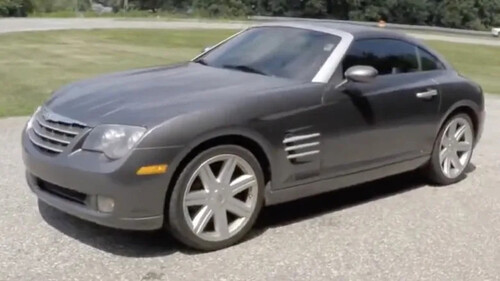
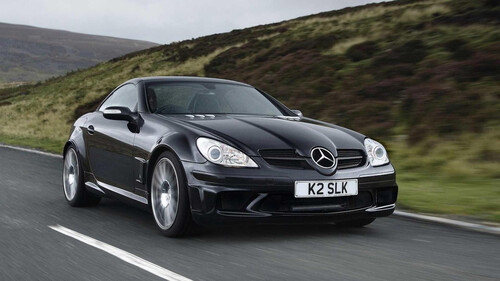
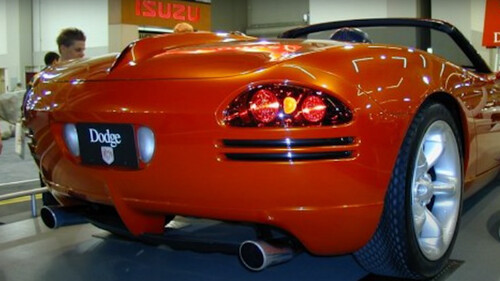
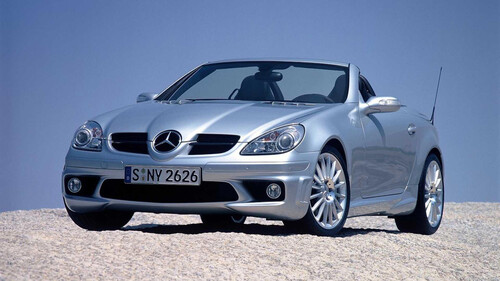
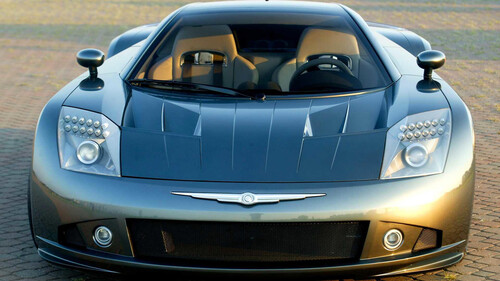
Auto manufacturers around the world frequently work together on various projects to help absorb expensive development costs, or to reduce the timescale for a project considerably. After all, the faster a vehicle gets to market, the quicker you can start selling it. American marque Chrysler has been a part of plenty of these arrangements over the years, though it found itself in dire straits in the 1990s. As a result, German giant Daimler, which owns Mercedes-Benz, elected to take it over in 1998.The consequence of this was a range of Chrysler models over the following decade that featured bones from a range of Mercedes offerings, which was done in a bid to reduce costs and boost profits within Chrysler. The whole thing came to an end in 2007 when Daimler ended up selling Chrysler for a fraction of what it had purchased it for, though several interesting models had slipped through the net by then. One of these was a two-door coupe and convertible called the Crossfire, which has some interesting underpinnings. The Crossfire Was Essentially A Mercedes-Benz SLK Underneath Chrysler While Chrysler tended to cater to the upper end of the market during its mid-20th century heyday, things had changed drastically by the time Daimler had taken it over. The German collective decided to essentially instill Chrysler models as more affordable versions of its own outgoing models, and the first built in this fashion was the Crossfire. Taking the shape of a two-door coupe or convertible, the Crossfire was afforded a stylish and chunky body. Peel back the skin though, and you'd find the underpinnings of the R170 generation Mercedes-Benz SLK.The R170 SLK debuted in 1996, and was Mercedes' approach to tackling the affordable roadster market. It was replaced by the R171 SLK in 2004, but rather than ditch the platform completely, Daimler decided to give it to Chrysler so that it could produce its own two-door offering without spending a fortune. The Crossfire was to be priced considerably lower than the contemporary SLK, which was fair enough given that it was essentially a previous-gen SLK. In fact, 39% of the Crossfire was made up of old SLK. This included the chassis, suspension, and drivetrain.Chrysler took care of the exterior and interior styling primarily, though a range of other underbody components were taken from the American marque's parts bin. It may have been a little aged when compared to some of the modern coupes and roadsters of the time, but there are worse bases to make use of than the first-gen SLK. The Crossfire Drove Well For The Price BaT Indeed, the Crossfire was afforded decent performance due to making use of the high-quality Mercedes componentry, though its stiffer suspension and stiffer anti-roll bar setup meant it wasn't as graceful over the bumps when compared to Mercedes' own offerings. The marque couldn't let its more budget-focused understudy match it from a comfort standpoint, of course. The upside of this is that the Crossfire handles pretty well, and gives its driver confidence thanks to its solid road-holding ability.It's not the fastest sports car on the planet, given that it used the 3.2-liter naturally aspirated V6 from the R170 SLK. This meant it produced 215 horsepower, which was channeled to the rear wheels via a six-speed manual transmission. A five-speed auto unit was also on the menu. To put into context the level of the Crossfire's V6, the base R171 SLK got a smaller 3.0-liter V6 that produced 228 hp, making it more powerful and lighter than the unit found under the hood of the Chrysler. Still, the older engine was still a solid product, and at least afforded decent reliability given all the kinks had been worked out over the last decade.Besides, the Chrysler could still sprint to 60 mph in under 6.5 seconds, which is solid given its price point. The engine also sounded more characterful than it had in its previous Mercedes host, as Chrysler's engineers made some tweaks to the unit to ensure it crackled and popped a little more than in its standard form. The Crossfire Showed Its Value In Other Ways Chrysler Chrysler's two-door offering was priced considerably lower than even the most basic SLK, with the 2008 version retailing for just $34,735. If you wanted a two-door roadster with a Merc badge on it, you had to hand over a little over $44k. This may seem like good value on the Crossfire's part, but step inside and the cost-cutting becomes abundantly clear. While it came with a decent list of standard equipment, such as dual-zone climate control and leather bucket seats, the quality of the fixtures and fittings did little to inspire confidence. The switches and materials used around the cabin felt cheap, and were also prone to emitting squeaks and rattles, especially as the vehicle aged.Calling the Crossfire a quality product would have to be done through gritted teeth as a result, but this at least means they're pretty affordable today. A Tidy Crossfire Can Be Found For Less Than $10k BaT Due to the vehicle's parts-bin special reputation that it had even 20 years ago, it has struggled to set itself apart as a future classic. CarBuzz's Marketplace values even final-year coupe models at just $6,499, though budget for $10,000, and you'll easily be able to find yourself a well-looked-after example with decent mileage on the clock. Extend your spend towards the $15k mark, and you could secure a mint machine that has fewer than 30,000 miles on the odometer.Given its Mercedes-sourced underpinnings, the Crossfire will also prove dependable as long as you maintain it properly. It's known to suffer from electrical issues every now and again, but they're solid mechanically. The Crossfire SRT6 Provides Big Power If You Fancy Getting A Shift On Chrysler Of course, the appeal of having a two-door coupe or drop top with big power makes one of Merc's AMG models appealing. Well, the Crossfire SRT-6 offers the best of both worlds. It used the supercharged 3.2-liter V6 from the likes of the SLK 32 AMG, which meant peak output spiked to 330 hp. This allowed it to blast through the 60 mph barrier in only 5.4 seconds, while its uprated suspension and braking setups, again borrowed from Merc's hot SLK, ensured it was much more capable in the twisty bits than the standard model.In addition, the SRT-6 received a racier body kit, which was characterized by a larger fixed rear spoiler. Ultimately, all that hard work to give the Crossfire SRT-6 a sharper edge was wasted by the decision to only offer it with a five-speed auto transmission. This was a bit of a kick in the teeth for the purists, who wished they could have the six-speed manual found in the vanilla Crossfire. This didn't help shift any more units, and the car was ultimately axed after just two model years in 2006, following just 4,000 examples being shifted. Used SRT-6s Are A Cheap Way Of Enjoying AMG-Level Performance Chrysler Despite the Crossfire SRT-6's rarity, used examples can be found for a bargain outlay on the used market. You would need right around $16,000 to pick one up in average condition, but lower mileage specimens out there command closer to $20k. If you're happy to take delivery of a machine with closer to 100,000 miles on the clock, you may be able to part with less than $10k. Considering you'd have 330 hp and AMG-spec underpinnings at your disposal, there are worse ways to spend this kind of cash.It's fair to say neither flavor of Crossfire was particularly popular; they at least stand out as a solid way of getting into Mercedes-Benz ownership without actually buying one. You'll just have to give up the status and cabin quality you can expect from an actual Merc, which might get difficult once you spend some time with it. Still, there are plenty of solid used Mercedes on the market, so don't worry too much.Sources: Chrysler.